Quick Answer
Asphalt driveway sealcoating costs $0.15 to $0.65 per square foot professionally installed, or $0.08 to $0.35 per square foot for DIY materials. Most driveways need sealing every 2 to 3 years, starting 3 to 6 months after a new asphalt installation. Sealcoating protects asphalt from UV rays, water, and oil, and can extend a driveway's life by several years for a fraction of the cost of replacement.
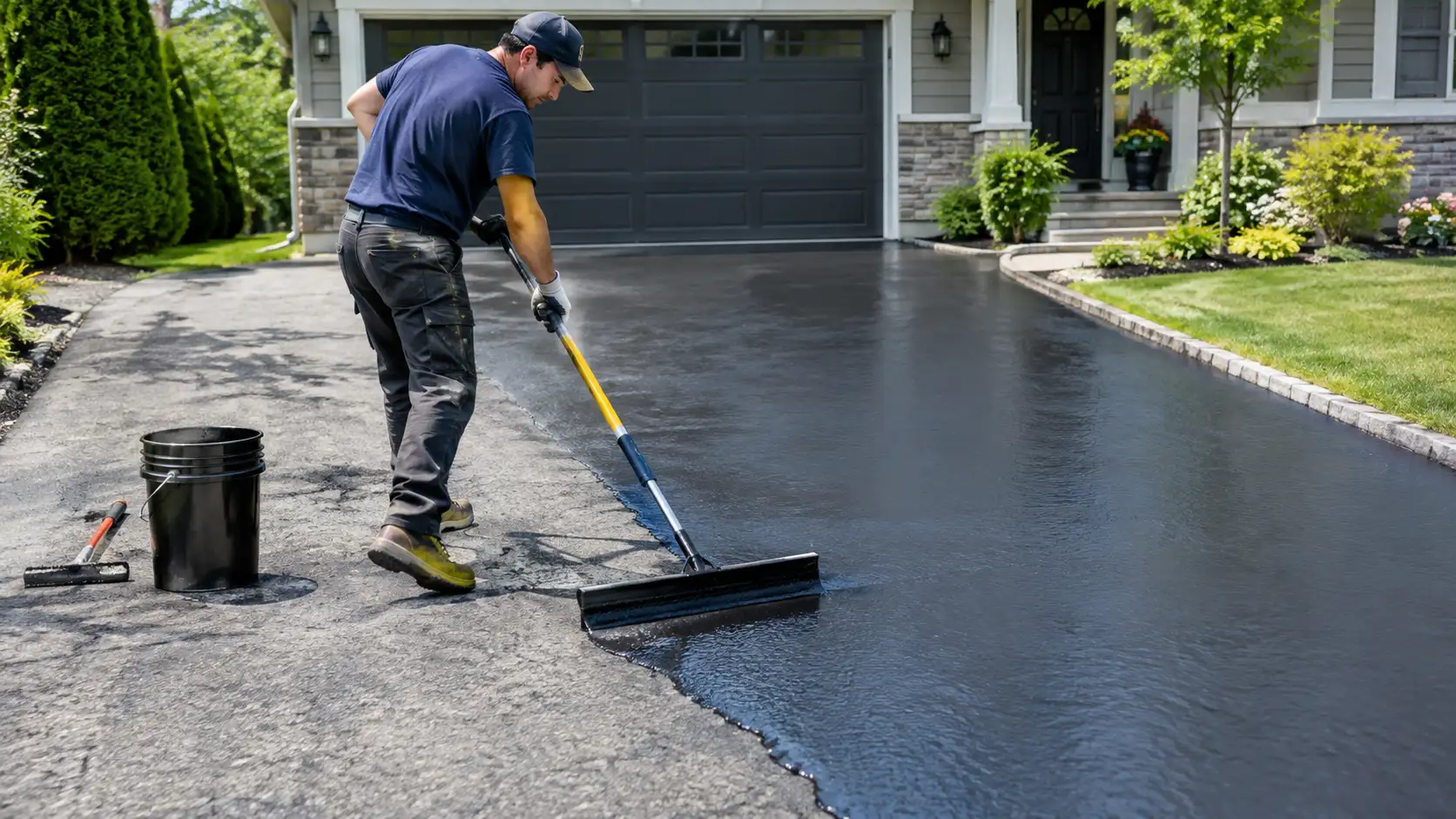
Asphalt driveway sealcoating is a thin protective coating applied over asphalt to block water, UV rays, and chemical damage from oil and gas spills. It's the cheapest maintenance step that actually extends a driveway's life, and it's one most homeowners either do too rarely or skip entirely until cracks and fading make the problem obvious.
This guide covers how often to seal, what it costs, whether it's worth doing, and the steps to do it yourself. If you're also planning a new asphalt surface, understanding correct asphalt pavement thickness from the start is just as important as keeping it sealed once it's down.
What Sealcoating Actually Does
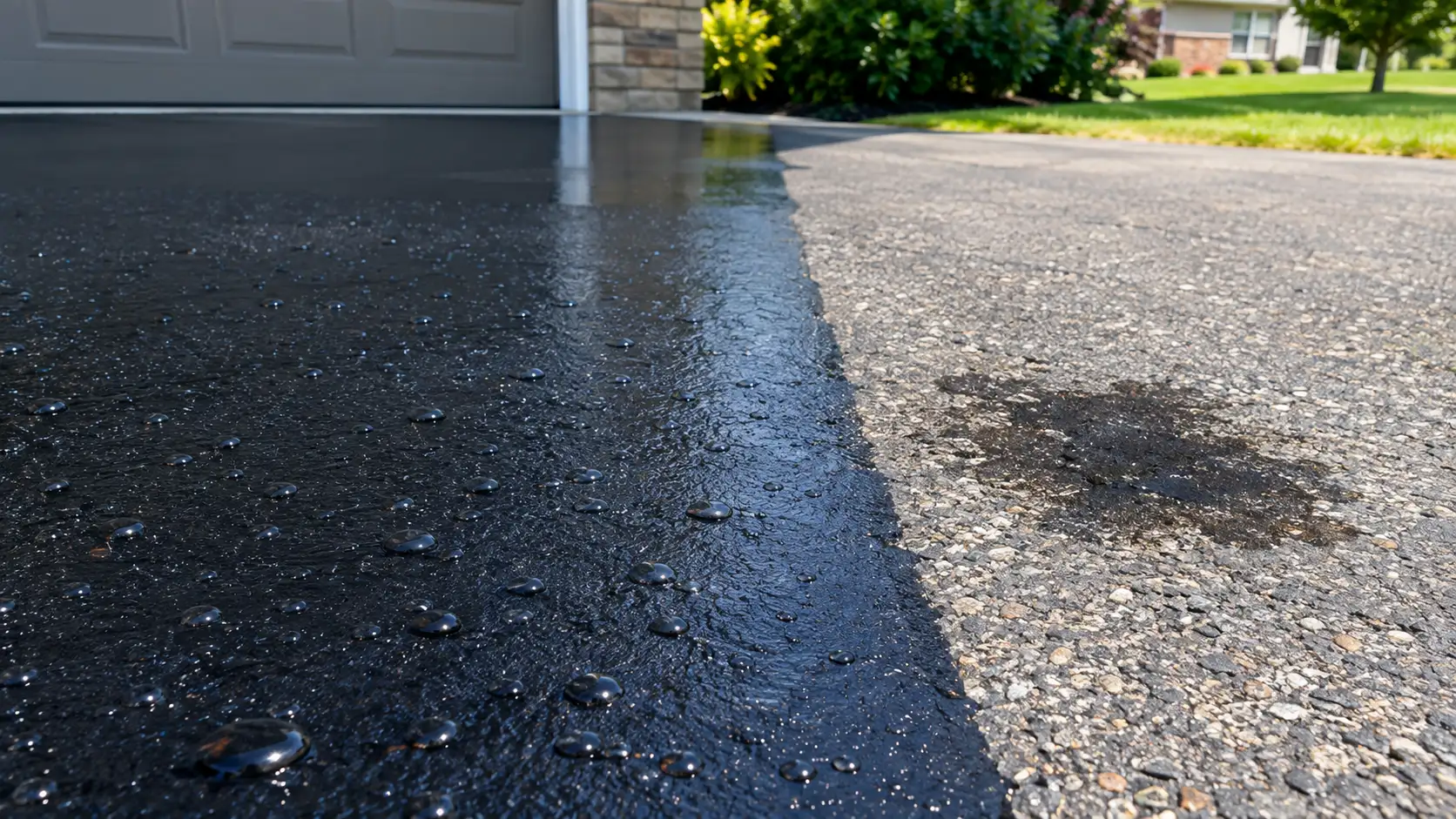
Fresh asphalt is a deep black mix of aggregate and bitumen binder. Sun exposure oxidizes that binder over time, drying it out and turning the surface a dull gray. Water gets into small cracks and expands when it freezes, widening them. Oil and gas spills soften the asphalt's binder directly, since both the binder and many petroleum products share a similar chemistry.
Sealcoat forms a thin barrier over the surface that blocks UV rays, sheds water, and resists oil and gas penetration. It doesn't add structural strength — it protects the asphalt that's already there from breaking down faster than it should. This is fundamentally different from the role of the bitumen binder within the asphalt mix, which provides structural flexibility from day one.
Key point:Sealcoating is a surface protectant, not a structural repair. If cracks or base damage already exist, sealcoating won't fix them — it simply preserves what's still good.
How Often Should You Seal an Asphalt Driveway
Seal a brand-new asphalt driveway 3 to 6 months after installation, not immediately. Fresh asphalt needs time to cure and release volatile compounds from the binder. Sealing too early traps those compounds and can leave the surface soft.
After that first application, reseal every 2 to 3 years for most residential driveways. A few things shift that number:
Heavy traffic or steep driveway
Wears sealer down faster, which can mean resealing closer to the 2-year mark.
Harsh climates with intense sun or heavy freeze-thaw cycles
Also shortens the resealing interval.
Light use and shaded driveway
Can stretch the interval toward 3 years without issue.
Watch the driveway itself rather than relying purely on a calendar. Fading from deep black to gray, a rough or pitted surface texture, or visible hairline cracking are all signs it's due, regardless of exactly how many years have passed.
Avoid over-sealing. Multiple paving sources agree that annual sealing does more harm than good. It builds up excess layers that can peel, and it can trap oils inside the asphalt, leaving the surface soft and flexible instead of protected. Stick to the 2-to-3-year window.
Asphalt Driveway Sealcoating Cost
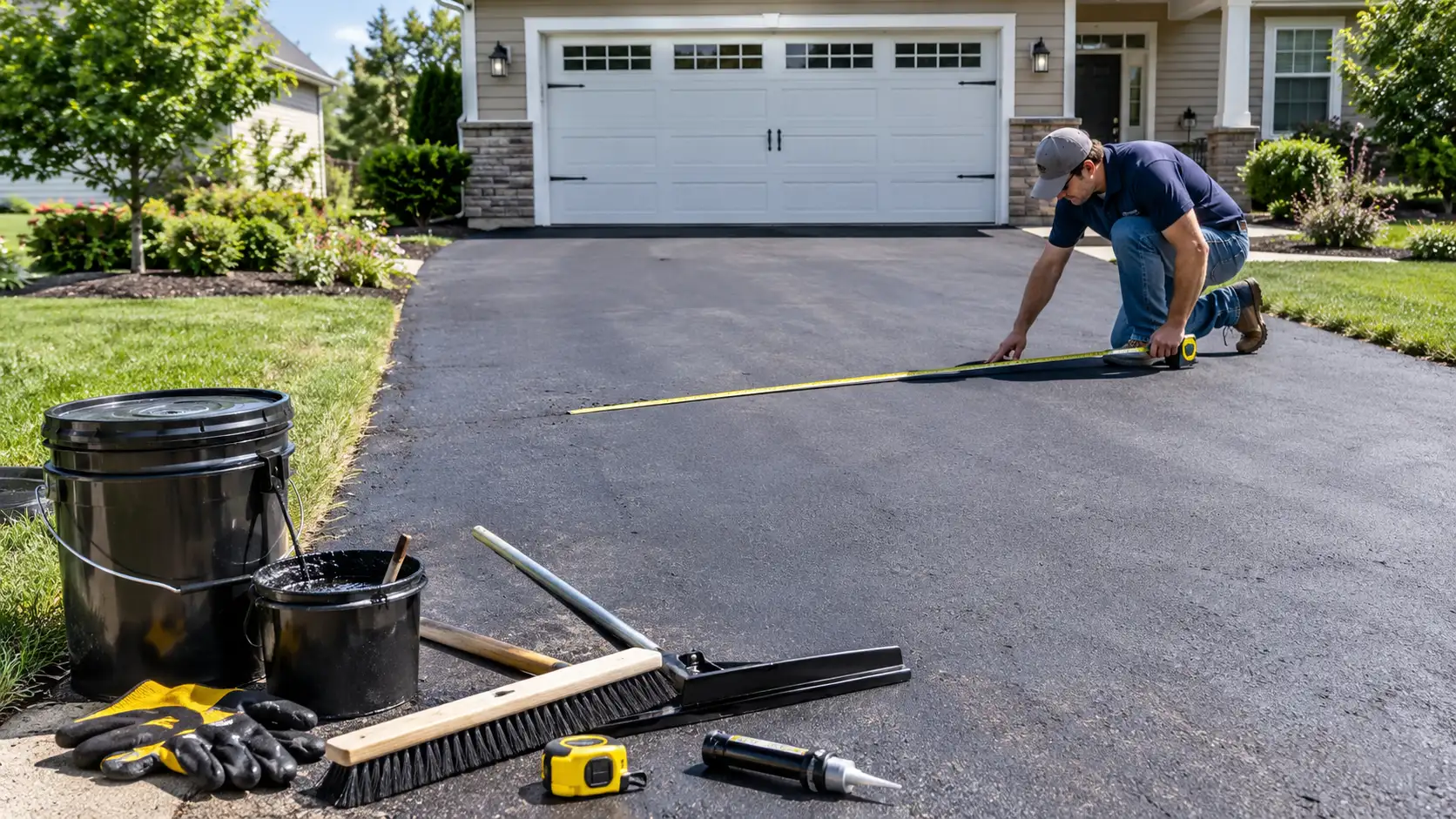
Pricing varies by region, sealant type, and whether you hire a professional or do it yourself. For a complete picture of what asphalt installations cost before you even get to sealcoating, the worldwide bitumen driveway cost guide breaks down prices by country and driveway size.
| Driveway Size | DIY Cost | Professional Cost |
|---|---|---|
| Small (200 to 300 sq ft) | $30 to $75 | $120 to $200 |
| Medium (600 sq ft, double car) | $50 to $110 | $150 to $300 |
| Large (1,000+ sq ft) | $90 to $200 | $300 to $600+ |
Per square foot, professional sealcoating generally runs $0.15 to $0.65, with most jobs landing between $0.20 and $0.30. DIY materials run $0.08 to $0.35 per square foot, depending on the sealant type.
Sealant Type and Cost
Sealant type affects cost directly:
| Sealant Type | Cost per Sq Ft |
|---|---|
| Asphalt emulsion | $0.08 to $0.10 |
| Coal tar emulsion | $0.06 to $0.10 |
| Latex acrylic | $0.20 to $0.25 |
| Eco-friendly formulas | $0.25 to $0.38 |
Crack repair adds cost on top of the base sealing price, typically $0.35 to $1.75 per square foot of damaged area depending on severity. Professionals often charge a separate pressure washing fee, usually $0.27 to $0.39 per square foot or a flat $100 to $200, if the driveway needs cleaning before sealing.
Most professional sealcoating companies also carry a minimum service charge, often $150 to $200, so a very small driveway may cost close to the same as a medium one.
Is Driveway Sealcoating Worth It?
Yes, for most driveways. The math works in sealcoating's favor by a wide margin: spending $0.20 to $0.30 per square foot every 2 to 3 years is far cheaper than the cost of a full driveway replacement, which runs several dollars per square foot and only becomes necessary sooner when asphalt is left unprotected.
Unsealed asphalt exposed to sun, water, and oil breaks down faster, developing cracks and potholes years ahead of a sealed surface. Skipping sealcoating entirely doesn't just risk an earlier full replacement — it also tends to mean more frequent, piecemeal crack repairs in the years leading up to it. This is closely related to why deferred maintenance is one of the costliest asphalt project mistakes property owners make — each round of piecemeal repair adds cost that regular sealing would have mostly prevented.
The exception: A driveway already past the point sealcoating can help. If the asphalt is over 20 years old, the base beneath it has failed, or cracks run deeper than about 2 inches, sealcoating treats the surface without fixing the underlying problem. In that case, a professional repair or resurfacing assessment makes more sense than another round of sealer.
How to Seal an Asphalt Driveway Yourself
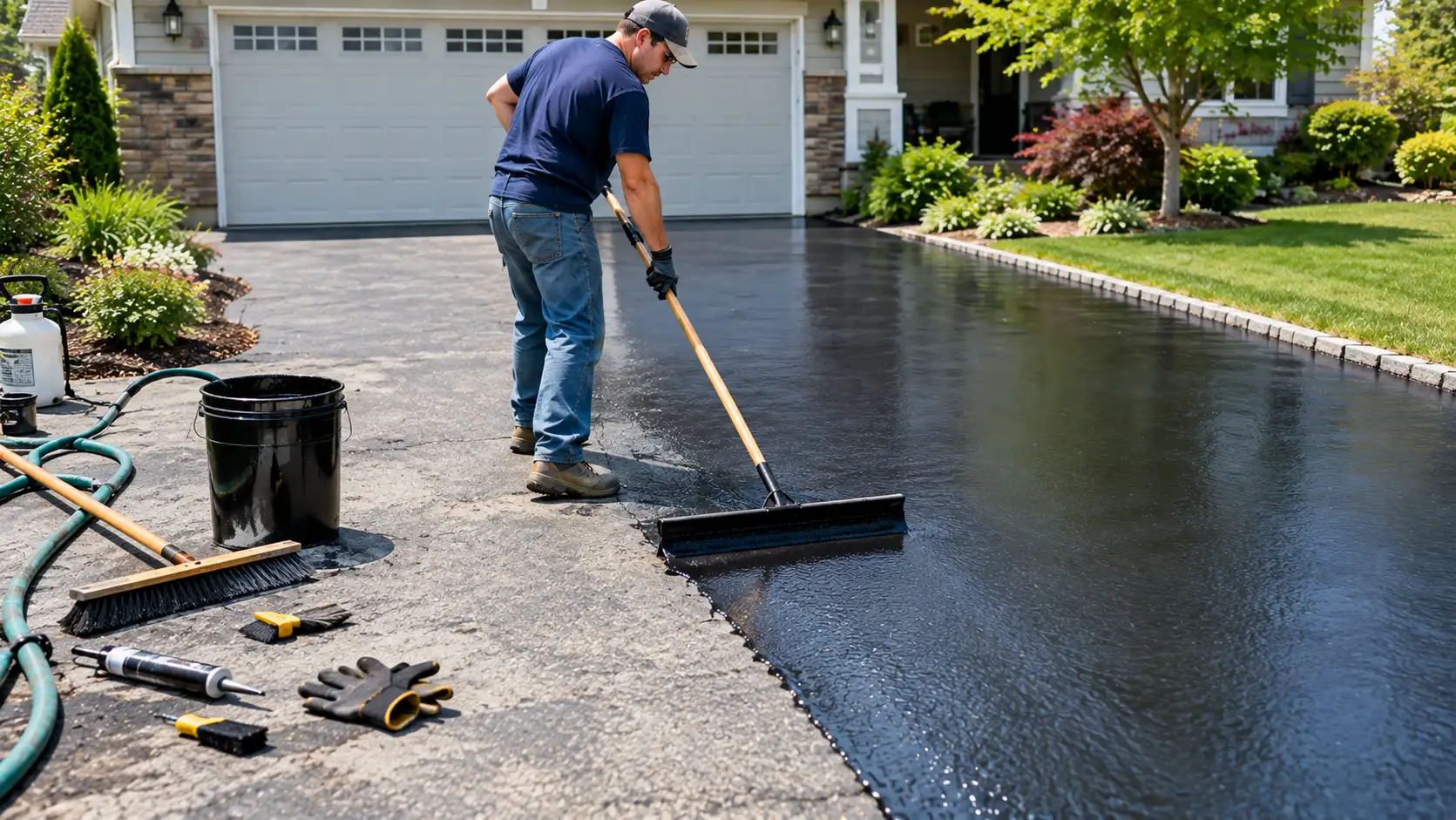
DIY sealcoating is one of the more approachable home maintenance projects, provided the weather cooperates and the surface is properly prepped. The same principle of careful surface preparation applies whether you're sealing a driveway or working on any asphalt maintenance — the Asphalt Institute's pavement construction guidance reinforces that surface condition before application determines most of the outcome.
What You'll Need
Step-by-Step Process
Clear and sweep the driveway
Remove all debris, dirt, and vehicles. Sweep thoroughly so no loose material remains on the surface.
Degrease oil and grease stains
Scrub stained areas with a degreaser and rinse. For step-by-step instructions on absorbent prep and degreasing, see our guide on how to remove oil stains from an asphalt driveway. Sealer won't bond properly over an oil-contaminated surface.
Fill cracks
Apply crack filler to any gaps before sealing. Let it cure fully per the product's instructions — often 24 hours — before moving to the next step.
Pressure wash and dry
Pressure wash or scrub the full surface to remove loose debris, then let it dry completely — usually 24 hours in good weather.
Check the forecast
You need temperatures between 50 and 90 degrees F and at least 2 consecutive dry days — one before application and one after — for the sealer to cure properly.
Apply the first coat
Apply the first coat with a squeegee applicator, working in small sections and maintaining a wet edge so lines don't show once dry.
Let dry, then apply second coat
Let the first coat dry — typically 4 to 8 hours depending on conditions — before applying a second coat for better coverage and durability.
Keep vehicles off for 24 to 48 hours
Keep vehicles off the driveway for at least 24 to 48 hours after the final coat, longer in cooler or humid conditions.
Pro tip: Two thinner coats generally outperform one thick one. Thick applications can crack or peel as they cure. This is also a good time to address stubborn oil stains before they worsen — our guide on removing bitumen and petroleum stains from surfaces covers the right products and methods for different stain types.
Sealcoating a Parking Lot
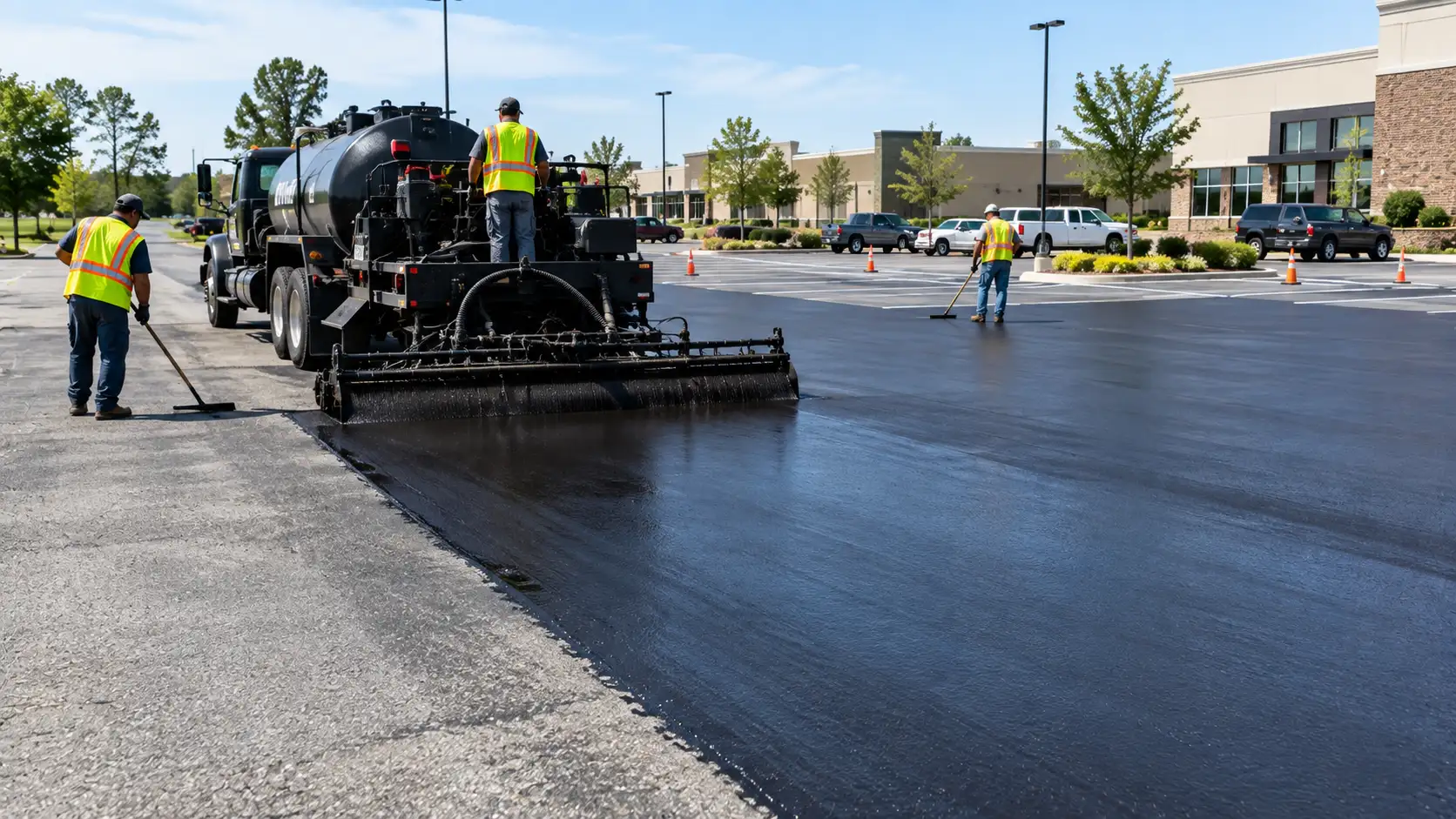
Commercial parking lots follow the same core sealcoating process as a residential driveway, but a few differences matter at that scale.
Traffic volume changes the schedule
A parking lot sees far more daily traffic than a driveway, which wears sealer down faster. Many commercial lots need resealing every 2 to 3 years as well, but high-traffic lots — like those at retail centers or restaurants — sometimes need it closer to every 1 to 2 years.
Sectioning the work matters more
A large lot cannot be sealed and cured all at once without shutting down access entirely, so most commercial jobs are done in sections, often overnight or over a weekend, to keep at least part of the lot usable.
Line striping is part of the job
Parking lots need their stall lines and markings repainted after sealcoating, since the sealer covers the old paint. This adds a cost line professionals typically quote separately from the sealcoating itself.
Cost scales differently
Per square foot, large commercial jobs often land at the lower end of the pricing range, since contractors can apply materials more efficiently across a big, open area compared to the edges, curves, and obstacles common on a residential driveway.
For a parking lot of any real size, hiring a commercial paving contractor makes more sense than a DIY approach. The equipment, sectioning logistics, and striping work go well beyond what a homeowner-scale project calls for. The same factors that influence choosing between asphalt and concrete for commercial surfaces also apply here — material choice and maintenance frequency are closely linked at the commercial scale.
Conclusion
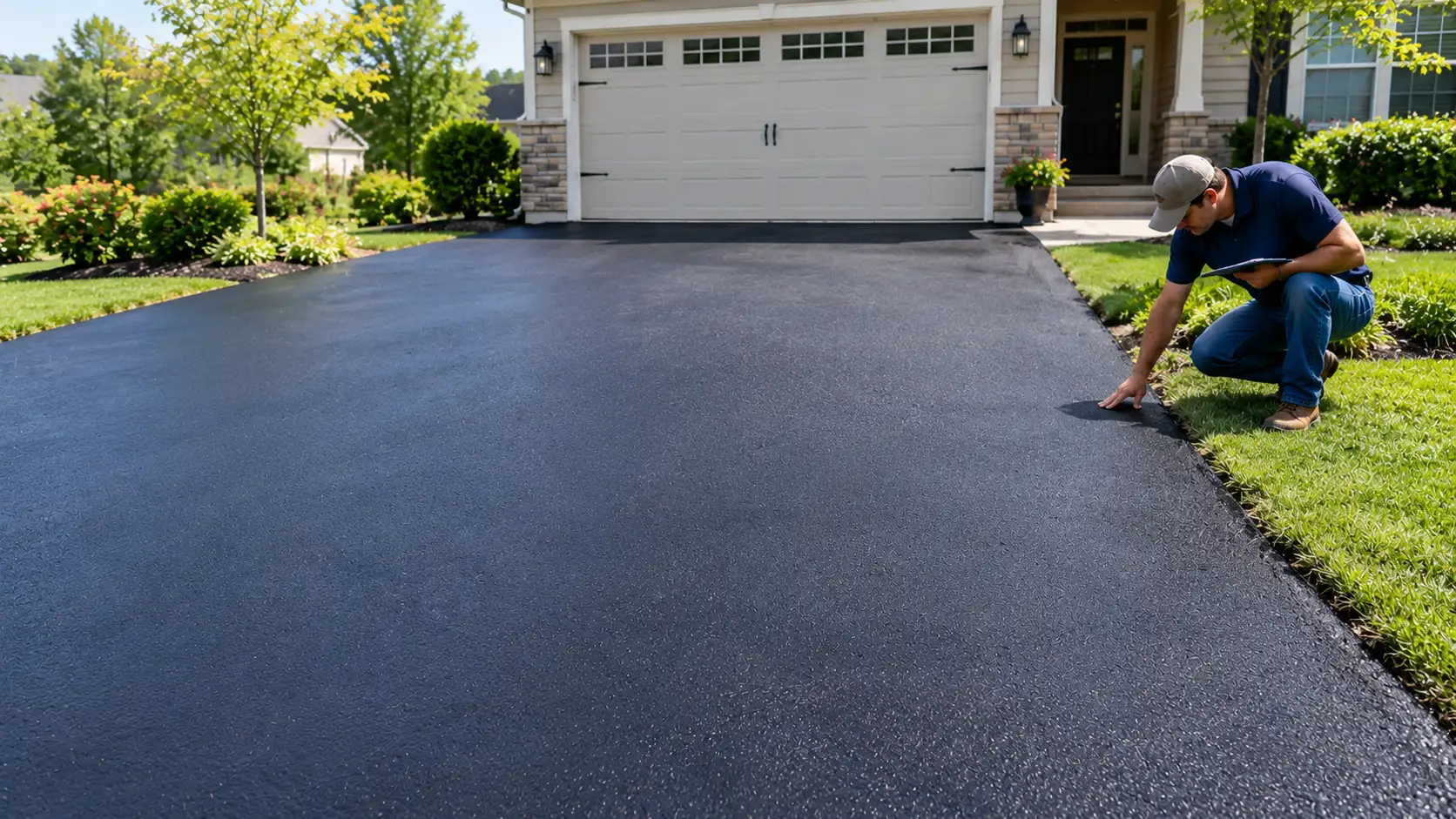
Sealcoating is cheap insurance for asphalt. A driveway sealed every 2 to 3 years, starting a few months after installation, holds its color and resists cracking far longer than one left unprotected — for a cost measured in cents per square foot rather than dollars. DIY sealing works well for most homeowners who follow proper prep and weather windows, while parking lots and larger commercial jobs are better handled by a contractor equipped for sectioning, striping, and faster turnaround.
Before budgeting any paving or maintenance project, use our free Bitumen Calculator to estimate material quantities and costs accurately — from initial paving through to long-term upkeep planning.
For the broader technical context of how asphalt behaves over its lifetime — including how the bitumen binder degrades and why protective surface treatments matter — the Federal Highway Administration's asphalt pavement resources provide a thorough engineering foundation.
Frequently Asked Questions
How often should I seal my asphalt driveway?
Every 2 to 3 years for most driveways, starting 3 to 6 months after a new installation. Heavy traffic or harsh climates can shorten that interval, while light use can stretch it slightly longer.
How much does it cost to sealcoat a driveway?
Professional sealcoating runs $0.15 to $0.65 per square foot, or $150 to $300 for a typical 600 square foot driveway. DIY materials cost $0.08 to $0.35 per square foot, or roughly $50 to $110 for the same size.
Is sealing your own driveway worth it?
Yes, for most homeowners. DIY sealcoating saves 40 to 60% compared to hiring a professional and uses the same basic process, as long as you follow proper prep and weather guidelines.
Can you seal an asphalt driveway too often?
Yes. Sealing every year, rather than every 2 to 3 years, can build up excess layers that peel and can trap oils in the asphalt, making the surface soft instead of protecting it.
What temperature is needed to seal a driveway?
Between 50 and 90 degrees F, with at least 2 consecutive dry days — one before application and one after — so the sealer can cure properly.
How long after paving should you wait to seal a driveway?
3 to 6 months. Sealing too soon traps volatile compounds still releasing from the fresh asphalt binder and can leave the surface soft.
Does sealcoating fix cracks and potholes?
No. Sealcoating protects the surface but does not repair structural damage. Cracks need to be filled before sealing, and significant potholes or base failure need separate repair.

Founder & Web Developer
Nabeel Awan is a web developer and the founder of BitumenCalcPro. His work focuses on web development and building practical online tools, with a strong interest in civil engineering, asphalt, bitumen, pavement construction, and construction technology.