Quick Answer
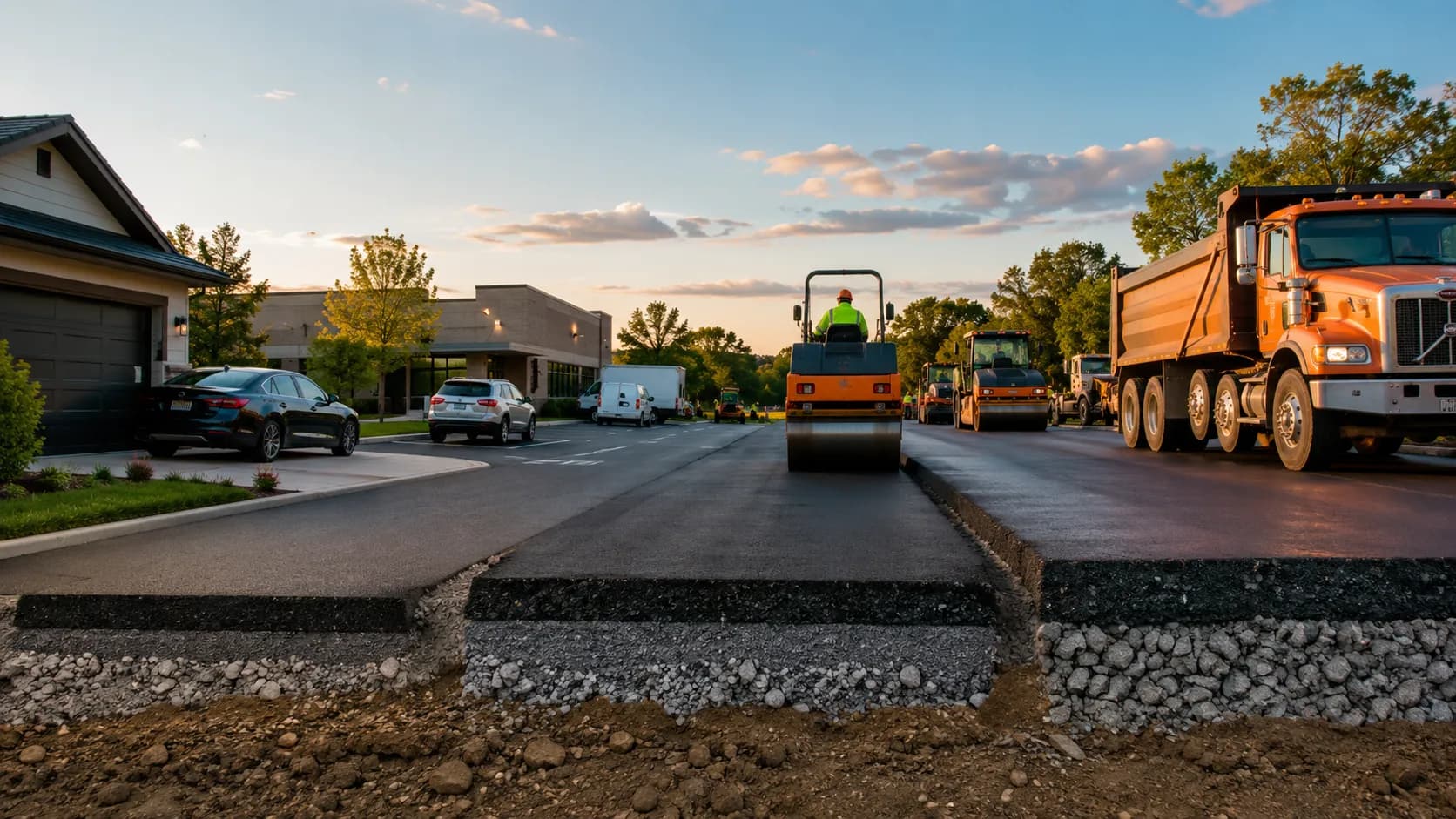
Asphalt thickness typically ranges from 2 inches for light residential driveways to 12 inches for heavy-duty highways. Residential driveways need 2–3 inches, commercial parking lots need 3–4 inches, and areas handling trucks or heavy equipment need 4–8 inches or more. The right thickness depends on traffic load, vehicle weight, soil conditions, and climate.
Asphalt that's too thin fails early — it cracks, ruts, and breaks down under loads it was never built to handle. Asphalt that's too thick wastes money. Getting asphalt thickness right is one of the most consequential decisions in any paving job, and most guides give you the numbers without explaining the reasoning behind them.
This guide gives you thickness recommendations for driveways, roads, parking lots, and heavy equipment areas — along with the factors that push those numbers up or down on any specific project.
Why Asphalt Thickness Matters
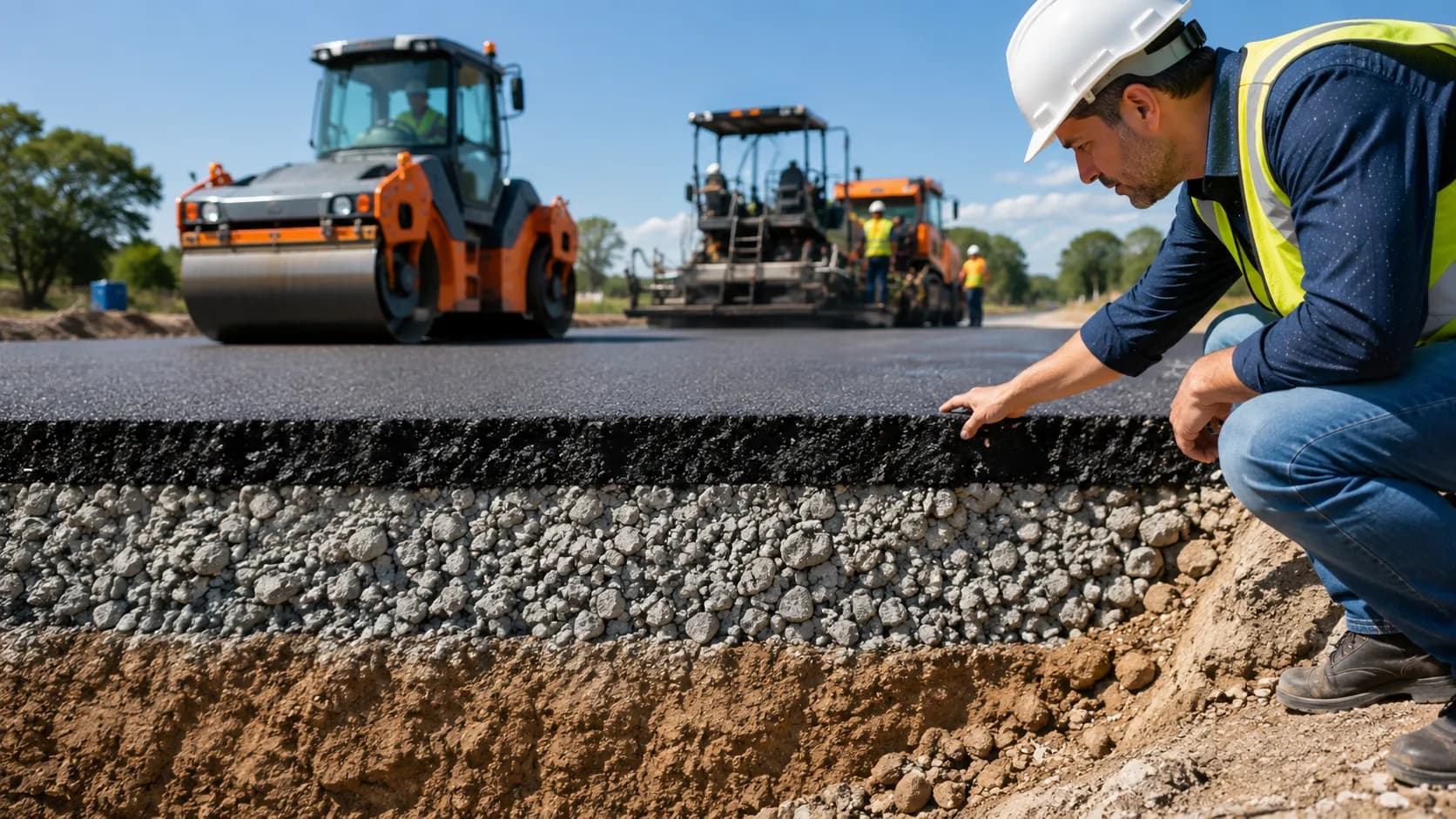
Asphalt spreads the weight of vehicles across a wider area before it reaches the soil underneath. Think of it like snowshoes distributing body weight over snow — a thin layer concentrates pressure into a small area, while a properly thick layer spreads that same load out and keeps the surface from deforming.
When asphalt is too thin for the load it carries, it flexes repeatedly under traffic. That repeated flexing creates small fatigue cracks, often in a web pattern that looks like alligator skin. Once cracks form, water gets into the base layer, and freeze-thaw cycles or continued traffic turn those cracks into potholes. Getting the thickness right from the start is far cheaper than repairing the damage that undersized asphalt eventually causes. You can use our asphalt quantity calculator to estimate exact material requirements for your project before breaking ground.
Asphalt Thickness Chart by Use Case
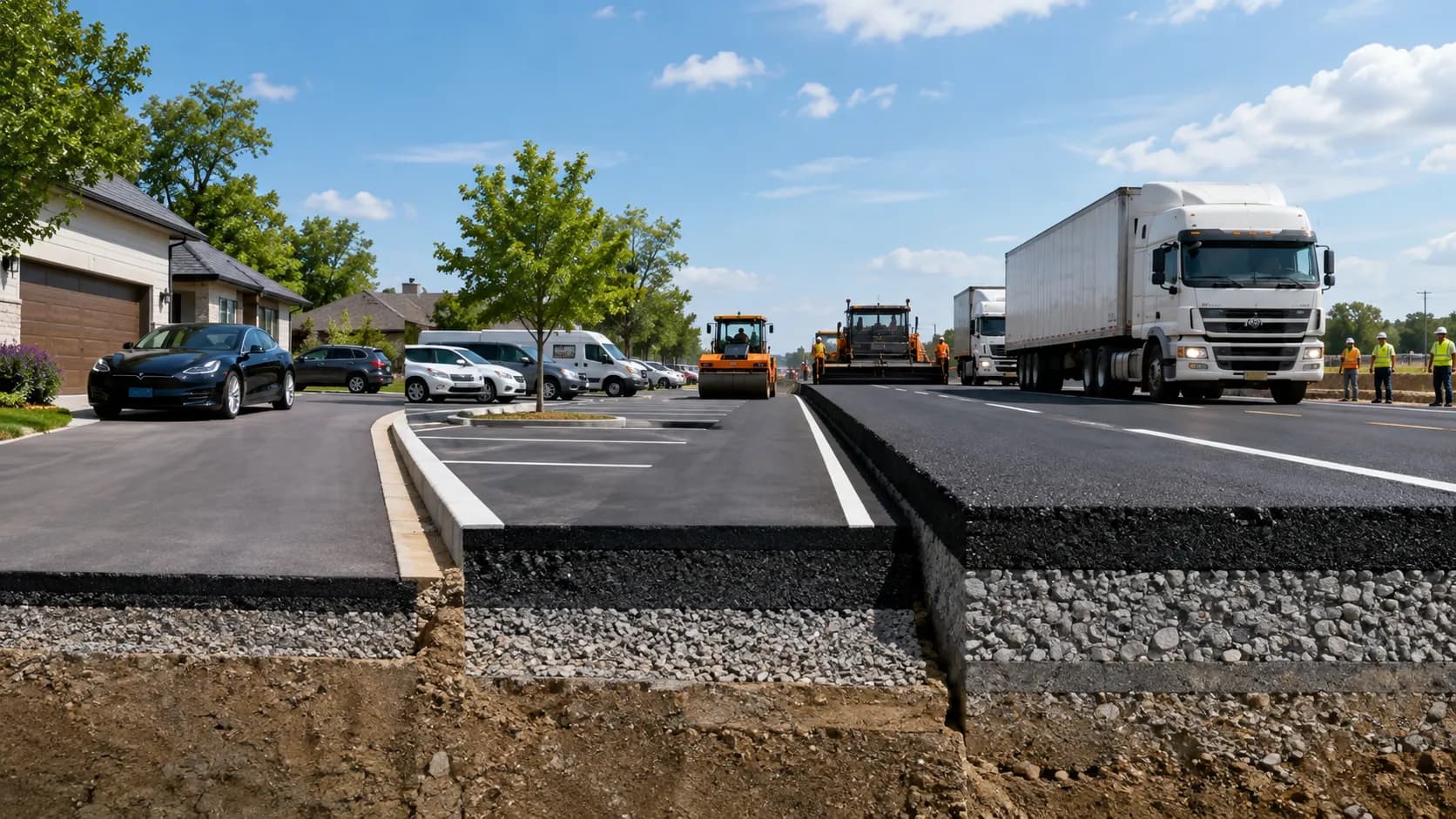
The table below summarizes typical asphalt thickness ranges across common applications, pulled together from paving industry guidance and typical contractor specifications. Always check local building codes, since exact requirements vary by municipality and climate.
| Application | Asphalt Thickness | Aggregate Base |
|---|---|---|
| Residential driveway (standard) | 2–3 inches | 4–8 inches |
| Residential driveway (heavy vehicles/RVs) | 3–4 inches | 6–8 inches |
| Commercial driveway | 3–4 inches | 8 inches |
| Parking spaces (light traffic) | 3 inches | 6 inches |
| Parking lot drive lanes/entrances | 4–6 inches | 6–8 inches |
| Heavy-duty parking (trucks, loading zones) | 6–8 inches | 8–12 inches |
| Local/residential roads | 4 inches | 6–8 inches |
| Highways and major roads | 4–12 inches | Varies by traffic study |
| Loading dock aprons | 6+ inches | 8–12 inches |
| Walkways/trails (no aggregate base) | 3–5 inches | None |
| Walkways/trails (with aggregate base) | 2–3 inches | 4–6 inches |
These figures represent widely cited industry ranges rather than a single universal standard — always confirm against your project's engineering specification or local code before finalizing a design.
Asphalt Thickness for Residential Driveways
Most residential driveways handling standard passenger vehicles need 2 to 3 inches of compacted asphalt over a properly prepared aggregate base. The base layer often matters more than people expect — 4 to 8 inches of compacted granular aggregate underneath does much of the structural work, distributing weight before it ever reaches the soil.
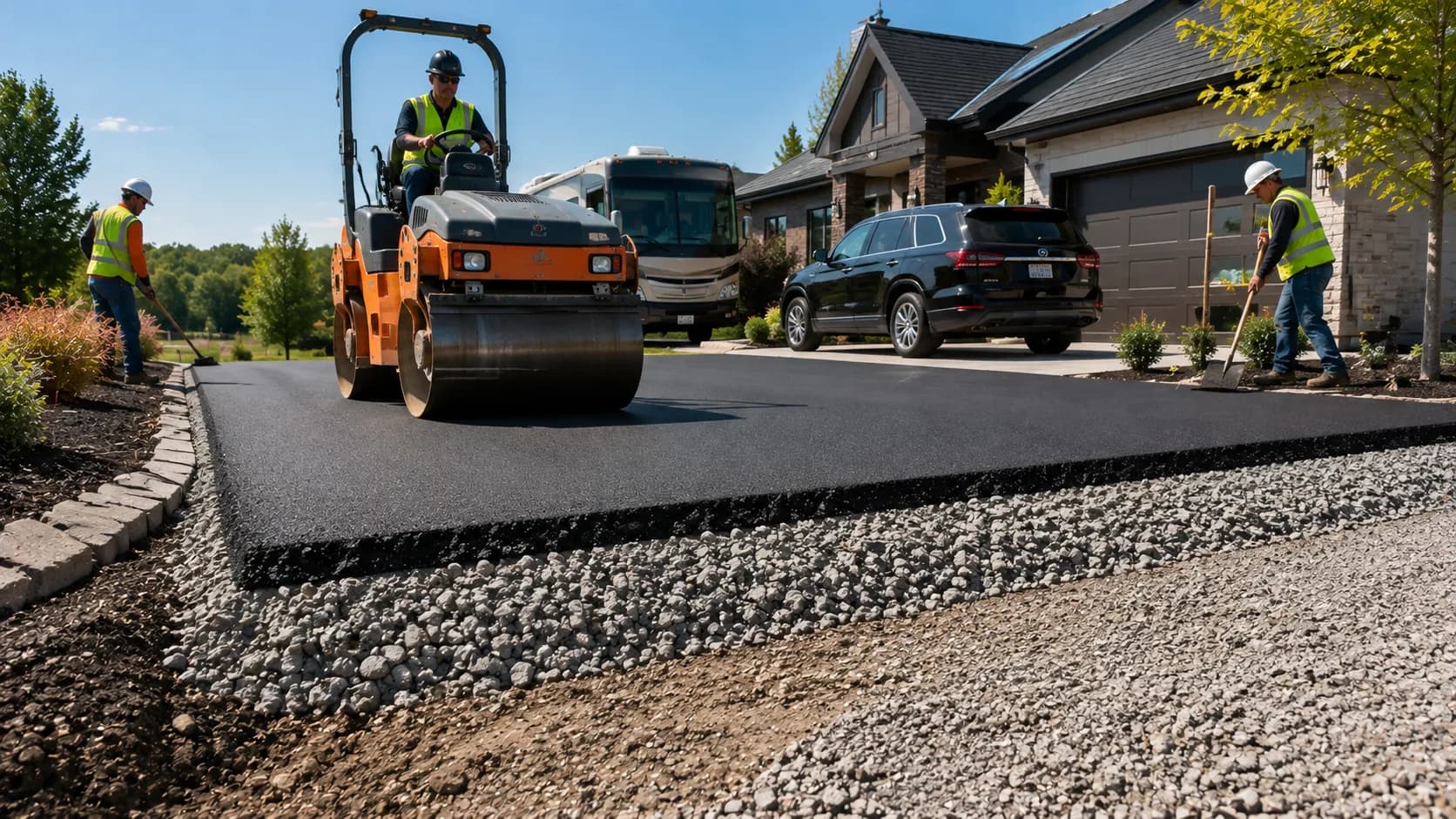
If the driveway will regularly see heavier vehicles — an RV, a boat trailer, or a delivery truck — bumping up to 3 to 4 inches of asphalt is the safer call. The extra thickness helps distribute the additional axle weight and reduces the risk of indentations or surface buckling under repeated heavy loads. Some paving associations recommend 4 inches as a baseline for a full-depth residential driveway built for maximum longevity, particularly in regions with harsh freeze-thaw cycles.
When deciding on driveway materials, initial thickness specs are only half the equation. Compare long-term maintenance, installation timelines, and material costs in our detailed analysis of asphalt vs concrete driveway performance.
Asphalt Thickness for Roads
Road thickness varies more than any other category, since it depends heavily on traffic volume, vehicle weight, and the engineering design behind the specific road. Local and residential streets with moderate traffic typically use around 4 inches of asphalt, while highways carrying heavy commercial traffic can range anywhere from 4 to 12 inches, depending on projected traffic loads over the pavement's design life.
Road thickness design generally follows structured engineering methods, such as those outlined in the AASHTO Guide for Design of Pavement Structures, which accounts for subgrade soil strength, expected traffic loading over time, and climate. This is one area where thickness genuinely shouldn't be guessed — road pavement design is typically calculated by a civil engineer based on projected traffic data specific to that road, not applied as a flat rule of thumb.
Asphalt Thickness for Parking Lots
Parking lots aren't uniform — different zones within the same lot often need different thicknesses depending on how they're used.
— 3 inches is typically sufficient for regular passenger vehicles that park and sit rather than maneuver repeatedly
— 4 to 6 inches, since these areas see continuous turning and braking, which stresses the surface more than straight-line parking
— 6 inches of asphalt over 8 inches of aggregate base is a common minimum, since trucks stop, idle, and load in these spots, creating concentrated point loads rather than distributed traffic
Climate plays a real role here too. Regions with harsh winters and heavy freeze-thaw cycling, or extreme summer heat, often specify thicker parking lot asphalt — sometimes 4 to 6 inches even for standard traffic areas — to better handle the additional stress those conditions place on the pavement. Understanding the right bitumen grade for your climate is equally important — the binder grade affects how the asphalt performs across temperature extremes.
Asphalt Thickness for Heavy Equipment and Trucks
Areas that regularly handle heavy trucks, construction equipment, or other high-axle-weight vehicles need substantially more asphalt than standard applications — typically 6 to 8 inches, sometimes reaching higher for the most demanding use cases.
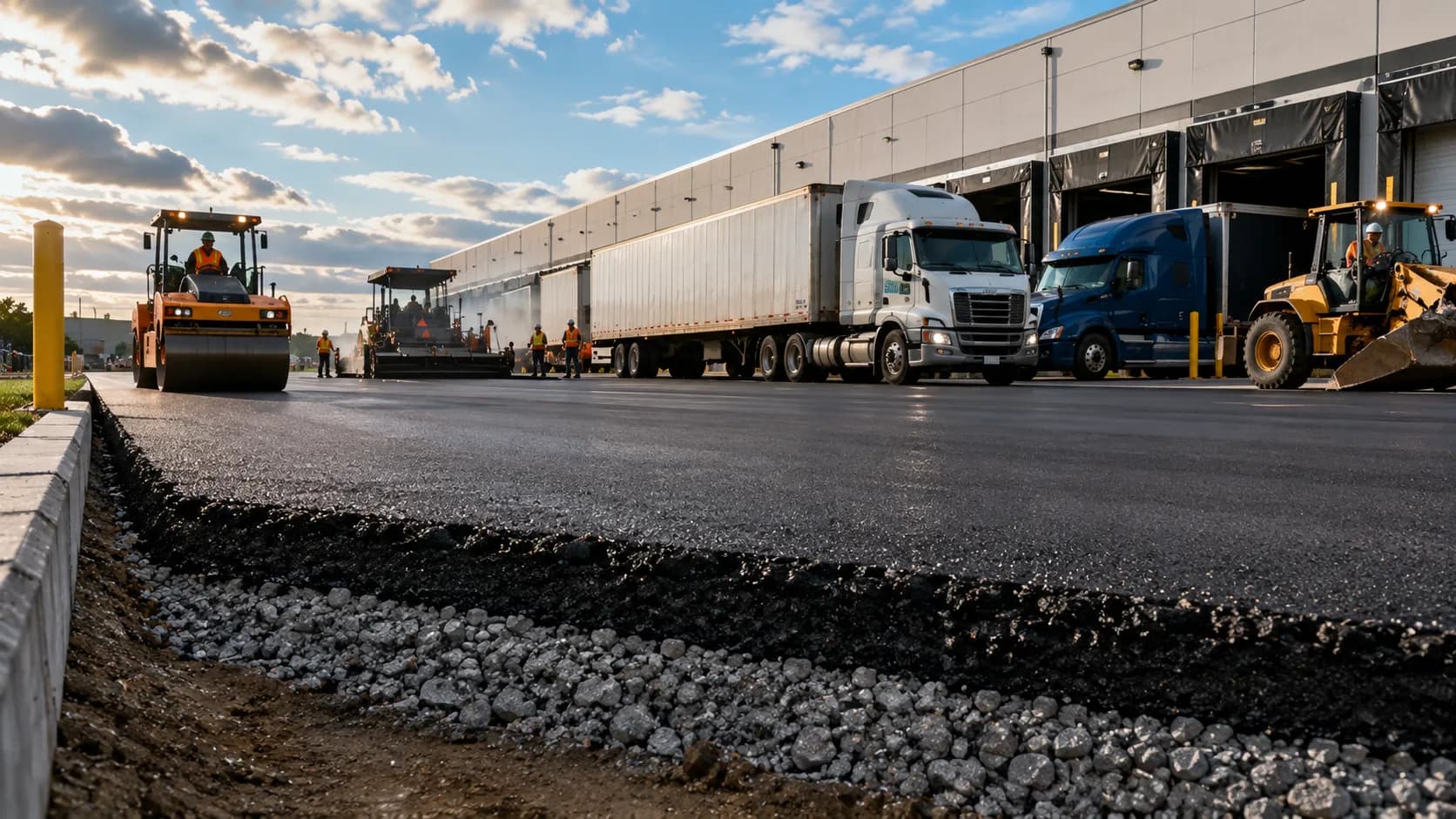
- Loading docks — minimum 6 inches to withstand concentrated, stationary point loads from trucks parked and idling while loading or unloading
- Industrial and heavy equipment access roads — 4 to 7 inches, including both binder and surface layers, is common for routes that see consistent heavy vehicle traffic
- Fire truck access routes — 6 inches or more, since emergency vehicles are exceptionally heavy and access routes need to perform reliably under that load at any time
- Vehicles or axle loads exceeding roughly 8,000 lbs — generally require 4 inches or more of asphalt at minimum, often paired with a thicker aggregate base than lighter-duty applications
For these heavy-duty applications, the asphalt is typically installed in multiple layers — a binder course beneath a wear course — rather than as a single lift, which improves structural performance under concentrated, repeated loading. The Asphalt Institute publishes detailed thickness design guidance for heavy-duty industrial applications that engineers can reference for site-specific specifications.
Factors That Affect Required Asphalt Thickness
Thickness recommendations aren't arbitrary — a handful of site-specific factors determine what a given project actually needs.
More traffic and heavier vehicles both call for thicker asphalt, since load and frequency compound each other's stress on the pavement.
Weak, clay-heavy, or poorly draining soil can't support loads as effectively, so thicker asphalt or a thicker aggregate base compensates for a less stable foundation.
Regions with significant freeze-thaw cycling or extreme heat put more stress on pavement, since asphalt expands and contracts with temperature swings; thicker asphalt handles that movement better.
The base does much of the structural work supporting the asphalt above it; skimping on the base undermines even a properly thick asphalt layer.
A driveway built to last 25 years needs different specifications than one expected to be resurfaced within a decade.
Common Mistakes That Lead to Thin, Failing Asphalt
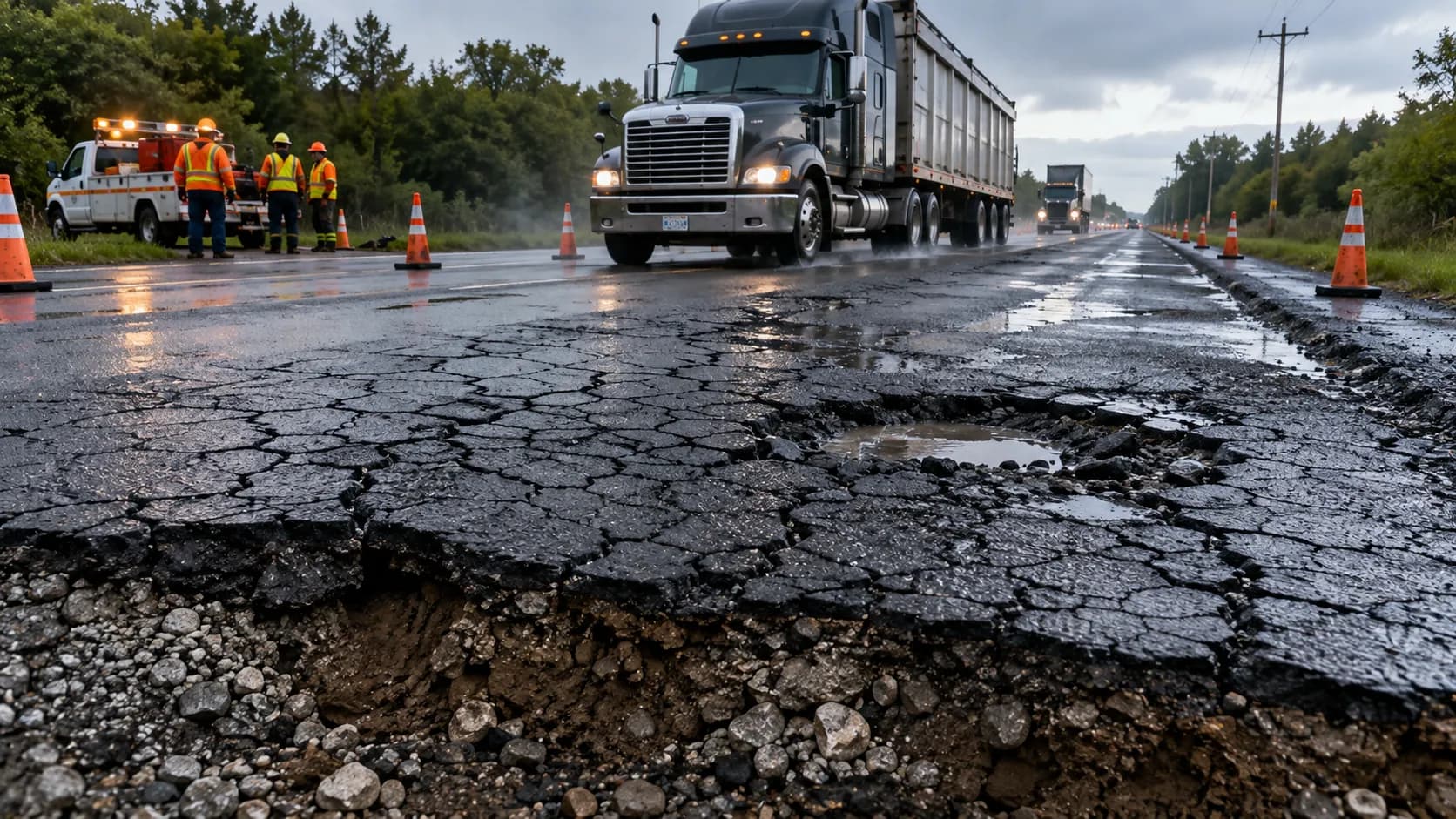
- Skipping or under-building the aggregate base — asphalt thickness alone can't compensate for an inadequate base; the two work together structurally
- Using residential specs for commercial or heavy-use areas — a driveway-grade 2-inch layer under regular truck traffic fails far faster than the same thickness under passenger cars
- Ignoring local climate — a thickness that works in a mild climate may underperform in a region with severe freeze-thaw cycling
- Treating thickness tolerance loosely — industry practice generally allows a tolerance of around a quarter inch from the specified thickness; falling meaningfully short of spec increases failure risk even if it looks fine at installation
These same principles apply when estimating asphalt materials for any paving project. Our cold mix bitumen guide covers how temporary repair materials differ from hot-mix structural asphalt — useful context when evaluating patching options for existing pavement failures.
Video: Asphalt Thickness Explained
Getting the thickness of an asphalt layer right is super important for making it strong. This video explains how the size of the stones inside the asphalt changes how thick the layer needs to be. It also shows why laying down a thicker layer keeps the asphalt hot longer, making it much easier to press down tightly, especially on cold days.
In Short
Asphalt thickness isn't one-size-fits-all — it scales directly with traffic weight, vehicle type, soil conditions, and climate. Residential driveways generally need 2 to 3 inches, commercial paving projects like parking lots need 3 to 4 inches, and heavy-duty areas handling trucks or equipment need 6 to 8 inches or more — always paired with an adequately thick aggregate base underneath.
Getting the thickness right from the start, rather than cutting corners on either the asphalt or the base beneath ,it is the difference between decades of reliable performance and a surface that needs costly repairs within a few years.
Frequently Asked Questions
How thick should asphalt be for a driveway?
Most residential driveways need 2 to 3 inches of compacted asphalt. If the driveway will regularly handle heavier vehicles like RVs or trucks, 3 to 4 inches is the safer choice.
How thick should asphalt be for a road?
It varies widely, from around 4 inches for local residential streets up to 12 inches for highways carrying heavy commercial traffic, depending on projected traffic loads and engineering design.
How thick should asphalt be for heavy equipment or trucks?
Areas regularly handling heavy trucks or equipment typically need 6 to 8 inches of asphalt, often over a thicker aggregate base than standard applications.
How thick should asphalt be for a parking lot?
Standard parking spaces generally need 3 inches, while drive lanes, entrances, and loading zones need 4 to 6 inches due to the additional stress from turning and braking traffic.
What happens if asphalt is too thin?
Thin asphalt can't distribute vehicle weight properly, leading to fatigue cracking. Once cracks form, water intrusion and continued traffic quickly turn them into potholes and larger structural failures.
Is the aggregate base as important as the asphalt thickness?
Yes. The base layer distributes load before it reaches the soil, and an inadequate base undermines even a properly thick asphalt layer above it.
Does climate affect how thick asphalt should be?
Yes. Regions with severe freeze-thaw cycles or extreme heat generally need thicker asphalt to handle the additional expansion, contraction, and stress those conditions place on the pavement.

Founder & Web Developer
Nabeel Awan is a web developer and the founder of BitumenCalcPro. His work focuses on web development and building practical online tools, with a strong interest in civil engineering, asphalt, bitumen, pavement construction, and construction technology.