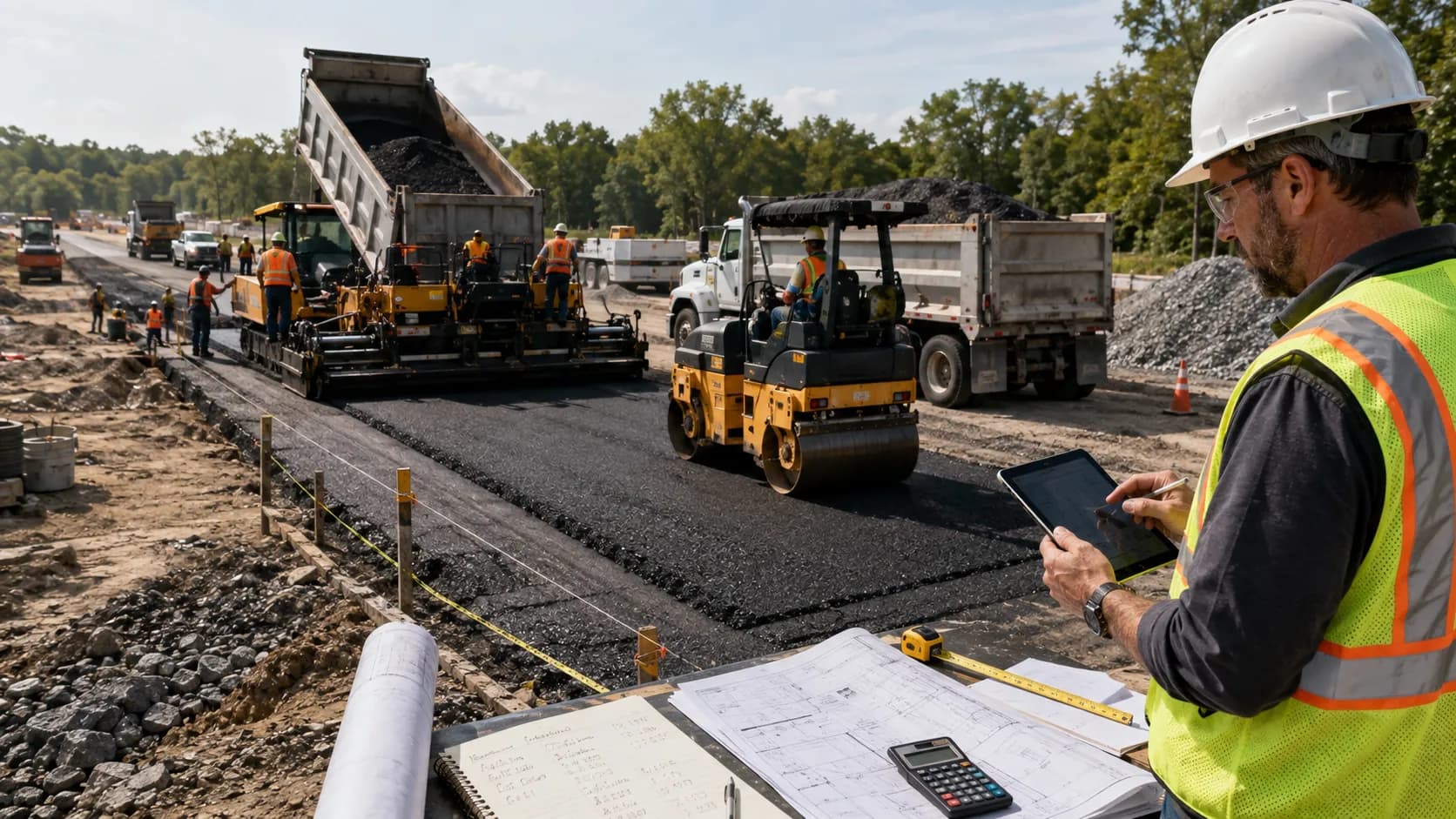
Quick Answer
The most common asphalt estimation mistakes are miscalculating area or thickness, using the wrong density value, forgetting compaction shrinkage, skipping waste allowance, and underestimating the aggregate base. A single error of just 10% in material estimates can translate into thousands of dollars in wasted asphalt, rushed reorders, or project delays.
A contractor once ordered 18 tonnes of asphalt for a car park. They needed 26. The mistake? A single wrong number in the area calculation — caught only after the crew was already on site. Asphalt estimation mistakes are rarely obvious until they're expensive.
This guide breaks down the 10 most common errors that inflate project costs or cause shortfalls, with direct fixes for each. Whether you're estimating a residential driveway or a commercial road, these are the mistakes worth knowing before the order goes in.
A Quick Terminology Note: Bitumen vs. Hot Mix Asphalt
Before getting into the mistakes themselves, one distinction trips up more estimates than it should. Bitumen is the black, petroleum-based binder — it typically makes up only around 5% of a finished asphalt mix by weight. Hot mix asphalt (HMA), sometimes just called "asphalt" or "blacktop," is the full paving material: bitumen binder combined with aggregate (stone, sand, gravel), which is what actually gets ordered by the ton and laid on a road or driveway.
This matters directly for estimating, because the two have very different densities. Liquid bitumen runs close to water's density, roughly 1.00–1.05 g/cm³. Compacted hot mix asphalt is much denser, typically around 145 lbs per cubic foot (roughly 2,320 kg/m³, or about 2.32 t/m³), since it's mostly aggregate by weight. Using a bitumen density figure to calculate an HMA tonnage order — or vice versa — produces a quantity that's off by a wide margin. Throughout this guide, "asphalt" refers to the finished paving mix unless stated otherwise.
Why Asphalt Estimation Mistakes Cost More Than They Look Like They Should
A miscalculated asphalt order rarely fails quietly. Order too little, and you're paying rush fees for a second delivery, or worse, laying two separate batches that don't bond properly at the seam. Order too much, and you're paying for material that gets wasted, plus disposal costs on top of it. Industry estimates suggest a 10% error in material calculations can translate into thousands of dollars in wasted asphalt or costly last-minute orders on a mid-sized project.
Hot mix asphalt makes this worse than most materials, since it has to be laid while still hot. There's no "we'll use the leftover next week" option — a shortfall means a rushed, expensive reorder mid-project, and a surplus means paying for asphalt that gets dumped. Running your numbers through a Asphalt Tonnage Calculator before ordering eliminates several of these risk points at once.
The 10 Most Common Asphalt Estimation Mistakes
#1Miscalculating Area or Volume
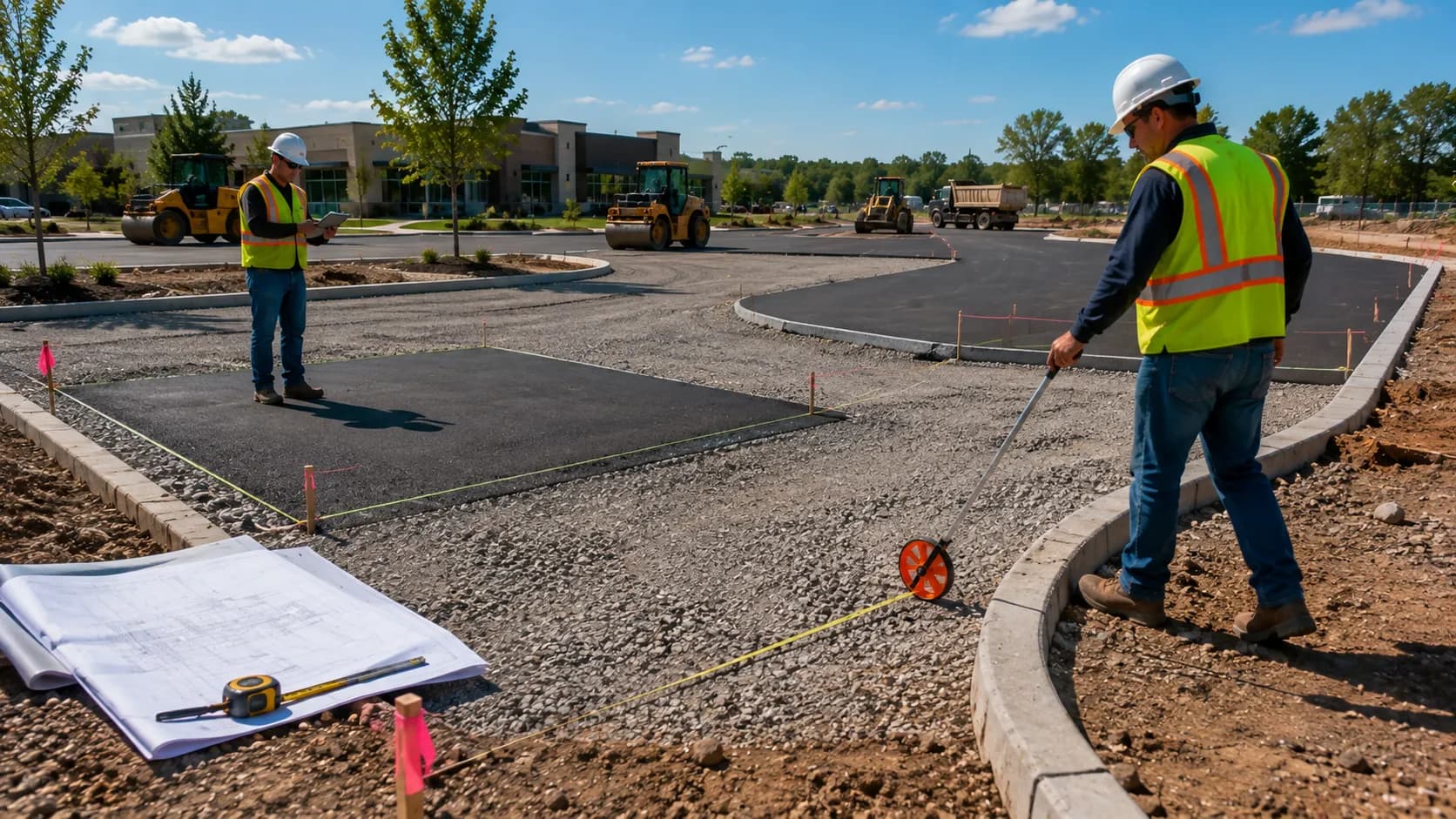
The most basic estimating error is also the most common: measuring the space incorrectly before ordering. Irregular shapes, curves, and multiple sections get rounded off or estimated by eye instead of measured properly, and that rounding compounds fast on a large project.
How to avoid it: Break irregular areas into simple shapes (rectangles, triangles) and calculate each separately, then add them together. Double-check every measurement before entering it into a calculation — a single mistyped dimension changes the tonnage required and throws off the entire budget.
#2Forgetting Unit Conversions
Asphalt calculations move between several units — inches to feet for thickness, square feet to cubic feet for volume, cubic feet to tons for ordering. Skipping or fumbling any one of these conversions is one of the most frequent errors in manual estimating, and it's an easy one to make when you're doing the math by hand or in a rushed spreadsheet.
How to avoid it: Convert every measurement to consistent units before calculating, and use a dedicated asphalt calculator rather than a manual spreadsheet where a single wrong formula or misplaced decimal can silently throw off the entire order.
#3Using the Wrong Density Value
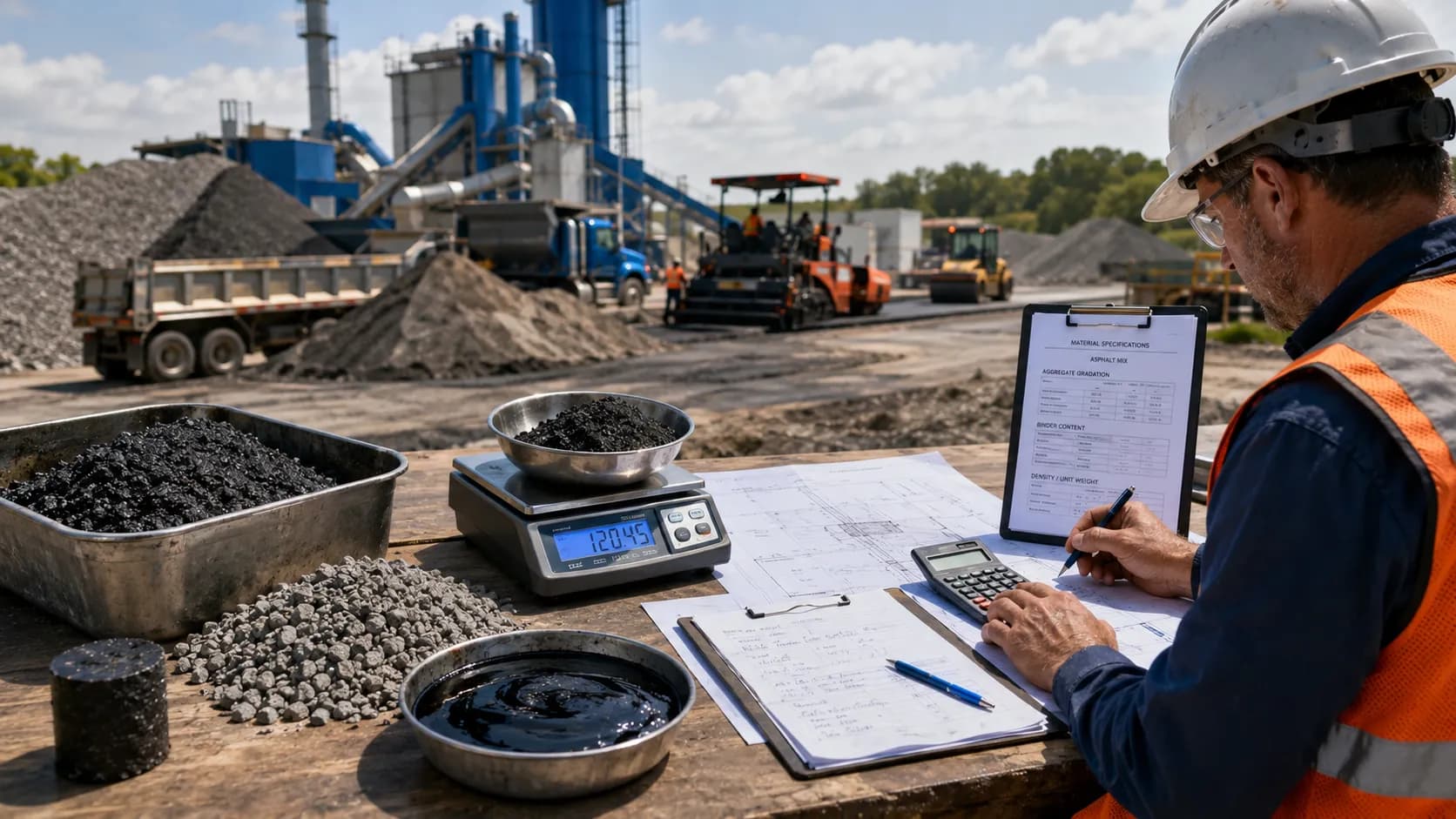
Asphalt density isn't one fixed number — it varies by mix type, aggregate gradation, and binder content. Estimators sometimes plug in a generic or rounded density figure instead of the actual value for the specific material being used, which throws off the weight-to-volume conversion that ordering depends on.
Standard dense-graded hot mix asphalt is typically planned at around 145 lbs per cubic foot, though actual mixes can range from about 140 to 155 lbs/ft³ depending on the aggregate and mix design — porous or open-graded mixes run lighter, around 125–135 lbs/ft³. This is a different figure entirely from liquid bitumen density (roughly 1.00–1.05 g/cm³, close to water), since HMA is mostly aggregate by weight. Confusing the two, or using a flat industry average when your supplier's actual mix design differs, is a quiet but common source of tonnage errors.
This matters because asphalt is typically priced and delivered by weight, but measured and specified by volume on the project side. Get the density wrong, and every ton ordered translates into the wrong actual coverage area. For bitumen-specific density figures by grade, see our Bitumen Density Chart; for the HMA tonnage conversion, confirm the mix density with your supplier rather than relying on a rounded, generic number.
How to avoid it: Use the mix-specific density from your supplier's mix design, not a generic average. Standard dense-graded HMA runs around 145 lbs/ft³ — but always verify with your actual source material.
#4Ignoring Compaction Shrinkage
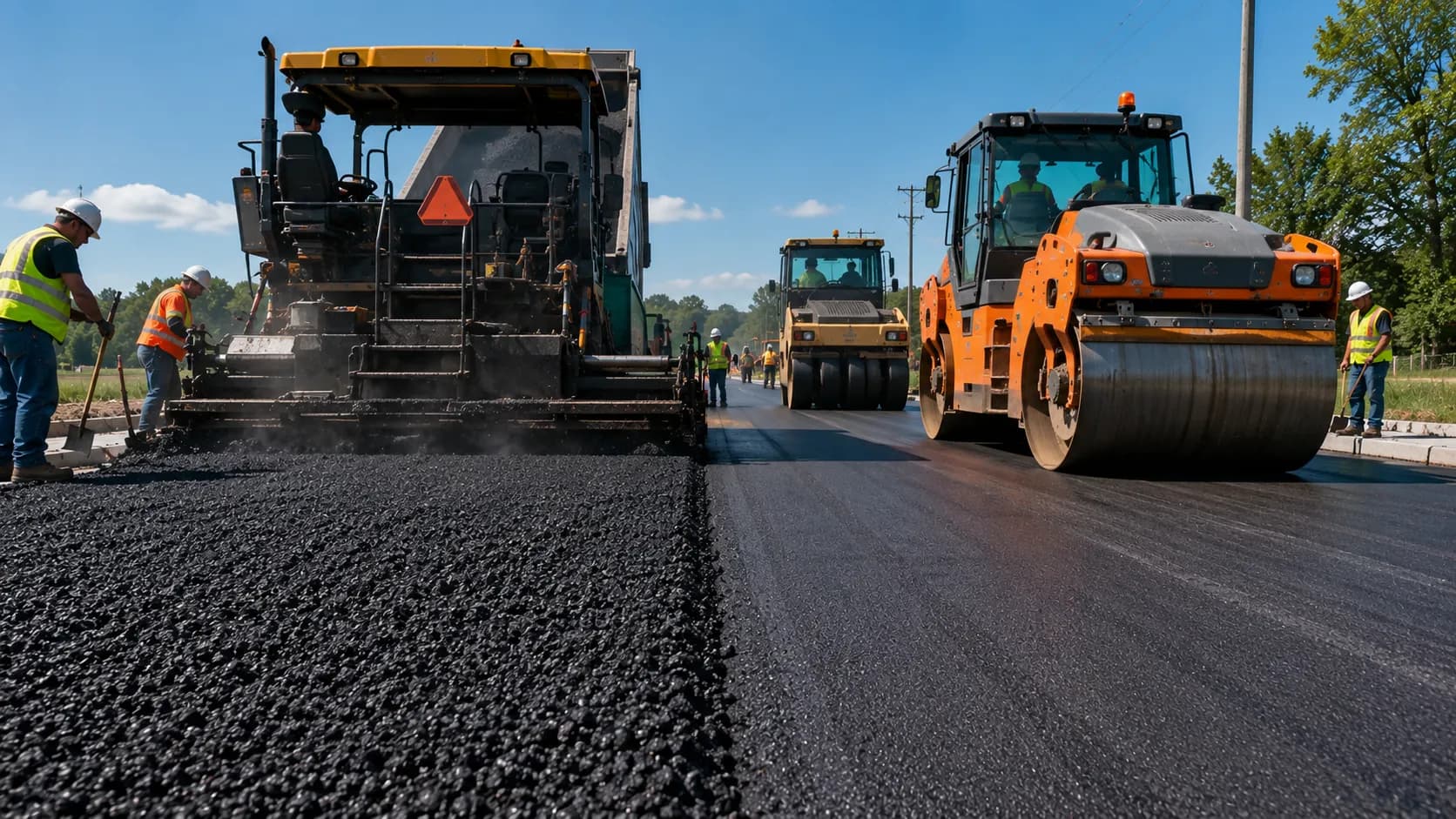
Loose asphalt takes up more space than compacted asphalt. As it gets rolled and compacted during installation, it typically loses somewhere around 10% of its volume. An estimate based on loose volume without accounting for this shrinkage looks sufficient on paper but comes up short once the material is actually compacted on site.
How to avoid it: Factor in a compaction adjustment when calculating how much loose material to order for a given finished thickness, rather than assuming loose volume and finished volume are the same thing.
#5Skipping Waste and Contingency Allowance
Even a well-measured project loses some material to spillage, trimming at edges, equipment residue, and minor rework. Estimating exactly the amount needed with zero buffer sounds efficient, but it routinely leaves a project short by the time the job is actually finished.
How to avoid it: Add roughly 5% waste allowance for large, simple, rectangular projects, and closer to 10% for smaller jobs or areas with curves, multiple sections, or an uneven subbase — irregular shapes and small orders lose proportionally more material to edge trimming and joint overlap than large, simple ones do.
#6Underestimating the Aggregate Base
It's easy to focus estimating effort entirely on the asphalt layer and treat the base beneath it as an afterthought. But the aggregate base is a separate material calculation with its own thickness requirement, and skimping on it — in the estimate or the actual build — undermines the asphalt layer above it regardless of how accurately that layer was calculated. For typical base thickness ranges by application, see our complete asphalt thickness guide.
How to avoid it: Calculate the base as its own line item with its own thickness and volume, not as a rough add-on to the asphalt total.
#7Not Accounting for Existing Surface Conditions
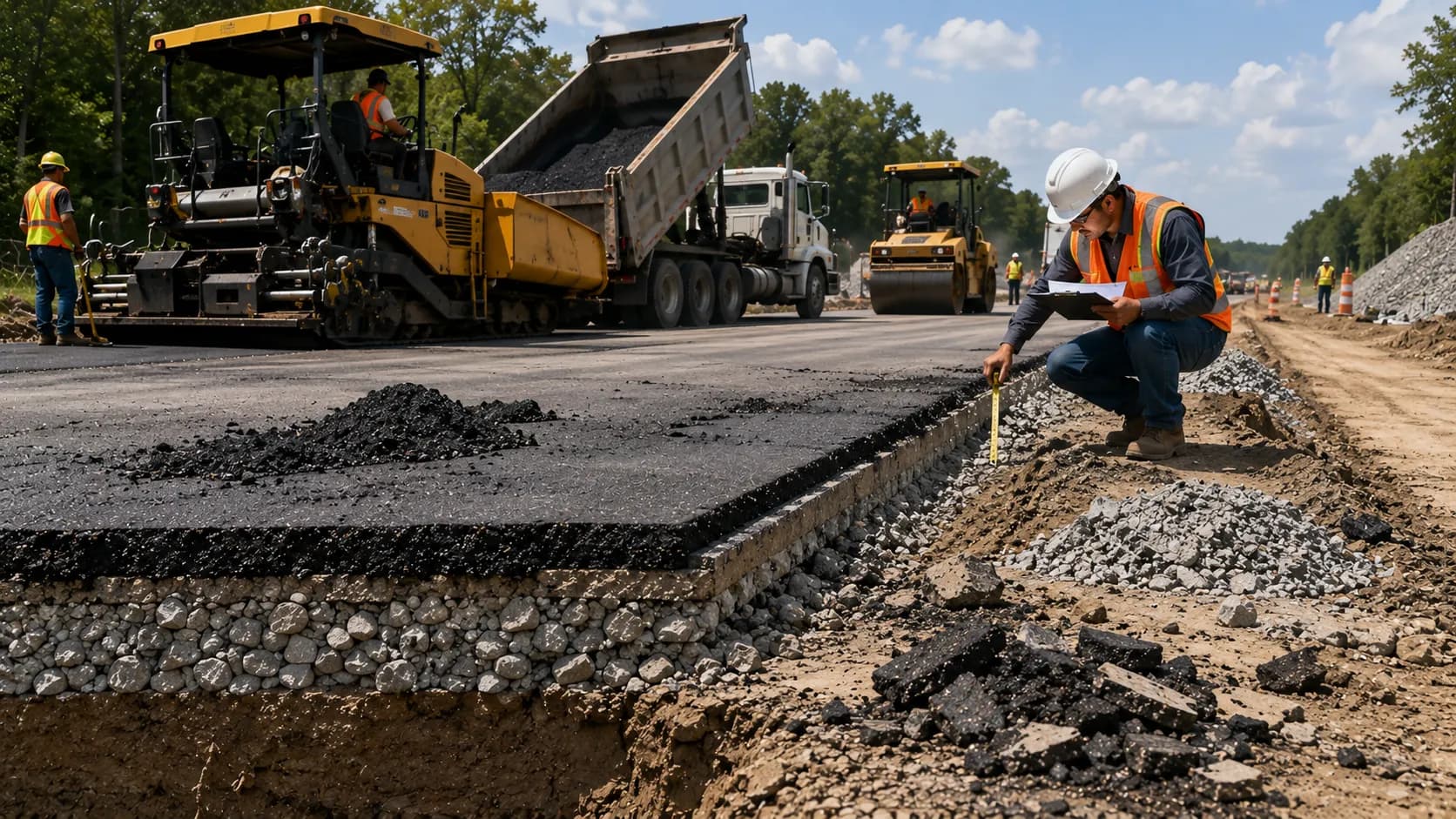
Paving over an existing, damaged, or uneven surface often needs more material than paving onto a flat, prepared base, since low spots and unevenness need extra asphalt to level out. Estimators who calculate purely from flat dimensions, without a site evaluation, tend to underestimate the material needed to actually finish the surface properly.
How to avoid it: Inspect the base condition before finalizing an estimate. A damaged or uneven substrate, or a softer gravel base compared to a solid one, typically calls for a thicker asphalt layer to achieve a smooth, durable finish.
#8Overlooking Secondary Materials
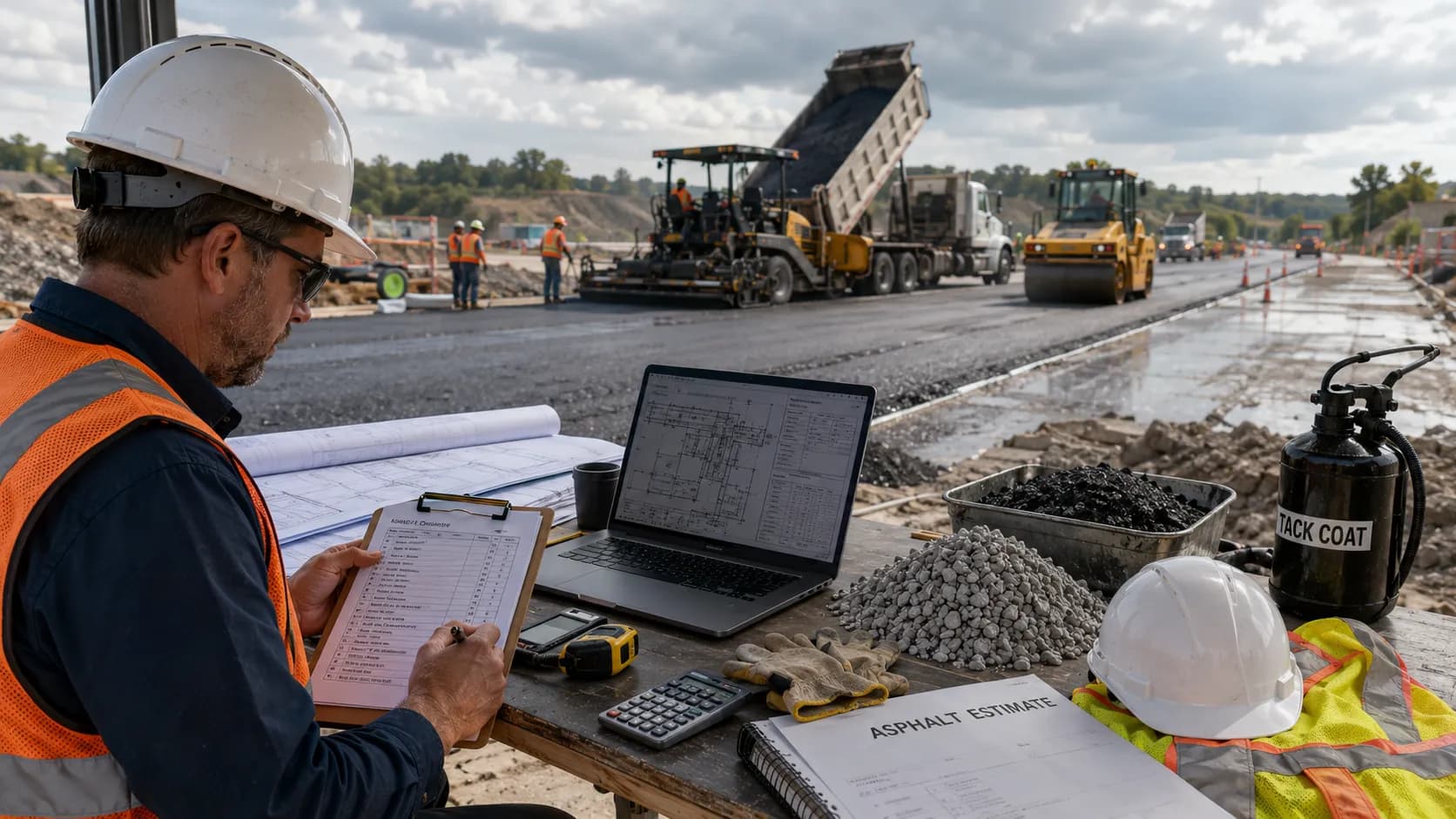
An estimate that only accounts for the asphalt itself misses real costs. Tack coat between layers, edge gravel, base stabilization material, and similar secondary items are easy to forget when the estimating focus stays narrowly on the main asphalt tonnage.
How to avoid it: Build a complete material list before pricing the job, not just the headline asphalt quantity — tack coat and base materials are small individual costs that add up across a full project.
#9Inconsistent Pricing and Manual Calculation Errors
On larger projects with multiple estimators, it's common for different people to price the same job differently — one using outdated material costs, another forgetting equipment mobilization, a third using a labor rate that hasn't been current in years. Manual spreadsheet calculations compound this risk, since a single misplaced decimal or an outdated formula can turn a comfortable margin into a loss without anyone noticing until the job is already underway.
How to avoid it: Standardize pricing inputs across everyone doing estimates, and use a calculation tool rather than a manually maintained spreadsheet wherever possible, so the math itself isn't a source of error.
#10No Contingency for Weather or Site Surprises
Fixed estimates that don't account for weather delays, unexpected soil conditions, or utility conflicts discovered mid-project tend to blow their budget the moment anything doesn't go exactly to plan. These aren't rare edge cases — they're routine enough on paving projects that skipping a contingency line is itself the mistake.
How to avoid it: Build a reasonable contingency into the estimate up front rather than treating every site surprise as an emergency change order later.
Quick Reference: Estimation Mistakes and Their Fixes
| Mistake | Consequence | Practical Fix |
|---|---|---|
| Miscalculated area | Wrong tonnage ordered | Break irregular areas into simple geometric shapes; double-check field measurements |
| Unit conversion errors | Silent, compounding calculation errors | Convert all dimensions to consistent units before calculating; use a dedicated calculator |
| Wrong density value | Inaccurate weight-to-volume conversion | Use mix-specific density (e.g., ~145 lbs/ft³ for standard HMA) instead of a generic average |
| Ignoring compaction shrinkage | Under-ordering by roughly 10% | Adjust loose volume calculation to account for roller compaction |
| Skipping waste allowance | Material shortfall mid-job | Add roughly 5% for large, simple jobs; 10% for smaller or irregular ones |
| Underestimating the base | Premature pavement failure | Estimate the aggregate base as its own line item with its own thickness |
| Ignoring existing surface condition | Underestimating material for uneven areas | Inspect the site before finalizing the estimate |
| Forgetting secondary materials | Incomplete cost picture | List tack coat, edge gravel, and base materials separately |
| Inconsistent manual pricing | Budget errors, lost margin | Standardize pricing inputs; use calculation tools over spreadsheets |
| No weather/site contingency | Budget overruns from routine surprises | Build a reasonable contingency line into the estimate |
How to Estimate Asphalt More Accurately
The Asphalt Institute and industry best practice both point to the same fundamentals — accuracy comes from discipline in each step of the process, not from heroic math at the end.
Measure carefully — break the area into simple shapes and verify every dimension before calculating
Confirm the correct density for the specific bitumen grade or asphalt mix being used
Calculate loose volume, then adjust for compaction shrinkage to determine how much material to actually order
Add a standard waste allowance on top of the core calculation
Calculate the aggregate base separately, with its own thickness and volume
Inspect the site before finalizing figures, not just measuring from a plan or satellite image
List every material, not just the headline asphalt tonnage — tack coat, base, edging
Use a dedicated calculator rather than a manual spreadsheet to reduce the risk of formula or conversion errors
Running these numbers through a proper Bitumen Calculator Free instead of a manual spreadsheet removes several of the most common error points at once: density, unit conversion, and volume calculation all happen consistently rather than depending on whoever's doing the math that day. The AASHTO pavement design standards also provide structured frameworks for material estimation that many contractors reference on formal projects.
To Sum Things Up
Most asphalt estimation mistakes come down to a handful of repeatable errors — wrong measurements, skipped unit conversions, an incorrect density figure, ignored compaction shrinkage, and no allowance for waste or the aggregate base. None of these are complicated to fix individually, but missing even one can turn a well-planned project into an expensive mid-job scramble.
Building a complete, careful estimate up front — and using a proper calculator instead of manual math — is the cheapest insurance a paving project can have. Explore more paving guides in our asphalt and bitumen knowledge hub, or jump straight to the calculator to run your own numbers.
Frequently Asked Questions
How much can an asphalt estimation mistake cost?
Even a 10% error in material estimates can translate into thousands of dollars in wasted asphalt, rush reorder fees, or project delays, depending on project size.
Why does compaction matter for asphalt estimating?
Loose asphalt takes up more volume than it does once compacted, typically shrinking by around 10% during rolling. Estimates based only on loose volume without this adjustment tend to fall short.
What's the most common asphalt calculation mistake?
Unit conversion errors — mixing up inches and feet, or cubic feet and tons — are among the most frequent, since asphalt calculations require moving through several different units before arriving at a final order quantity.
Is bitumen the same as asphalt for estimating purposes?
No, and confusing the two is a real source of error. Bitumen is the binder alone, with a density close to water (~1.00–1.05 g/cm³). Hot mix asphalt is the full paving mix: bitumen plus aggregate with a much higher density, typically around 145 lbs/ft³. Use the correct figure for whichever material you're actually ordering.
Should I include a waste allowance in my asphalt estimate?
Yes. Spillage, trimming, and minor job-site loss are normal on almost every project. A common guideline is around 5% for large, simple, rectangular jobs and closer to 10% for smaller or more complex ones.
Does the aggregate base need its own estimate?
Yes. The base is a separate material with its own thickness and volume requirements, and it's commonly underestimated even when the asphalt calculation itself is accurate.
Is it better to use a calculator or manual spreadsheet for asphalt estimating?
A dedicated calculator generally reduces errors compared to manual spreadsheets, since it standardizes unit conversions and density values instead of relying on formulas that can be mistyped or become outdated.

Founder & Web Developer
Nabeel Awan is a web developer and the founder of BitumenCalcPro. His work focuses on web development and building practical online tools, with a strong interest in civil engineering, asphalt, bitumen, pavement construction, and construction technology.