Quick Answer
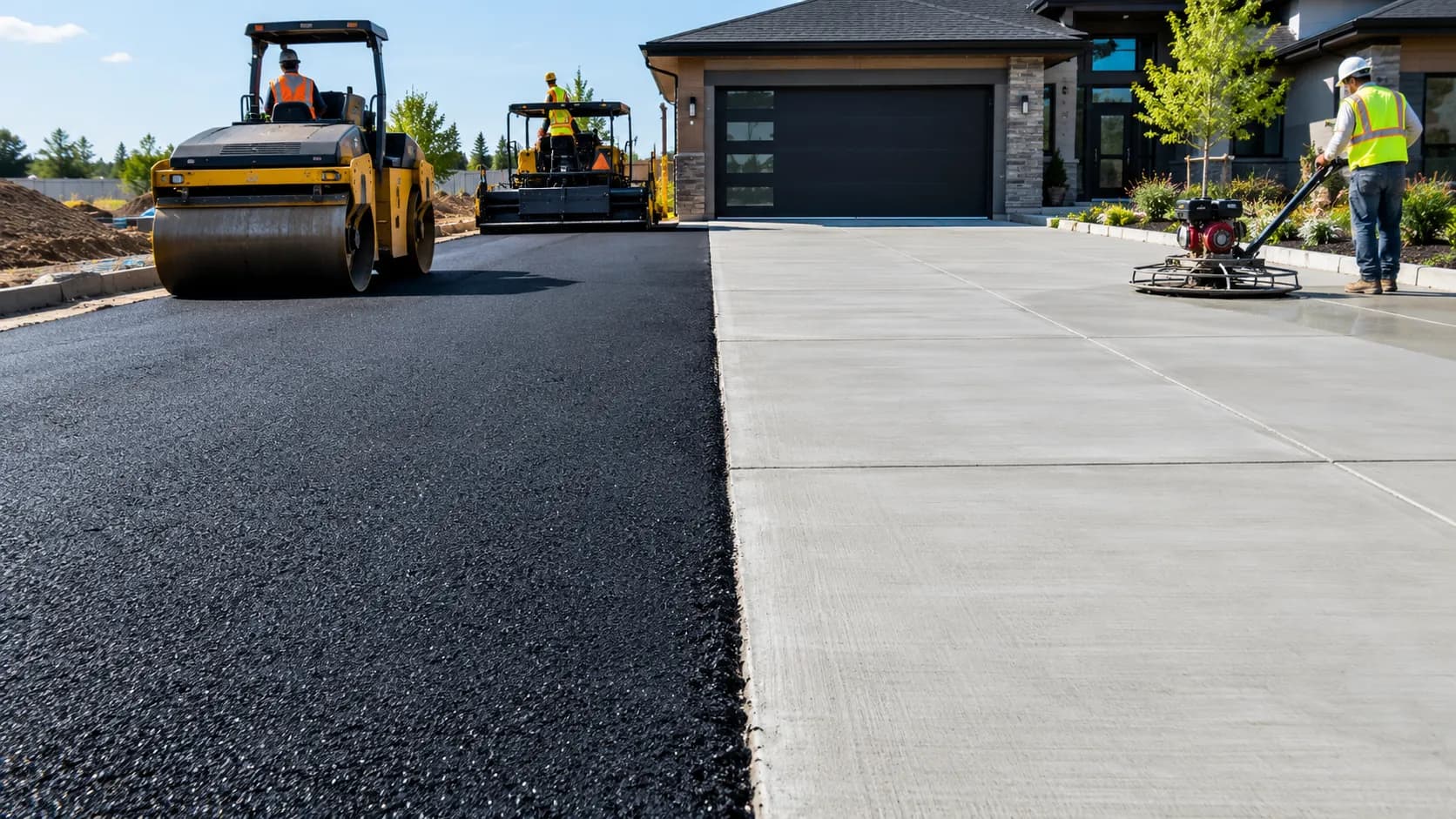
Asphalt costs less upfront (about $3 to $15 per square foot) and installs faster, but it lasts 15 to 20 years and needs sealcoating every 2 to 5 years. Concrete costs more upfront (about $6 to $20 per square foot), lasts 25 to 40 years, and needs far less maintenance. Asphalt handles cold climates and freeze-thaw cycles better. Concrete holds up better in extreme heat. The right choice depends on your budget, climate, and how long you plan to keep the surface.
Asphalt vs concrete comes down to a trade: less money now or less money later. Asphalt wins on upfront cost and installation speed. Concrete wins on lifespan and long-term maintenance. Neither material is better in every case. The right pick depends on your climate, your budget timeline, and what the surface needs to handle.
This guide breaks down the real differences: cost, durability, climate performance, maintenance, and how each material behaves on a driveway, road, or parking lot. If you're budgeting a bitumen driveway project or planning quantities for any paving job, our free Bitumen Calculator can help you estimate material quantities and costs before committing to a quote.
What Are Asphalt and Concrete Made Of
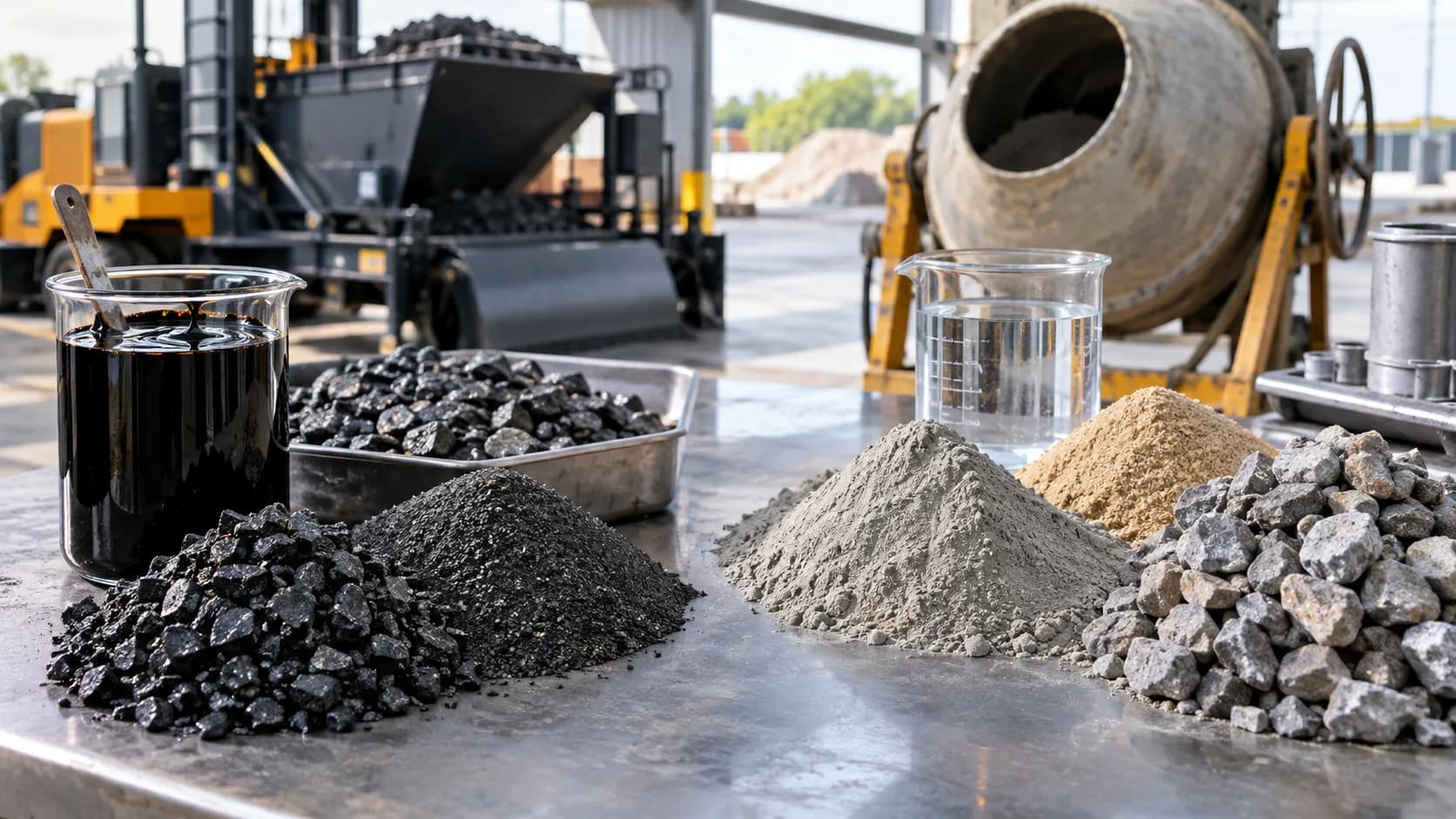
Asphalt is a mix of crushed stone, sand, and bitumen — a petroleum-based binder that holds the aggregate together. It's laid hot, usually around 300°F, then compacted with rollers before it cools into a solid, flexible surface. Understanding the role of bitumen as an asphalt binder clarifies why the two paving materials perform so differently — bitumen's thermoplastic properties are the root of asphalt's flexibility advantage.
Concrete is a mix of cement, water, sand, and coarse aggregate. Cement reacts with water in a chemical process called hydration, which hardens the mix into a rigid slab. Concrete takes about 28 days to reach full design strength, though it can handle light foot traffic within a week.
The core difference starts here. Asphalt stays somewhat flexible after it sets. Concrete becomes rigid. That single property drives most of the performance differences covered below.
Cost Comparison
Asphalt is cheaper to install in almost every case. Reported ranges vary by region and project size, but asphalt typically runs $3 to $15 per square foot installed, while concrete runs $6 to $20 per square foot. For a 600-square-foot driveway, that puts asphalt around $1,800 to $9,000 and concrete around $3,600 to $12,000.
The upfront gap closes over time. Asphalt needs sealcoating every 2 to 5 years at roughly $0.15 to $0.45 per square foot, plus periodic crack repairs. Concrete needs occasional degreasing and joint sealing, but nothing on that recurring schedule. Several cost studies that track 30-year total ownership costs — including sealcoating, repairs, and eventual replacement — find the two materials land close to each other, or concrete comes out slightly ahead, once you factor in that a concrete surface often outlasts two full asphalt replacements.
Bottom line:Asphalt wins if you need the lower number today. Concrete wins if you're comparing total cost across 25 to 30 years.
Lifespan and Durability
Concrete lasts longer. A well-installed concrete surface typically holds up 25 to 40 years, and some sources report 50 years with strict maintenance. Asphalt typically lasts 15 to 20 years before it needs full replacement, though consistent sealcoating and prompt crack repair can push that toward the higher end.
Compressive strength tells part of the story. Standard concrete mixes reach 3,000 to 4,000 PSI, and highway-grade mixes go higher — 4,000 to 6,000 PSI — which is why concrete handles heavy, repeated loads like truck traffic and airport runways well. Asphalt's strength comes from a different property: flexibility. It bends slightly under load and ground movement instead of cracking, which matters more on surfaces exposed to shifting soil or freeze-thaw cycles. This same structural reasoning informs decisions about asphalt pavement thickness and layer design.
Concrete's rigidity is also its weak point. Once a concrete slab cracks, the crack doesn't self-heal the way an asphalt surface can be resealed. Asphalt develops surface wear and smaller cracks over time, but repairs are usually simpler and cheaper per square foot than a concrete slab replacement.
Climate and Weather Performance
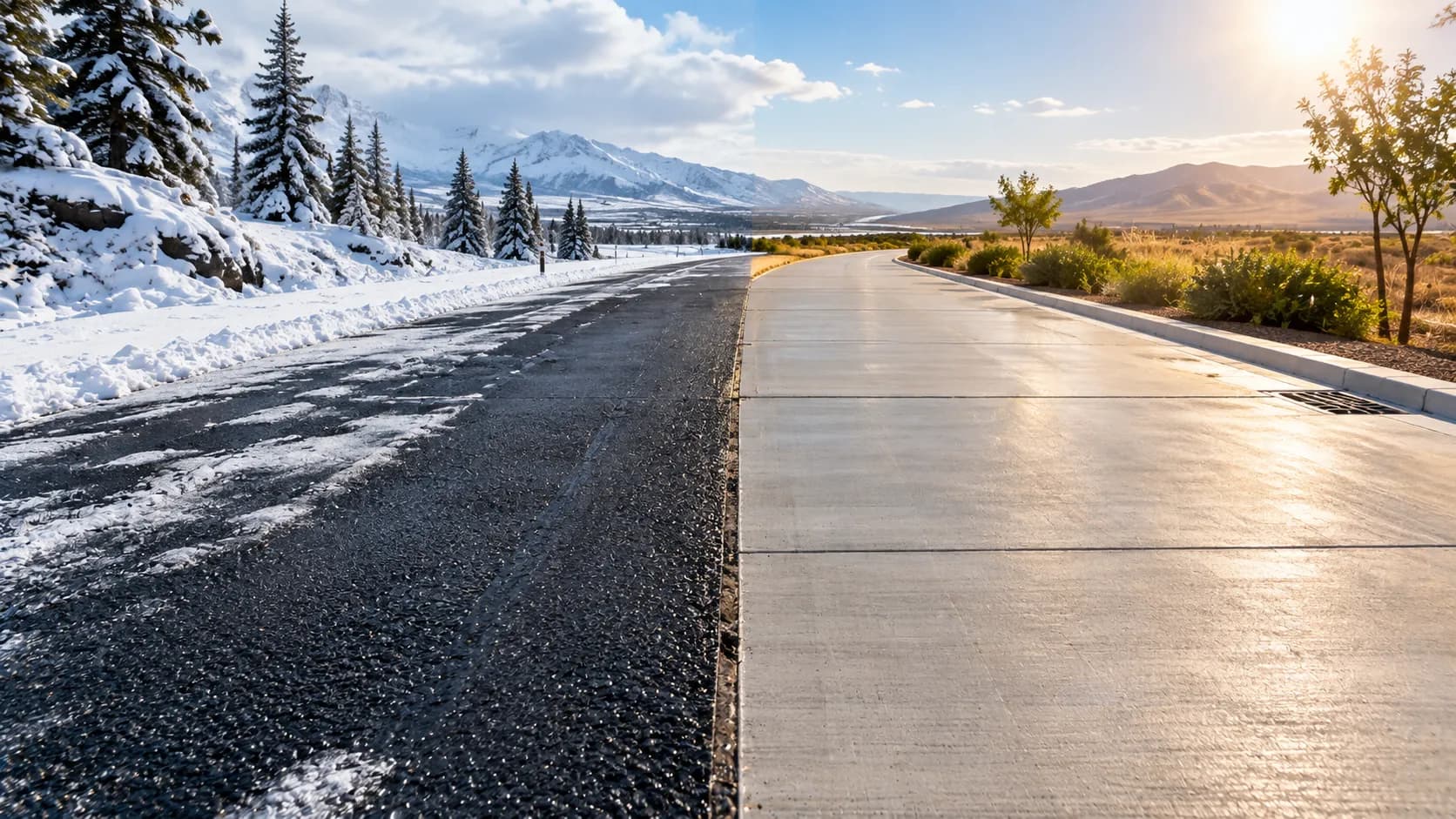
Climate is often the deciding factor, and the two materials respond to weather in opposite ways.
Cold climates favour asphalt.Its flexibility lets it expand and contract with freeze-thaw cycles without cracking as readily as rigid concrete. Asphalt's dark surface also absorbs more heat from sunlight, which helps snow and ice melt faster. Road salt, heavily used in northern climates, is harder on concrete than asphalt, since salt penetrates concrete's pores and speeds up surface scaling and deterioration.
Hot climates favour concrete. Concrete resists softening and rutting under sustained high heat better than asphalt does. Asphalt can soften in extreme summer temperatures, leading to surface deformation under heavy or slow-moving traffic. This is part of why cities in hot regions have shifted toward more concrete paving — partly to reduce the urban heat island effect that dark asphalt surfaces contribute to.
Installation timing matters too. Concrete needs temperatures within a specific range during its 24 to 48-hour curing window. Pouring concrete below 50°F slows the hydration process and can reduce final compressive strength if not managed with insulation or heated water. Asphalt installs across a wider temperature range and cures faster, which is part of why cold-climate contractors often prefer it for winter or shoulder-season work.
| Factor | Asphalt | Concrete |
|---|---|---|
| Cold weather / freeze-thaw | Handles well — flexes with movement | Prone to cracking and salt damage |
| Extreme heat | Can soften and rut | Holds shape well |
| Installation temperature range | Wider | Narrower — needs 50°F+ typically |
| Snow and ice melt | Faster, due to dark surface | Slower |
Maintenance Requirements
Asphalt needs more frequent, smaller maintenance tasks. Sealcoating every 2 to 3 years protects the surface from UV exposure, motor oil degradation (learn how to clean oil spills off asphalt), and water penetration. Small cracks need filling before they widen and let water into the base layer. Skipping this schedule shortens asphalt's lifespan noticeably.
Concrete needs less frequent attention but different types of care. Occasional degreasing removes oil and grease stains, since these soak into concrete's more porous surface. Joint sealing prevents water infiltration at expansion joints. Concrete doesn't need the recurring sealcoat cycle asphalt does, which is the main reason its long-term maintenance cost runs lower.
Repair Costs
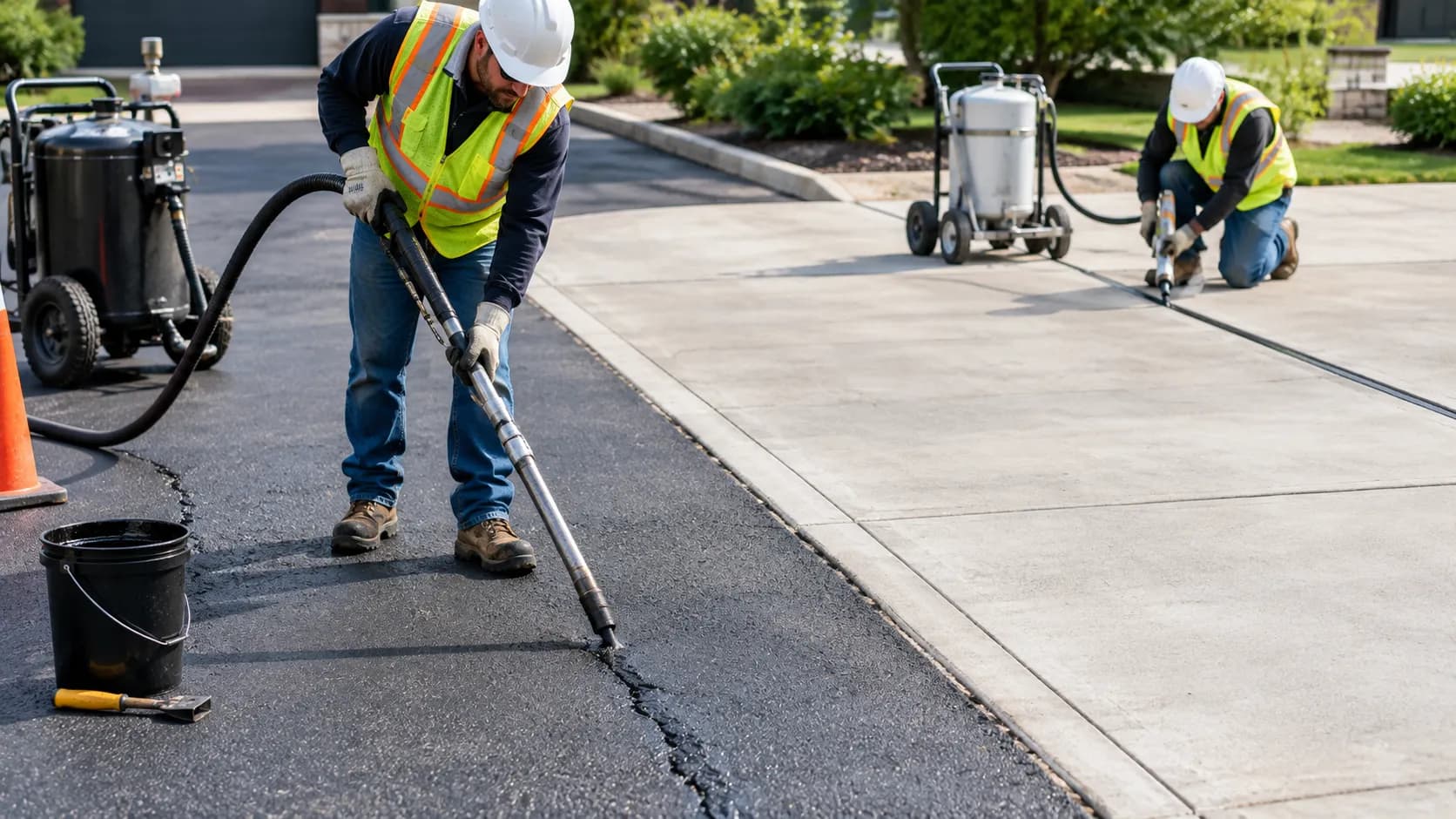
Asphalt repairs tend to be cheaper and faster per instance. A small crack costs roughly $1 to $3 per linear foot to fill. Larger issues like potholes or minor sinking run $2 to $5 per square foot. Asphalt's flexibility also means minor surface damage rarely requires a full section replacement.
Concrete repairs cost more per instance — roughly $3 to $25 per square footdepending on severity — and a cracked slab section often needs full removal and replacement rather than a surface patch, since concrete doesn't compact or reseal the way asphalt does. Unforeseen repair scope is also one of the most common asphalt and paving estimation mistakes that push project budgets over before work even starts.
Environmental Considerations
Asphalt has a real recycling advantage. Roughly 95% of removed asphalt gets reused in new paving projects, since old asphalt can be milled up and reprocessed. This cuts down on both landfill waste and the need for fresh raw material. The Federal Highway Administration reports asphalt is North America's most recycled material by tonnage.
Concrete's environmental case rests more on longevity than recyclability. A surface that lasts 30 to 40 years — versus asphalt's 15 to 20 — means fewer total replacement cycles and less material consumed over a property's lifetime, even though concrete production (particularly cement manufacturing) carries a heavier carbon footprint per ton than asphalt production. Neither material has a clear environmental win across every scenario. It depends on whether you weight recyclability or lifespan more heavily.
Asphalt vs Concrete for Roads and Highways
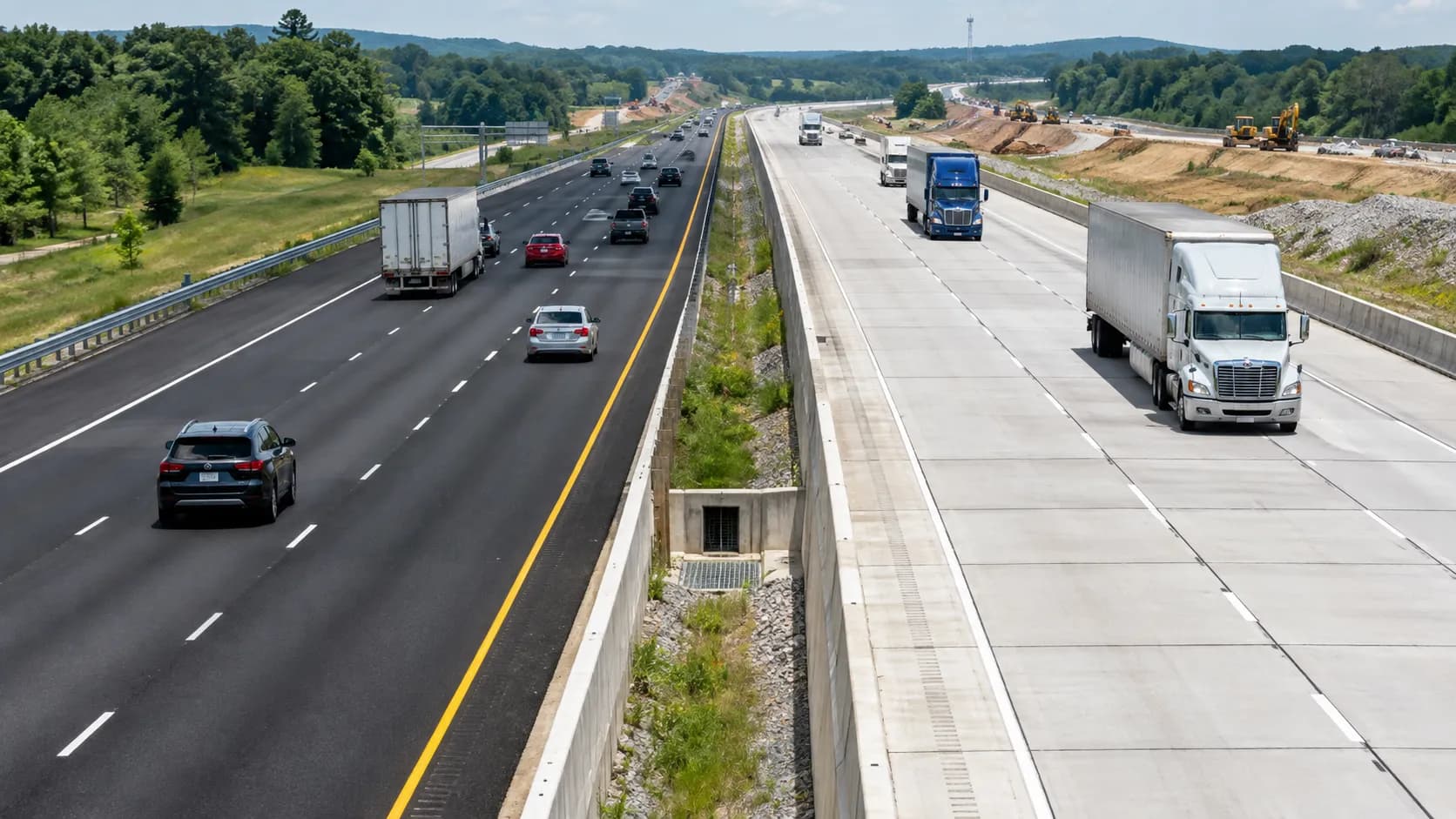
At the road and highway scale, the same trade-offs apply, with a few added factors.
Asphalt is the more common choice for standard roads, largely due to lower upfront cost and faster installation — fewer lane closures and shorter curing windows matter more on high-traffic routes. Its flexibility also handles the ground movement that comes with a road's much longer, continuous surface better than a rigid material would. These are some of the same considerations that influence decisions around cold mix versus hot mix asphalt for road maintenance.
Concrete shows up more often on highways designed for very heavy, sustained truck traffic, airport runways, and stretches where long-term durability outweighs the higher installation cost and longer closure time needed for curing. Some transportation studies suggest concrete roads can last roughly twice as long as asphalt roads under comparable heavy-traffic conditions, though the exact multiplier varies by region, traffic load, and climate.
Which Should You Choose?
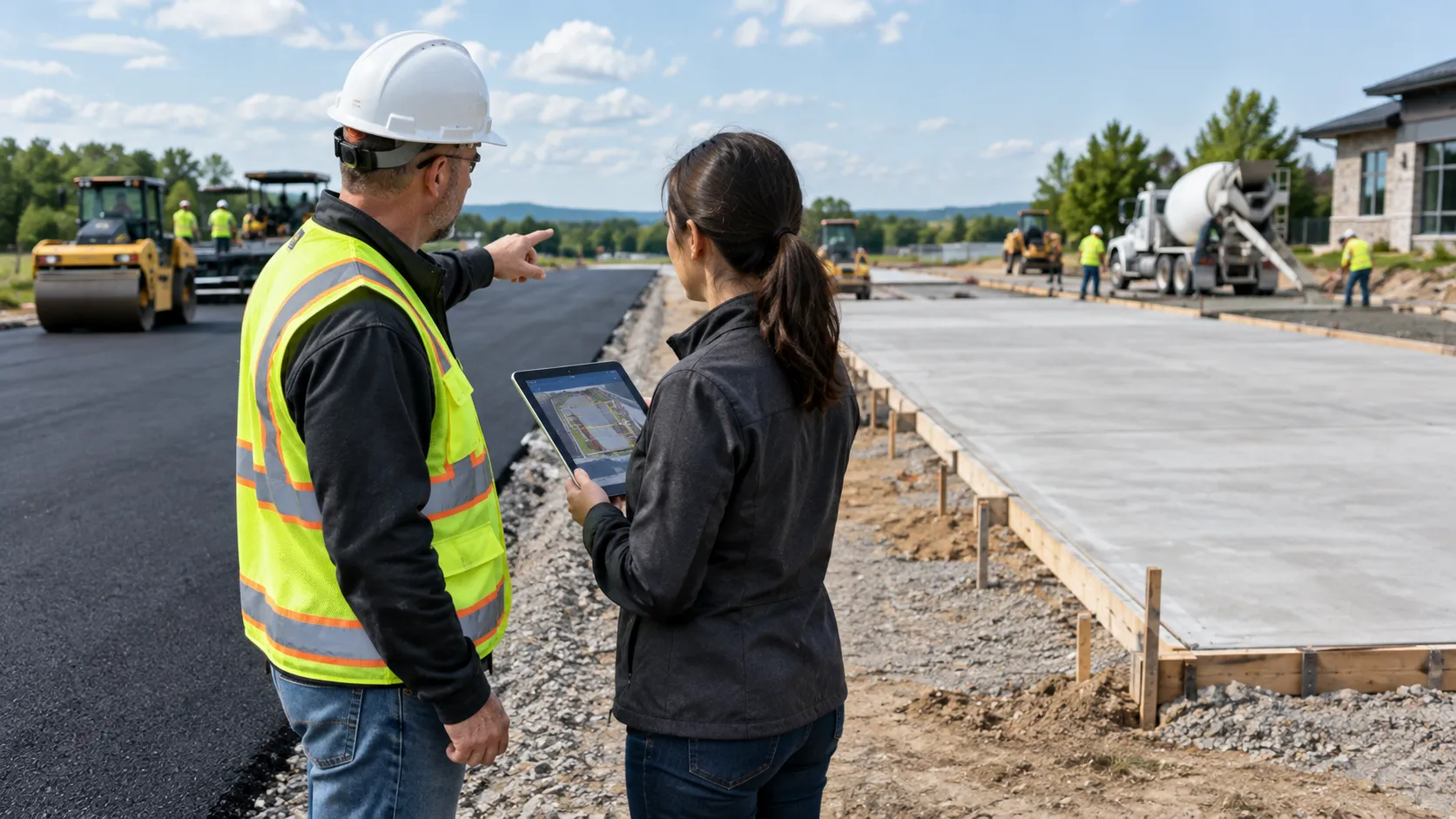
A few practical questions narrow this down fast:
Is your budget tighter right now than it will be later?
Asphalt's lower upfront cost makes sense if you need to spread expenses over time rather than pay more today for less maintenance later.
Do you live somewhere with harsh winters and heavy salt use?
Asphalt's flexibility and better cold-weather performance usually make it the safer pick.
Do you live somewhere with intense, sustained summer heat?
Concrete's heat resistance avoids the softening and rutting asphalt can experience.
How long do you plan to keep the property?
If you're staying 20-plus years, concrete's longer lifespan and lower maintenance frequency often make it the better long-term value, even with the higher installation cost.
Do you want a lower-maintenance surface, even if it costs more upfront?
Concrete is the clear choice here.
Conclusion
Asphalt and concrete solve the same problem in different ways. Asphalt costs less to install, cures faster, and flexes with cold weather and ground movement — but it needs regular sealcoating and typically lasts 15 to 20 years. Concrete costs more upfront and takes longer to cure, but it resists heat well, needs far less recurring maintenance, and typically lasts 25 to 40 years. Climate, budget, timeline, and how long you plan to keep the surface should drive the decision more than upfront price alone.
To understand the full properties of the bitumen binder that gives asphalt its flexibility — including how its petroleum chemistry affects climate response and durability — our complete bitumen guide covers all of that in detail.
Planning a paving project? Use our free Bitumen Calculator Online to estimate mix weight, binder content, and aggregate requirements accurately — before you commit to a contractor quote.
Frequently Asked Questions
Is asphalt or concrete cheaper?
Asphalt is cheaper to install, typically $3 to $15 per square foot versus concrete's $6 to $20 per square foot. Over 25 to 30 years, including maintenance and eventual replacement, the total cost often evens out or slightly favors concrete.
Which lasts longer, asphalt or concrete?
Concrete lasts longer. A well-maintained concrete surface typically holds up 25 to 40 years, compared to 15 to 20 years for asphalt.
Is asphalt or concrete better for cold climates?
Asphalt generally performs better in cold climates. Its flexibility handles freeze-thaw cycles and ground movement better than rigid concrete, which is also more vulnerable to road salt damage.
Is asphalt or concrete better for hot climates?
Concrete typically holds up better in extreme heat, since asphalt can soften and rut under sustained high temperatures and heavy traffic.
How often does asphalt need sealcoating?
Every 2 to 5 years, depending on traffic, climate, and sun exposure. Skipping this maintenance shortens asphalt's lifespan.
Does concrete need sealcoating like asphalt does?
No. Concrete needs occasional degreasing and joint sealing instead, which is less frequent and generally less expensive over time than asphalt's sealcoating cycle.
Which paving material is more environmentally friendly?
It depends on what you weigh more heavily. Asphalt is about 95% recyclable, but concrete's much longer lifespan means fewer total replacement cycles over time.

Founder & Web Developer
Nabeel Awan is a web developer and the founder of BitumenCalcPro. His work focuses on web development and building practical online tools, with a strong interest in civil engineering, asphalt, bitumen, pavement construction, and construction technology.