Quick Answer
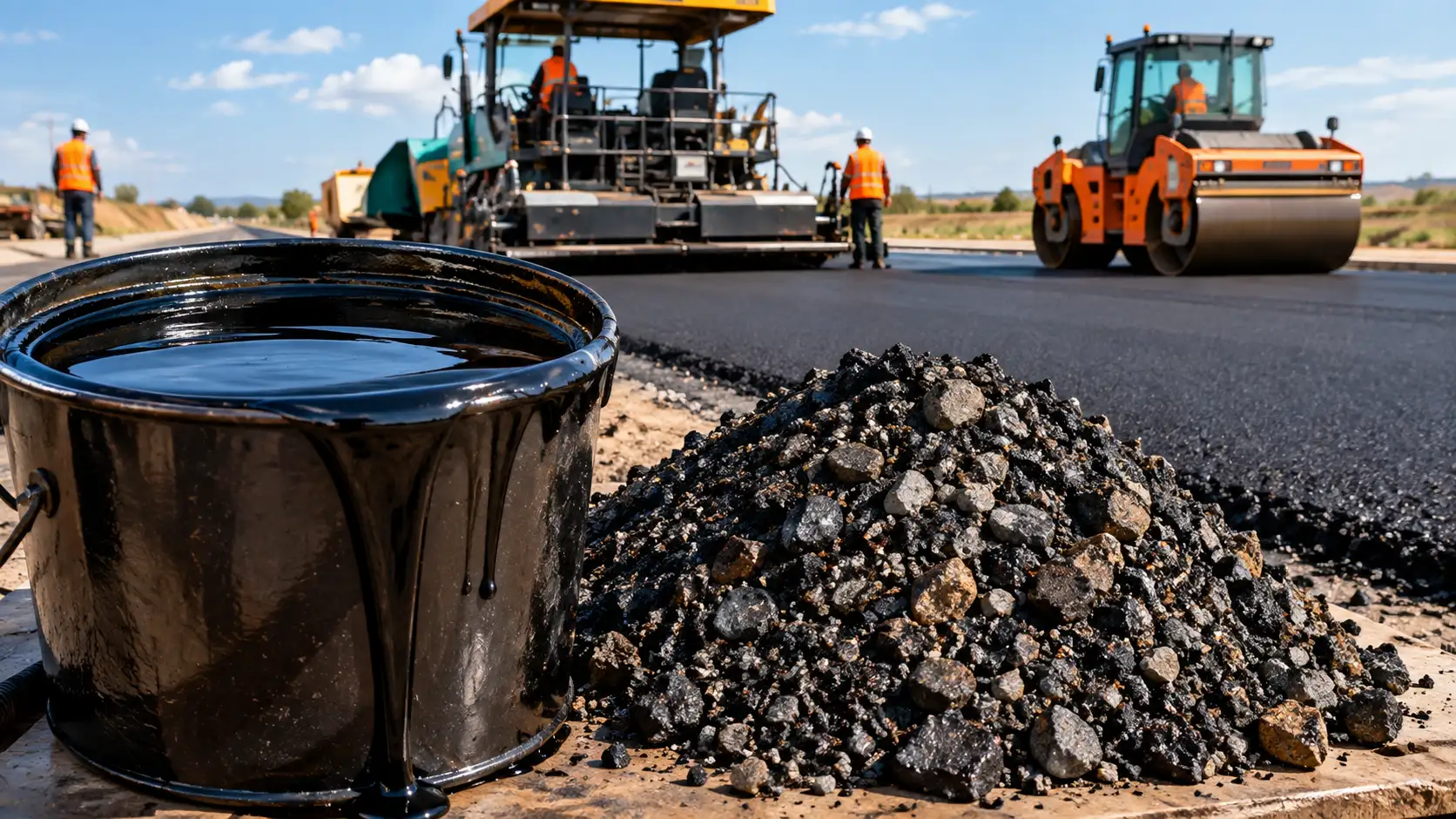
Asphalt vs bitumen is a question of mix versus binder. Bitumen is the thick, black, sticky residue left after refining crude oil. Asphalt is the road surface made with it: about 95% stone, sand and filler, bound by roughly 5% bitumen. Bitumen can be sprayed as a thin seal on its own. Asphalt is blended hot at a plant and compacted in thick layers. In the US, “asphalt” often names the binder too.
A supplier quotes you 20 tonnes of bitumen. Your contractor talks about laying 20 tonnes of asphalt. Those are very different orders — mixing them up can leave a job short of material or a budget off by a wide margin.
The asphalt vs bitumen confusion is common because the words swap meaning between countries. This guide explains what each material is, how each is made, where each belongs, and how to calculate quantities. You'll also find a worked example, two comparison tables, and answers to the questions people ask most.
If you want to go deeper on the binder itself first, our complete guide to what bitumen is covers chemistry, natural deposits, and properties in full detail before you compare it to asphalt.
Bitumen and Asphalt at a Glance
| Bitumen | Asphalt | |
|---|---|---|
| Role | Binder | Finished paving mix |
| Origin | Refinery residue, or natural deposits | Bitumen mixed with heated stone, sand and filler |
| Bitumen share | 100% | About 4 to 7% by weight |
| Made at | Refinery | Asphalt plant |
| Used alone | Yes — as thin sprayed coats | Rarely — it is the pavement itself |
| Typical layer | Thin seal or tack coat | Thick compacted course (25–200 mm) |
What Is Bitumen?
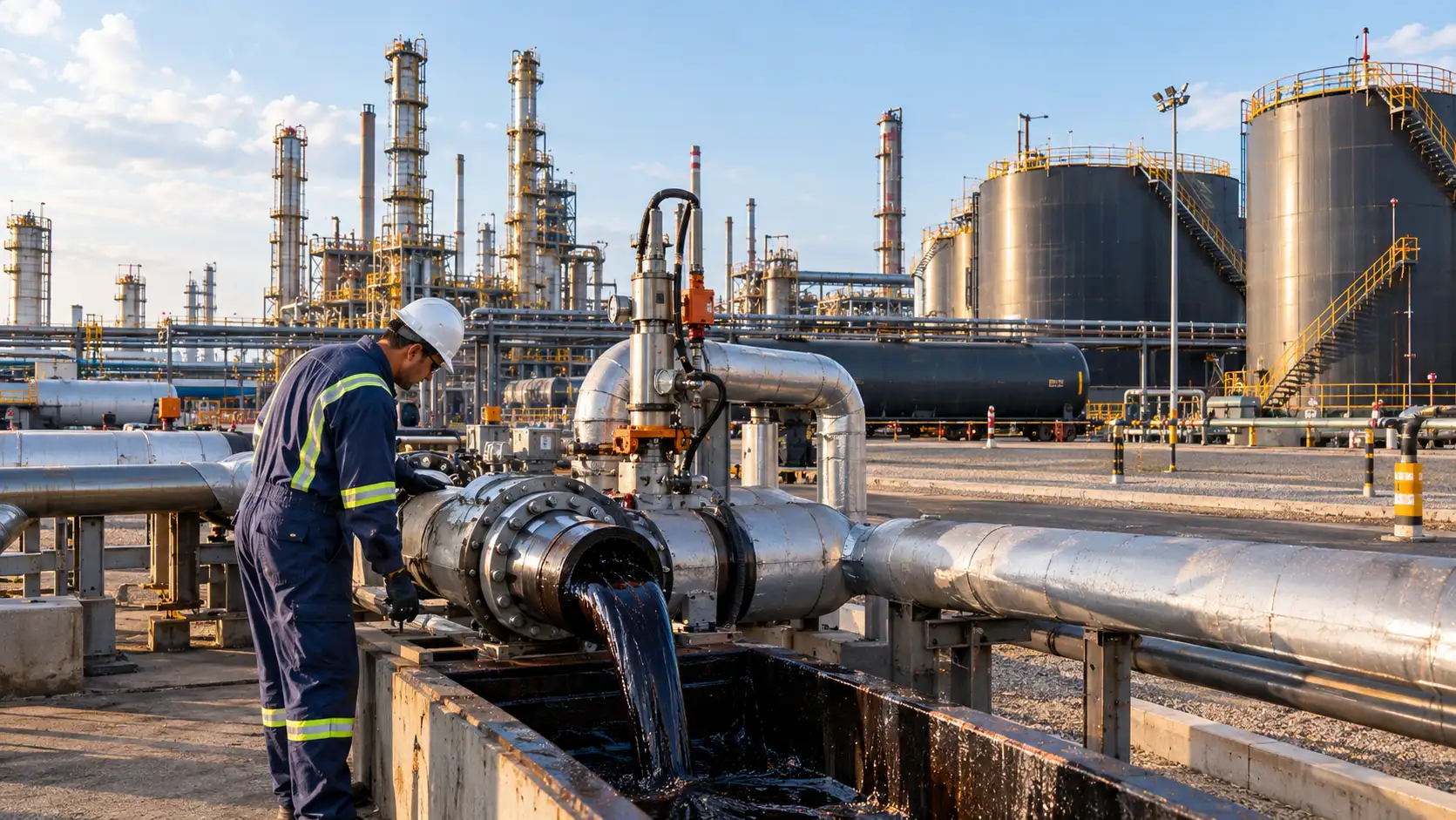
Bitumen is the heaviest part of crude oil. Refiners heat the crude and draw off the lighter products first — petrol, diesel, kerosene. The remainder goes through vacuum distillation, and the thick residue at the bottom is the raw material for bitumen.
Four properties matter most on the road:
- Thermoplastic: It softens when heated and stiffens as it cools — which is why it can be pumped, sprayed, and mixed at elevated temperatures, then sets firm on the road.
- Adhesive: It sticks firmly to stone particles, coating every surface and locking aggregate together under load.
- Waterproof: It repels water and protects the structural layers below from moisture infiltration.
- Slow ageing: It hardens through oxidation over the years, which is why old pavements crack — and why binder content, grade selection, and compaction all matter so much at the design stage.
Natural Bitumen
Some bitumen comes from the ground. Pitch Lake in Trinidad covers roughly 100 acres. Crude oil seeps up there, the light fractions evaporate, and heavy asphalt stays behind. Sir Walter Raleigh used it to caulk ships in 1595, and it was first used on roads in 1815 — it is still mined and sold for paving today. Even so, nearly all road bitumen comes from refineries, where production quality is consistent and volume is scalable.
Bitumen Grades
Refined bitumen is graded by hardness or by performance. The most common test is penetration: a weighted needle is pressed into the sample at 25°C, and the depth it sinks — in tenths of a millimetre — gives the grade. A lower number means harder bitumen. For a full breakdown of grading systems, including how to read a PG grade like PG 64-22, see our bitumen grades explained guide.
The standard paving grade for warm to hot climates and normal traffic. Most widely used globally.
Softer. Handles cold weather and light traffic better. Common in cooler regions.
Viscosity grades common in India and parts of South Asia, set by viscosity measured at 60°C.
Performance Grade. Two numbers: the high-temperature rutting limit and the low-temperature cracking limit. Dominant in North America.
Polymer-modified bitumen. Polymers or rubber added for extra resistance to rutting in heat and fatigue cracking under heavy, slow loads.
A softening point test adds another check, measuring the temperature at which the bitumen softens enough to flow under standard conditions — useful for confirming grade consistency on delivery.
Forms of Bitumen
Bitumen leaves the refinery in several forms, each suited to a different job:
Paving grade
Applied hot. The binder for asphalt mixes and the material in bulk tanker deliveries.
Cutback bitumen
Thinned with a solvent for lower-temperature spraying. The solvent evaporates and the binder hardens.
Bitumen emulsion
Tiny bitumen droplets suspended in water with an emulsifier. Sprays cold, water evaporates as it sets. Used for tack coats and surface dressings.
Blown (oxidised)
Air blown through hot bitumen makes it harder and less temperature-sensitive. Goes into roofing membranes and pipe coatings.
Modified (PMB)
Polymers or rubber added for improved elasticity, heat resistance, and fatigue life — the premium choice for demanding roads.
Bitumen emulsion in particular has its own classification system based on electrical charge and setting speed. Our bitumen emulsion explained guide covers cationic versus anionic types, production, and grade codes like CRS-1 and SS-1.
What Is Asphalt?
Asphalt is a manufactured composite with four ingredients working together:
Aggregate makes up about 90 to 95% of the mix by weight and 75 to 85% by volume. It carries the traffic load. Bitumen coats every particle and holds the structure together. The mix of particle sizes — called gradation — controls how tightly the stone packs and how many air voids remain after compaction.
How Asphalt Is Made and Laid
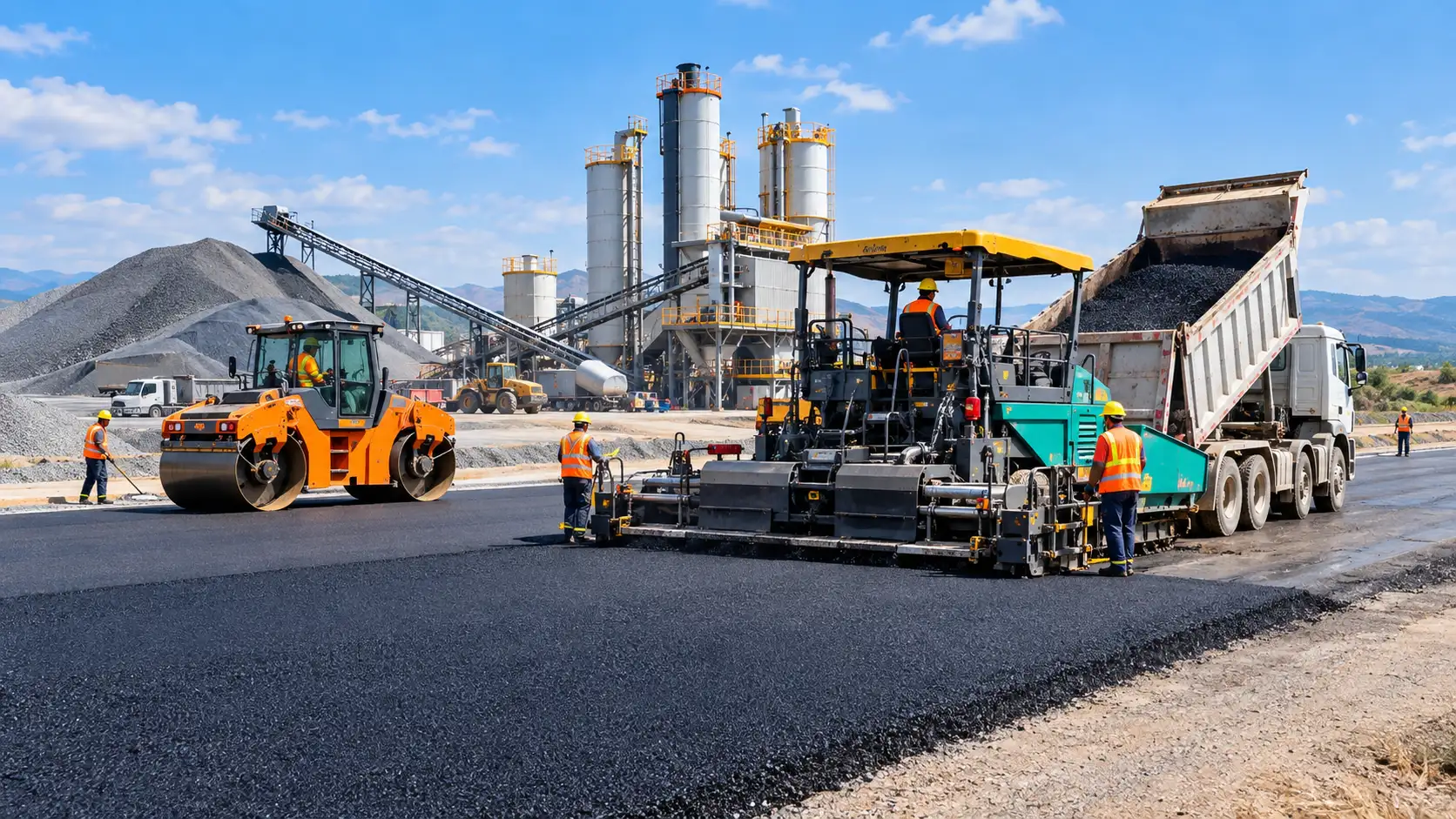
The plant dries and heats the aggregate to remove moisture before bitumen contact.
Hot bitumen is metered in and mixed until every aggregate particle is fully coated.
Insulated trucks deliver the mix to site under covers to hold the heat. Temperature loss during transit matters — cooled mix compacts poorly.
Crews spray a thin bitumen emulsion on the existing surface so the new layer bonds to it.
A paver spreads the mix evenly to the specified loose thickness.
Rollers compact the mat while it is still hot. Cooled mix stiffens and cannot reach design density.
Traffic returns once the mat has cooled to a safe temperature — usually within a few hours.
Types of Asphalt Mix
By Gradation
Dense-graded (DBM / BC)
The most common type, with a continuous range of particle sizes and few voids. South Asian specs often call these Dense Bituminous Macadam (binder course) and Bituminous Concrete (wearing course).
Stone mastic asphalt (SMA)
Gap-graded, with stone touching stone, a high binder content and stabilising fibres. Excellent rutting and cracking resistance on heavy routes.
Open-graded (porous asphalt)
Little fine material and many interconnected voids. Water drains through, spray drops and noise falls. The pores clog over time and need maintenance.
Mastic asphalt
Very high binder and filler content, spread by hand rather than rolled. Waterproofs bridge decks, car parks, and roofs.
By Temperature
| Type | Production Temperature | Best Use |
|---|---|---|
| Hot mix asphalt (HMA) | ~120°C to 190°C | Standard new pavement and resurfacing |
| Warm mix asphalt (WMA) | ~100°C to 150°C | Lower emissions, longer hauls, night paving |
| Cold mix | Ambient — no heating needed | Patching, remote sites, temporary repairs |
For cold mix patching specifically, our cold mix bitumen guide covers emulsion-based and cutback cold mixes, performance limits, and when to use them versus hot mix.
How Much Bitumen Goes Into Asphalt?
Most paving mixes hold 4 to 7% bitumen by total weight. Base courses sit near 4.5%, and SMA reaches about 7%.
The amount matters critically. Too little binder leaves the surface dry, brittle, and prone to cracking and stone loss. Too much makes it soft, so wheel paths rut in summer heat.
Engineers find the right amount through mix design, using the Marshall method or Superpave. They test several binder contents and pick the optimum — usually targeting about 4% air voids in the compacted mix. One Marshall design for a semi-dense bituminous concrete wearing course landed at 5.11% binder by total weight.
Why the Two Words Get Mixed Up
The confusion is regional. In American English, “asphalt” means the binder that British English calls bitumen. Americans also shorten “asphalt concrete” to “asphalt,” and that finished mix is what British and Australian English call asphalt or tarmac.
UK / Europe / Australia
Specifications lean toward “bitumen” for the binder and “asphalt” or “tarmac” for the finished mix.
United States
Specifications prefer “asphalt binder” or “asphalt cement” for the binder, and “asphalt concrete” or just “asphalt” for the mix.
Two questions clear it up before you compare any quote:
- Does the word mean the binder or the finished mix?
- Is the quantity in tonnes of mix or litres of binder?
Tar is a different product.It comes from coal or wood; bitumen comes from crude oil. “Tarmac” began as a brand name for tar-bound road stone. Today it is slang for almost any black paved surface, even though modern “tarmac” uses bitumen, not tar.
Sprayed Bitumen Seal vs Asphalt Layer
For many buyers, the practical choice comes down to a sprayed seal or a full asphalt layer. Both use bitumen, but they behave very differently in service.
| Sprayed Bitumen Seal | Asphalt Layer | |
|---|---|---|
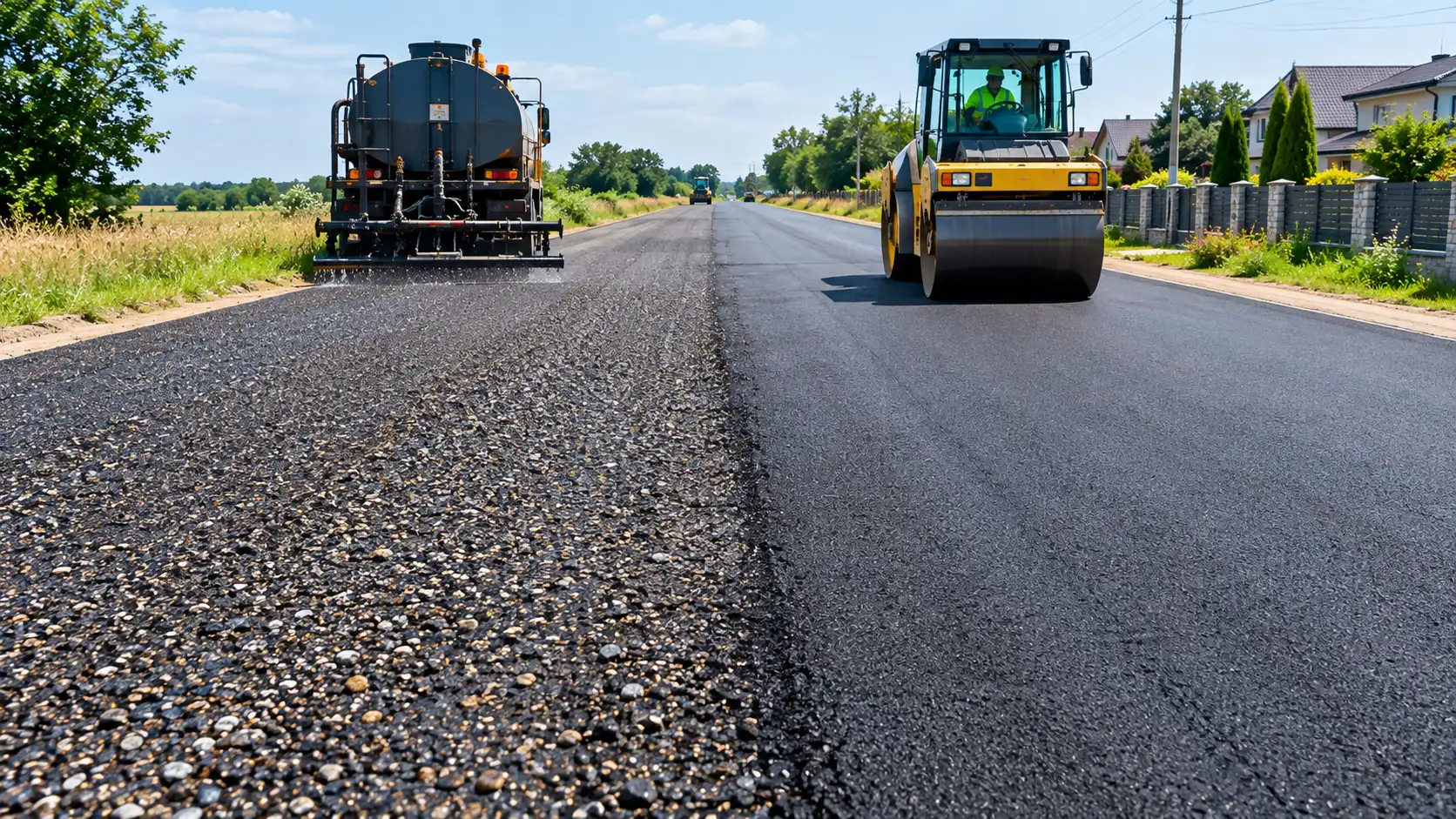
| Thickness | ~10 to 20 mm | ~25 to 200 mm depending on course |
| Typical life | ~5 to 10 years | Longer — typically 15–25 years |
| Upfront cost | Lower | Higher |
| Heat performance | Softens in extreme heat | Holds shape better with correct grade |
| Surface texture | Loose chips — more tyre noise | Dense and quieter |
| Best for | Low-traffic rural roads, car parks | Driveways, city streets, highways |
Thickness and lifespan figures for sprayed seal above are indicative values from Australian paving practice. Verify these against your local road authority specifications before making design decisions.
A seal costs less to lay, and on a quiet road it can be the right call. Asphalt costs more upfront. On busy surfaces it usually costs less per year of service.
How Bitumen and Asphalt Fail
Knowing the failure modes explains most specification choices — and helps you spot early warning signs on an existing surface.
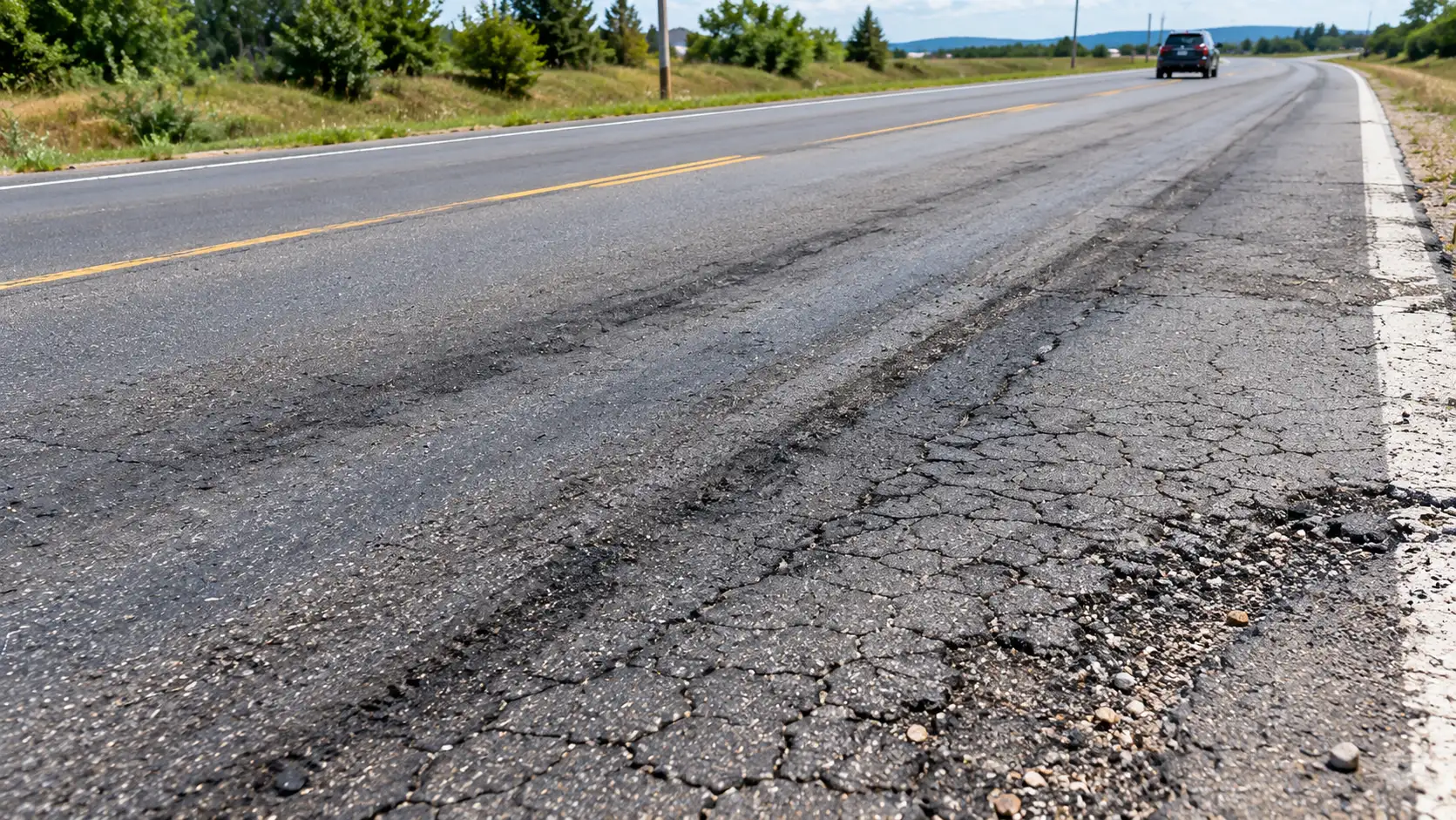
Rutting
Grooves form in wheel paths when the binder is too soft for the heat and load. Harder grades, SMA, and PMB reduce it. A binder that softens too much in summer heat is the most common cause.
Fatigue cracking
Repeated loading cracks the layer from the bottom up, often in an interconnected pattern. Thin layers over weak or insufficiently compacted bases suffer most.
Thermal cracking
Cold temperatures make the binder brittle. Softer grades such as 80/100 — or a low-temperature PG grade — help in cooler regions.
Stripping
Water gets between the binder and the stone and breaks the adhesive bond. Good drainage, clean aggregate, and anti-strip additives such as hydrated lime reduce the risk.
Ageing and ravelling
Oxidation hardens the binder over time. Stones start to come loose — this is ravelling. Correct binder content and proper compaction at construction slow down the ageing process significantly.
Compaction matters most. A mix that leaves the roller with too many air voids lets in water and air — and ages faster than one correctly compacted at the right temperature.
What Drives the Cost
No single price applies everywhere, but the same factors move every quote:
Compare quotes on the same basis: same thickness, same mix type, and same units. Mixing tonnes of mix with tonnes of binder in a comparison leads to the same confusion as mixing the two words.
Recycling and the Environment
Asphalt is one of the most recycled construction materials on earth. Crews mill old pavement, crush it, and feed it back into new mixes as reclaimed asphalt pavement (RAP). The binder in that reclaimed material still works and contributes to the new mix design.
2024 Industry Data
The National Asphalt Pavement Association (NAPA) industry survey — conducted in partnership with the Federal Highway Administration — reported that 101.4 million tons of reclaimed asphalt pavement went back into use in the US in 2024.
The same survey put warm mix asphalt production at 178.3 million tons — approximately 40% of the total US market. Warm mix cuts fuel use, reduces fumes, and enables longer hauls before the mix cools below compaction temperature.
Verify these figures against the most recent NAPA annual survey before citing them, as the numbers update each year.
Which One Should You Choose?
| Application | Best Choice |
|---|---|
| Driveway or car park | Asphalt — thicker, copes better with turning and parked vehicles |
| Low-traffic rural road on a tight budget | Sprayed bitumen seal |
| Highway, airport, port or industrial yard | Asphalt with harder or modified binder |
| Pothole or patch repair | Cold mix asphalt — no plant or heating needed |
| Reservoir or canal lining | Asphalt — impermeable when properly designed |
| Bonding new layers to old pavement | Tack coat of bitumen emulsion |
| Roof waterproofing | Modified bitumen membrane (blown or PMB) |
How to Estimate Bitumen and Asphalt Quantities
Work out the mix weight first, then take the binder share from it. These two formulas cover most situations:
Mix (tonnes) = area (m²) × thickness (m) × density (kg/m³) ÷ 1,000
Bitumen (tonnes) = mix (tonnes) × binder % ÷ 100
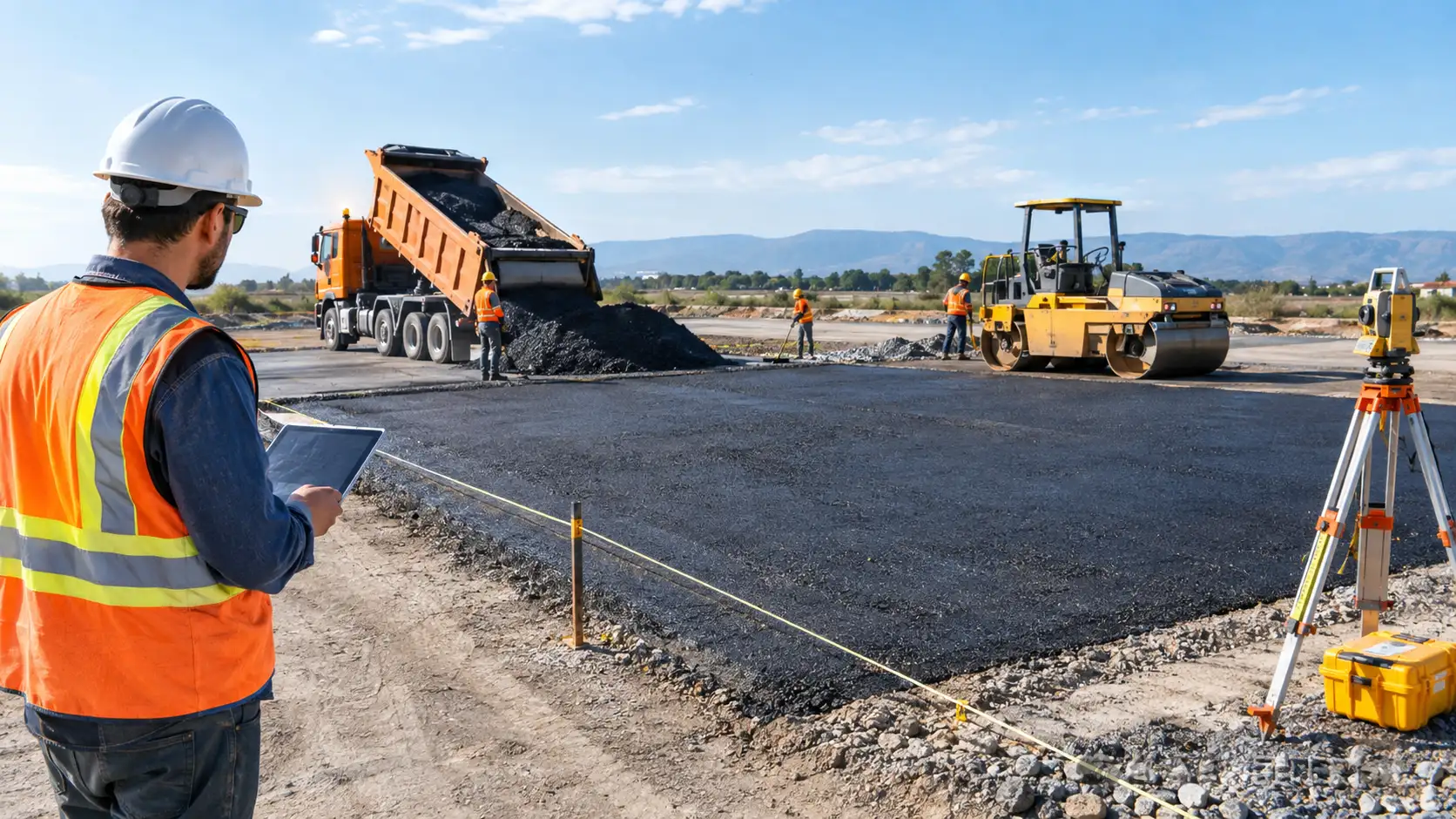
Worked Example
A 500 m road section, 6 m wide, with a 50 mm binder course. Compacted density: 2,400 kg/m³. Binder content: 4.6%.
Area: 500 × 6 = 3,000 m²
Mix: 3,000 × 0.05 × 2,400 ÷ 1,000 = 360 tonnes
Bitumen: 360 × 0.046 = 16.56 tonnes
To convert to litres: divide by bitumen density (~1.03 t/m³) → ≈ 16,100 litres.
Use the density and binder content from your actual mix design, not the values above. Add an allowance for wastage and base irregularity. The BitumenCalcPro calculator runs these steps automatically and handles unit conversions.
Common Estimating Mistakes
- Ordering tonnes of asphalt when the quote is for tonnes of bitumen — or the reverse.
- Using a density figure taken from a different mix type.
- Skipping a wastage allowance and base irregularity factor.
- Comparing the per-tonne price of mix with the per-tonne price of binder.
Conclusion
Asphalt vs bitumen is a question of binder versus mix. Bitumen is the petroleum-derived binder; asphalt is stone and sand coated in roughly 5% of it. Use bitumen alone for thin seals, tack coats, and waterproofing. Use asphalt where a surface has to carry traffic for years. Before you compare any quote, confirm which material and which unit it means. Should accidental overspray or spills occur during handling, check our step-by-step instructions on removing bitumen safely from skin, equipment, and driveways.
If you're new to the material, you may also wonder how to say the word correctly. Our bitumen pronunciation guide covers British (BICH-uh-mun), American (buh-TOO-mun), and Australian accents with full IPA notation.
Once you have the grade and mix type confirmed, check how the bitumen will arrive. Our guide on how bitumen is transported — tanker temperatures, UN 3257 classification, and the site delivery checklist — is the natural next step.
When choosing between flexible paving and rigid alternatives, compare the upfront installation costs, lifespan, and maintenance needs. See our comprehensive guide on asphalt vs concrete pavement differences for cost, durability, and climate suitability comparisons.
Use the free bitumen quantity calculator to turn your road dimensions into mix tonnage and binder weight before placing the order.
Frequently Asked Questions
Is asphalt the same as bitumen?
No. Bitumen is the binder, and asphalt is the mix that contains it — roughly 95% stone and sand bound by about 5% bitumen. In the US, 'asphalt' can also mean the binder itself, which is the main source of confusion.
Can you pave a road with bitumen alone?
No. Bitumen has no load-bearing structure without stone aggregate. Even a sprayed bitumen seal has chips rolled into it to provide texture and structural grip.
How much bitumen is in asphalt?
Usually 5 to 6% by weight. The full range for paving mixes is about 4 to 7%, depending on mix type — base courses sit near 4.5% while stone mastic asphalt reaches around 7%.
Is bitumen the same as tar?
No. Bitumen comes from crude oil refining, and tar comes from destructive distillation of coal or wood. 'Tarmac' started as a brand for tar-bound stone but is now used loosely for any black paved surface, even though modern versions use bitumen.
Which is cheaper, a sprayed bitumen seal or asphalt?
A sprayed bitumen seal costs less to install. Asphalt costs more upfront but lasts significantly longer, so busy surfaces usually favour asphalt on a cost-per-year-of-service basis.
Which bitumen grade is used on roads in Pakistan?
60/70 penetration grade is the usual choice, with 80/100 in cooler northern regions and PMB for high-heat, heavy-traffic routes. The project specification and NHA standards have the final say.
Can asphalt be recycled?
Yes. Old pavement is milled, crushed and fed back into new mixes as reclaimed asphalt pavement (RAP). The binder in it still functions, reducing both material cost and environmental waste.
What is the difference between bitumen and asphalt cement?
Nothing meaningful. Asphalt cement is the US term for paving-grade bitumen. Both phrases describe the same material — the petroleum-derived binder used in asphalt mixes.

Founder & Web Developer
Nabeel Awan is a web developer and the founder of BitumenCalcPro. His work focuses on web development and building practical online tools, with a strong interest in civil engineering, asphalt, bitumen, pavement construction, and construction technology.