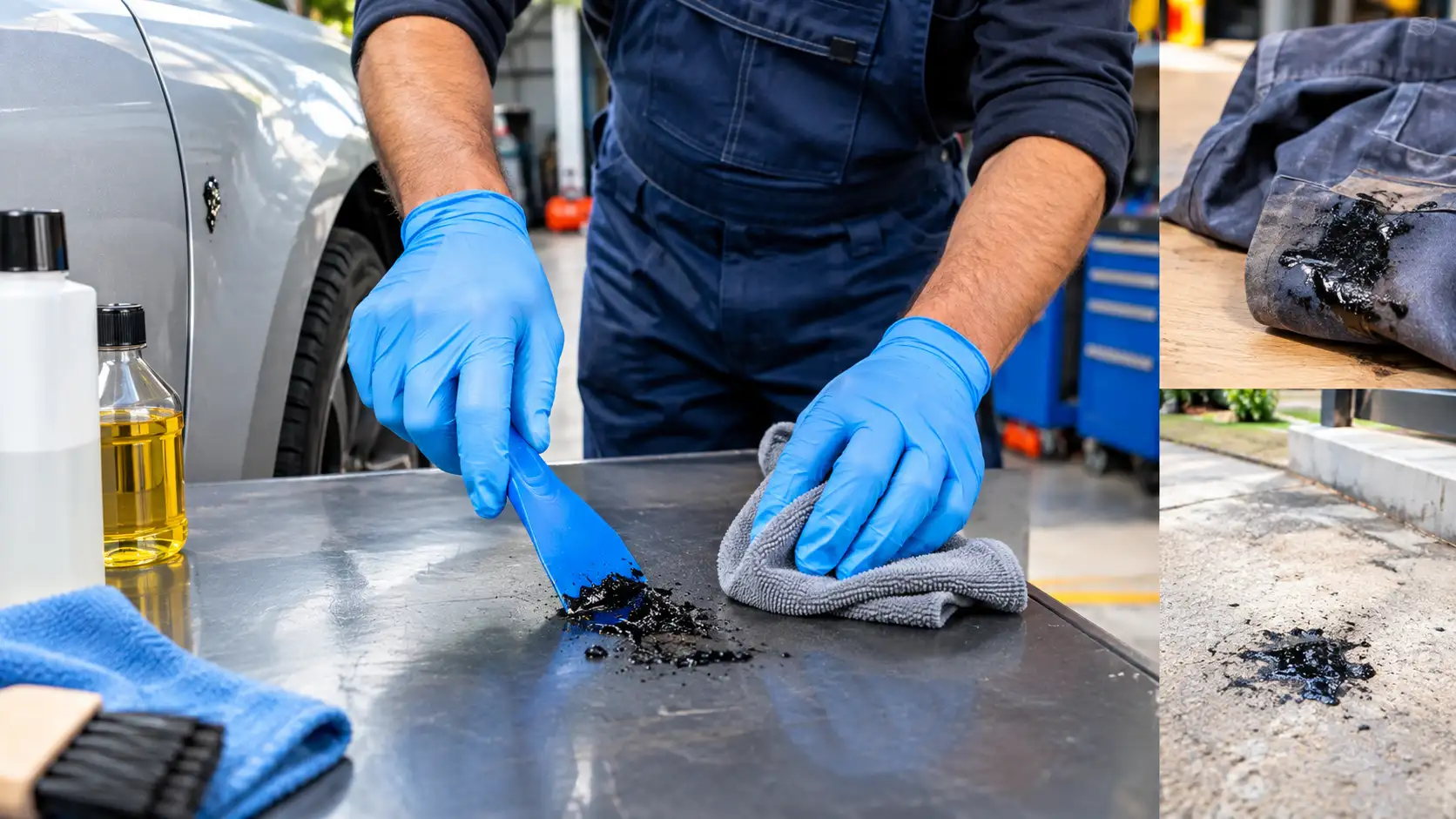
Quick Answer
To remove bitumen, soften it first with heat, cold, or a compatible oil-based product, then lift it off without scrubbing it deeper into the surface. Skin and clothes respond well to vegetable oil or butter. Car paint and concrete need a dedicated tar remover or mineral spirits. Wood and parquet often need a scraper plus gentle heat. Never use gasoline, acetone, or harsh solvents on skin, and never touch hot, fresh bitumen with bare hands.
Bitumen is a thick, petroleum-based binder used in roofing, driveways, and parquet flooring. It's built to resist water and stick to almost anything, which is exactly why it's so hard to get off once it lands somewhere you didn't want it. The fix depends entirely on the surface: what softens bitumen on concrete can ruin car paint, and what's safe on denim will do nothing for a solid lump stuck to a wood block floor.
This guide breaks removal down by surface, based on what actually works and what causes more damage than the stain itself. If you want to understand why bitumen behaves the way it does — its hydrocarbon chemistry, thermoplastic properties, and where it comes from — our complete guide to bitumen covers all of that in detail.
Why Bitumen Is Hard to Remove
Bitumen is made of heavy hydrocarbons. It doesn't dissolve in water because water and oil don't mix. It softens with heat and firms up as it cools — useful on a road, but a problem once it's stuck to your hands, your car, or your floor. The only reliable way to shift it is to dissolve it with an oil-based product or a solvent, or soften and chip it away mechanically.
Two mistakes cause most of the damage people report: scrubbing dry bitumen with force, which drags grit across paint or masonry and scratches it, and reaching for a harsh solvent like gasoline or acetone before checking if something milder will do the job.
The thermoplastic behaviour that makes bitumen so effective in asphalt road construction is also what makes cold, hardened bitumen so stubborn once it has bonded to a porous surface.
How to Remove Bitumen from Skin
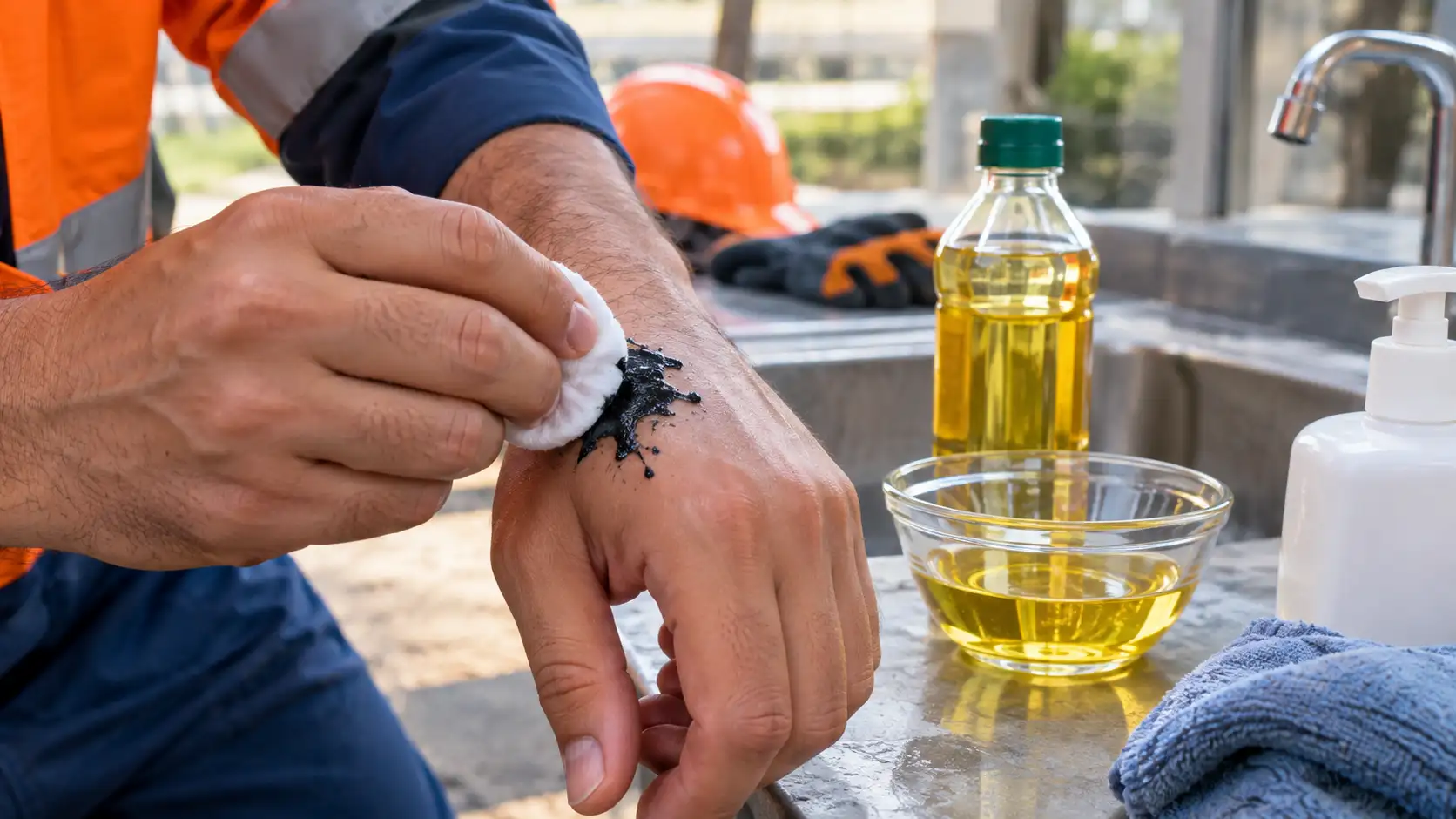
Bitumen on skin falls into two very different situations, and mixing them up is dangerous.
Cold, Dried Bitumen on Unbroken Skin
Cold, dried bitumen on unbroken skin is a cleaning task. Research comparing removal methods found vegetable oils — including olive oil and sunflower oil — work better than petroleum jelly for dissolving bitumen without irritating the skin. Butter has also been used successfully in clinical case reports for the same reason: it's non-toxic and melts at a low temperature, letting it work into the residue.
- 1Apply a generous amount of vegetable oil, olive oil, or softened butter directly to the spot
- 2Let it sit for several minutes so the oil can soften the bitumen
- 3Gently wipe with a soft cloth — don't scrub
- 4Repeat if residue remains, then wash with mild soap and water
What to Avoid on Skin
Avoid gasoline, kerosene, paint thinner, or acetone on skin. These strip natural oils, irritate tissue, and add a fire risk for no real benefit over a kitchen oil.
Hot, Fresh Bitumen Burns — Medical Emergency
Hot, fresh bitumen that has burned the skin is a medical emergency, not a stain. Do not pull off adhered bitumen — this can tear the burned skin underneath. Do not apply ice, solvent, or oil to a burn.
Keep the person warm, avoid removing anything stuck to broken skin, and get urgent medical attention — especially for burns to the face, hands, joints, or any burn that's large, deep, blistering, or very painful. The NHS burn treatment guidelines are the authoritative reference for this type of injury. Medical teams have used melted butter and vegetable oil to dissolve hardened bitumen from burn injuries under clinical supervision — that is not a first-aid step to attempt at home on a burn.
How to Remove Bitumen from Clothes
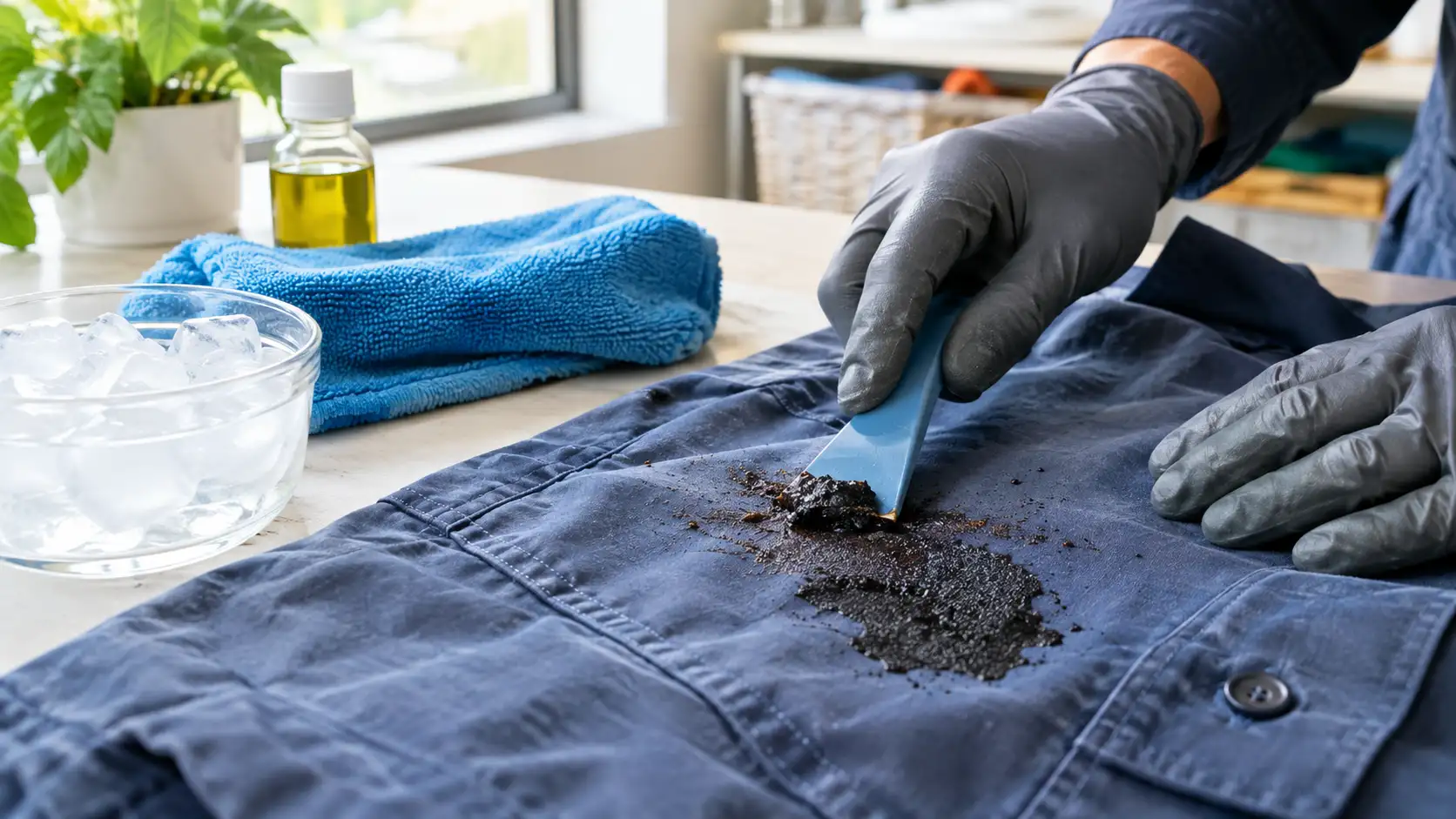
Fabric holds onto bitumen differently than skin does, since the sticky residue works its way into fibres rather than sitting on a flat surface.
- 1Cool it down first — Ice or a spell in the freezer makes bitumen brittle and easier to break away without smearing it further into the weave
- 2Scrape off solid material — Use a dull knife or spoon — work from the outside edge inward to avoid spreading
- 3Apply oil to soften the residue — Vegetable oil, shortening, or petroleum jelly applied to the remaining stain — let it sit for 10 to 20 minutes
- 4Blot, don't rub — Lift the softened residue with a clean cloth — rubbing pushes the stain deeper into the weave
- 5Pre-treat then wash as normal — Apply a standard laundry stain remover or dish soap before washing
Avoid rubbing hot bitumen while it's still warm — that pushes it deeper into the fabric. For delicate materials, test in an inconspicuous spot first.
How to Remove Bitumen from Car Paint
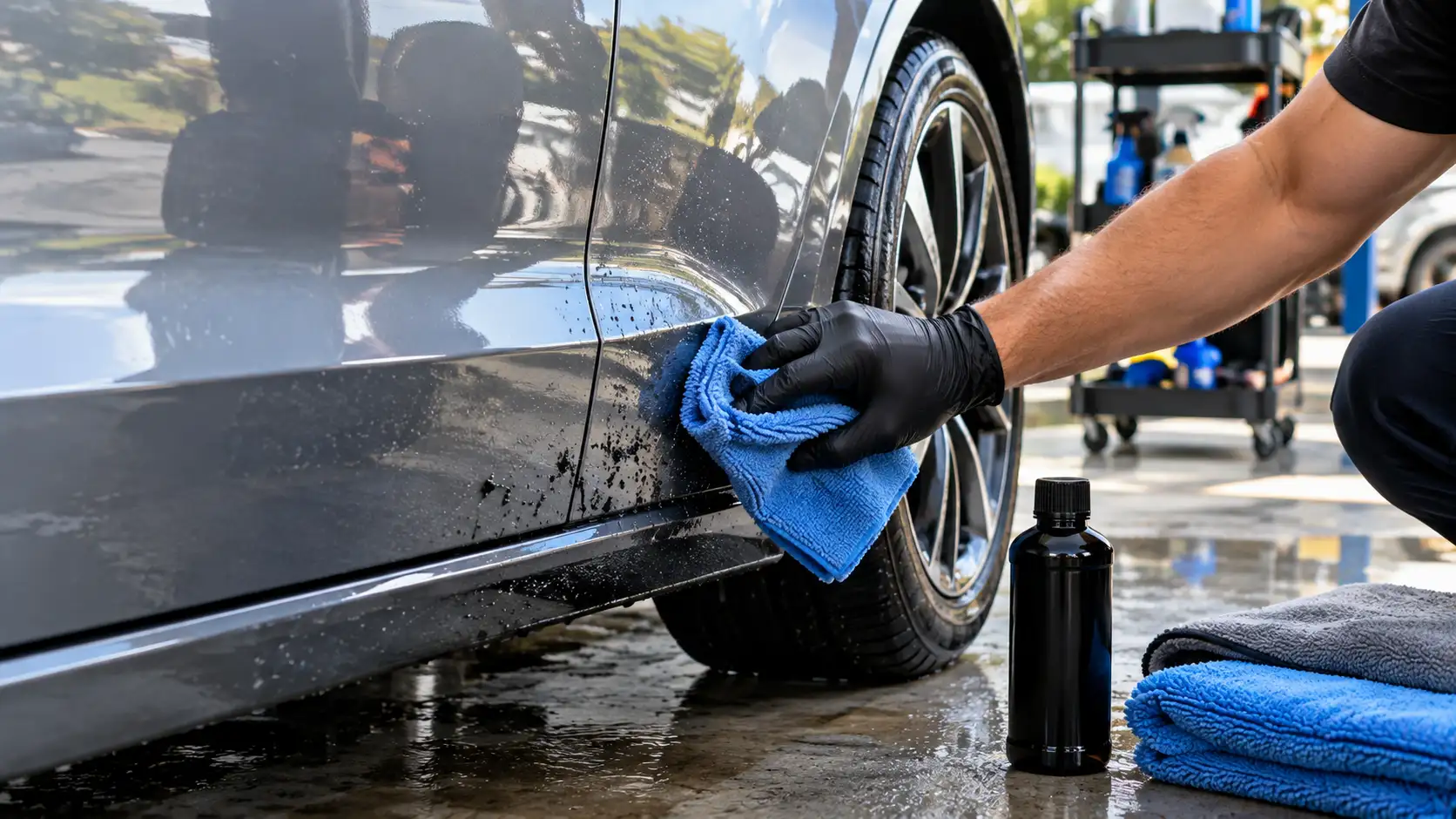
This is one of the most-searched bitumen removal problems, and also where the wrong method causes the most expensive damage. Road tar splatter is essentially the same material found on a freshly laid bitumen driveway — and it bonds to clear coat just as effectively.
Step-by-Step
- 1Wash first — pH-neutral car shampoo — cleaning a dirty panel before treating the spot risks grinding road grit into the paint
- 2Apply tar remover — A dedicated tar and bug remover, or a citrus or hydrocarbon-based automotive solvent, directly to the spot
- 3Dwell for 5–10 minutes — Allow the solvent time to break down the bitumen before wiping
- 4Wipe gently with microfiber — Reapply and repeat if any residue remains — don't force it
- 5Clay bar if needed — Only after the solvent has done its job — use a lubricated clay bar to lift any remaining embedded particles
- 6Rewash and protect — Remove all solvent residue then apply wax or sealant to restore paint protection
What to avoid:Gasoline, kerosene, and paint thinner dull clear coat and strip wax faster than a proper tar remover. Don't clay first either — large, sticky tar deposits can drag across the finish and cause fine scratches before the solvent has dissolved the bulk of the residue.
How to Remove Bitumen from Concrete and Driveways
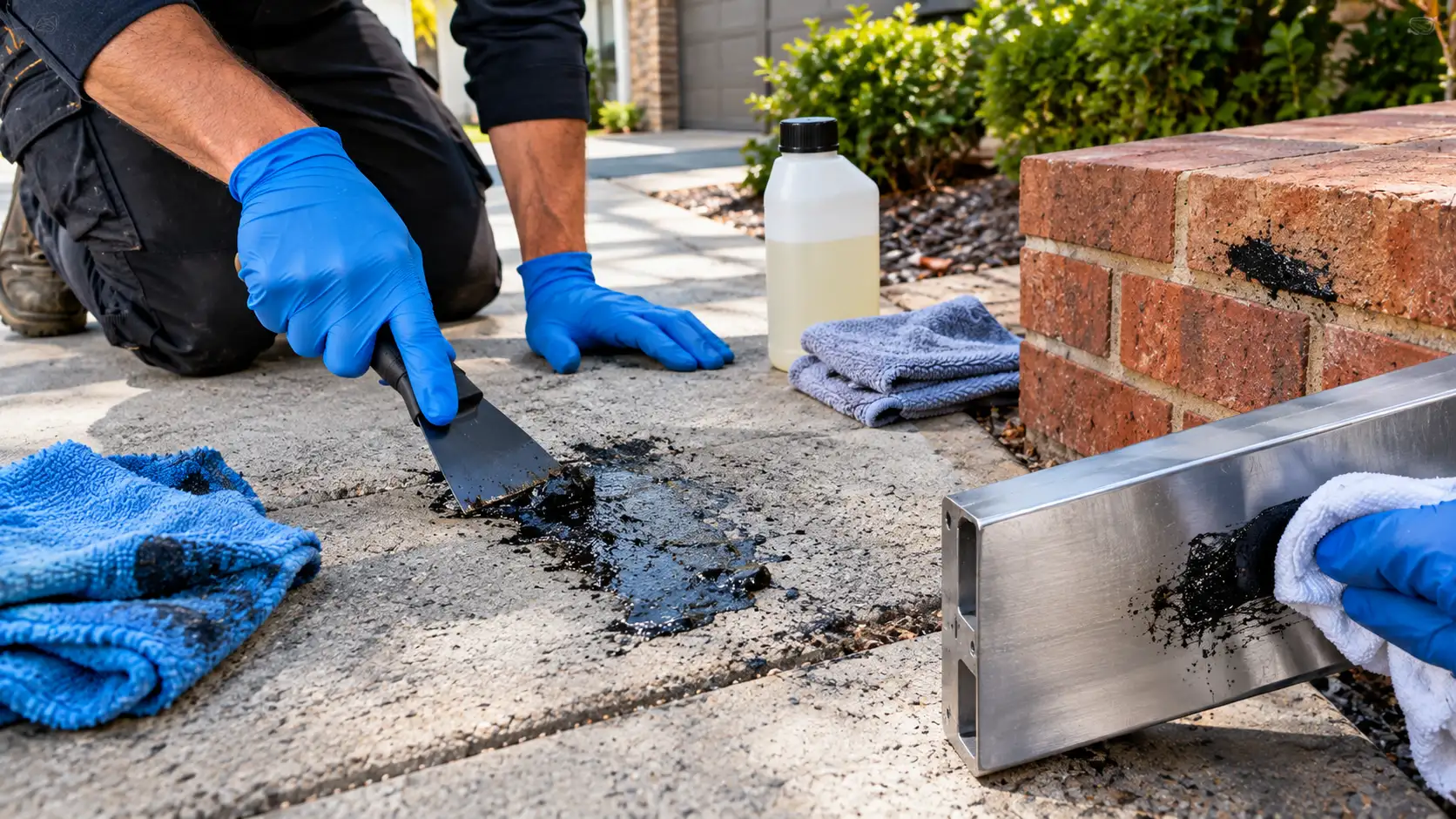
Concrete's porous surface makes bitumen removal a two-part job: get the solid material off, then deal with the oily stain it leaves behind. The same porosity that makes asphalt pavement design critical also determines how deeply bitumen soaks into an unprotected concrete or driveway surface.
- 1Scrape off solid material — Plastic or stiff putty knife — cold weather helps since bitumen turns brittle and chips away more cleanly
- 2Apply solvent — Dedicated asphalt and tar remover, mineral spirits, or WD-40 directly onto the remaining stain
- 3Dwell for several minutes — Give the solvent time to soften residue before attempting to lift it
- 4Blot — never wipe back and forth — Back-and-forth wiping pushes dissolved bitumen deeper into the porous surface
- 5Degrease and rinse — Degreasing dish soap and water scrub to lift the oily residue left behind
- 6Pressure wash if available — Hot water pressure washing speeds up the process significantly for large or stubborn stains
A concrete sealer applied after cleaning prevents future stains from soaking in as deeply — sealed concrete is far less porous than bare concrete.
How to Remove Bitumen from Brick
Brick is even more porous than concrete, which means the same aggressive scrubbing that damages concrete will damage brick faster.
- Let it harden first — If tar is still warm, let it cool — brittle bitumen chips away more cleanly than soft, sticky material
- Soak with solvent first — don't immediately scrub — Press a solvent-soaked cloth against the stain for at least 5 minutes before any agitation
- Use petroleum-based solvent or masonry degreaser — These dissolve the residue without damaging the brick face the way acid-based products can
- Lift with a soft brush — Work gently to avoid grinding the residue deeper into the brick texture, then rinse thoroughly
- Never use a metal scraper on brick — Metal tools chip and gouge brick permanently — once that surface damage occurs it cannot be reversed
A yearly masonry sealer makes future bitumen spills far easier to clean — sealed brick doesn't absorb the oily component of the stain the way bare brick does.
How to Remove Bitumen from Metal
Metal is more forgiving than wood, brick, or car paint — most bare metal tolerates stronger solvents without lasting damage. The complication is usually what's attached to the metal, not the metal itself.
- 1Scrape off as much solid bitumen as possible with a metal or plastic scraper, whichever suits the surface
- 2Apply a bitumen-suited solvent — asphalt remover, mineral spirits, or kerosene — to the remaining residue
- 3Wipe clean with a rag, repeating as needed until the surface is clear
- 4Rinse and dry thoroughly to remove solvent residue and prevent any corrosion risk
Caution near adjacent materials: A solvent strong enough to cut bitumen can soften paint, degrade rubber seals, or damage plastic parts nearby. Test on a hidden section first and keep the solvent away from anything that is not bare, unpainted metal.
How to Remove Bitumen from Wood and Parquet Flooring
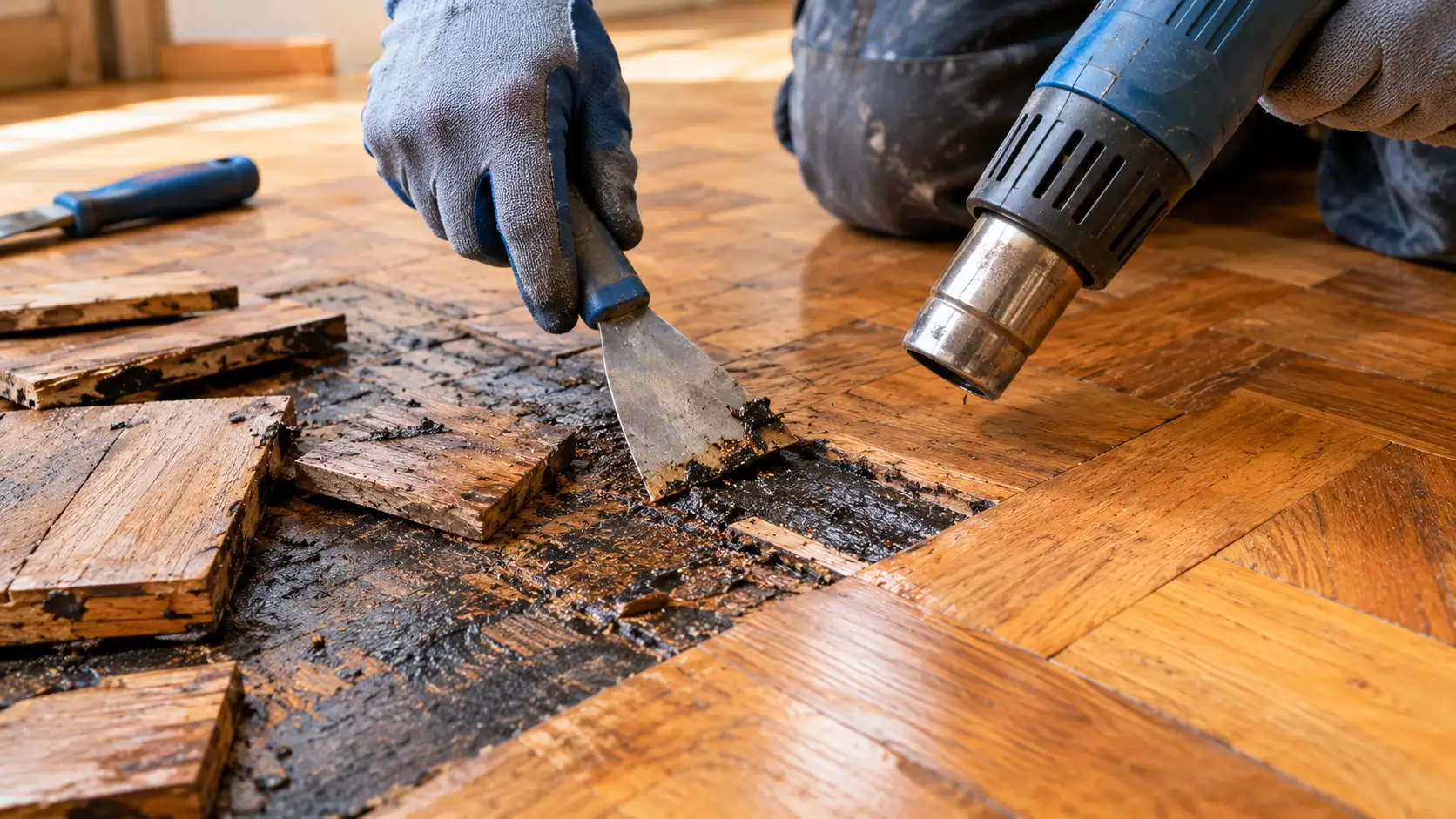
Wood, especially reclaimed parquet block flooring historically glued down with hot bitumen, is one of the most labour-intensive removal jobs there is. The adhesive strength that made bitumen so effective as a construction binder — covered in depth in our bitumen properties guide — is precisely what makes it so difficult to remove from porous wood grain.
Two Main Approaches
🔥 Heat Method
Warm the bitumen gently with a heat gun, then scrape with a flat scraper or shave hook while it's still soft. Keep heat moderate — too much scorches the wood or makes the bitumen runny and harder to control.
❄️ Cold Method
Freeze small blocks or use dry ice on larger areas to make the bitumen brittle enough to chip off cleanly. Avoids fumes and mess, though it works best on thinner layers.
Avoid soaking wood in solvent. Wood absorbs liquid along the grain — oversaturating it risks swelling, warping, or finish damage. For a large flooring job, a specialist bitumen removal service is often more practical than a full DIY approach across dozens of square metres.
How to Remove Bitumen from Shoes
Shoes combine several challenges at once: rubber soles, fabric or leather uppers, and often a mix of textures in one item.
- Cool and harden first — Let bitumen cool — freezing the shoe briefly makes it brittle and easier to chip away
- Scrape carefully around stitching — Use a dull tool and work slowly to avoid pulling seams apart
- Rubber soles tolerate stronger solvents — Mineral spirits or a dedicated adhesive remover works well on rubber without the damage risk present on fabric or leather
- Fabric or leather uppers need a gentler hand — Vegetable oil or a leather-safe cleaner, blotting rather than rubbing — the same approach as clothing removal
- Air dry away from heat — Clean off solvent residue thoroughly and allow natural drying to avoid material stress
Test any solvent on a hidden section first. A product safe for rubber soles can discolor or damage leather and synthetic uppers.
How to Remove Bitumen Paint
Bitumen paint is a thinned, ready-to-use coating that hasn't fully cured into a hardened film in most cases — making it easier to remove than solid bitumen. The Asphalt Institute pavement design guidance describes the same binder chemistry at full concentration — bitumen paint is simply a diluted, brush-applied form of the same base material, which is why standard solvents work on it effectively.
- Metal or masonry — A paint stripper formulated for bituminous coatings, or mineral spirits, softens it for scraping
- Delicate surfaces — Start with warm soapy water for very light residue, moving up to a solvent only if needed
- Multiple coats may need multiple passes — Several rounds of solvent application and scraping are often required for thick or layered coatings
- Ventilation is essential — Fumes from bituminous paint strippers are stronger than small stain removal — always work in a well-ventilated area
Which Method Works Best on Which Surface
Every surface has a different best first move. This table summarises the safest starting point and the most common mistakes for each.
| Surface | Best First Approach | Avoid |
|---|---|---|
| Skin (cold, unbroken) | Vegetable oil or butter | Gasoline, acetone, aggressive scrubbing |
| Skin (hot burn) | Medical attention — no home removal | Ice, solvent, pulling off adhered material |
| Clothes | Cool, scrape, then oil | Rubbing while hot |
| Car paint | Dedicated tar remover, then clay bar | Gasoline, clay before solvent |
| Concrete | Scrape, then solvent, then degrease | Wiping back and forth |
| Brick | Gentle solvent soak, soft brush | Metal scrapers |
| Metal | Scraper plus solvent | Solvent near rubber or plastic components |
| Wood / parquet | Heat or cold plus scraper | Soaking in solvent |
| Shoes | Cool, scrape, surface-appropriate solvent | Same solvent on rubber and leather without testing |
| Bitumen paint | Purpose-made stripper or mineral spirits | Working without ventilation |
Conclusion
Bitumen removal comes down to matching the method to the surface: oil for skin and fabric, solvent for hard surfaces like car paint and concrete, and heat or cold plus mechanical scraping for wood and parquet. The two things that cause the most damage across every surface are scrubbing dry residue with force and reaching for a harsh solvent before trying a milder one. Treat hot, fresh bitumen burns as a medical emergency, and treat everything else as a patience-first cleaning job.
Understanding why bitumen bonds so aggressively starts with understanding what it actually is. Our complete bitumen guide covers the hydrocarbon chemistry and thermoplastic behaviour that make it both useful and stubborn. If you are evaluating bitumen-based products for roofing or waterproofing, our modified bitumen roofing guide is a useful next step.
If you're working with bitumen on a paving project and need to plan quantities, our free Bitumen Calculator gives accurate estimates for mix weight, binder content, and aggregate requirements for any road or driveway project.
Frequently Asked Questions
What dissolves bitumen best?
Oil-based products work on skin and fabric: vegetable oil, olive oil, and butter are commonly used and researched for skin safety. For hard surfaces like concrete, metal, and car paint, a dedicated tar remover, mineral spirits, or kerosene dissolves it more effectively.
Can I use WD-40 to remove bitumen?
Yes, WD-40 is commonly used to soften bitumen and tar on car paint and concrete. Spray it on, let it dwell for several minutes, then wipe with a clean cloth.
Does vinegar remove bitumen?
Not effectively. Bitumen is a hydrocarbon, and vinegar is water-based and mildly acidic, which doesn't break down oil-based residue the way a solvent or oil does.
Is it safe to use gasoline to remove bitumen?
Not on skin or fabric. Gasoline dissolves bitumen but irritates skin, damages some fabrics, and carries a real fire risk. It's sometimes used on tools or bare metal, but safer alternatives exist for nearly every surface.
How do you remove bitumen from a car without damaging the paint?
Use a dedicated tar and bug remover first, let it dwell, then wipe gently. Follow with a clay bar only if residue remains, then wash and reapply wax or sealant.
Why does bitumen stick so hard once it's dry?
Bitumen is made of heavy hydrocarbons that harden as they cool and cure. Once fully dried, the material bonds tightly to porous surfaces like concrete and brick, which is why it needs a solvent or mechanical softening rather than washing it away with water.
Can hot bitumen burns be treated with butter at home?
No. While clinical studies have used butter and vegetable oil to remove hardened bitumen from burn wounds, this was done under medical supervision as part of treatment. A hot bitumen burn needs urgent medical attention first, not a home remedy.

Founder & Web Developer
Nabeel Awan is a web developer and the founder of BitumenCalcPro. His work focuses on web development and building practical online tools, with a strong interest in civil engineering, asphalt, bitumen, pavement construction, and construction technology.