Quick Answer
To remove oil stains from asphalt, start with an absorbent like cat litter or baking soda for fresh spills, then scrub with dish soap and a stiff brush. For dried, older stains, use a dedicated asphalt-safe degreaser rather than a harsh solvent, since gasoline and strong chemical strippers can soften the asphalt binder itself. Rinse thoroughly, let the area dry, and reseal the driveway once the stain is gone.
An oil stain on an asphalt driveway is a common problem with a straightforward fix, as long as you match the method to how fresh or old the stain is. Asphalt's biggest weakness here is also its biggest clue: it's made from petroleum, so oil doesn't just sit on top of it; it can soften the binder underneath if left untreated long enough. That's why the right first move matters more than the exact product you reach for.
This guide covers what to do for a fresh spill, what works on an old, dried stain, and which products to avoid entirely. Whether you are performing routine driveway care or using our Bitumen & Asphalt Calculator to estimate materials for an upcoming resurfacing project, maintaining surface cleanliness protects your pavement investment.
Why Oil Stains Asphalt So Easily
Asphalt driveways are made of crushed stone and sand held together with bitumen, a thick, black petroleum binder. Motor oil and other petroleum products share enough chemistry with that binder that they can dissolve into it rather than just sitting on the surface the way they would on concrete.
This explains two things. First, why asphalt stains darker and faster than concrete does (as detailed in our guide on asphalt vs concrete pavement differences). Second, why using the wrong cleaning product, especially a strong solvent, can make the problem worse by softening the asphalt around the stain instead of just lifting the oil off.
Technical Note: According to technical guidance from the Asphalt Institute, refined petroleum products like motor oil, diesel, and gasoline act as active fluxing solvents on bituminous binders, lowering bitumen viscosity and causing aggregate debonding.
How to Remove a Fresh Oil Stain
Speed matters most here. Oil that hasn't had time to soak in is far easier to lift than oil that's had days to work into the surface.
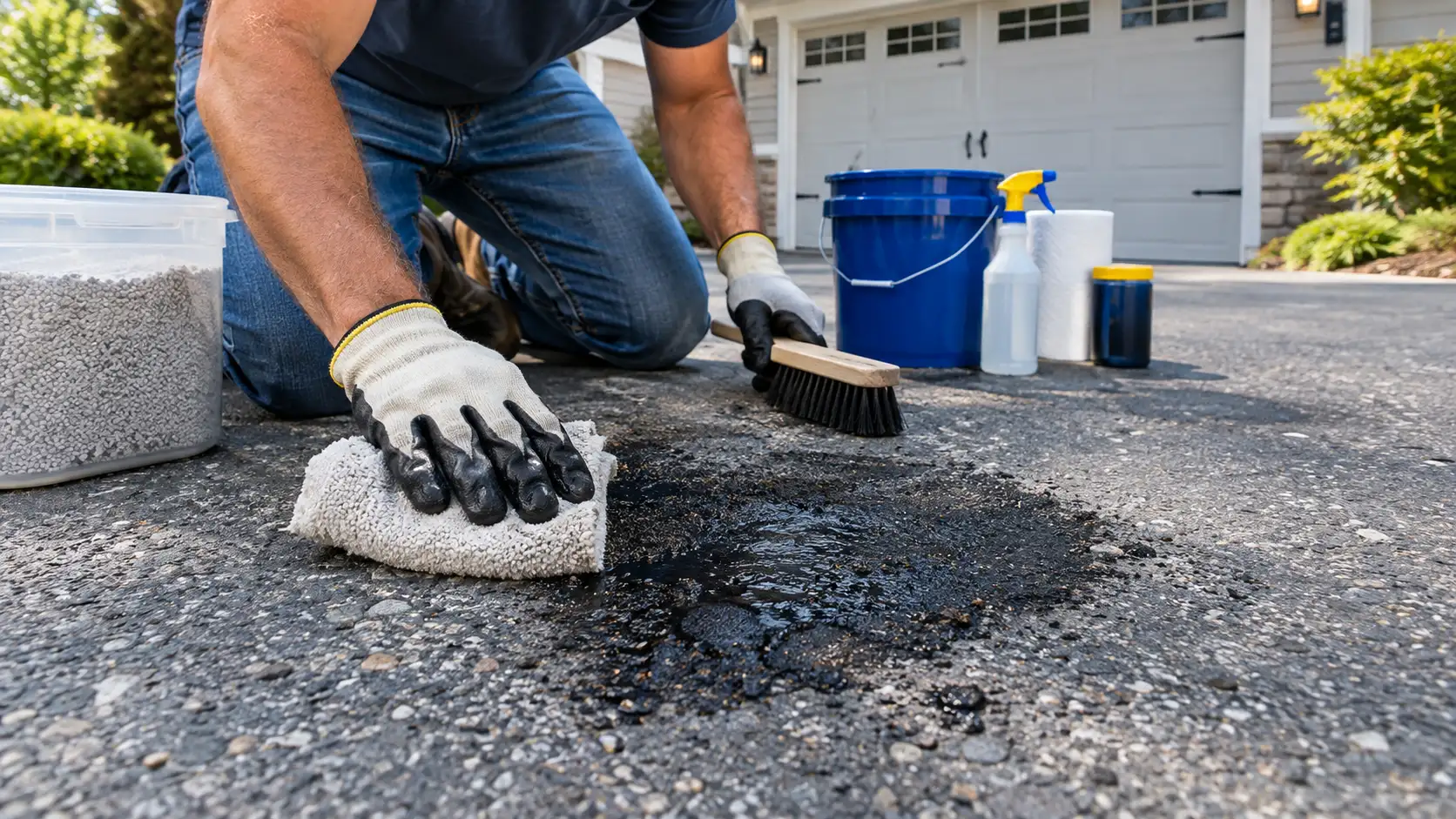
Blot up standing oil
Blot up any standing oil with a rag or paper towels. Don't wipe it around. Press down and lift.
Cover with absorbent material
Cover the spot with an absorbent material. Cat litter, baking soda, and cornstarch all work. Clay-based cat litter tends to be the most effective at pulling oil up out of a porous surface.
Let it sit
Let it sit. Give it at least 30 minutes for a small spill, or overnight for anything larger.
Sweep up and check
Sweep up the absorbent and check the spot. If a shadow remains, move to the dish soap method below.
Catching a spill within the first hour or two is the single biggest factor in how easy the whole cleanup turns out to be. Prompt spill cleanup helps prevent major pavement repair costs, often discussed in our analysis of asphalt project estimation mistakes.
How to Clean an Older, Set-In Oil Stain
Dried stains need more than absorption. The oil has already worked into the surface, so the next step is breaking it down and lifting it out.
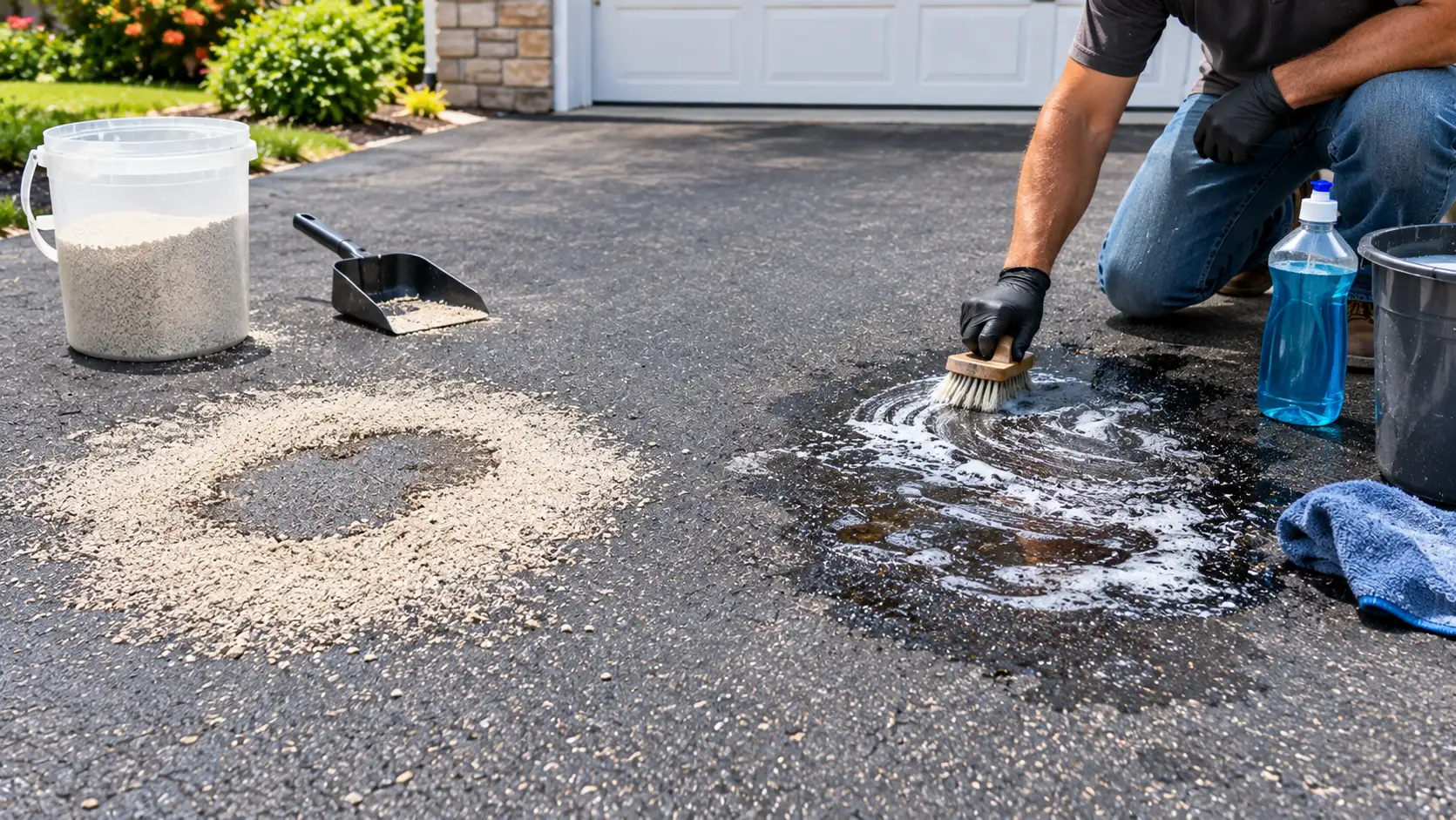
1. Apply dish soap or laundry detergent directly to the stain. A thick, concentrated application works better than diluting it first.
2. Scrub with a stiff-bristled brush, working in small circles to force the soap into the stain rather than just across the surface.
3. Let it sit for 30 to 60 minutes, especially on older stains.
4. Rinse with hot water if you have access to it, since heat helps break down oil more effectively than cold water alone.
5. Repeat as needed. Older stains often need 2 or 3 rounds before they fully lift.
For stains that don't respond to dish soap, a dedicated asphalt-safe degreaser is the next step. Products made specifically for oil and grease removal on pavement, rather than general-purpose cleaners, are formulated to lift petroleum residue without attacking the asphalt itself. Apply according to the product's instructions, since concentration and dwell time vary by brand.
What to Avoid
A few common home remedies and products cause more harm than good on asphalt specifically.
Gasoline or Kerosene
These dissolve oil effectively, but they also dissolve asphalt's own binder, leaving the surface soft or damaged where applied.
Strong Solvent Strippers
Strong solvent-based strippers not labeled safe for asphalt. Many degreasers built for concrete or metal are too aggressive for a petroleum-based surface.
WD-40 as Primary Treatment
WD-40 as a primary treatment. It can loosen light residue, but multiple independent product comparisons find it underperforms compared to dedicated degreasers on asphalt specifically, and it's not formulated for this job.
Wire Brushes & Abrasives
Scrubbing with a wire brush or anything abrasive enough to score the surface. This can leave permanent marks even after the stain itself is gone.
If you're ever unsure whether a product is safe for asphalt, test it on a small, inconspicuous section first and check back after a few minutes for any softening or discoloration. Environmental standards from the U.S. EPA emphasize using non-toxic, biodegradable pavement cleaners to protect runoff drainage networks.
Using a Pressure Washer
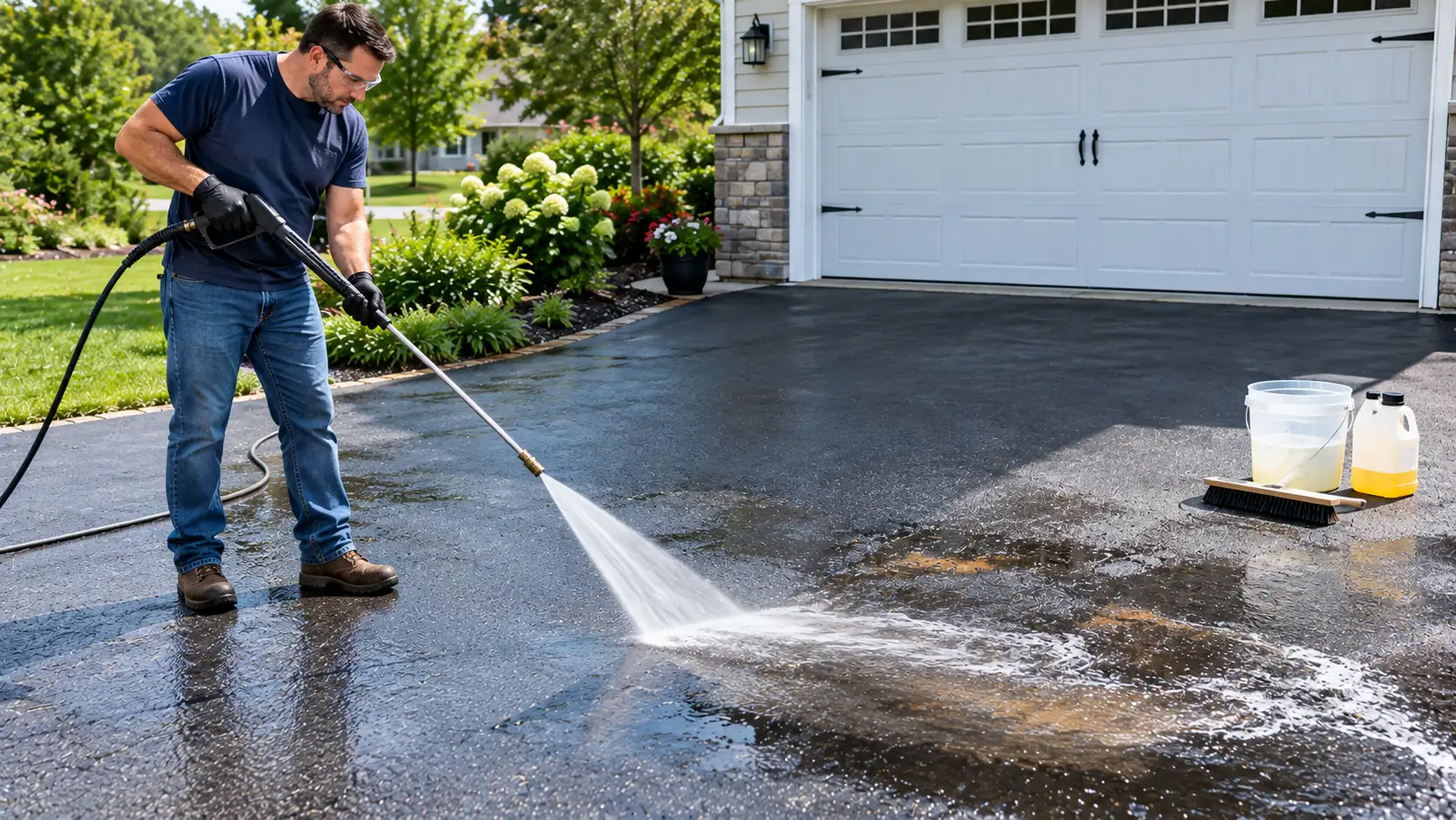
A pressure washer speeds up the rinse step and can help lift loosened residue after an absorbent or degreaser has already broken down the oil, but it's not a standalone fix. Spraying water at a stain alone, without pretreatment, mostly just moves the oil around rather than removing it.
If you use one, start with a wider spray pattern and moderate pressure. A narrow, high-pressure stream held too close can actually etch or damage the asphalt surface, especially on an older or already-weathered driveway.
When the Stain Won't Fully Come Out
Some oil stains, especially large ones that sat for weeks or months before treatment, leave a faint shadow even after thorough cleaning. At that point, a few options remain:
1. Live with it.A faint shadow is cosmetic and doesn't affect the driveway's structural condition.
2. Apply an asphalt-safe filler or patch if the oil has visibly softened or degraded the surface, not just stained it.
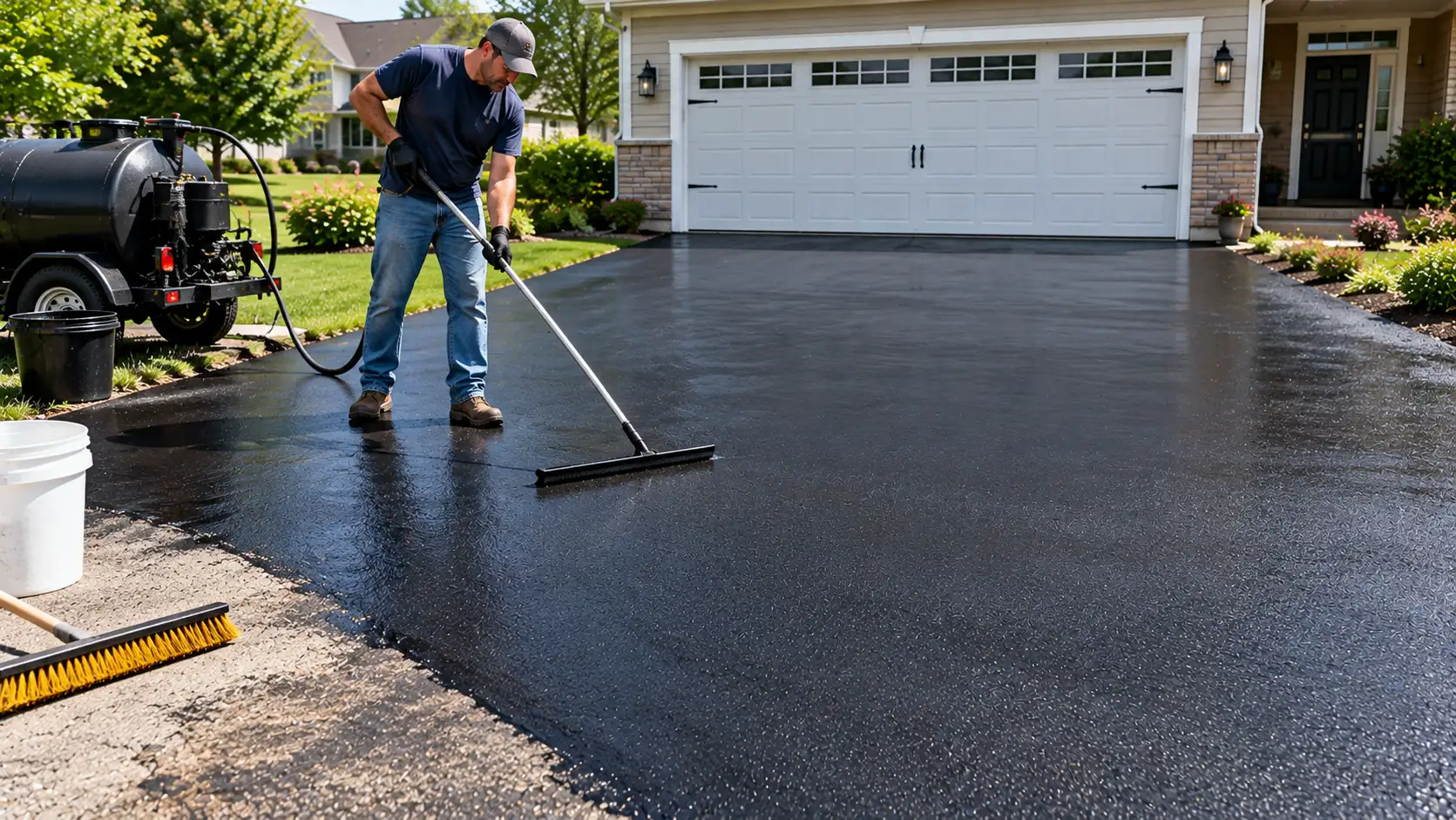
3. Sealcoat the entire driveway. This is often the most effective fix for a stubborn, visible stain, since a fresh coat of sealer restores a uniform black color across the whole surface rather than trying to spot-treat one area.
Sealcoating after cleaning is worth doing even without a lingering stain. Check our complete asphalt driveway sealcoating guide for details on DIY application, costs, and timing. It protects the surface from future oil and gas spills and restores the deep black color that fades over time from sun exposure.
Preventing Future Oil Stains
A few habits make the next spill far easier to deal with, or prevent it entirely:
Check your vehicle for leaks. A slow, recurring drip usually means a gasket or seal needs attention, and catching it early saves repeated driveway cleanups.
Keep an oil-absorbent mat or a sheet of cardboard under a known leak until you fix the vehicle issue.
Reseal the driveway every 2 to 3 years. A properly sealed surface resists oil penetration far better than bare, unsealed asphalt. Regular maintenance keeps long-term replacement costs down as outlined in our driveway paving cost guide.
Clean spills immediately rather than waiting. The difference between a 10-minute cleanup and an hours-long scrubbing session usually comes down to how long the oil sat before you treated it.
Conclusion
Removing oil stains from asphalt comes down to matching the method to the stain's age. Fresh spills respond well to absorbents like cat litter or baking soda, followed by a dish soap scrub if needed. Older, dried stains need a dedicated degreaser rather than harsh solvents, since gasoline and strong strippers can damage asphalt's own petroleum-based binder. Clean spills quickly, skip the gasoline, and reseal the driveway once the stain is gone to protect against the next one.
Planning a driveway maintenance or repaving project? Calculate material quantities and costs accurately with our free Bitumen Quantity Calculator.
Frequently Asked Questions
What is the best way to get oil stains out of an asphalt driveway?
For fresh spills, use an absorbent like cat litter or baking soda first, then follow with dish soap and a stiff brush. For older stains, a dedicated asphalt-safe degreaser works better than general household products.
Does WD-40 remove oil stains from asphalt?
It can help loosen light residue, but it's not formulated for this job and generally underperforms compared to a dedicated degreaser on older or heavier stains.
Is it safe to use gasoline to clean oil off a driveway?
No. Gasoline dissolves oil, but it also dissolves asphalt's own petroleum-based binder, which can soften or damage the surface where it's applied.
Can baking soda remove oil stains from asphalt?
Yes, for fresh spills. Spread a thick layer over the stain, let it absorb the oil for at least 30 minutes, then sweep and scrub the remaining residue with dish soap.
Will a pressure washer remove oil stains from a driveway?
On its own, not effectively. A pressure washer works best after an absorbent or degreaser has already broken down the oil, helping rinse away the loosened residue.
Why does oil stain asphalt more than concrete?
Asphalt is petroleum-based, so oil shares enough chemistry with the asphalt binder to soften and dissolve into it rather than just sitting on top the way it does on concrete.
How do I get rid of an old oil stain that won't come out?
Try repeated applications of a dedicated degreaser first. If a faint shadow remains, sealcoating the full driveway usually restores a uniform appearance better than trying to spot-treat the stain further.

Founder & Web Developer
Nabeel Awan is a web developer and the founder of BitumenCalcPro. His work focuses on web development and building practical online tools, with a strong interest in civil engineering, asphalt, bitumen, pavement construction, and construction technology.