Quick Answer
Bitumen driveway cost typically runs £45–£100 per m² in the UK, €40–€70 per m² in Ireland, $35–$100 per m² in Australia, $90–$150 per m² in New Zealand, $75–$140 per m² (roughly $7–$13 per sq ft) in the US, and $32–$88 CAD per m² in Canada. Groundwork, drainage, and driveway size shift the total more than the material itself. Most installations last 15 to 25 years.
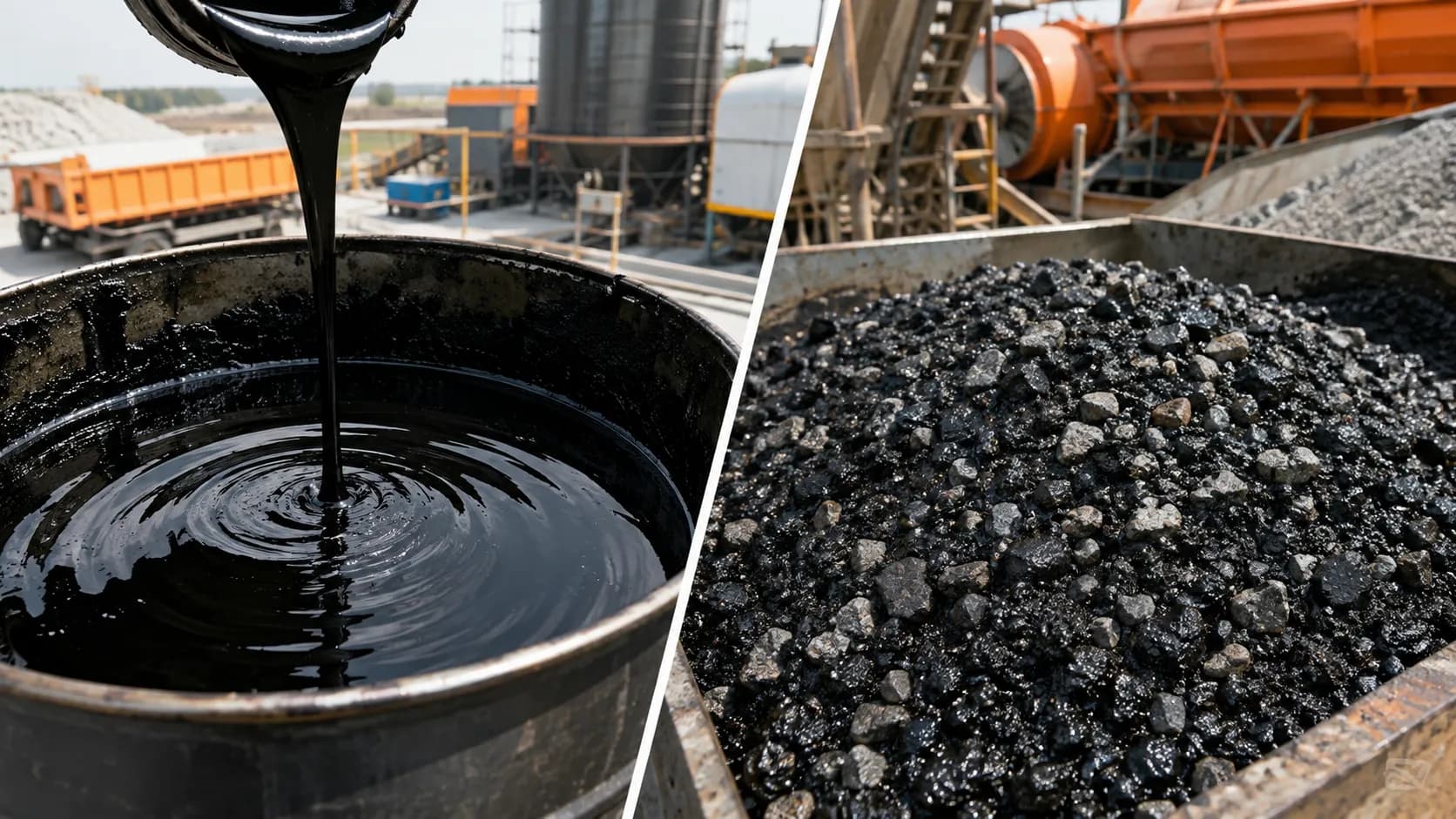
Ask for a "bitumen driveway" in Brisbane, Dublin, or Auckland, and everyone knows what you mean. Ask in Chicago or Toronto, and you'll likely get a blank look, then "you mean asphalt?" It's the same material almost everywhere: aggregate bound together with bitumen, a petroleum-based binder. The UK, Ireland, Australia, New Zealand, and South Africa mostly say "bitumen" or "tarmac." The US and Canada say "asphalt." A few UK contractors get technical and call it "bitmac," short for bituminous macadam, since actual tar hasn't been used in the mix for decades.
This guide covers real 2026 pricing across the main English-speaking markets, in local currency, plus what pushes a quote up or down no matter where you live.
Bitumen vs Asphalt: Are They the Same Thing?
Functionally, yes. Both refer to aggregate bound with a petroleum-based binder. The terminology differs by region, not by material composition. "Bitumen" and "tarmac" dominate in the UK, Ireland, Australia, and New Zealand. "Asphalt" and "blacktop" are the standard North American terms.
This distinction matters when comparing international quotes: a UK bitmac driveway and a US asphalt driveway are priced differently — but they are not different products. What varies is labour cost, local specification, and market competition. For a deeper look at the material itself, see our guide on what bitumen is and how it's made .
Bitumen Driveway Cost by Country
Prices below cover a professionally installed driveway, including groundwork and the bitumen surface. Currency and units follow local convention, since that's how you'll see quotes in each market.
| Country | Typical cost per m² | Typical single-car driveway (20–25 m²) |
|---|---|---|
| United Kingdom | £45 – £100 | £1,000 – £2,200 |
| Ireland | €40 – €70 | €1,000 – €1,750 |
| Australia | $35 – $100 (premium up to $175) | $875 – $2,500 |
| New Zealand | $90 – $150 | $2,250 – $3,750 |
| United States | $75 – $140 ($7–$13 per sq ft) | $1,900 – $3,500 |
| Canada | $32 – $88 CAD | $800 – $2,200 CAD |
A few things stand out once you line these up. Ireland and the UK sit at the lower end globally, largely because bitmac dominates the market there and competition among installers is high. New Zealand and the US run higher, partly due to labour costs and partly because "asphalt" quotes in those markets often assume a thicker, denser mix than standard UK bitmac. For context on how asphalt thickness affects both cost and performance, our complete asphalt thickness guide covers recommended depths by application type.
United Kingdom: Tarmac Driveway Costs
UK bitumen (tarmac) driveways cost £45 to £100 per m², with £45–£80 typical for a standard job and higher figures reflecting London and South East labour rates or premium finishes. A 40m² double driveway usually lands between £2,000 and £4,000.
Key point: Bitmac is the most competitive driveway surface in the UK market. London and South East quotes sit 20–30% above the national average due to local labour costs. A soakaway or permeable border is required on non-permeable surfaces over 5m² draining to the road — budget £500–£1,000 if your site needs one.
Ireland: Tarmac Driveway Pricing
Irish pricing runs €40 to €70 per m², making tarmac the cheapest full driveway surface available, ahead of block paving (€60–€120) and paving flags (€50–€90). Tarmac is contractor-only in Ireland; there's no real DIY supply option, so labour is baked into every quote.
Key point: Ireland has one of the most competitive bitmac markets in the world relative to GDP. The low per-m² cost makes it significantly cheaper than equivalent block paving or resin-bound alternatives.
Australia: Asphalt Driveway Costs
Australian asphalt driveways cost $35 to $45 per m² for a standard job, climbing to $100–$175 per m² for premium mixes or decorative finishes. Costs vary by state: Victoria and Queensland run slightly higher than Western Australia, largely due to labour and transport differences.
Key point: Hot climate zones in Queensland and Western Australia can soften standard asphalt under heavy vehicles and prolonged sun exposure. Contractors in those regions often recommend a slightly harder-grade mix or a sealing schedule every 3–4 years rather than 5.
New Zealand: Asphalt Driveway Prices
NZ pricing sits a little below plain concrete, which runs $100 to $150 per m². Asphalt driveways commonly land in the $90 to $150 per m² range once site preparation, a compacted base course, and any drainage work are included.
Key point: Many NZ councils require notification or a building consent for a new vehicle crossing onto a public road, separate from the driveway surface itself. Factor this into your timeline and budget before booking a contractor.
United States: Asphalt Driveway Cost
US asphalt driveways cost $7 to $13 per sq ft for a new installation, which converts to roughly $75 to $140 per m². Replacement jobs that include tearing out an old surface run higher, at $8 to $15 per sq ft, while a simple overlay on a sound base costs $3 to $7 per sq ft.
Key point: US contractors typically quote in square feet, not square metres. Always convert before comparing to international rates. Site prep — including demolition of the existing surface — is often quoted as a separate line item and can add 15–25% to the headline driveway cost. Our asphalt estimation guide covers the unit conversion errors that trip up most homeowners when comparing quotes.
Canada: Asphalt Driveway Cost
Canadian hot-mix asphalt costs $3.00 to $8.17 per sq ft, or about $32 to $88 CAD per m². A standard 2-car driveway (around 56 m²) typically totals $1,800 to $4,900 CAD before extras like edging or drainage.
Key point: Canadian winters are the harshest of any market in this guide. Freeze-thaw cycles accelerate cracking on thin or poorly sealed driveways. Sealing every 2–3 years rather than 5 is strongly recommended in provinces with severe winters.
What Drives the Price Everywhere
Regardless of country, the same handful of factors explain most of the gap between a cheap quote and an expensive one. Understanding these helps you evaluate contractor quotes — and spot the ones cutting corners on things that actually matter.
Driveway size
Smaller jobs cost more per m². A contractor's minimum charge for delivery, plant hire, and a crew gets spread across less area, so a small single-car driveway can cost 30% to 50% more per square metre than a large one.
Ground condition
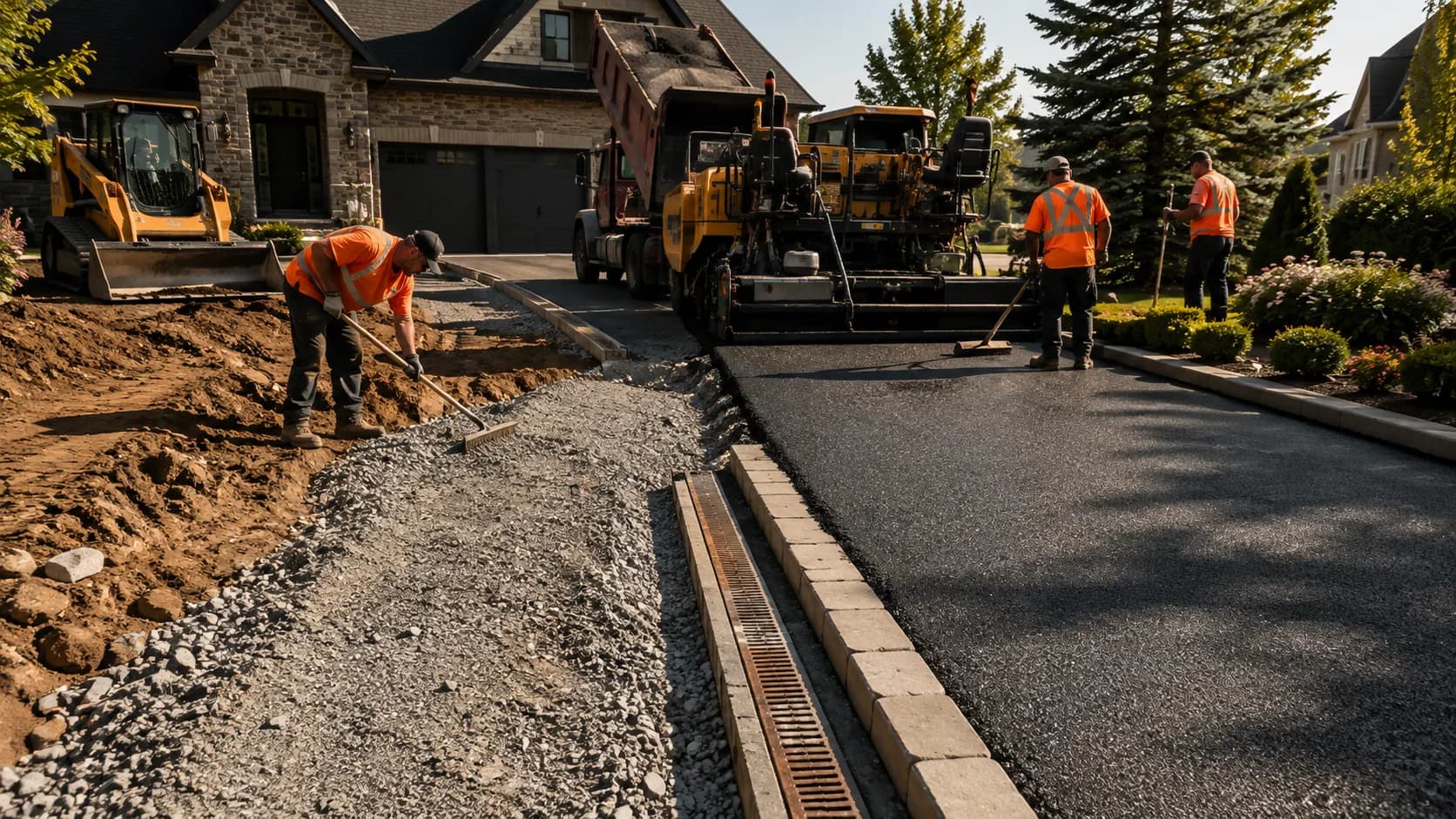
Old tarmac, cracked concrete, or soft soil needs digging out before anything new goes down, typically to 150mm. This excavation and disposal step often adds 25% to 35% of the total project cost.
Sub-base depth
A compacted layer of crushed stone under the bitumen surface is what actually carries the load. Skimping here is the single most common reason driveways fail early — usually within 5 years instead of lasting the full 15 to 25.
Drainage
Many countries now regulate where rainwater from a driveway can go. In England, non-permeable driveways over 5m² that drain to the street need planning permission unless you add a soakaway or permeable surface. Budget £500–£1,000, or the local equivalent, if your site needs it.
Bitumen thickness
A 25 to 40mm surface layer suits normal domestic traffic. Heavier vehicles or soft ground often call for a base course plus a separate surface course, which adds material and labour cost but extends the driveway's working life.
Access
Narrow side passages or driveways that machinery can't reach easily mean more hand labour, which can add 10% to 20% to a quote in any country.
Finish and colour
Standard black is cheapest everywhere. Coloured or decorative mixes — including red-chip finishes popular in the UK and premium coloured asphalt in Australia — typically cost 10% to 50% more.
Region within the country
Labour and transport costs vary locally just as much as they do between countries. Expect capital cities and major metro areas (London, Sydney, Auckland, Toronto) to sit at the higher end of the national range.
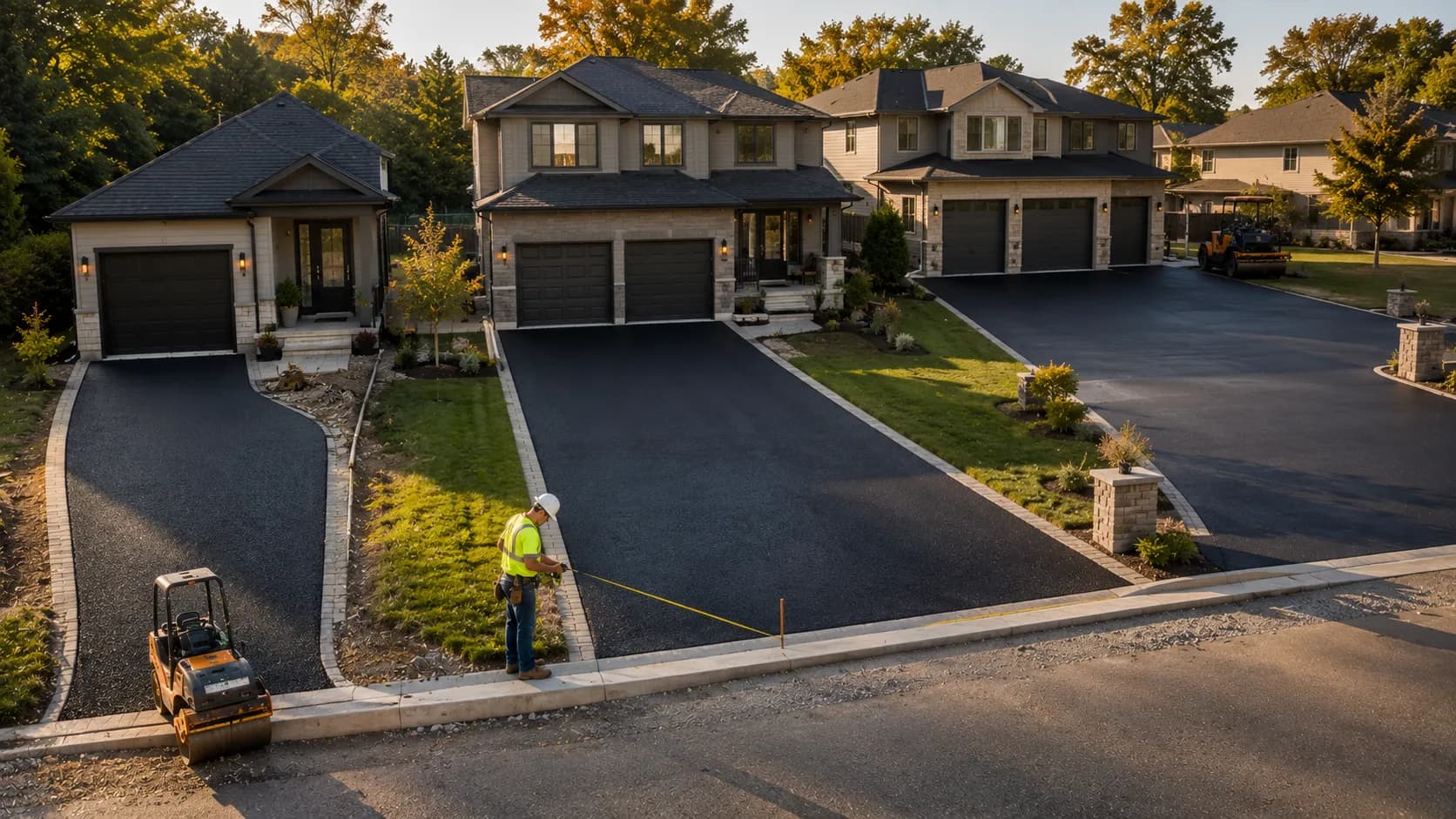
Bitumen Driveway Cost by Size
These figures use the UK range as the reference point since bitmac terminology and UK pricing data are the most detailed publicly available, but the proportional relationship between sizes holds in every market.
| Driveway size | UK cost (illustrative) |
|---|---|
| Single car (20m²) | £1,000 – £2,000 |
| Double, 2 cars (40m²) | £2,000 – £4,000 |
| Large (60m²) | £2,700 – £6,000 |
| Extra large (100m²+) | £4,500 – £10,000+ |
To estimate your own market, take your local per-m² rate from the country table above and apply the same size-based logic: expect the rate to sit 20% to 30% higher than average for anything under 25m², and 10% to 20% lower than average for anything over 75m². For precise quantity calculations, our Asphalt Driveway Cost Calculator can help you work out material volumes before you approach a contractor.
Bitumen vs Other Driveway Materials
The relative cost order between materials stays consistent worldwide, even though the actual numbers shift by country. Bitumen's main appeal everywhere is the same: a durable, tidy surface for meaningfully less than block paving, resin bound, or premium concrete, with a shorter install time too.
| Material | Relative cost | Typical lifespan | Worth knowing |
|---|---|---|---|
| Bitumen / asphalt | Lowest of the hard surfaces | 15 – 25 years | Quick to install, softens under fuel or oil spills |
| Gravel | Lower, sometimes cheaper than bitumen | 10 – 20 years | Needs regular topping up and raking |
| Tar and chip / chip seal | Low | 3 – 5 years | Cheapest upfront, shortest lifespan |
| Concrete | Mid to high | 20 – 30 years | Cracks are harder to disguise than on bitumen |
| Resin bound | High | 15 – 25 years | Permeable, needs a skilled installer |
| Block paving | Highest | 20 – 30 years | Most design flexibility, weeds grow in joints |
Understanding which bitumen grade suits your climate can also influence how well your driveway performs long-term — especially in markets with extreme heat or cold.
How Long a Bitumen Driveway Lasts
A properly installed bitumen or asphalt driveway lasts 15 to 25 years in most climates. Some go longer with regular sealing; several installers report driveways still performing well past 30 years.
Climate plays a real role here. Bitumen handles freeze-thaw cycles reasonably well, which is part of why it's popular in the UK and Ireland, but extreme heat in parts of Australia and the southern US can soften the surface and make it more prone to rutting under heavy or stationary vehicles. Regular sealcoating every 2 to 3 years helps offset this in hot climates and is one of the most cost-effective ways to extend a driveway's working life regardless of where you are.
Installation quality still matters more than climate. A shallow or poorly compacted sub-base is the most common reason a driveway fails early, wherever it's laid. This is why asking contractors specifically about sub-base depth is one of the most useful questions you can ask when comparing quotes — our asphalt thickness guide explains the recommended depths for different applications.
Planning Permission and Local Rules by Country
Requirements vary enough by country that it's worth checking before you commit to a quote.
🇬🇧 United Kingdom
No permission needed for most driveways. Non-permeable surfaces over 5m² that drain to a public road do need permission, unless you fit a soakaway or permeable surface instead.
🇮🇪 Ireland
Generally exempt for standard residential driveways, though local authority rules on drainage and access to public roads still apply.
🇦🇺 Australia
Council requirements vary by state and sometimes by local government area. Larger jobs — especially those affecting stormwater flow or a new crossover to the street — often need a permit.
🇳🇿 New Zealand
Many councils require a building consent or at least notification for a new vehicle crossing onto a public road, separate from the driveway surface itself.
🇺🇸 United States
Most residential driveway resurfacing doesn't need a permit, but a new crossing that meets a public street, or work in a utility easement, often does. City and county rules differ enough that a quick call to your local building department is worth the 10 minutes.
🇨🇦 Canada
Similar to the US — resurfacing is usually permit-free, but new crossovers to public roads require approval. Municipality rules vary significantly between provinces.
How to Save Money Without Cutting the Corners That Matter
Get 3 quotes from local contractors. Prices for an identical job can vary by hundreds of dollars, pounds, or euros within the same city.
Book outside peak season. Spring and early summer are the busiest months in most markets, and contractors sometimes flex on price when they have gaps in the schedule.
Skip decorative edging or coloured mixes if budget is tight. Standard black bitumen with basic edging does the job and costs noticeably less.
Combine your job with a neighbour's if timing allows. Some contractors reduce the per-unit rate for back-to-back jobs on the same street.
Don't cut the sub-base depth or skip required drainage to save money upfront. Both show up as cracks, dips, and pooling water within a few years — and fixing the underlying problem later costs more than doing it right the first time.
Maintenance Costs After Installation
Sealing
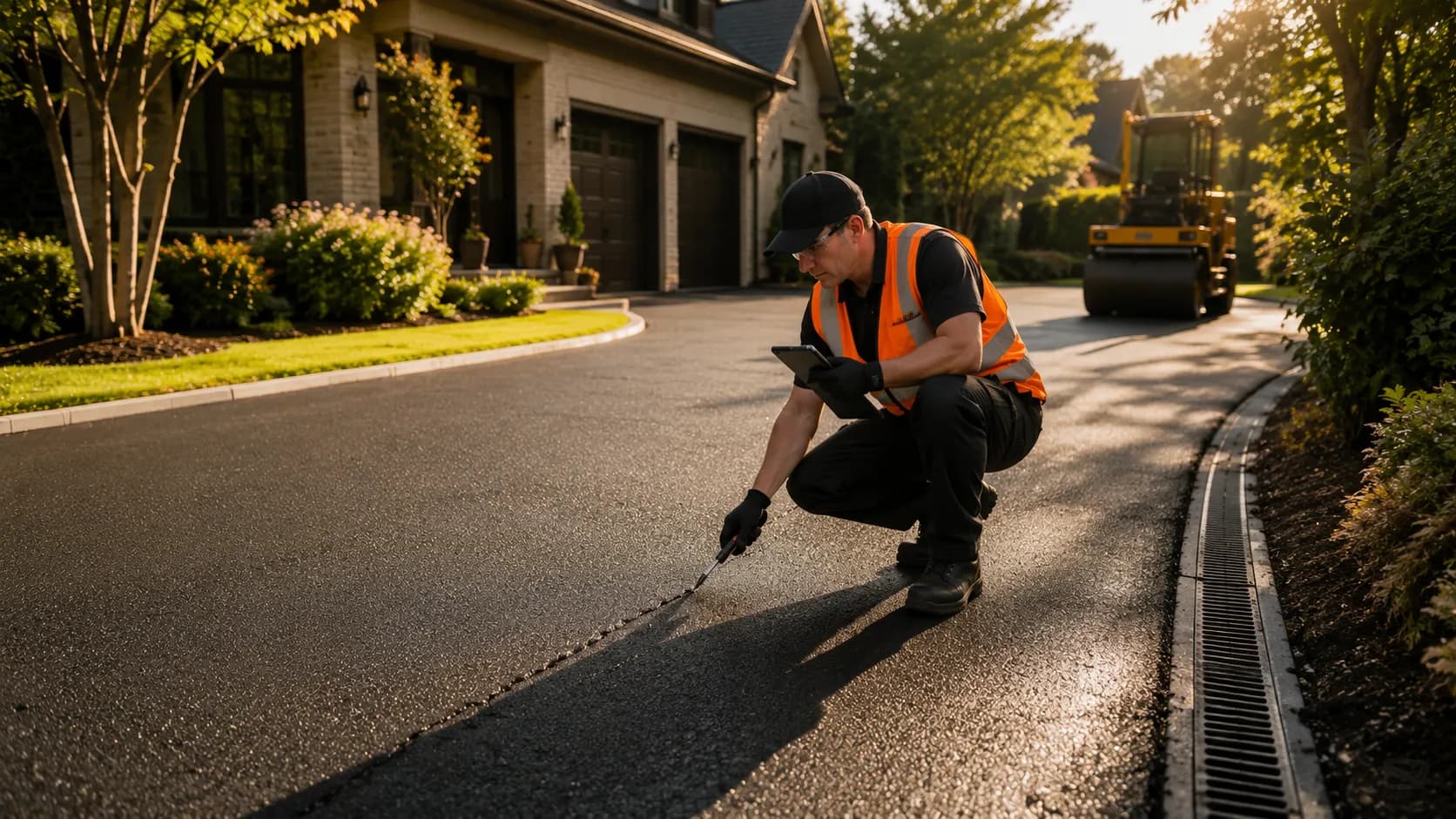
Recommended every 3 to 5 years. Costs roughly 5% to 10% of the original installation cost per treatment and protects against UV fading, fuel spills, and oil damage.
Crack repair
Small cracks are cheap to fix if caught early — usually a small fraction of a full resurfacing job. Left alone, water gets in, freezes or expands, and turns a hairline crack into a pothole.
Resurfacing (overlay)
If the sub-base is still sound but the surface has worn thin, an overlay costs roughly a third to half of full replacement.
Routine cleaning
A yearly pressure wash keeps moss, staining, and organic growth off the surface and costs little beyond the price of hiring or owning a pressure washer.
Fuel and oil spills
Petrol, diesel, and oil soften bitumen over time in every climate. Wipe up spills quickly rather than letting them sit on the surface.
Why the Price Gap Between Countries Is So Wide
A £50 per m² UK driveway and a $140 per m² US driveway aren't as different as the raw numbers suggest, but three real factors do separate markets.
Labour cost
Paving crews in the US and Canada generally earn more per hour than equivalent crews in the UK or Ireland, and labour typically makes up 30% to 45% of a driveway's total cost. That gap alone explains much of the difference between UK and North American pricing.
Mix specification
What gets called 'asphalt' in the US often uses a denser, more refined mix than standard UK bitmac, closer to what UK contractors would price as a premium surface course. You're not always comparing the same product when you compare quotes across borders.
Market maturity and competition
Bitmac driveways are extremely common in the UK and Ireland, with a large number of specialist contractors competing for the same jobs. In markets where concrete or pavers dominate — such as much of the US and New Zealand — fewer contractors specialise in bitumen work, which keeps quotes higher.
None of this means one country is getting a better deal. A US quote at $100 per m² and a UK quote at £70 per m² can both represent fair, competitive pricing for their respective markets. For more context on how bitumen properties affect specification choices, the Asphalt Institute publishes detailed guidance on mix design standards used across North American markets.
A Worked Cost Example: 45m² Double Driveway
Take a 45m² double driveway — a common size for a two-car UK household or a modest US suburban home.
🇬🇧 UK Example
At £55 per m² average, that's roughly £2,475 installed, assuming a straightforward site with no major excavation.
Add a soakaway for drainage compliance and basic edging, and a realistic total sits closer to £3,000 to £3,300.
🇺🇸 US Example
At $100 per m² average ($9.30 per sq ft, mid-range), the same size driveway runs about $4,500.
Site prep in North America is often quoted separately and can add another 15% to 25% if the existing surface needs full removal.
The lesson: A quote that looks expensive next to an online average from a different country usually isn't overpriced. It's reflecting a different labour market and, often, a different specification. Always compare like-for-like and ask each contractor what sub-base depth they're quoting for.
Currency and Unit Conversions to Watch
Quotes get confusing fast when contractors mix units. A few conversions worth keeping handy. Avoiding these conversion pitfalls is one of the key points covered in our guide to common asphalt estimation mistakes .
| Conversion | Value |
|---|---|
| 1 square metre (m²) | ≈ 10.76 square feet |
| $10 per sq ft | ≈ $108 per m² |
| £1 per m² | Very different from $1 per sq ft — never compare directly |
| VAT / tax | Usually included in UK & Irish quotes; sometimes separate in US & Canada |
When you're comparing quotes from contractors in different regions, or checking an online estimate against a local quote, convert everything to the same unit and currency before judging whether a price is fair. The Checkatrade cost guides offer regularly updated UK-specific benchmarks for tarmac and driveway work that can serve as a useful cross-reference for local quotes.
The Bottom Line
Bitumen driveway cost lands somewhere between £45 and £100 per m² in the UK and Ireland, and the local equivalent of $75 to $150 per m² across Australia, New Zealand, the US, and Canada. The material and the underlying installation process are nearly identical worldwide; what changes is labour cost, local drainage rules, and how much groundwork your site needs.
Get 3 local quotes, ask each contractor how deep the sub-base will be and where the water goes, and you'll be able to compare them on the details that actually determine how long your driveway lasts. For long-term care and dealing with accidental drips during paving, check our guide on cleaning bitumen stains from driveways and tools. Explore more guides in our bitumen and asphalt knowledge hub, or use our free bitumen quantity calculator to estimate material needs before you approach contractors.
Frequently Asked Questions
Is bitumen the same as asphalt?
Functionally, yes. Both use bitumen as the binder holding aggregate together. 'Bitumen' or 'tarmac' is the common term in the UK, Ireland, Australia, New Zealand, and South Africa. 'Asphalt' is the standard term in the US and Canada for the same material category.
Which country has the cheapest bitumen driveways?
Based on current per-m² rates, Ireland and the UK tend to sit at the lower end globally, largely due to a competitive contractor market and widespread use of standard bitmac rather than premium asphalt mixes.
How thick should a bitumen driveway be?
Most residential driveways use a 25 to 40mm surface layer over a compacted sub-base of 100 to 150mm. Heavier use or soft ground often calls for a base course plus a separate surface course.
Do I need planning permission for a bitumen driveway?
It depends on your country and, often, your local council. The UK requires permission only for larger, non-permeable driveways draining to the street. Australia and New Zealand often require a permit for new crossovers to public roads. Check locally before booking work.
How long does bitumen driveway installation take?
A standard single or double driveway usually takes 1 to 3 days in any market, covering excavation, sub-base laying, and the bitumen surface. Larger or more complex jobs with heavy groundwork can take a week or more.
Can I lay a bitumen driveway myself?
Small patch repairs are DIY-friendly with cold-lay products sold in most markets. A full driveway needs hot-laid material, a roller, and correct grading, which is why almost everyone hires a contractor for a complete installation.

Founder & Web Developer
Nabeel Awan is a web developer and the founder of BitumenCalcPro. His work focuses on web development and building practical online tools, with a strong interest in civil engineering, asphalt, bitumen, pavement construction, and construction technology.