Quick Answer
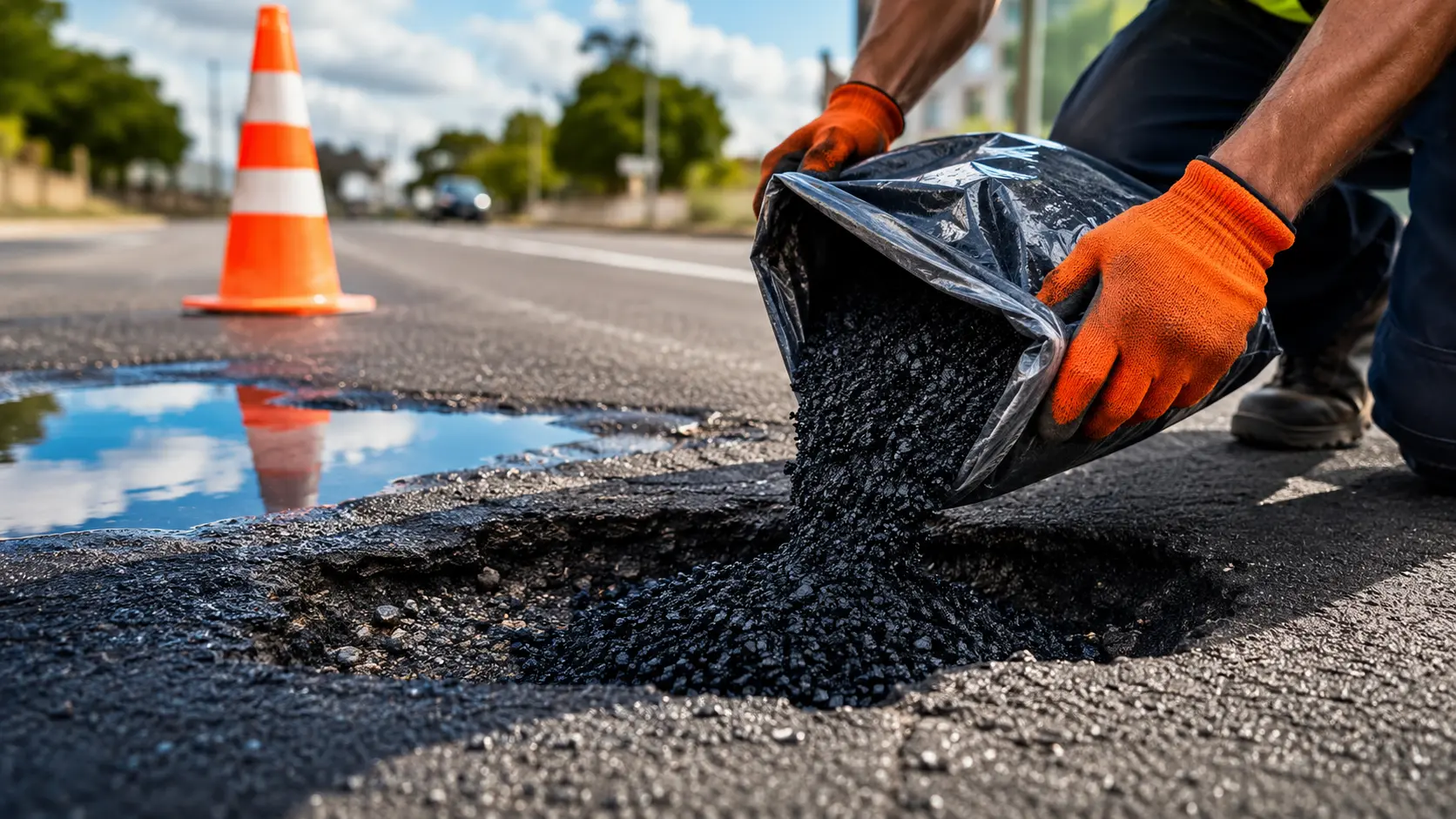
Cold mix bitumen is a ready-to-use paving material made by coating aggregate with emulsified or cutback bitumen, so it stays workable without heating. It is the standard choice for pothole repairs, low-traffic roads, and emergency fixes in any weather. It is weaker and shorter-lived than hot mix asphalt, so it works best as a repair material rather than for new road construction.
Cold mix bitumen fills more potholes than any other asphalt product — and is also one of the most misapplied. Chosen for the right job in the right conditions, it's fast, practical, and cost-effective. Used as a shortcut for repairs it wasn't designed to handle, it fails within months and leaves a bigger problem than the one it covered.
This guide explains how cold mix is made, when it's the right call, and how to apply it so repairs actually last — not just look fixed for a few weeks. If you're tackling a residential driveway, our step-by-step asphalt driveway crack and pothole repair guide pairs directly with this article for hands-on product selection and technique.
What Is Cold Mix Bitumen?
Cold mix bitumen is a paving material made by coating stone, sand, and gravel with bitumen that has been treated to stay liquid at normal outdoor temperature. Hot mix asphalt needs heat to become workable. Cold mix skips that step entirely by using bitumen that is either emulsified in water or thinned with a solvent.
The result is a mix you can scoop from a bag, drop into a pothole, and tamp down without a heating plant or heated truck. The name is a bit misleading — cold mix is not chilled, it just never gets heated during production or application, unlike its hot-mix counterpart.
This makes cold mix a fundamentally different product from hot mix asphalt, even though both start from the same two ingredients: bitumen and aggregate. Contractors often describe the choice between them as trading peak strength for practicality, and that trade-off explains almost everything about where each material gets used.
How Is Cold Mix Bitumen Made?
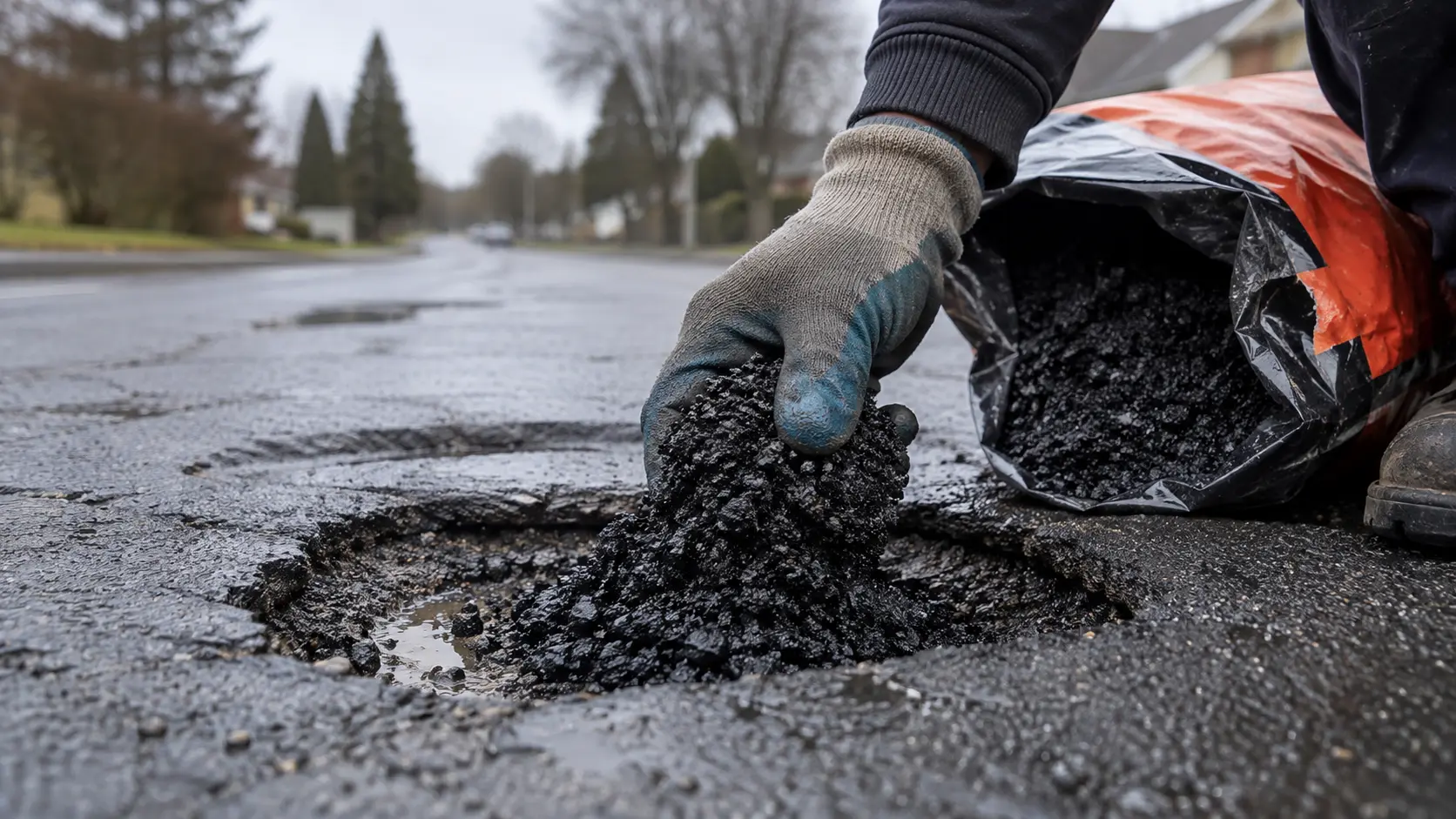
Cold mix relies on one of two binder types, both engineered to stay fluid without heat.
Bitumen Emulsion
Breaks bitumen into tiny droplets suspended in water, held together by an emulsifying agent. Once the emulsion coats the aggregate and gets compacted, the water evaporates and the emulsion breaks, leaving a continuous bitumen film binding the stone together. You can learn more about its properties and classification in our guide to bitumen emulsion. Common grades include medium-setting and cationic slow-setting emulsions, picked based on how fast the mix needs to cure on site.
Cutback Bitumen
Thins regular bitumen with a solvent, such as kerosene, so it flows at lower temperatures. As the solvent evaporates after laying, the bitumen firms back up again. Cutback has fallen out of favor in many regions because of air-quality rules on solvent emissions, which is why emulsion-based cold mix now dominates the market.
Refineries typically use standard paving-grade bitumen, often around 60/70 penetration grade, as the starting material for cold mix in moderate climates. Most emulsion-based formulations do not need heated or fully dried aggregate, which keeps production costs and energy use well below what a hot mix plant requires. To understand the underlying binder in more depth, read our guide on what bitumen is and how it is made.
Types of Cold Mix Asphalt
Cold mix is not a single product — engineers generally split it into two categories based on where and how the pavement will be used.
Dense-Graded Cold Mix
Packs aggregate tightly using a full range of particle sizes, leaving little empty space. Fewer air voids mean fewer paths for water to get in, giving higher strength and better resistance to moisture damage. The more common pick for general repair work and base or subbase layers.
Open-Graded Cold Mix
Uses aggregate with fewer fine particles, leaving more air voids in the finished surface. Water drains through quickly instead of pooling on top, improving skid resistance and cutting down on spray in wet weather. A common choice for surface courses where drainage and safety outrank raw strength.
Cold Mix and Recycled Asphalt (RAP)
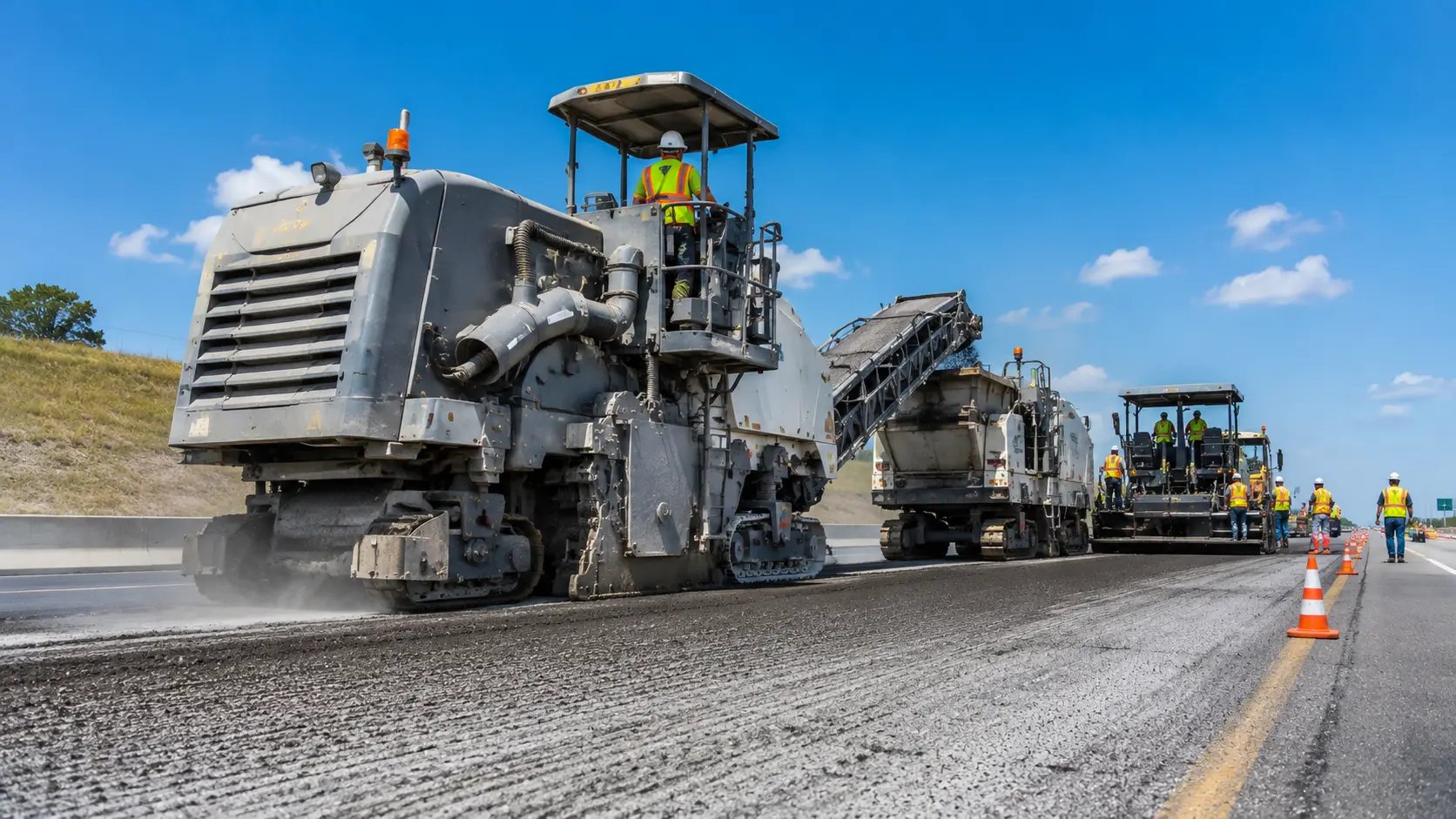
Cold mix technology plays a bigger role than most people realize in recycling old pavement. Reclaimed asphalt pavement (RAP) is what is left when an old asphalt road gets milled up during resurfacing — and cold mix binders are particularly good at putting it back to work.
Two related techniques handle this job:
A train of milling and mixing equipment grinds up the existing road surface, blends it with a small amount of emulsified or foamed bitumen and water right on site, and relays it as a new layer — with no hauling or heating involved.
A similar process, except the milled RAP gets hauled to a plant, mixed with a cold binder there, and trucked back for laying.
Both methods typically need only a small percentage of new binder by weight, since most of the material is the old, already-bound pavement being reactivated rather than replaced. These techniques cut both energy use and material costs significantly compared to full-depth removal and hot mix replacement. Some cold recycled mixes also blend in a small amount of lime or cement to boost early and long-term strength. According to the Federal Highway Administration pavement recycling guidelines, cold in-place recycling is recognized as a proven, cost-effective rehabilitation strategy for existing pavements.
This is a big part of why cold mix matters beyond pothole patching — it is a genuine pavement rehabilitation strategy, not just a stopgap repair method. If you are planning a RAP driveway or base paving project, calculate exact tons and cubic yards using our dedicated Asphalt Millings Calculator.
Cold Mix vs Hot Mix Asphalt
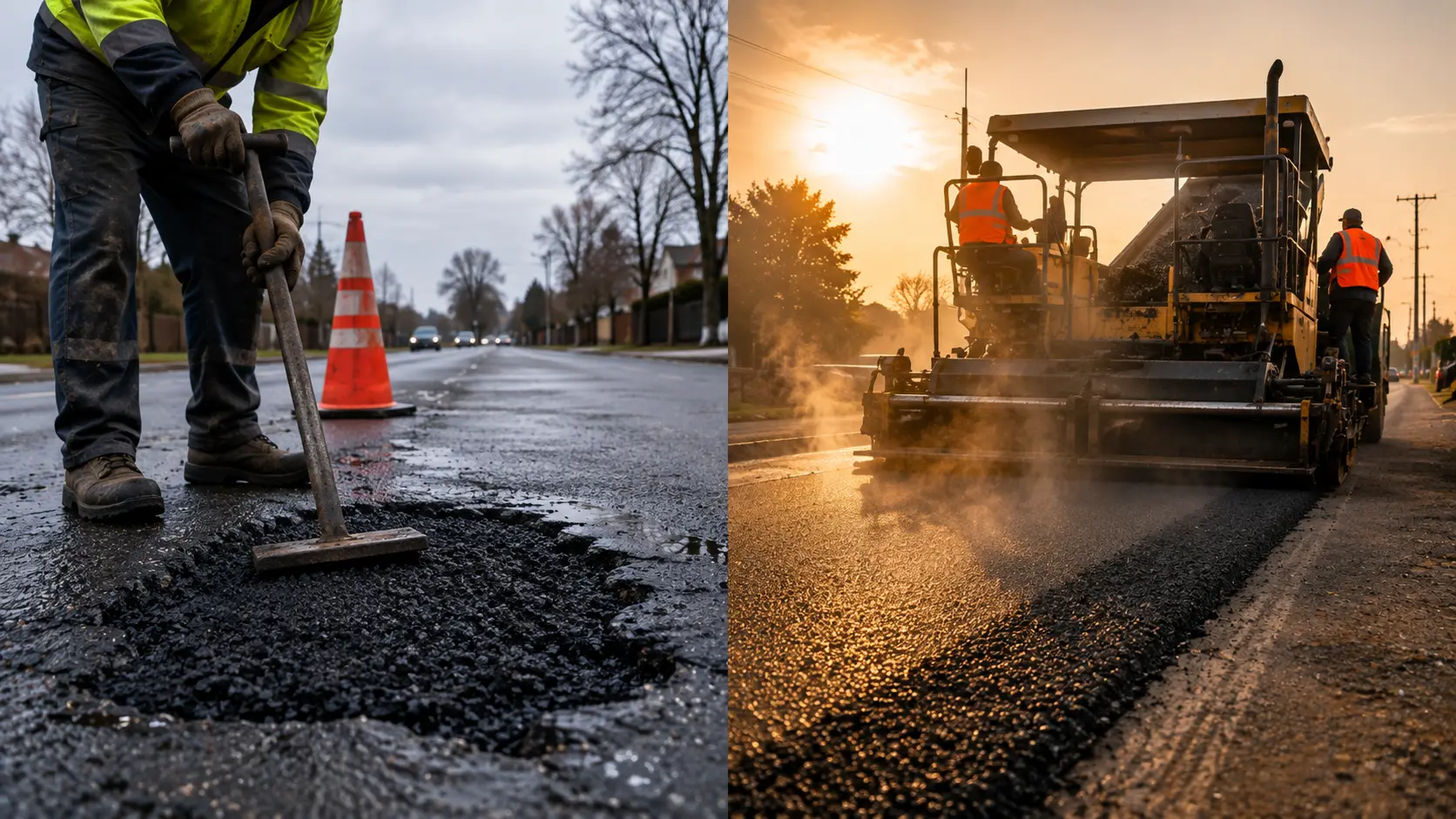
The core difference comes down to temperature, strength, and intended use. Hot mix asphalt typically gets heated to somewhere between 150 degrees C and 190 degrees C (roughly 300 to 350 degrees F or higher) before it is laid and compacted while still hot. Cold mix is applied at whatever temperature the outside air happens to be.
| Feature | Cold Mix Bitumen | Hot Mix Asphalt |
|---|---|---|
| Application temperature | Ambient (no heating needed) | Heated to roughly 150-190 degrees C (300-350 degrees F+) |
| Equipment needed | Shovel, tamper — no special gear | Paver, roller, heated transport |
| Storage | Can be bagged and stored for months | Must be used almost immediately after mixing |
| Strength | Lower, develops slowly | High, sets quickly on cooling |
| Best use | Repairs, patching, low-traffic areas, recycling | New roads, driveways, high-traffic pavement |
| Weather flexibility | Works in cold, wet conditions | Needs warm, dry conditions for best results |
| Energy use | Low — no aggregate or binder heating | High — both aggregate and binder heated |
| Typical repair lifespan | Months to a couple of years (temporary) | Years, often a decade or more (permanent) |
| Relative cost | Roughly 5-6% cheaper for small jobs | Higher upfront, better long-term value for big jobs |
Why Contractors Still Choose Hot Mix for Big Projects
Hot mix asphalt compacts to a much denser finished product, which is why it holds up under heavy, repeated traffic loads the way cold mix simply cannot. A properly laid hot mix road surface can last 15 to 20 years with routine maintenance, while a cold mix patch is designed to hold for months to a couple of years at most. That gap in service life is the main reason cold mix never fully replaces hot mix on new construction — it is a repair and maintenance tool, not a substitute for a properly engineered pavement structure. The Asphalt Institute publishes detailed mix design standards and technical guidance for both hot and cold asphalt applications.
Uses, Selection & Application
What Is Cold Mix Bitumen Used For?
Cold mix earns its place in road maintenance in situations where hot mix simply is not practical.
- Pothole repair
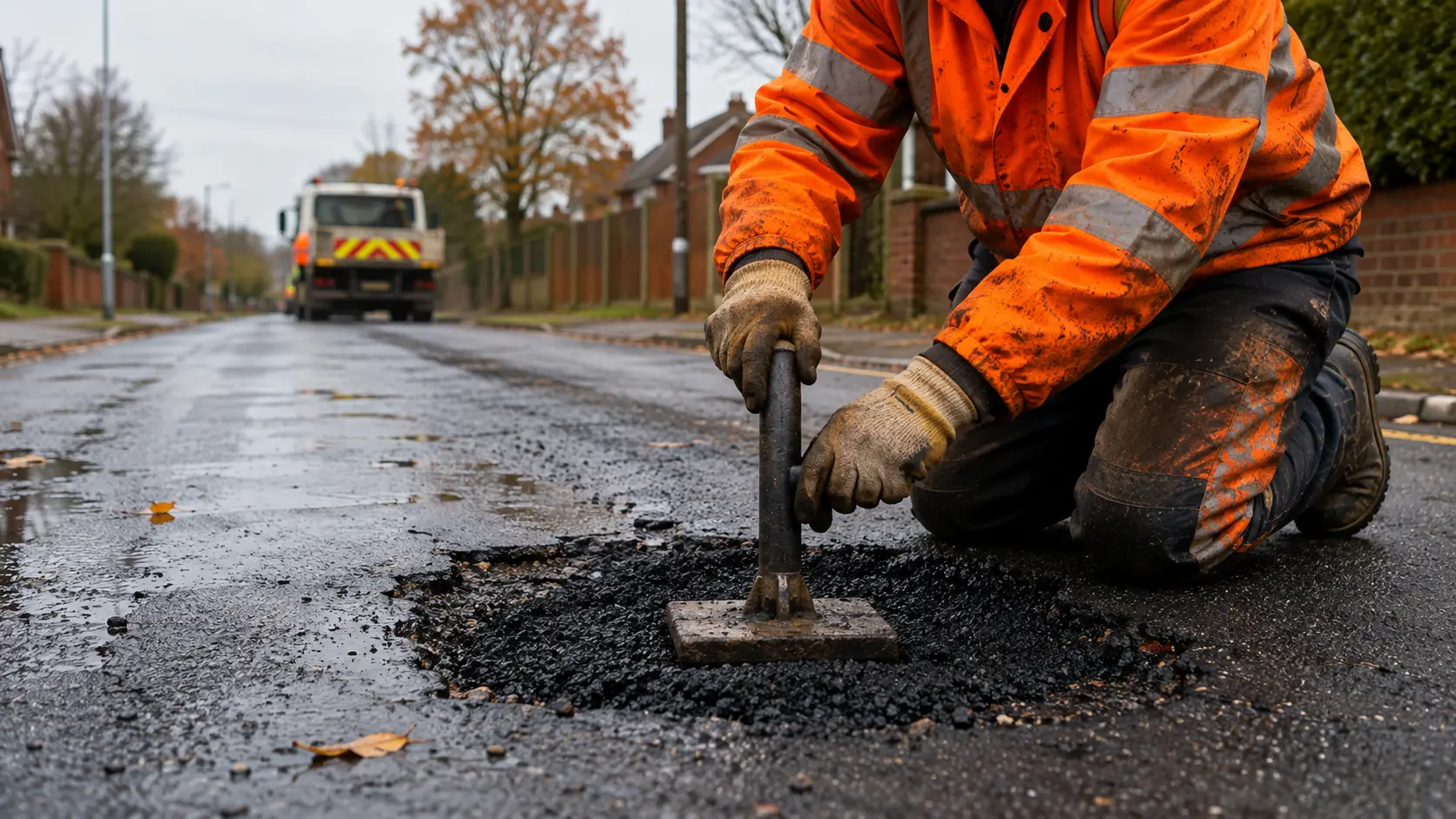
The single most common use, especially for quick fixes on roads, driveways, and parking lots
- Crack patching
Filling and sealing smaller surface damage before it spreads
- Emergency repairs
Where a hazard needs fixing immediately and a hot mix plant is not nearby
- Rural and remote roads
Locations far from a hot mix plant, where hauling hot asphalt before it cools is not feasible
- Low-traffic roads
Rural routes or access roads that do not see the heavy, repeated loads that wear down cold mix faster
- Winter maintenance
Cold mix does not rely on warm, dry conditions to cure, unlike hot mix
- Utility cut patching
Filling trenches dug for pipes or cables where a quick, workable fix is needed before permanent resurfacing
- Pavement recycling
As the binder in cold in-place and cold central plant recycling projects
Highway departments and municipalities often keep cold mix on hand specifically for emergency and winter use. It lets crews respond to a dangerous pothole the same day instead of waiting for a hot mix plant to schedule a batch.
Choosing the Right Cold Mix Product
Not every bag of cold patch performs the same, and picking the wrong one is a common reason repairs fail early.
For engineered applications like base courses or recycling projects, selection goes through a formal mix design process that matches binder and aggregate to the project traffic loads and climate, typically specified by a paving engineer.
Performance, Cost & Storage
Benefits of Cold Mix Bitumen
Removing a major cost and safety barrier — crews do not need hot boxes, heated trucks, or burn-risk handling
Cold, wet, or freezing conditions do not stop cold mix the way they stall hot mix production and laying
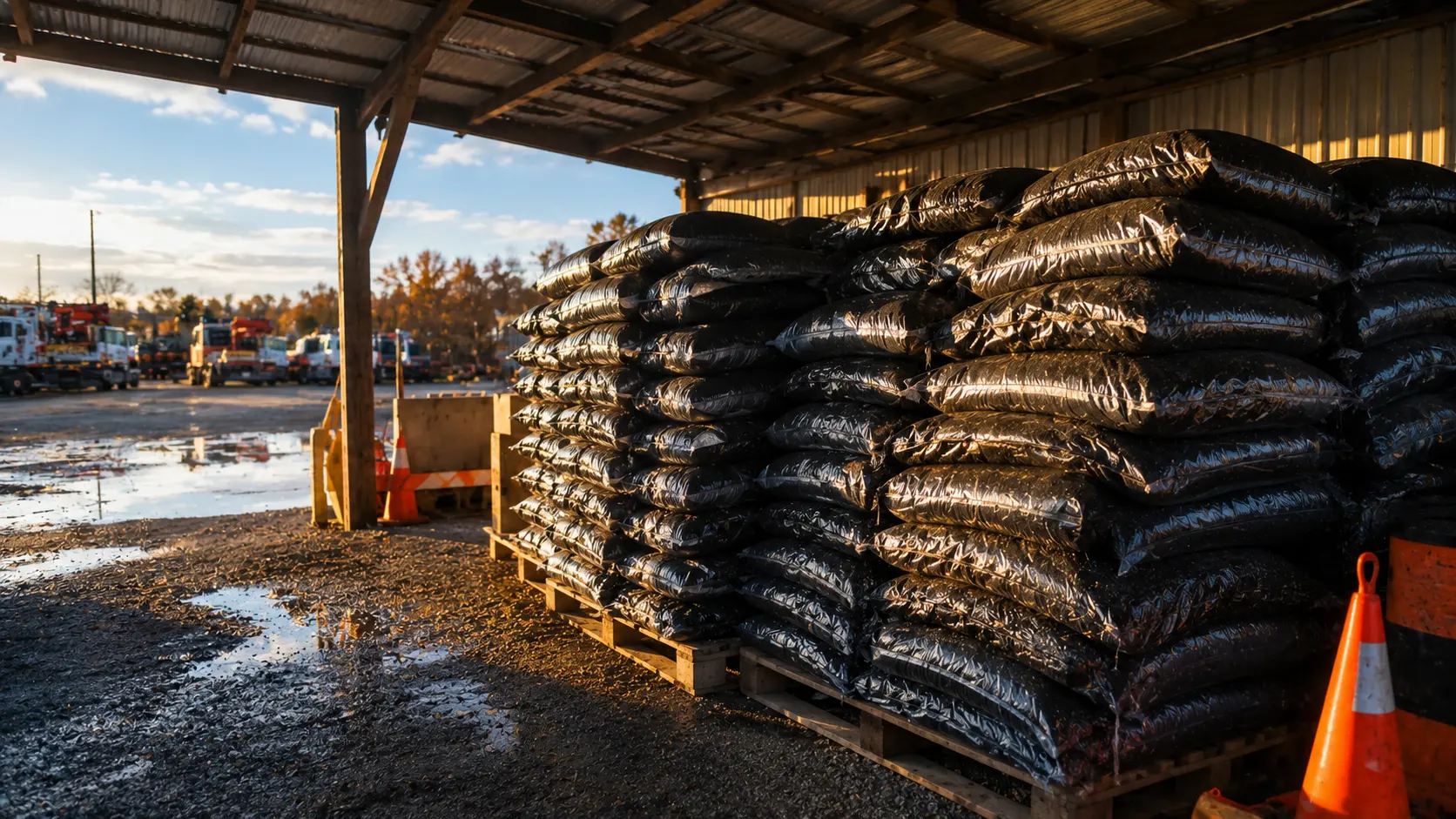
Properly sealed cold mix can be stored for several months without losing workability, so departments can stock up ahead of winter
No plant scheduling or batch mixing delay; crews grab bagged material and go
For small jobs, cold mix avoids the equipment and labor overhead that hot mix repairs require
Skipping the heating step means significantly less fuel burned per ton produced
Cold mix binders let RAP be reused directly, cutting cost and material waste
Homeowners and small property managers can patch a driveway pothole themselves with basic tools
Limitations of Cold Mix Bitumen
Cold mix does not compact and bond as tightly as hot mix, so it cannot handle the same traffic loads
A cold mix patch typically lasts months to a couple of years, while a proper hot mix repair can last a decade or more
Most repairs are temporary, meant to hold until conditions allow a hot mix repair
Since the mix relies on water or solvent evaporating to set, performance can suffer if it stays wet before it sets
Cold mix keeps curing for weeks after placement, unlike hot mix, which reaches most of its strength as soon as it cools
Highways and busy intersections need the strength that only hot mix provides
Cold mix can be harder to spread and shape than the pliable, warm consistency of hot mix
Engineered cold mix for recycling or base courses needs proper mix design and testing to perform reliably
How to Apply Cold Mix Bitumen
Applying cold mix correctly makes a real difference in how long the repair holds, even though the process is designed to be simple.
Remove loose debris, dirt, and standing water from the pothole or crack using a brush or broom
If possible, trim ragged edges so the patch has a clean surface to bond to
For deeper holes, add crushed gravel as a base layer before applying cold mix, since patches over about three inches (75mm) thick cure unevenly if placed all at once
Tamp the material down firmly — a hand tamper or the back of a vehicle tire works for small jobs, a plate compactor for larger ones
Cold mix settles as traffic compacts it further, so a slight crown helps the patch end up level
Light traffic is often fine within an hour or two, but the patch keeps gaining strength over the following days and weeks
Why Cold Mix Patches Fail (and How to Prevent It)
Most premature failures trace back to a handful of preventable mistakes, not a flaw in the material itself.
Taking a few extra minutes on prep and compaction matters more than the brand of cold mix used. The material itself is forgiving, but only when it has a clean, well-compacted surface to bond to.
What Affects Cold Mix Bitumen Cost
Cold mix pricing depends on several factors, though exact costs vary by region, supplier, and product grade.
| Cost Factor | Impact |
|---|---|
| Bitumen content and grade | Higher-quality binder and polymer-modified formulations cost more than basic mixes |
| Bag size and packaging | Small retail bags carry a higher per-pound cost than bulk totes or truckload quantities |
| Aggregate source | Locally sourced aggregate generally costs less than material transported over long distances |
| Order volume | Bulk purchases for municipal or contractor use typically bring lower unit pricing than small retail purchases |
| Crude oil market conditions | Cold mix tracks the same petroleum market swings affecting hot mix and other bitumen products |
For small repairs, cold mix is almost always cheaper overall than hiring a hot mix crew once labor and equipment costs are factored in. If you are budgeting a larger paving project, our free Bitumen Calculator can help you estimate quantities and material costs instantly.
How Long Does Cold Mix Bitumen Last?
Cold mix cures faster than most people expect but keeps developing strength over time. Most formulations allow light traffic within one to two hours and can typically handle full traffic within about a day, though this varies by product, mix design, and weather.
| Use Case | Typical Curing / Lifespan |
|---|---|
| Light traffic | Safe within 1-2 hours |
| Full traffic | Typically within 24 hours |
| Repair patch lifespan | Several months up to 2 years (stop-gap repair) |
| Engineered cold mix (CIR/CCPR) | Years — designed as a structural pavement layer |
| Hot mix asphalt (for comparison) | 15-20 years with routine maintenance |
Engineered cold mix used in recycling projects goes through a formal mix design process and is built to perform as a structural pavement layer for years — very different from a bagged stop-gap patch.
Cold Mix Bitumen Storage
One of the practical advantages of cold mix is shelf life. Properly bagged or bulk-packaged cold mix can typically be stored for several months without hardening or losing workability, as long as it is kept sealed and away from excess moisture. This is a major reason highway departments stockpile it before winter — cold mix bought in the fall is often still usable when spring pothole season arrives.
Storing cold mix in a dry, covered area further extends its shelf life. Bags left exposed to rain or left open to air tend to harden at the surface, which forces crews to break up the crust before the material underneath can be used.
Conclusion
Cold mix bitumen trades some strength and lifespan for speed, convenience, and year-round usability. Built from emulsified or cutback bitumen, it never needs heating, which makes it the practical choice for potholes, cracks, and emergency repairs — especially in cold weather or locations far from a hot mix plant.
Beyond simple patching, engineered cold mix also plays a real role in pavement recycling through techniques like cold in-place and cold central plant recycling, offering a lower-energy alternative for rehabilitating old roads. For anything beyond a repair or recycling project — new roads, driveways, or high-traffic pavement — hot mix asphalt remains the stronger, longer-lasting option.
Want to go deeper on the binder itself? Our guide on what bitumen is and how it is made covers everything from grades and properties to the full range of bitumen types. If you are planning a project, the free Bitumen Calculator on our homepage estimates quantities and costs instantly.
Frequently Asked Questions
Is cold mix bitumen the same as cold patch asphalt?
Yes, the terms are used interchangeably. Cold patch is the more common term for the packaged, ready-to-use product sold for pothole repair.
Can cold mix bitumen be used for driveways?
It works well for small repairs and patching on driveways, but it is not recommended for paving an entire new driveway, since it does not offer the strength or lifespan of hot mix asphalt.
How long does cold mix take to cure fully?
Light traffic is usually safe within one to two hours, but the mix continues to harden and gain strength over the following days and weeks.
Does cold mix bitumen work in winter?
Yes, this is one of its main advantages over hot mix, which struggles to bond properly in cold, wet conditions. Cold mix is specifically formulated to work in these conditions.
Is cold mix bitumen as strong as hot mix asphalt?
No. Cold mix is weaker and less durable, which is why it is used for repairs and low-traffic areas rather than new roads or heavily trafficked pavement.
What is the difference between bitumen emulsion and cutback bitumen?
Emulsion suspends bitumen droplets in water using an emulsifier; cutback thins bitumen with a solvent like kerosene. Both let the bitumen stay workable without heat, but they cure differently — emulsion sets as water evaporates, cutback sets as the solvent evaporates.
What is the difference between dense-graded and open-graded cold mix?
Dense-graded mix packs aggregate tightly for higher strength and less water penetration, while open-graded mix leaves more air voids so water drains through quickly, improving skid resistance at the cost of some structural strength.
Can cold mix bitumen be made from recycled asphalt?
Yes. Cold in-place and cold central plant recycling both use emulsified or foamed bitumen to reactivate milled asphalt pavement (RAP), often needing only a small percentage of new binder.
Is cold mix bitumen more environmentally friendly than hot mix?
Generally yes. Since it does not require heating aggregate or binder, cold mix production uses less energy and generates fewer emissions than hot mix, and it works especially well alongside recycled pavement.
Why does a cold mix patch sometimes pop out after a few weeks?
Usually because of poor surface prep or under-compaction rather than a problem with the material itself. Patches placed on loose debris, standing water, or without firm tamping tend to loosen and pop out under traffic long before the material has actually failed.

Founder & Web Developer
Nabeel Awan is a web developer and the founder of BitumenCalcPro. His work focuses on web development and building practical online tools, with a strong interest in civil engineering, asphalt, bitumen, pavement construction, and construction technology.