Quick Answer
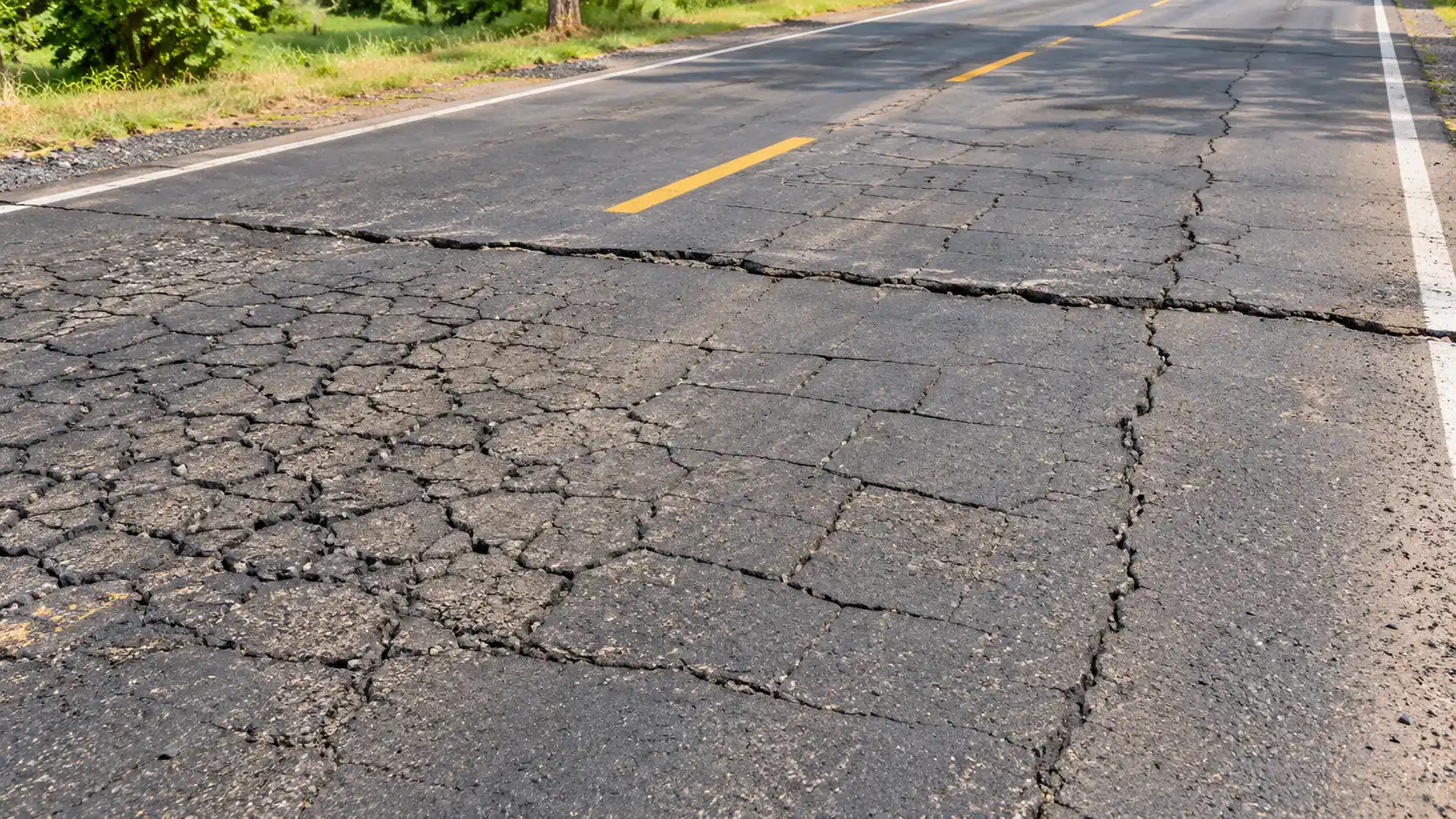
Asphalt cracking types and causes fall into three groups. Load-related cracks — mainly alligator and wheel-path longitudinal cracks — come from repeated traffic on a weak structure. Climate-related cracks, including block, transverse, and non-wheel-path longitudinal cracks, come from temperature swings and aging binder. Construction and support problems cause edge, joint, slippage, and reflective cracks. The crack pattern tells you which group you are dealing with.
Every crack in an asphalt surface has a pattern, and the pattern points to a cause. Small interlocking cracks in the wheel path mean something different from long, evenly spaced cracks across a lane. This guide covers the asphalt cracking types and causes you will meet on roads, parking lots, and driveways — how to tell them apart in the field, which ones can be sealed, and which ones need a structural repair.
It is written for contractors, estimators, site engineers, and property owners. Once you identify the crack type, our guide on repairing asphalt driveway cracks and potholes covers the step-by-step fix for each damage category, and our free Bitumen Calculator helps estimate material quantities before ordering.
Why Asphalt Cracks in the First Place
Asphalt is aggregate held together by a bitumen binder. A new mix flexes under load and recovers. As the binder ages, it oxidizes and stiffens, and the surface loses that flexibility. A crack forms when stress exceeds what the aged material can handle.
That stress comes from three places. First, traffic loading — repeated wheel passes flex the pavement, and heavy trucks cause the most damage. Second, climate — cold weather shrinks asphalt, and daily temperature cycles repeat the strain. Third, construction and support problems — poor compaction, weak bonding between layers, badly built joints, weak shoulders, and an unstable base or subgrade all create weak points. The bitumen binder grade chosen at mix design has a direct effect on how well the pavement resists both thermal cracking and fatigue under traffic.
Water speeds up all three. Once it gets into a crack, it softens the base, weakens the subgrade, and expands when it freezes. A small crack left open through a wet season usually grows significantly.
Asphalt Crack Types at a Glance
| Crack type | What it looks like | Main cause | Load-related? |
|---|---|---|---|
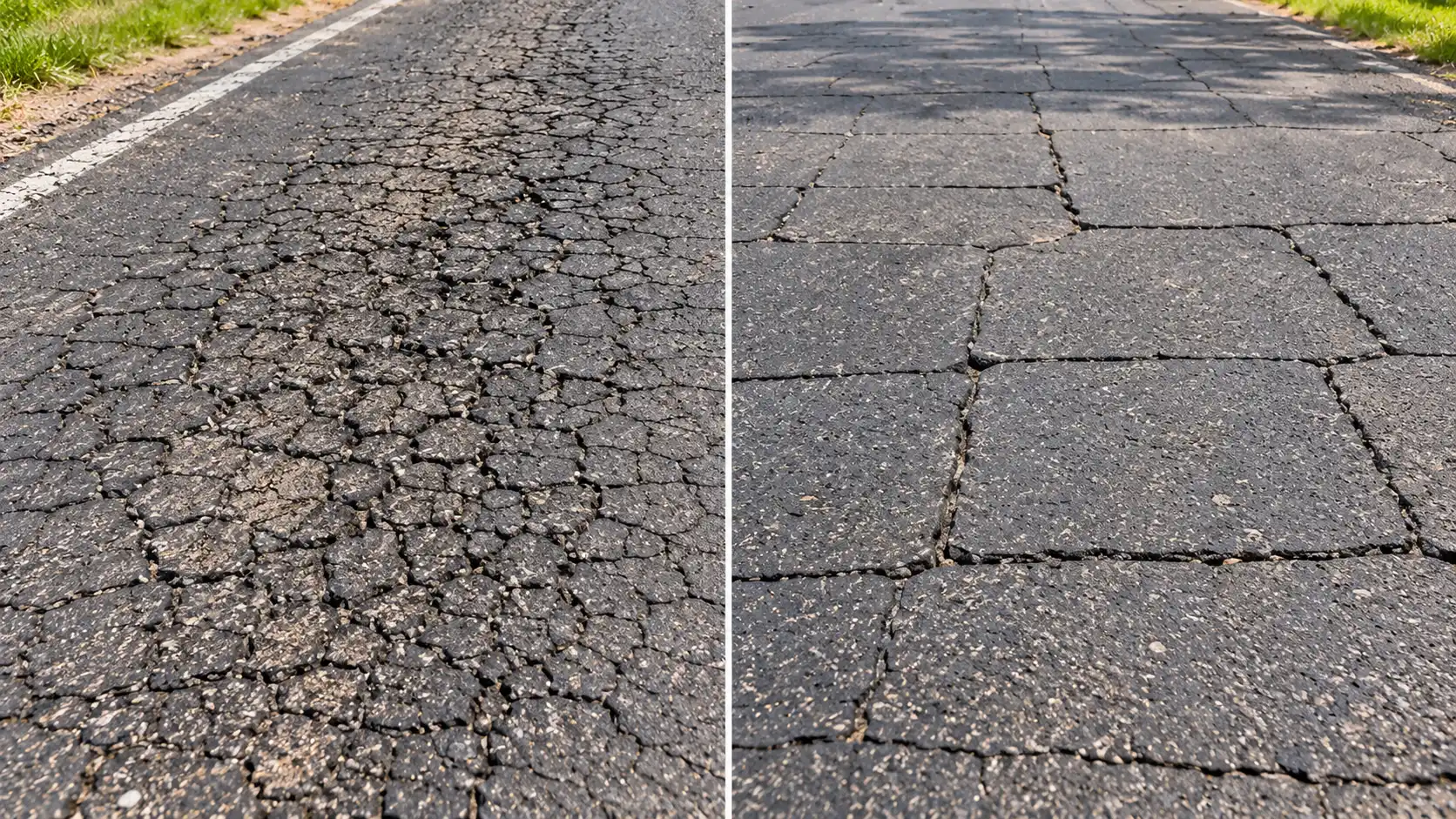
| Alligator (fatigue) | Interconnected cracks forming small pieces, usually in wheel paths | Repeated traffic on a weak structure | Yes |
| Block | Large rectangles across a wide area | Binder shrinkage and daily temperature cycles | No |
| Transverse (thermal) | Cracks across the lane, often evenly spaced | Low temperatures, hard or aged binder | No, though traffic worsens it |
| Longitudinal | Cracks parallel to the centerline | Fatigue in wheel path; joints, shrinkage or base movement elsewhere | Depends on location |
| Edge | Cracks within 1 to 2 ft of the pavement edge | Weak shoulder support, poor drainage | Partly |
| Slippage | Crescent or half-moon cracks | Poor bond between layers, weak surface mix | Yes (braking and turning forces) |
| Reflective | Cracks in an overlay matching the old surface below | Movement of the old pavement or concrete joints | No, though traffic speeds damage |
The 7 Main Asphalt Crack Types and Their Causes
Alligator (Fatigue) Cracking
Alligator cracking is a network of interconnected cracks that form small, many-sided pieces — usually under 1 ft (30 cm) across. It starts in the wheel paths and can spread across the whole lane. The pattern resembles alligator or crocodile skin, which is where the name comes from.
Causes:
- Repeated traffic loads above what the pavement was designed to carry
- A pavement layer that is too thin, or a structural design that was inadequate from the start
- A weak or wet base and subgrade
- Poor compaction during construction — including when paving crews push on in rain
- Heavier traffic than planned, such as a new bus route on an older street
Cracks can start at the bottom of the asphalt layer and travel up. Others start at the surface where tire stress is high and the binder has aged — engineers call that top-down cracking. The right asphalt pavement thickness for the actual traffic load is the primary defense against fatigue cracking.
Structural failure. Crack sealing stops working once the alligator pattern forms. Left alone, loose pieces break out and become potholes. The usual repair removes the failed area and rebuilds it after fixing the underlying cause — often drainage or a weak base.
Block Cracking
Block cracking divides the surface into large rectangles, roughly 1 to 100 sq ft (0.1 to 9 m²). It usually covers a wide area and often shows up where traffic is light — such as parking lots and shoulders.
Causes:
- Shrinkage of the asphalt and daily temperature cycling
- Binder that has aged and hardened so it can no longer expand and contract
- A binder grade poorly matched to the local climate in the mix design
Block cracking is not load-related, which separates it from alligator cracking. High in-place voids accelerate binder oxidation and cracking, making it vital to calculate air voids in asphalt during post-compaction quality checks. The two can look similar in early stages, so check the block size and whether the cracking follows the wheel paths. Light cases respond to crack sealing or a surface treatment. Widespread, severe cases usually need milling and an overlay.
Transverse (Thermal) Cracking
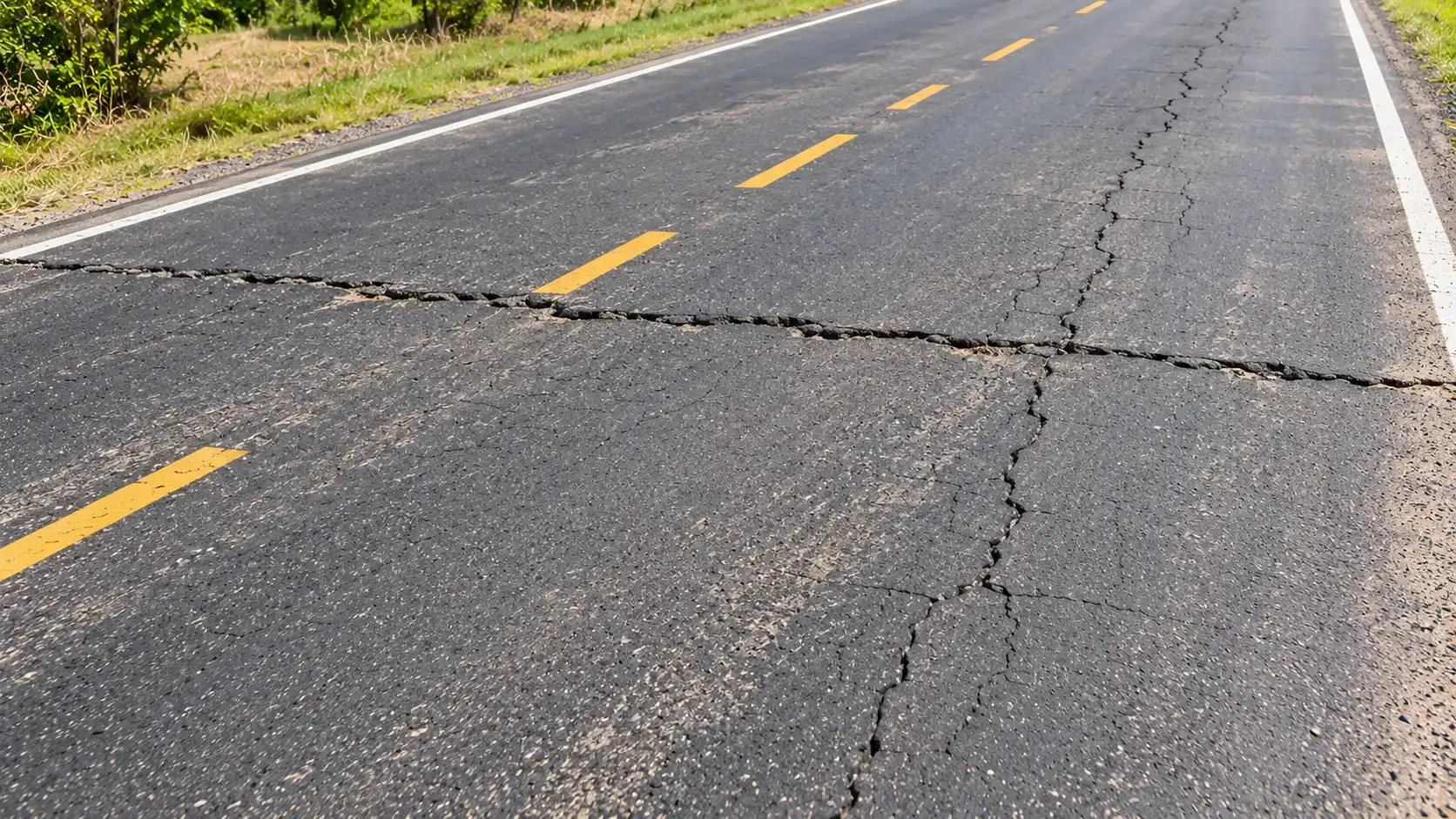
Transverse cracks run across the pavement, roughly perpendicular to the centerline. They often appear at regular intervals along the road.
Causes:
- Low-temperature thermal cracking — the surface shrinks in cold weather
- Binder that is too hard for the climate, or binder that has aged and oxidized
- A shrinking or cracked base below the surface
- A crack in the old layer reflecting up through an overlay
- Poor transverse joint construction, often from incorrect paver operation
These cracks are not directly caused by traffic, although heavy loads make them worse. A transverse crack can also be an early sign of alligator cracking to come, so treat it before water gets in.
Longitudinal Cracking
Longitudinal cracks run parallel to the centerline or the paving direction. Location tells you the cause.
In the wheel path
Usually load-related fatigue cracking in its early stage. Often leads to alligator cracking if left untreated.
Outside the wheel path
Usually a poorly constructed lane joint, shrinkage, cracks reflecting upward, embankment settlement, or expansive subgrade near the edge.
Paving joints should sit outside the wheel paths wherever possible. Wheels running directly on a joint speed up its failure.
Edge Cracking
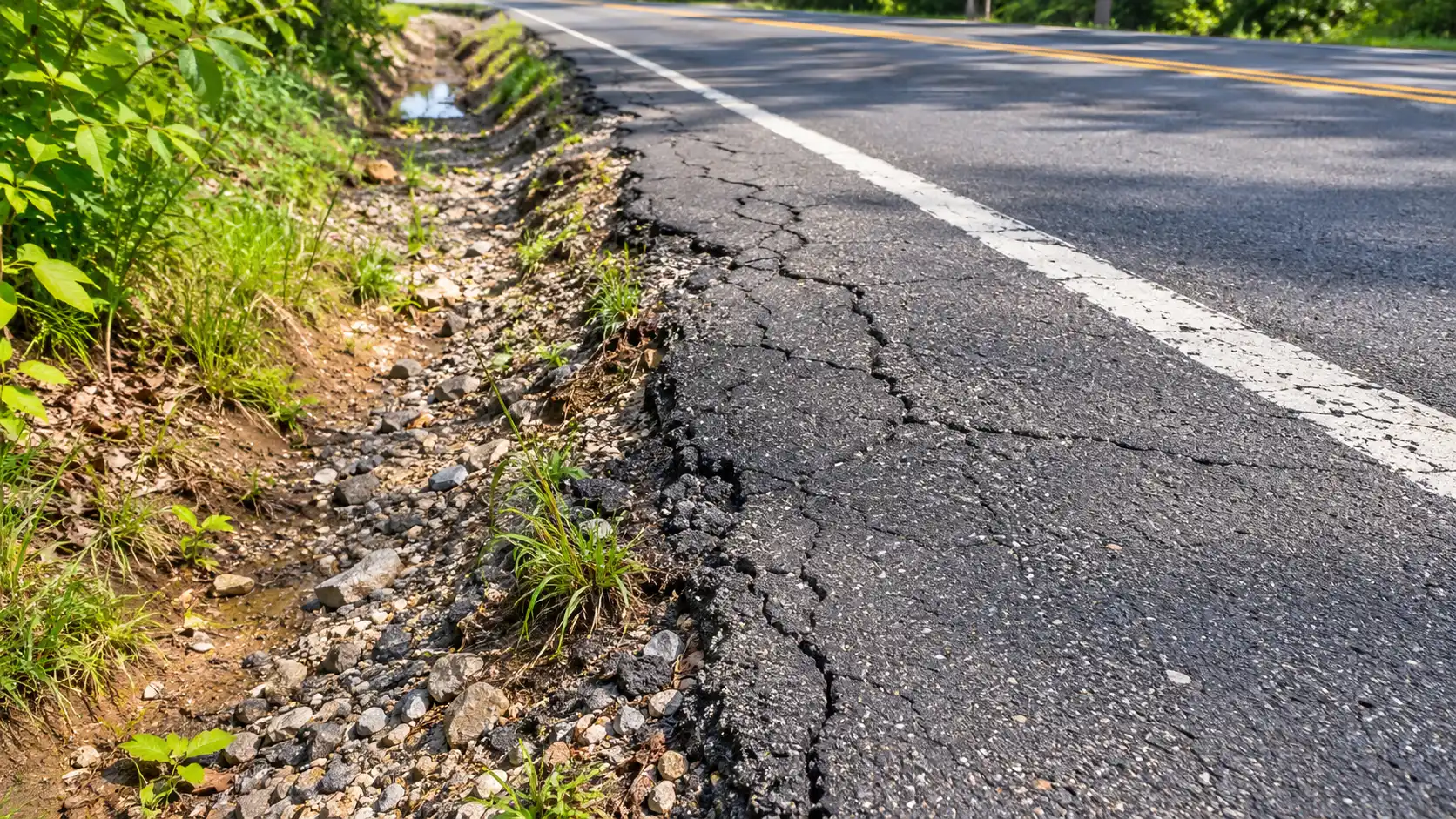
Edge cracks run along the pavement edge, usually within 1 to 2 ft (30 to 60 cm) of it. They often begin as crescent shapes and can branch toward the shoulder. With time they can resemble alligator cracking.
Causes:
- Lack of support from a weak or low shoulder
- Poor drainage that softens the base at the edge
- Alternate wetting and drying under the shoulder surface
- Trees, shrubs, and heavy vegetation close to the edge
- Heavy vehicles driving on the edge of the lane
Fix the support first. Remove nearby vegetation, correct the drainage, and rebuild the shoulder with good material. Then seal the cracks. Sealing alone will not stop the base from settling.
Slippage Cracking
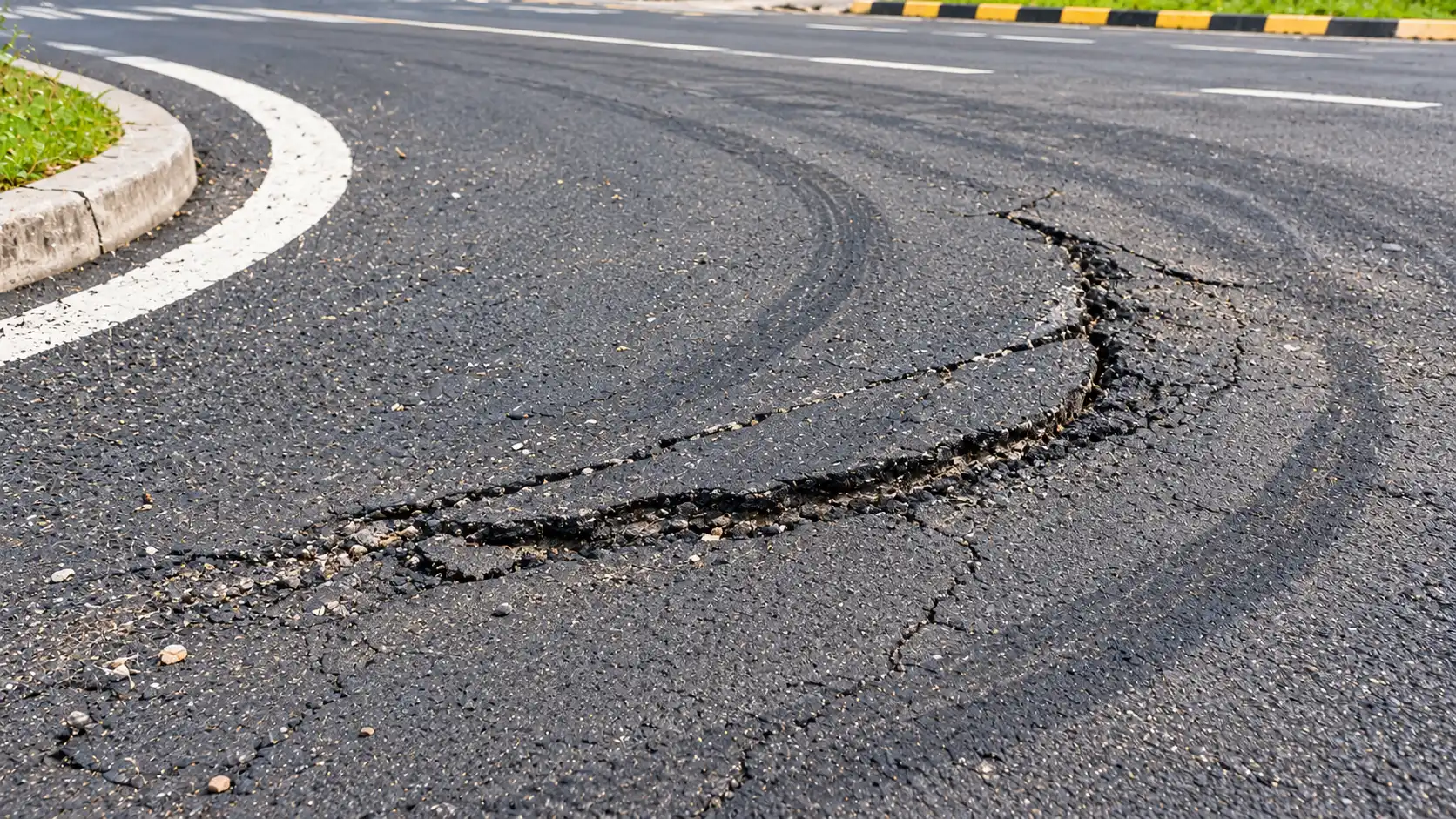
Slippage cracks are crescent or half-moon shaped. They appear where vehicles brake, turn, or accelerate — such as intersections and curves — because those spots carry the highest shear forces.
Causes:
- Weak bond between the surface layer and the layer below
- Missing or poorly applied tack coat
- Dust, dirt, oil, or water trapped between layers during paving
- A low-strength surface mix
- Excessive deflection of the whole pavement structure
The surface course slides and shoves under traffic, then tears. Slippage cracking is a direct consequence of a missing or contaminated tack coat — our guide on tack coat application and common bond failures covers the rates, cure times, and mistakes that lead to exactly this distress type. Water trapped under the mat from rain during paving is another trigger — the guide on paving in wet weather conditions explains why a wet base causes slippage and bond failure. If the cause is deflection or fatigue below, a deeper repair is needed.
Reflective Cracking
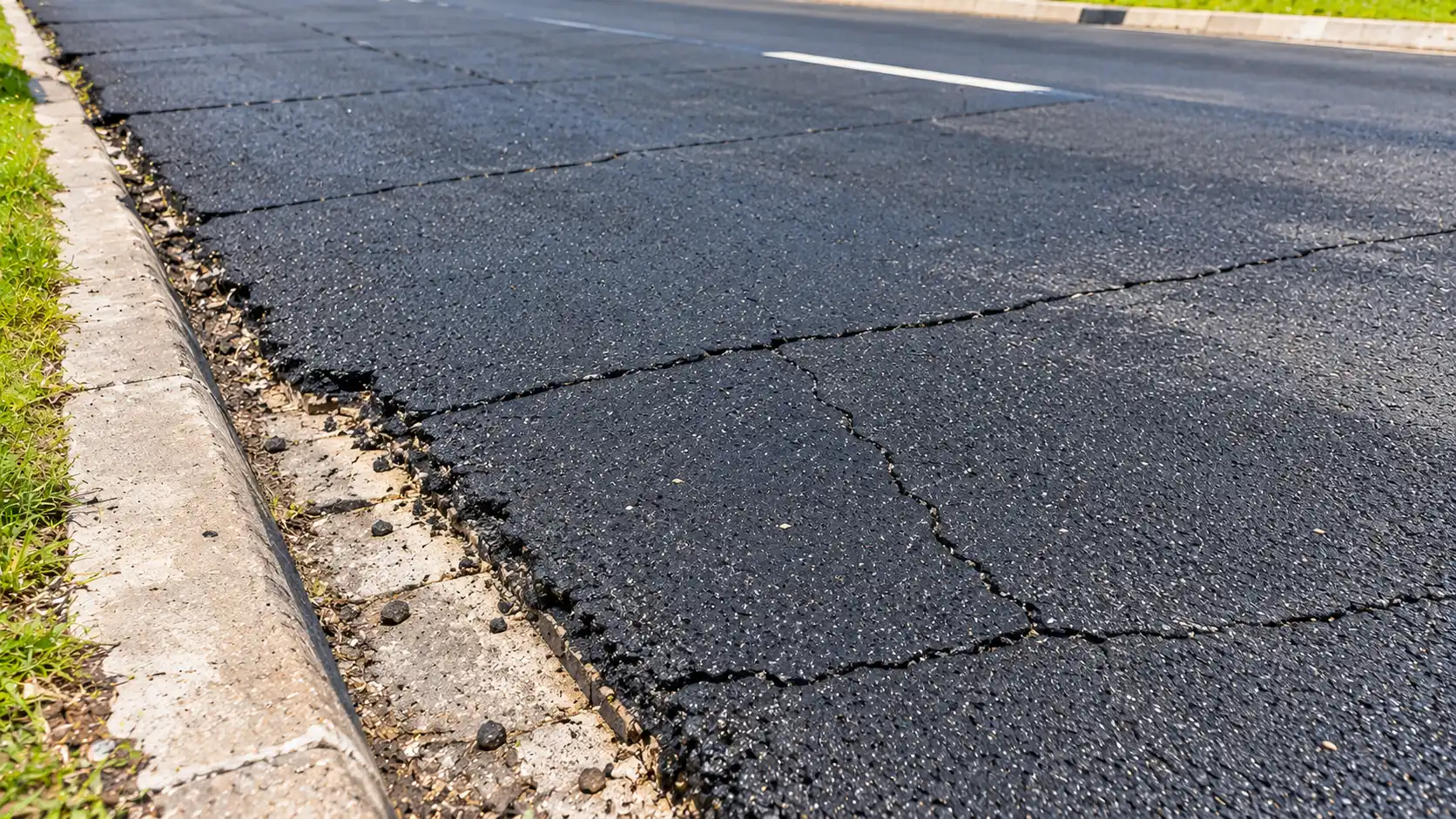
Reflective cracks form in an overlay and copy the crack or joint pattern of the pavement underneath. You often see straight lines that match the joint spacing of an old concrete slab below.
Causes:
- Movement of the old pavement caused by temperature and moisture changes
- Movement of concrete slabs beneath an asphalt overlay
- An overlay placed over cracks that were never repaired
Traffic is not the starting cause, although it speeds up damage once cracks open. Repair existing cracks before overlaying. Interlayer systems — such as geosynthetic grids or fabrics — can slow reflection. Narrow cracks can be sealed. Wide, numerous cracks usually mean removing and replacing the overlay after preparing the base layer.
How to Tell Which Crack You Have
Use this checklist on site. It takes a few minutes and usually narrows the cause to one or two options.
Find the location
Wheel path, lane center, edge, or across the lane? Location is the fastest first filter.
Read the pattern
Parallel lines, a grid of small pieces, large rectangles, or crescents? Each pattern points to a different cause.
Check spacing and extent
Evenly spaced cracks suggest thermal or reflective causes. A local patch suggests a local problem.
Look at traffic movement
Braking and turning zones point to slippage cracking.
Inspect drainage and surroundings
Look for standing water, low shoulders, and roots near the edge.
Check the history
Note any recent overlay, widening, utility cut, or old patch.
Measure width and watch for movement
Check whether pieces rock under traffic or fine material is pumping out of the cracks.
Surface Cracks vs Structural Cracks
The most useful question is whether the crack comes from the surface layer or the structure beneath it.
| Condition | Likely type | Typical response |
|---|---|---|
| Narrow cracks (under ~1/2 in or 12 mm), few in number | Thermal, block, joint | Crack seal or fill |
| Wider, more frequent cracks, with edges starting to break | Block, transverse, reflective | Crack seal with surface treatment, or mill and overlay depending on extent |
| Interconnected small pieces, loose material | Alligator | Remove and rebuild the failed area; fix the base and drainage |
| Crescent cracks with shoved surface | Slippage | Remove the slipped area, clean, apply tack coat, repave |
| Bowl-shaped holes through the surface | Pothole (end stage of alligator) | Patch, then address the cause |
Once you know the repair area, calculate the asphalt tonnage and tack coat quantity from area, thickness, and compacted density. Our guide on how to calculate asphalt yield per square yard shows the exact formulas and field verification steps. Our free tack coat calculator handles the tack coat arithmetic, and the common asphalt estimation mistakes guide covers the quantity errors that most often cause short orders and cost overruns on repair jobs.
How to Prevent Asphalt Cracking
Most cracking is predictable. These steps reduce it significantly:
Using cold mix bitumen for early crack filling and pothole repair keeps water out of the base between maintenance cycles, buying time before a full structural repair is needed.
Common Repair Mistakes
Sealing alligator cracks
Sealant does not restore structure. The failed area needs removal and rebuilding.
Overlaying without repairing
Cracks and joints reflect through the new layer, often within one or two seasons.
Skipping tack coat
Missing bond is a direct cause of slippage cracking — one of the most expensive failure modes to fix.
Ignoring drainage
A new patch over a wet base fails again at the same location.
Waiting too long
Cracks let in water, and water turns cheap sealing jobs into expensive rebuilds.
Conclusion
The crack tells you where to look. Pattern and location separate load-related cracks from climate-related ones and from those caused by weak bonding or poor support. Seal narrow cracks early, rebuild failed areas properly, and fix drainage and base problems before laying new asphalt.
Knowing the asphalt cracking types and causes makes the repair choice faster and keeps the same crack from coming back. For a full walkthrough of DIY and professional repair methods by crack type, see our step-by-step asphalt repair guide. FHWA's Pavement Distress Identification Manual is the definitive reference for field identification of pavement distress across all crack types.
Frequently Asked Questions
What causes cracks in new asphalt?
The usual causes are poor compaction, a weak base, the wrong binder grade, badly built joints, missing tack coat, and early overloading. Shrinkage cracks can also appear in the first seasons.
Do all asphalt cracks mean structural failure?
No. Block, thermal, and many longitudinal cracks come from climate and aging binder. Alligator cracking and slippage cracking are structural or bonding failures and need deeper repair.
Can alligator cracking be sealed?
Sealing is generally ineffective once the alligator pattern has formed. The failed area needs to be removed and rebuilt, and the underlying cause corrected.
What is the difference between block cracking and alligator cracking?
Block cracking forms large rectangles and is caused by shrinkage and temperature cycles. Alligator cracking forms small pieces, starts in wheel paths, and is caused by repeated traffic loading.
How do cracks turn into potholes?
As alligator cracking worsens, the interconnected cracks create small chunks of pavement. Traffic dislodges them, leaving a hole down through the asphalt layer to the base.
Does water cause asphalt cracks?
Water is rarely the only cause, but it speeds up almost every type. It softens the base, weakens the subgrade, and expands when it freezes inside cracks.

Founder & Web Developer
Nabeel Awan is a web developer and the founder of BitumenCalcPro. His work focuses on web development and building practical online tools, with a strong interest in civil engineering, asphalt, bitumen, pavement construction, and construction technology.