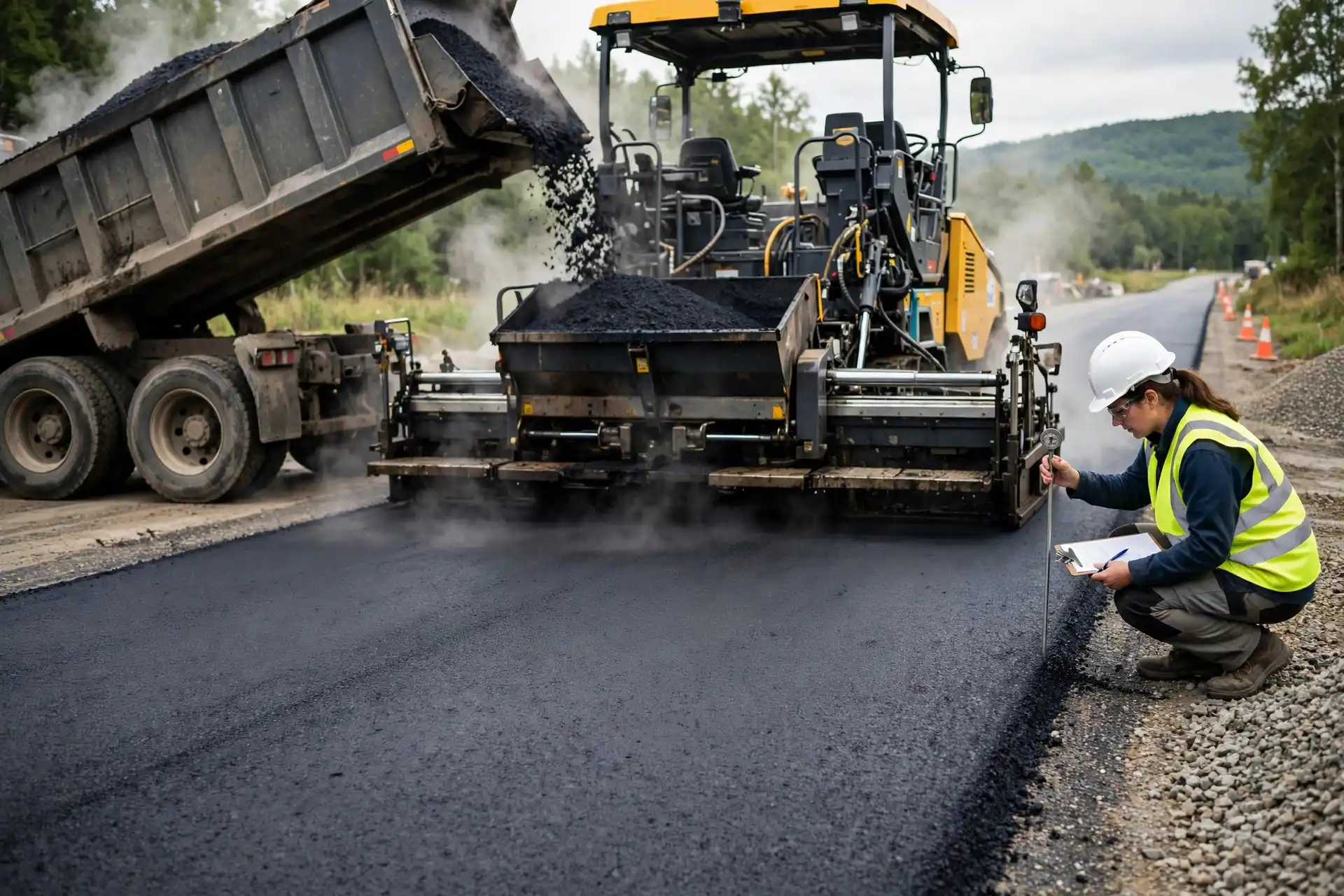
Quick Answer
To calculate asphalt yield, work in pounds per square yard. Multiply the compacted thickness in inches by about 110 lb per square yard per inch to get the target yield. Tons needed equals square yards × thickness × 110 ÷ 2,000. One ton covers about 18.2 square yards at 1 inch, or 9.1 at 2 inches. After paving, divide the pounds placed by the square yards covered to check actual yield against the target.
Asphalt is bought by the ton and laid by the square yard. Yield is the number that connects the two. It tells a crew how much mix to spread, tells an estimator how many trucks to order, and tells an inspector whether the mat on the ground matches the thickness on the plan.
This guide shows how to calculate asphalt yield from scratch, where the standard 110 factor comes from, how to run the numbers on real jobs, and how to check actual yield once paving starts. For large projects where you need total tonnage quickly, our free asphalt tonnage calculator handles the arithmetic and unit conversions automatically.
What Asphalt Yield Means
Asphalt yield is the amount of hot mix placed over a given area at a given thickness. Crews usually express it as pounds per square yard (lb/yd²). The per-inch version — pounds per square yard per inch of compacted thickness — is the figure you carry from job to job.
Coverage per ton
How many square yards (or square feet) one ton of mix covers at a set thickness
Spread rate
The pounds of mix applied per square yard — the same number as yield
Target vs actual
Target yield is what the design says to place. Actual yield is what scale tickets and measurements show you placed. The gap is the useful part.
How to Calculate Asphalt Yield: The Core Formulas
Start by converting the area to square yards, since yield works in that unit.
Square-foot alternative: tons = length (ft) × width (ft) × thickness (ft) × 145 ÷ 2,000. Both routes give nearly the same answer.
Metric version: Compacted hot mix weighs about 2,322 kg/m³, so tonnes = area (m²) × thickness (m) × 2.322. A 50 mm layer places about 116 kg/m².
Where the 110 Number Comes From
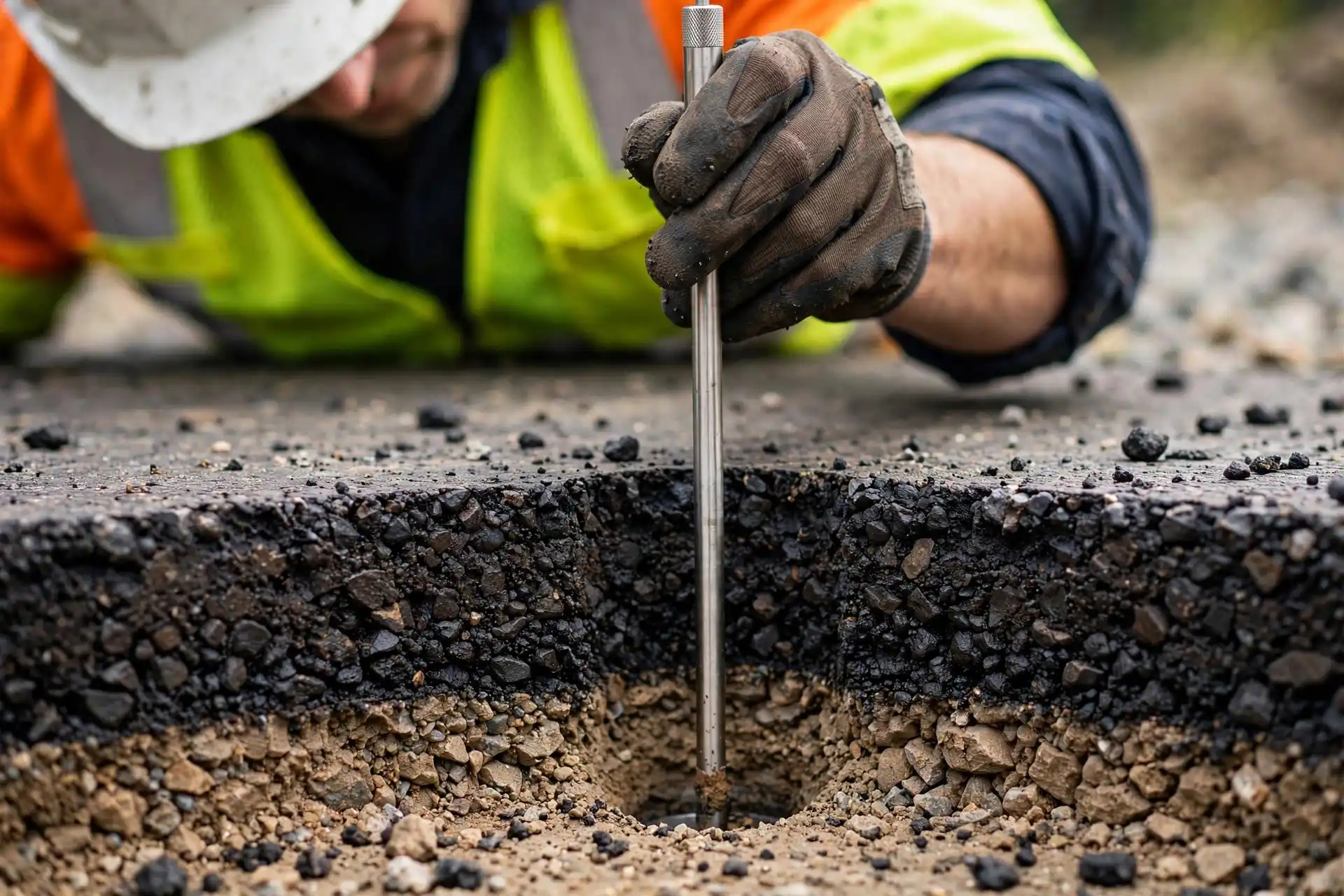
The 110 lb/yd² per inch factor is a shortcut for the density of compacted hot mix. Here is the derivation:
Mix-specific formula: lb/yd² per inch = 46.8 × bulk specific gravity of the compacted mix. A bulk specific gravity of 2.35 gives exactly 110. The mix design and field cores supply the real value, which is also used to calculate air voids in asphalt for volumetric compliance.
Several state transportation agencies use 110 as their estimating factor for all asphalt mixtures; some specifications use 112.
How much does the factor choice matter?
On a 1,000 yd² job at 2 inches:
| Factor | Tons needed |
|---|---|
| 108.75 (145 lb/ft³ exact) | 108.75 |
| 110 (common planning factor) | 110 |
| 112 (some specifications) | 112 |
The spread is about 3%. A few online calculators use roughly 121 lb/yd² per inch, which runs about 10% higher than 110. Check which factor a tool uses before comparing its answer with yours. Our guide to common asphalt estimation mistakes covers how the wrong density assumption is one of the most expensive errors estimators make.
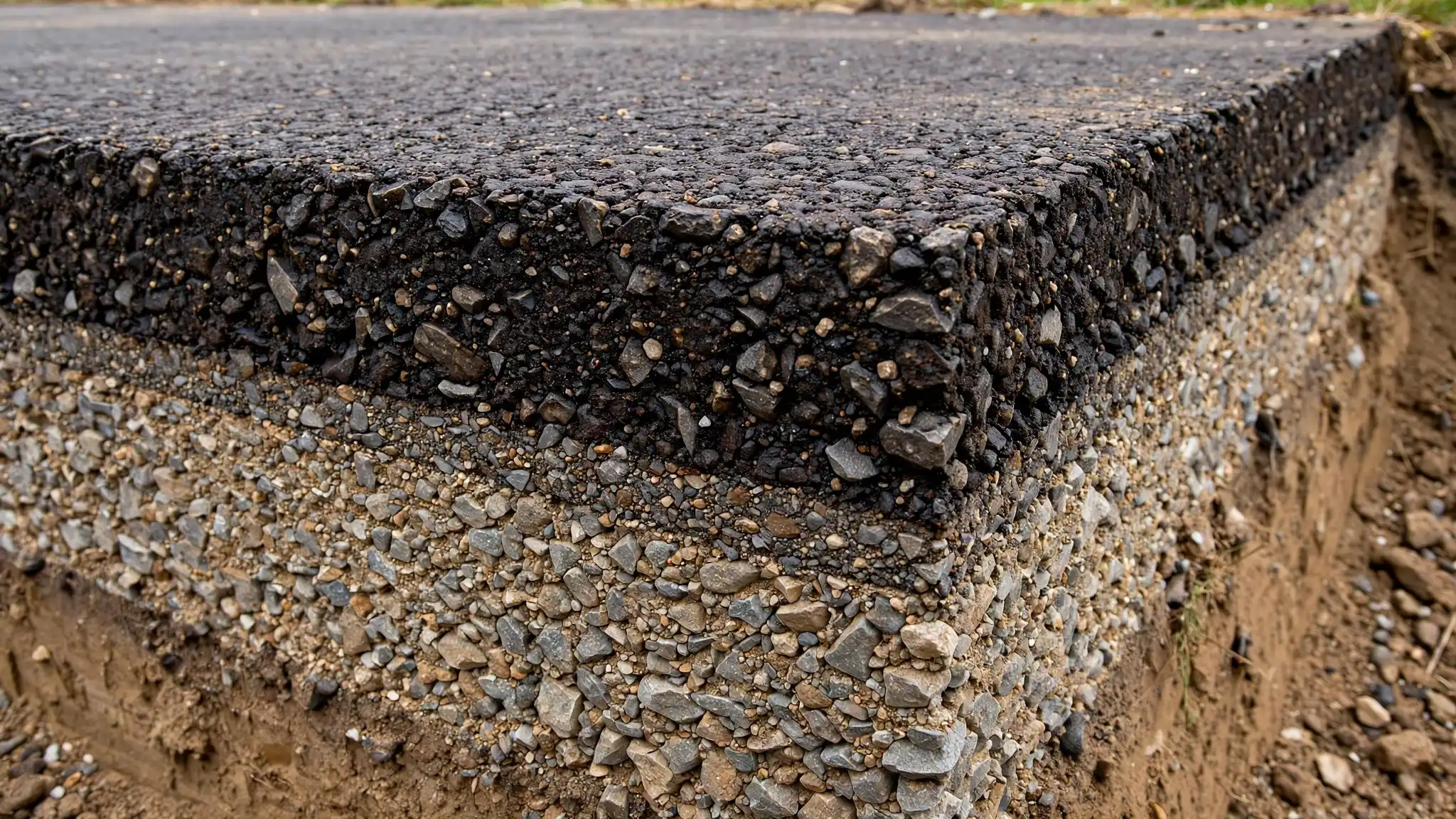
Worked Examples
Example 1 — Residential Driveway
A driveway is 12 ft × 50 ft, paved 3 inches thick.
Example 2 — Parking Lot Surface Course
A lot covers 20,000 ft² and gets a 2-inch surface course.
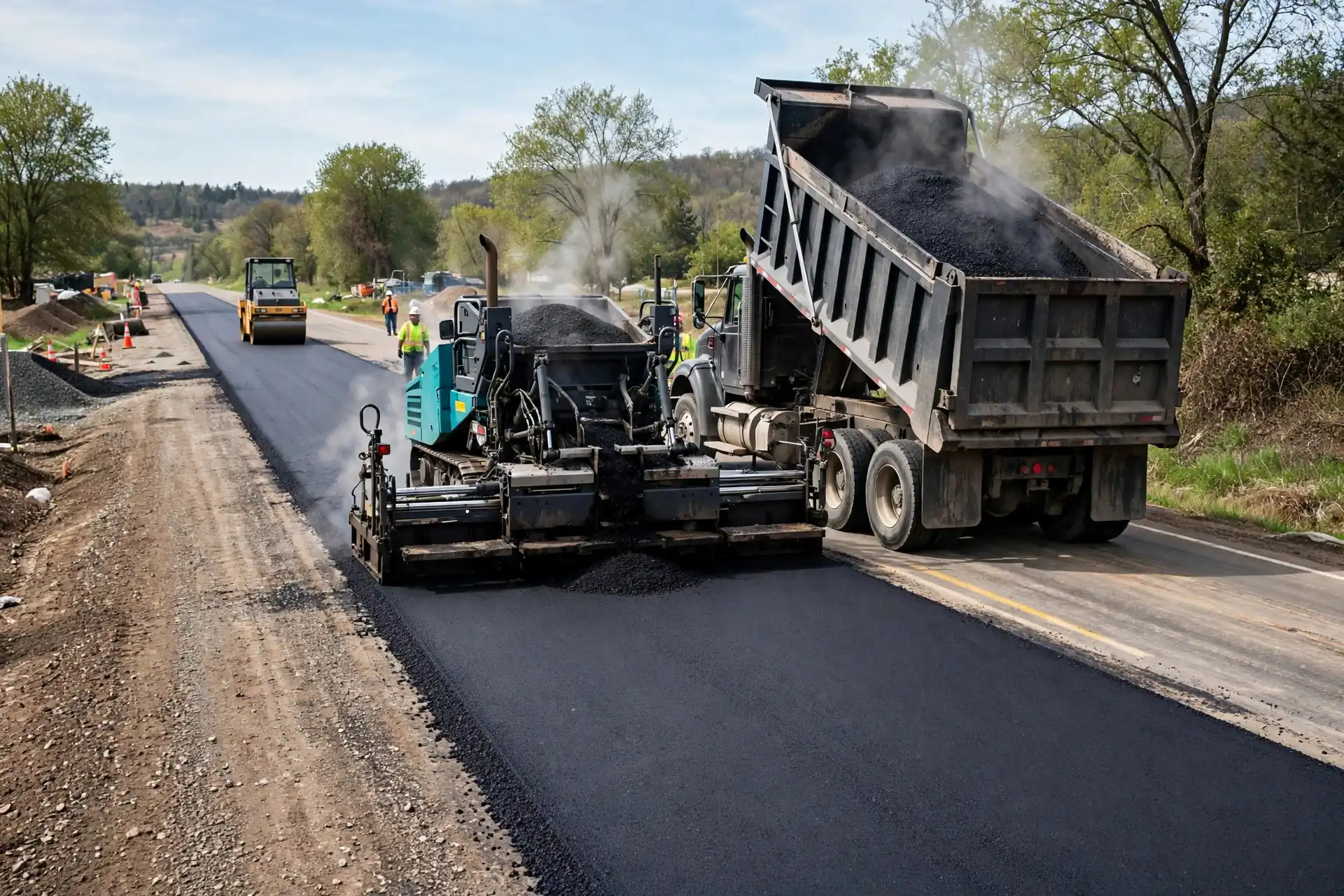
Example 3 — How Far a Truck Load Goes
A 20-ton load is spread 2 inches thick.
Example 4 — Lineal Feet Per Ton for a Lane
A 12-ft lane is paved 2 inches thick.
Cross-check: 182 yd² (Example 3) spread over a 12-ft width = about 136 ft of lane. ✓
Asphalt Coverage Per Ton Chart
Values use 110 lb/yd² per inch. Tons per 1,000 yd² = 1,000 × thickness × 0.055.
| Thickness | Sq yd per ton | Sq ft per ton | Tons per 1,000 sq yd |
|---|---|---|---|
| 1.5 in | 12.1 | 109 | 82.5 |
| 2 in | 9.1 | 82 | 110 |
| 2.5 in | 7.3 | 65 | 137.5 |
| 3 in | 6.1 | 55 | 165 |
| 4 in | 4.5 | 41 | 220 |
For the right layer depth by application type — driveway, road, parking lot, or heavy equipment — see our complete asphalt thickness guide.
How to Check Actual Asphalt Yield on the Job
The calculation tells you what to expect. The field check tells you what happened.
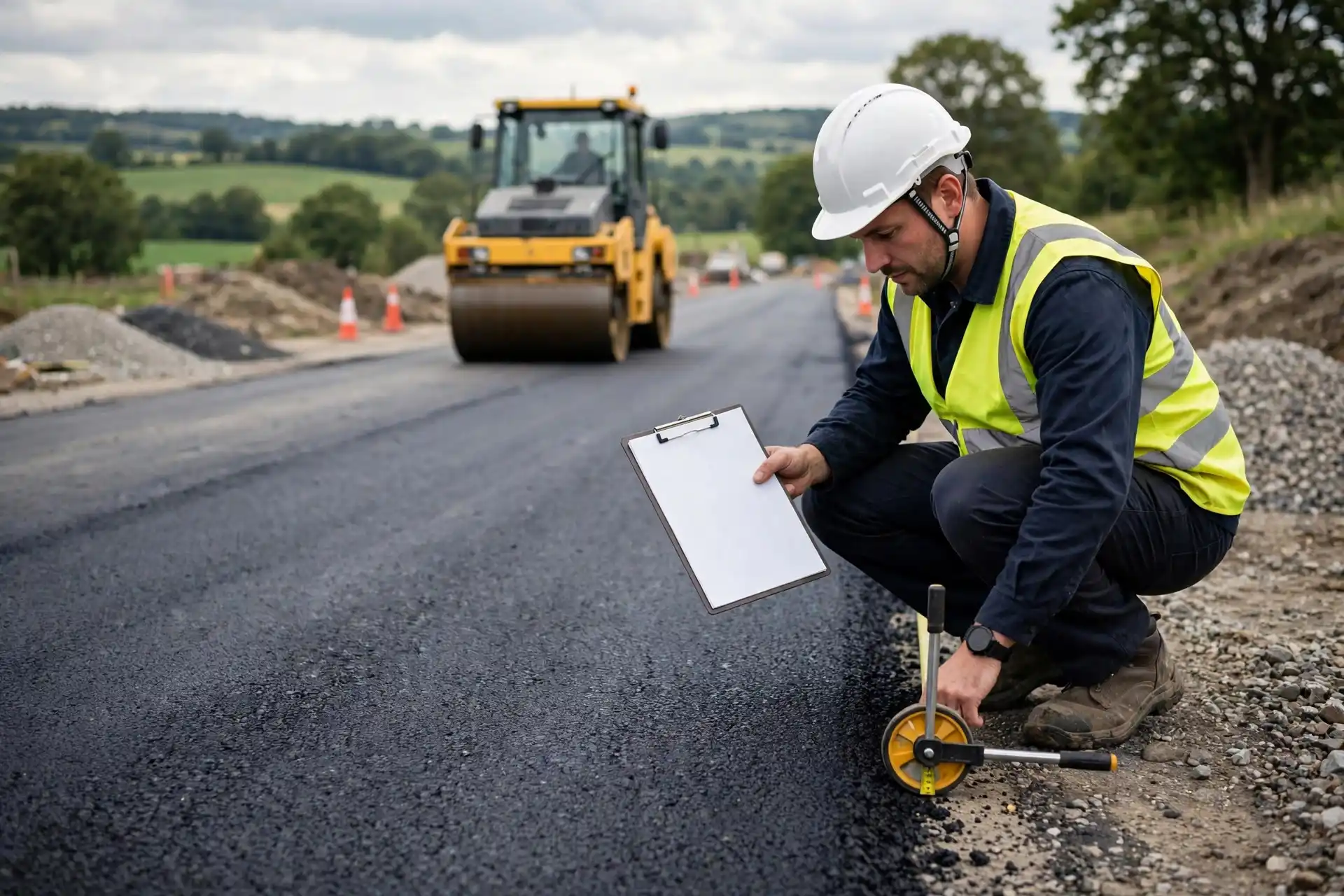
Total the pounds placed
Add up the net tons from the scale tickets and multiply by 2,000
Measure the area covered
Measure the paved length and width, then convert to square yards
Divide
Actual yield (lb/yd²) = pounds placed ÷ square yards covered
Compare with the target
Target = specified thickness × 110
Convert to thickness if needed
Average thickness (in) = actual yield ÷ 110
Field example — 2-inch spec
The mat is averaging 1.9 inches against a 2-inch spec. Agencies check yield per load and per day — the specification sets the tolerance.
What Moves Asphalt Yield
Mix density
Aggregate type and gradation change compacted weight per inch. Open-graded mixes weigh less than dense-graded ones and cover more area per ton.
Base condition
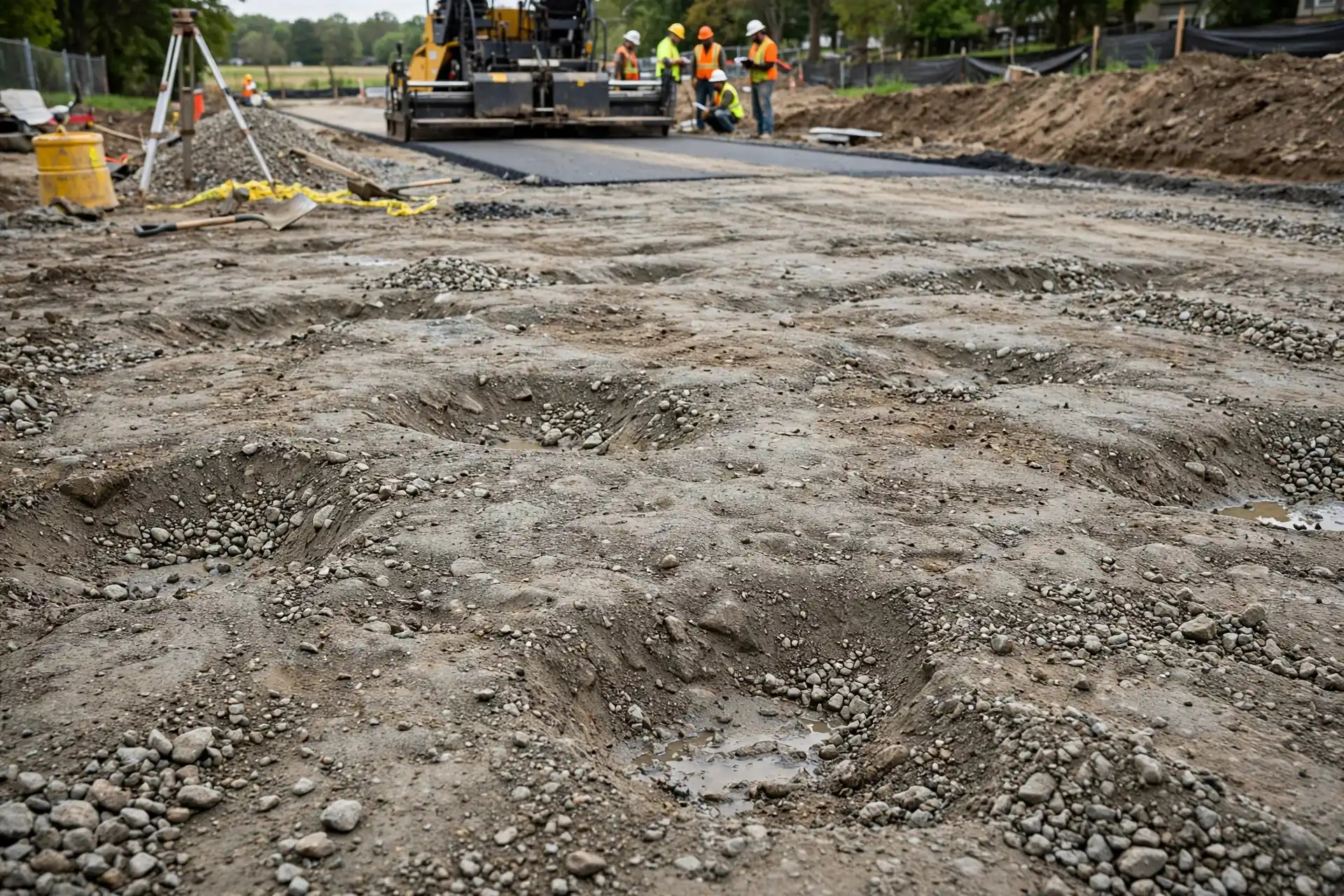
Low spots and rutted bases absorb extra mix, so actual yield runs above target — the most common reason a job comes in short.
Milled surfaces
Texture and uneven milling pull more material than a smooth surface — use the higher-end planning rate.
Thickness variation
An average thickness of 2.3 inches on a 2-inch spec uses about 15% more material than planned.
Compaction
Mix is bought by weight, so compaction does not change tonnage — it changes the final thickness. Always calculate from compacted thickness.
Waste
Edge trimming, hand work, and material left in the truck bed all add to tons ordered without adding to placed area.
Use compacted density with compacted thickness. If you calculate from loose volume, you need a loose density — mixing the two overstates the order. Learn how to compact asphalt to reach target in-place density to ensure your loose placement achieves the planned design thickness.
Ordering: Waste Allowance
The formulas give net tons in place. Add a buffer on top:
+5% waste
Large, simple, rectangular areas with a good base condition and minimal hand work
+10% waste
Small jobs, curves, irregular shapes, or uneven and poorly prepared bases
Round up to a full truckload. Plants deliver by the load, and a short order means a second delivery and a cold seam where two batches meet. The Asphalt Institute's construction guidelines recommend confirming mix density with the supplier's mix design before ordering on any job over a few hundred tons.
Converting Between Units
Plans and specifications arrive in mixed units, so keep these conversions handy:
| From | To | Multiply by |
|---|---|---|
| lb/yd² per inch | kg/m² per mm | 0.0214 |
| Short tons | Metric tonnes | 0.907 |
| Square feet | Square yards | 0.111 (divide by 9) |
| Square yards | Square meters | 0.836 |
A 110 lb/yd² per inch factor works out to about 2.35 kg/m² per mm, which matches the metric density of about 2.32 to 2.35 t/m³. The Federal Highway Administration's asphalt pavement resources include specification tables that use both unit systems.
Common Mistakes
Skipping the square yard conversion
Dividing by 9 is the step people forget when starting in square feet. The 110 factor only works with square yards.
Using loose thickness
The 110 factor assumes compacted thickness. Loose thickness runs higher — using it understates your order.
Mixing short tons and metric tonnes
A short ton is 2,000 lb; a tonne is about 2,205 lb. A 10% error becomes a shortage on site.
Treating 110 as exact
It is a planning factor. Confirm actual density with the supplier on large jobs using the bulk Gsb from the mix design.
Ignoring the base condition
An uneven base raises actual yield above target. Survey and prepare the base before calculating order quantities.
Confusing bitumen with mix
The 110 factor is for hot mix asphalt. Liquid bitumen binder has a density near that of water. See our Bitumen Density Chart for binder values.
Sum Up
To calculate asphalt yield, convert the area to square yards, multiply by the compacted thickness and 110 lb per inch, and divide by 2,000 for tons. Use 18.2 ÷ thickness for square yards per ton. After paving, divide pounds placed by square yards covered and compare the result with the target to catch thin or thick mats early.
Add 5% to 10% for waste and confirm the mix density with your supplier on large jobs. For the bitumen binder quantity inside the mix, our free Bitumen Calculator handles binder weight, litres, and order quantity from the mix design. For density values across different bitumen grades and forms, see our Bitumen Density Chart.
Frequently Asked Questions
What is asphalt yield?
Asphalt yield is the weight of hot mix placed per square yard at a set thickness, usually in lb/yd². Contractors use it to check that the mat matches the specified thickness.
How do you calculate asphalt yield?
Divide the pounds of mix placed by the square yards covered to get actual yield. For the target, multiply the specified thickness in inches by 110.
How many square yards does a ton of asphalt cover?
About 18.2 square yards at 1 inch, 9.1 at 2 inches, and 6.1 at 3 inches, using the standard 110 lb/yd² per inch planning factor.
Why is 110 lb per square yard per inch used for asphalt?
It rounds the weight of one square yard of compacted dense-graded mix at 1 inch thick. At 145 lb/ft³, one square yard by one inch equals about 108.75 lb, which rounds to 110 for planning purposes.
How many tons of asphalt do I need for 1,000 square yards?
At 2 inches, about 110 tons. At 3 inches, about 165 tons, before adding a waste allowance.
Does compaction change asphalt yield?
Mix is ordered by weight, so tonnage stays the same. Compaction sets the final thickness, so always calculate from compacted thickness, not loose thickness.
How much extra asphalt should I order?
About 5% for large, simple, rectangular jobs and about 10% for small or irregular ones. Round up to a truckload to avoid a costly second delivery.
Is asphalt yield the same as coverage?
They are two views of the same relationship. Yield is pounds per square yard, and coverage is square yards per ton.

Founder & Web Developer
Nabeel Awan is a web developer and the founder of BitumenCalcPro. His work focuses on web development and building practical online tools, with a strong interest in civil engineering, asphalt, bitumen, pavement construction, and construction technology.