Quick Answer
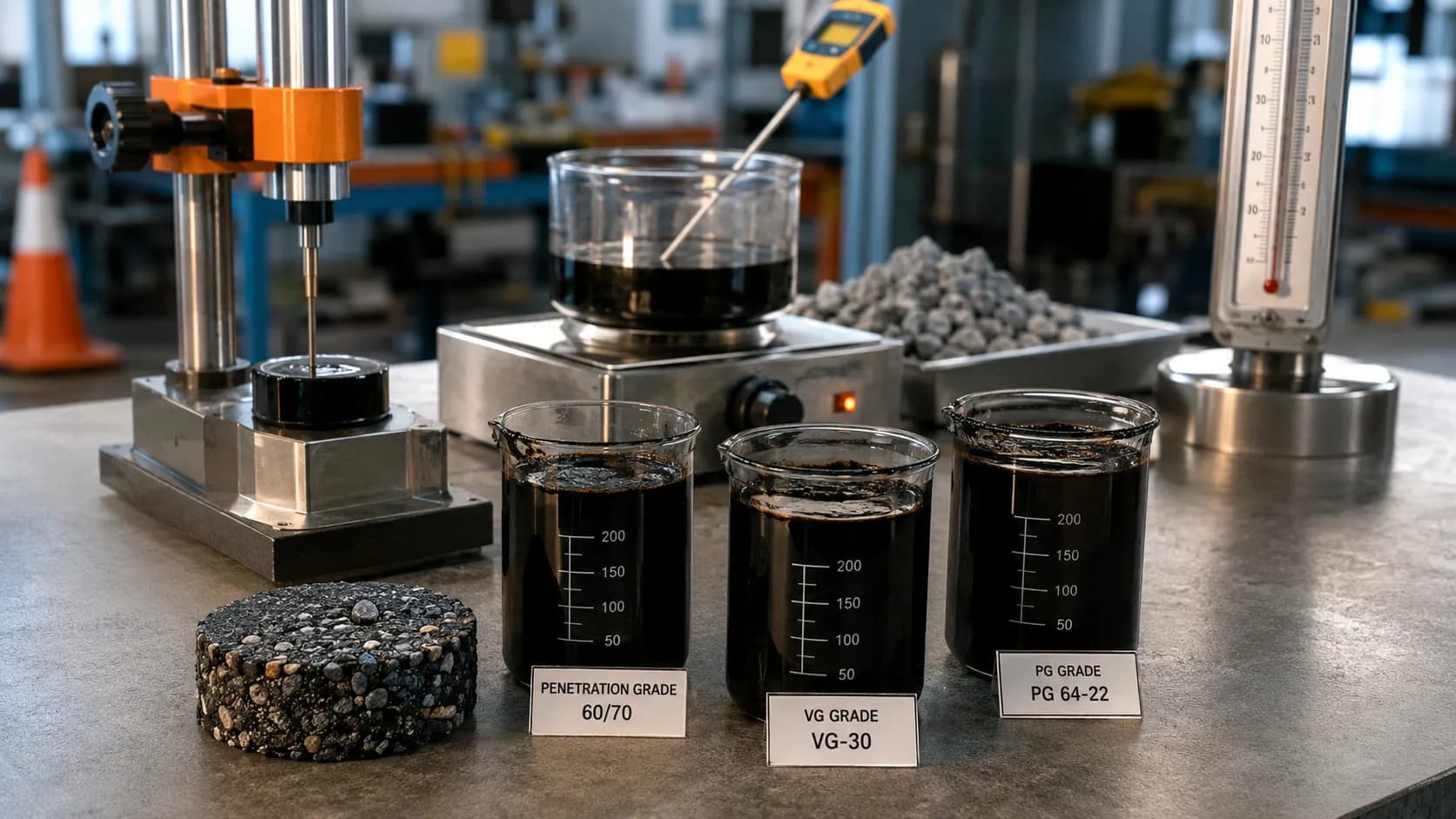
Bitumen grades classify binder by hardness or flow behavior so engineers can match it to climate and traffic. The main systems are penetration grade (60/70, 80/100), viscosity grade (VG10–VG40), and performance grade (PG 64-22 and similar). Softer grades suit cold climates and light traffic; harder or higher grades suit hot climates and heavy loads.
Pick the wrong bitumen grade and the road pays for it — literally. Too soft a binder and the pavement ruts in summer heat. Too stiff and it cracks in the cold. Bitumen grades exist to match the binder's behavior to the actual conditions a road will face, and getting that match right is the difference between a 20-year road and a 7-year one.
This guide explains the three main grading systems — penetration, viscosity, and performance grade — and shows you how to read them, compare them, and choose the right one for a given project.
What Are Bitumen Grades?
Bitumen grades are a classification system that tells engineers and contractors how a specific batch of bitumen will behave — how hard it is, how it flows when heated, and how it performs across different temperatures. Since bitumen used on a highway in a hot desert needs completely different properties than bitumen used on a mountain road that freezes every winter, grading exists so the right binder gets matched to the right job every time.
Three main grading systems are used around the world today: penetration grade, viscosity grade (VG), and performance grade (PG). Each one measures a different property, was developed to fix a limitation in the system before it, and remains standard in different regions or applications.
Penetration Grade Bitumen
Penetration grading is the oldest and simplest classification method, and it's still the most widely referenced grading label even in regions that have moved to newer systems.
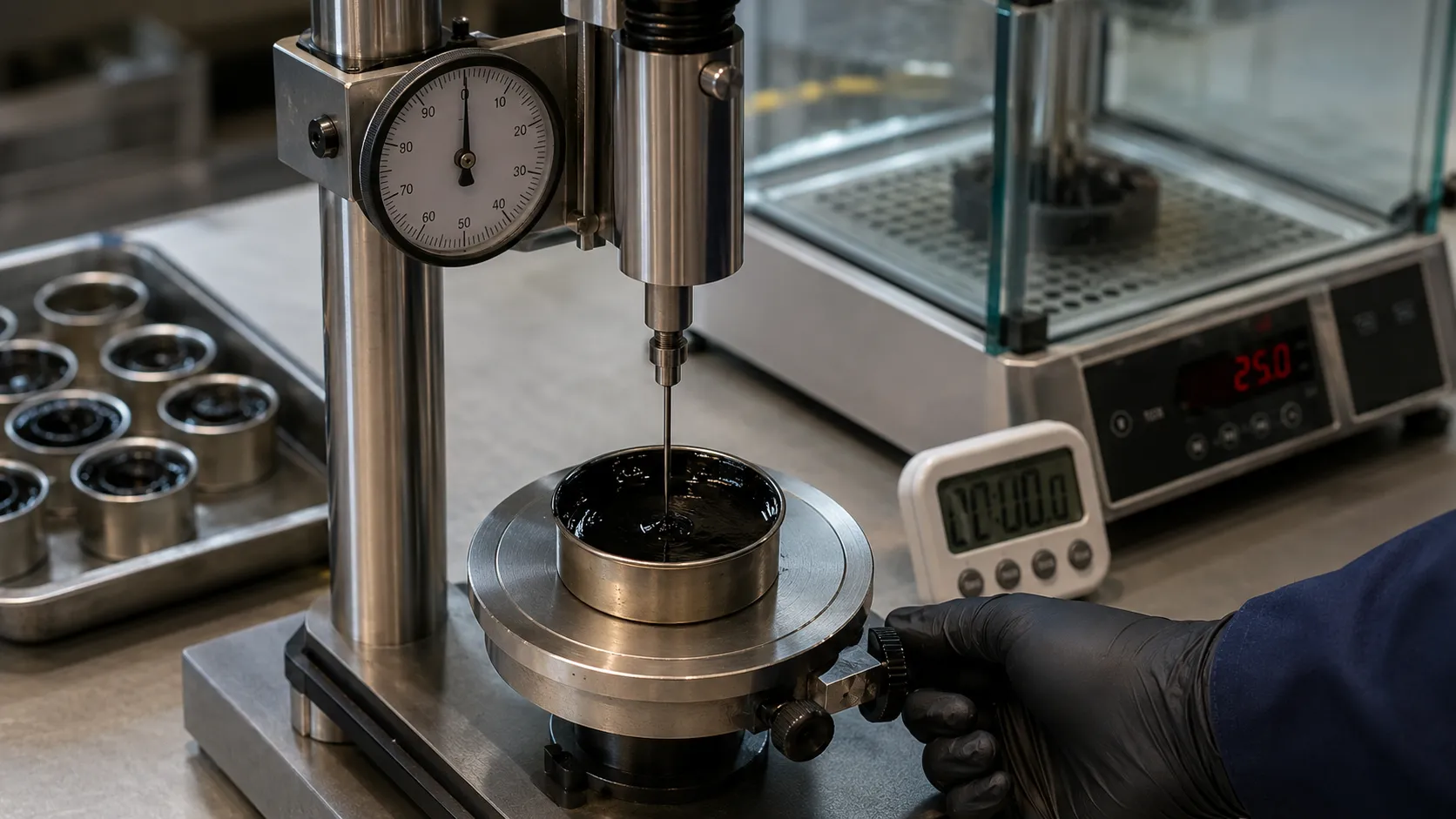
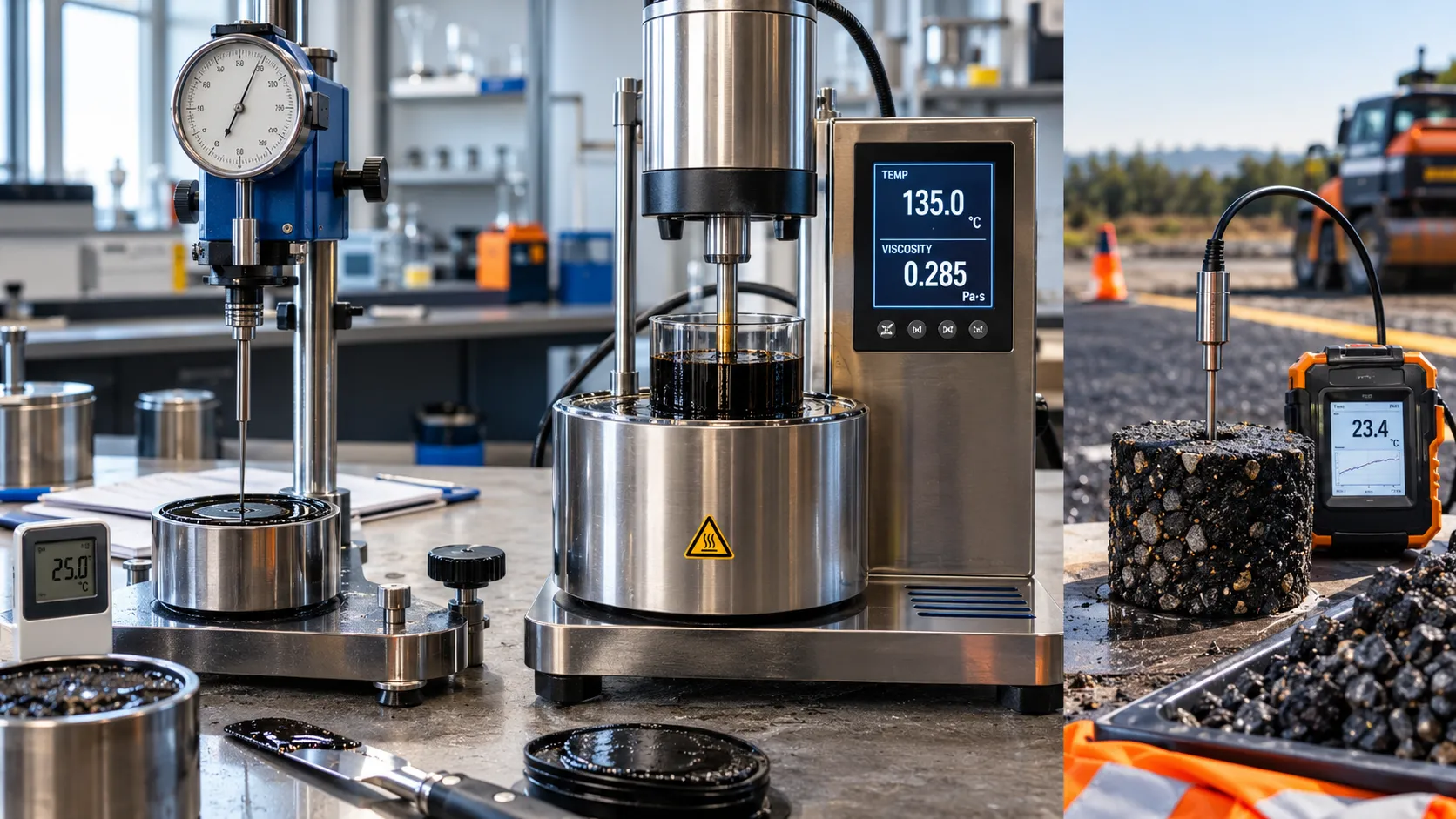
The test is straightforward: a needle weighing 100 grams is lowered onto a bitumen sample held at 25°C, and the depth it sinks in 5 seconds is measured in tenths of a millimeter (dmm). A “60/70” bitumen means the needle penetrates between 60 and 70 dmm under these conditions. Lower numbers mean a harder, stiffer bitumen; higher numbers mean a softer one.
Common penetration grades and their typical applications:
| Grade | Relative Hardness | Typical Use |
|---|---|---|
| 30/40 | Very hard | Hot climates, heavy traffic |
| 40/50 | Hard | Hot regions, high-traffic roads |
| 60/70 | Medium | General-purpose paving, moderate climates |
| 80/100 | Soft | Cooler climates, lighter traffic |
| 120/150 | Very soft | Cold regions, surface treatments |
Penetration grading works well for basic classification, but it has a real limitation: it only measures behavior at one fixed temperature. Two bitumens with the same penetration value at 25°C can behave very differently once actual pavement temperatures swing from freezing in winter to 60°C or more on a hot summer road surface. This gap is exactly what the viscosity grading system was built to close.
Viscosity Grade (VG) Bitumen
Viscosity grading measures how bitumen flows at 60°C — a temperature much closer to what a real road surface experiences in hot weather — rather than relying on a single room-temperature needle test. This gives a more dependable prediction of how a binder will resist rutting once it's actually carrying traffic in the heat.
VG bitumen is classified into four grades. This system, standardized in India under IS 73:2013, has become one of the most widely used viscosity-based classifications globally, and it's closely aligned with the guidelines published by the Asphalt Institute.
| Grade | Min. Penetration at 25°C | Absolute Viscosity at 60°C | Best Suited For |
|---|---|---|---|
| VG10 | 80 dmm | 800–1,200 poise | Cold climates, spraying, surface dressing |
| VG20 | 60 dmm | 1,600–2,400 poise | Moderate climates, average traffic |
| VG30 | 45 dmm | 2,400–3,600 poise | General road construction, standard traffic |
| VG40 | 35 dmm | 3,200–4,800 poise | Hot climates, heavy traffic, high-stress areas |
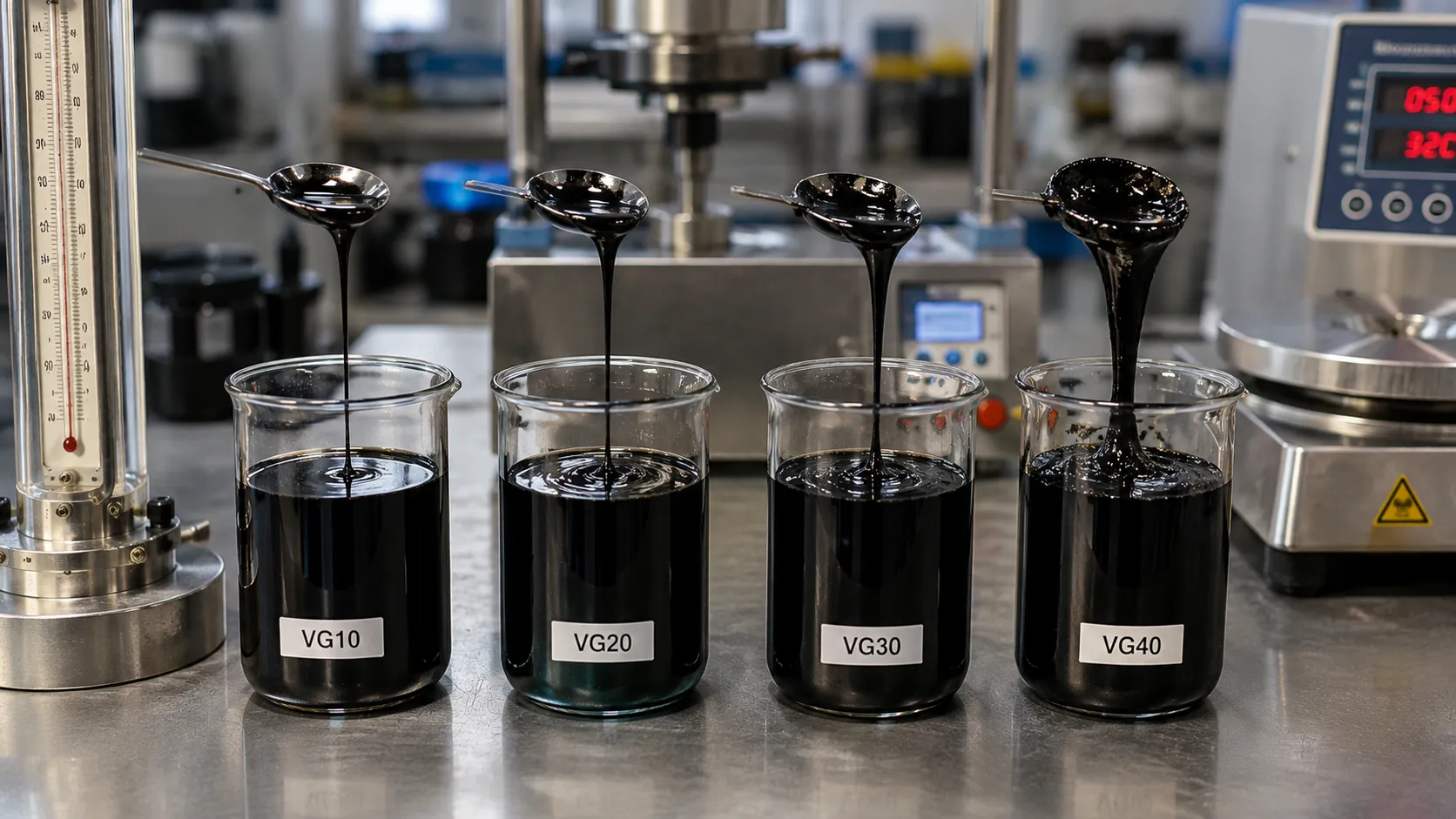
VG10 is the softest and most flexible, making it a natural fit for cold or high-altitude regions, prime coats, and tack coats where good wetting and easy spraying matter more than stiffness. VG30 sits in the middle and has become the default choice for standard highway construction in moderate climates, since it balances workability with enough stiffness to resist deformation. VG40 is the stiffest of the four, reserved for hot climates and heavy-traffic zones like toll booths, bus lanes, and intersections where vehicles accelerate and brake repeatedly.
A useful rule of thumb: VG30 is often used as a like-for-like replacement for 60/70 penetration grade, and VG10 for 80/100, in regions transitioning between the two systems. Once you have confirmed the right VG grade, our free Bitumen Calculator can estimate the exact quantity needed for any road project in seconds.
Performance Grade (PG) Bitumen
Performance grading takes a different approach entirely. Instead of classifying bitumen by a lab measurement at a fixed temperature, PG grading is built directly around the actual high and low pavement temperatures a road will experience over its service life. It was developed in the United States under the Strategic Highway Research Program (SHRP) specifically to reduce the gap between lab test results and real-world pavement failure.
A PG grade reads as two numbers, such as PG 64-22:
64
High Temperature
The average seven-day maximum pavement temperature the binder can handle without excessive rutting.
-22
Low Temperature
The minimum pavement temperature the binder can handle without thermal cracking.

Engineers select the PG grade based on regional climate data and expected traffic loading, which makes this system especially useful for large infrastructure projects where failure risk needs to be minimized across an entire temperature range, not just checked at one reference point.
Other Bitumen Types by Formulation
Beyond the three main grading systems, bitumen is also classified by how it's formulated for specific applications rather than by hardness or viscosity alone.
Paving grade bitumen
The standard refined binder used directly in hot mix asphalt — what the grading systems above all describe.
Cutback bitumen
Thinned with a volatile solvent so it stays workable at lower temperatures, common for prime coats and cold-weather spraying.
Bitumen emulsion
Bitumen dispersed in water for ambient-temperature application, widely used in tack coats and cold mix applications — our dedicated guide covers Bitumen emulsion in depth.
Polymer modified bitumen (PMB)
Blended with polymers to improve elasticity, rutting resistance, and fatigue life under heavy or repeated loading.
Oxidized (blown) bitumen
Air-blown to raise its softening point, mainly used in roofing and damp-proofing rather than roads.
These categories can overlap with the grading systems above — a PMB, for example, still has an underlying viscosity or penetration grade before modification, but the added polymers change how it performs beyond what the base grade alone would predict.
How to Choose the Right Bitumen Grade
Selecting a grade comes down to matching the binder's temperature behavior to the conditions it will actually face.
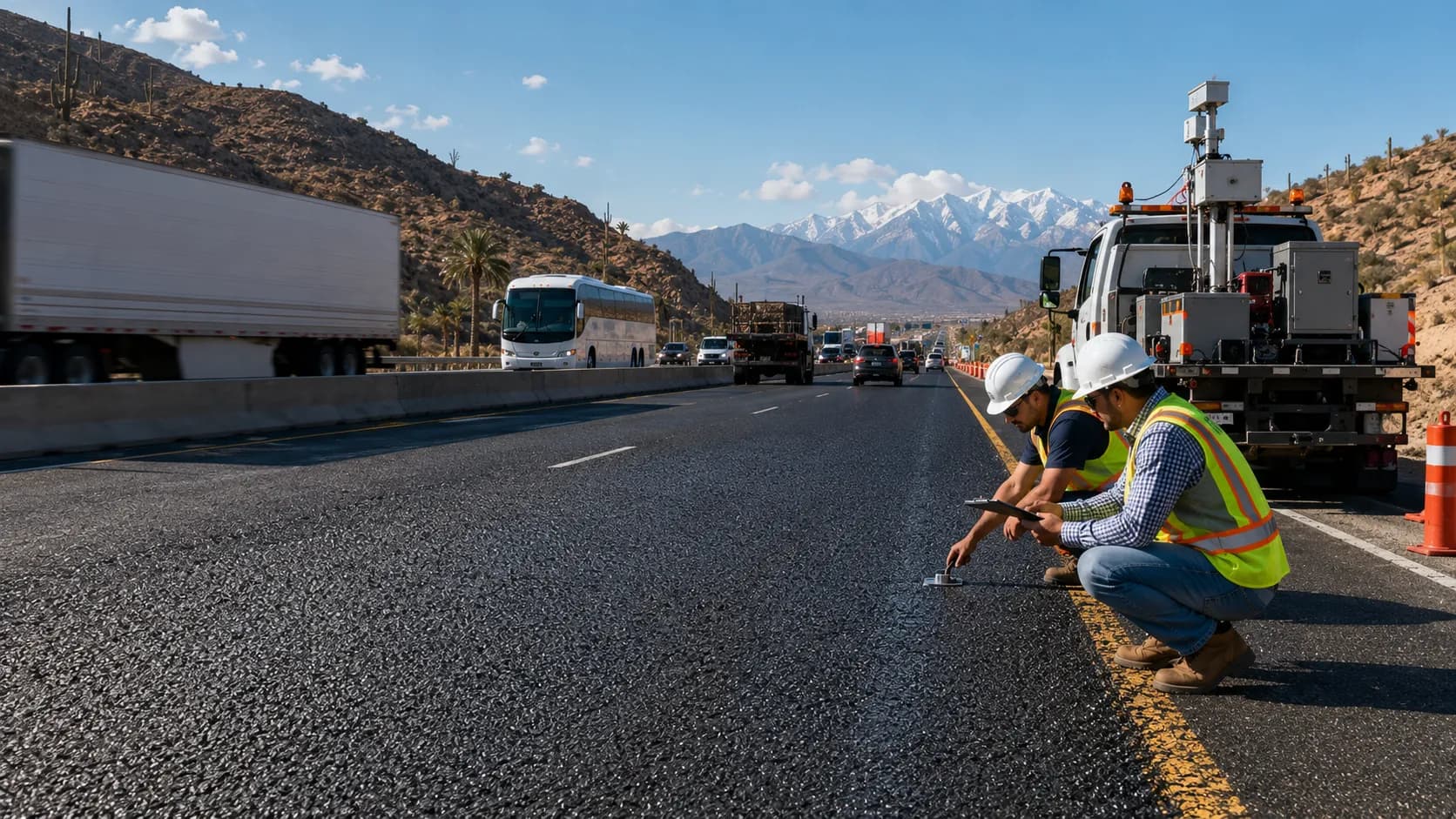
Hot regions need stiffer, higher-viscosity grades to resist rutting; cold regions need softer grades to avoid thermal cracking.
Heavy, slow-moving, or channelized traffic — bus lanes, intersections, ports — benefits from stiffer grades or PMB.
Road paving, prime coats, surface dressing, and roofing all call for different formulations, not just different hardness levels.
National and regional road authorities typically mandate a specific grading system and grade range for public infrastructure — always check the governing standard before ordering.
Softer grades are easier to work with at lower plant temperatures, which can matter for smaller operations or remote sites.
Worth noting: Using the wrong grade is one of the more common — and entirely preventable — causes of early pavement failure. A binder too soft for the local climate softens further in summer heat and leads to rutting; one too stiff for winter lows becomes brittle and cracks. Getting the grade right at the specification stage costs nothing extra and prevents expensive repairs later. Pair your grade selection with our bitumen density reference chart to verify grade-specific properties during quantity estimation.
Penetration vs. VG vs. PG: Quick Comparison
Each grading system has its strengths. Here is how they sit side by side when making a specification decision:
| Factor | Penetration Grade | Viscosity Grade (VG) | Performance Grade (PG) |
|---|---|---|---|
| What it measures | Hardness via needle test | Flow resistance at 60°C | Actual pavement temperature range |
| Test temperature | 25°C only | 60°C (and often 135°C) | Based on regional climate data |
| Accounts for temperature swings | No | Partially | Yes, directly |
| Common region | Traditional, widespread | India and similar markets | United States and similar markets |
| Best for | Simple, general classification | Predictable hot-weather performance | Climate-specific, high-reliability projects |
Summary
Bitumen grading exists to match binder behavior to real-world conditions — climate, traffic, and application all shape which grade is appropriate for a given project. Penetration grading offers a simple hardness baseline, viscosity grading (VG10–VG40) gives a more reliable read on hot-weather performance, and performance grading (PG) ties the binder directly to actual pavement temperature extremes. Getting the grade right from the start is one of the cheapest ways to avoid rutting, cracking, and early pavement failure down the line.
Once you've confirmed the right grade, use our free Bitumen Calculator to estimate the exact quantity of binder needed based on road dimensions, mix density, and binder percentage — saving time and reducing waste before you place the order.
Grade selection also affects delivery logistics — PMB grades have a narrower temperature window and shorter storage time than standard paving grades. Our guide on bitumen transport methods and delivery temperatures covers what to specify when booking a tanker and what to check on arrival at site.
Before you head into a site meeting, make sure you can say the material's name with confidence. Our bitumen pronunciation guide covers all major English accents — British, American, and Australian — with IPA notation and common mistakes to avoid.
To confirm that delivered bitumen meets technical specifications, explore our comprehensive guide on standard bitumen quality tests including penetration, ductility, softening point, and binder aging tests.
Frequently Asked Questions
What does bitumen grade 60/70 mean?
It means a needle penetrates between 60 and 70 tenths of a millimeter into the bitumen sample under standardized test conditions at 25°C. It's a mid-range penetration grade suited to general-purpose paving.
What is the difference between VG30 and VG40 bitumen?
VG40 is stiffer and more viscous than VG30, making it better suited to hot climates and heavy traffic, while VG30 is the more general-purpose grade used across standard road construction.
How do I read a PG grade like PG 64-22?
The first number (64) is the highest average pavement temperature the binder resists rutting at; the second number (-22) is the lowest temperature it resists cracking at.
Which bitumen grade is best for road construction?
There's no single best grade — it depends on climate and traffic. VG30 is a common general-purpose choice in moderate climates, but hot, high-traffic regions often need VG40 or a higher PG grade.
Can I substitute VG30 for 60/70 penetration grade bitumen?
In many cases yes, since VG30 is often used as an equivalent replacement for 60/70 during a regional transition between grading systems, but always confirm against the specific project's governing specification.
Why did viscosity grading replace penetration grading in some regions?
Because penetration grading only tests at one temperature (25°C) and doesn't reliably predict how bitumen performs at real pavement temperatures in hot weather, which viscosity grading measures more directly at 60°C.
What grade of bitumen is used for roofing?
Roofing typically uses oxidized (blown) bitumen rather than standard paving grades, since air-blowing raises its softening point for better performance in membrane and waterproofing applications.

Founder & Web Developer
Nabeel Awan is a web developer and the founder of BitumenCalcPro. His work focuses on web development and building practical online tools, with a strong interest in civil engineering, asphalt, bitumen, pavement construction, and construction technology.