Quick Answer
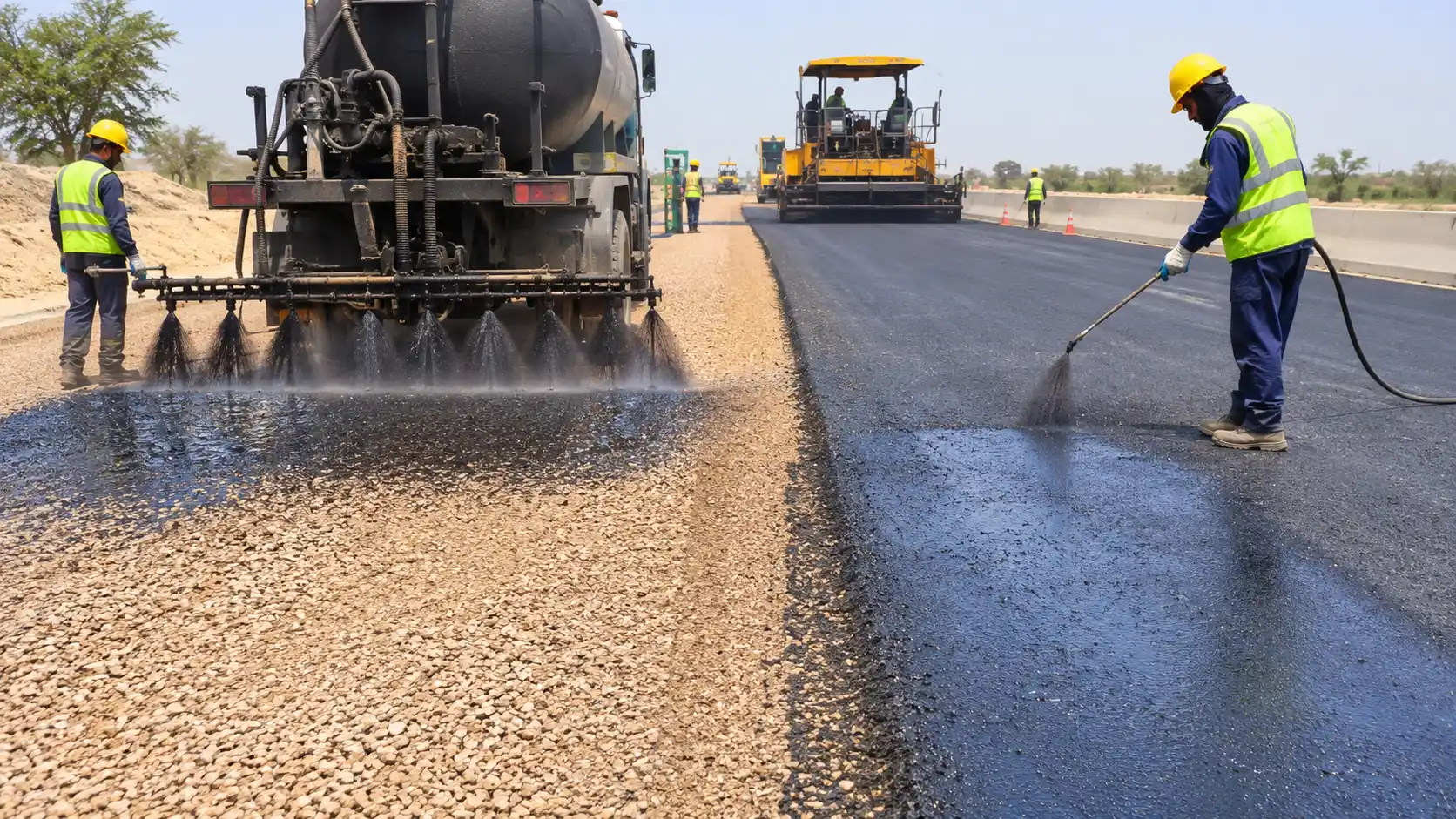
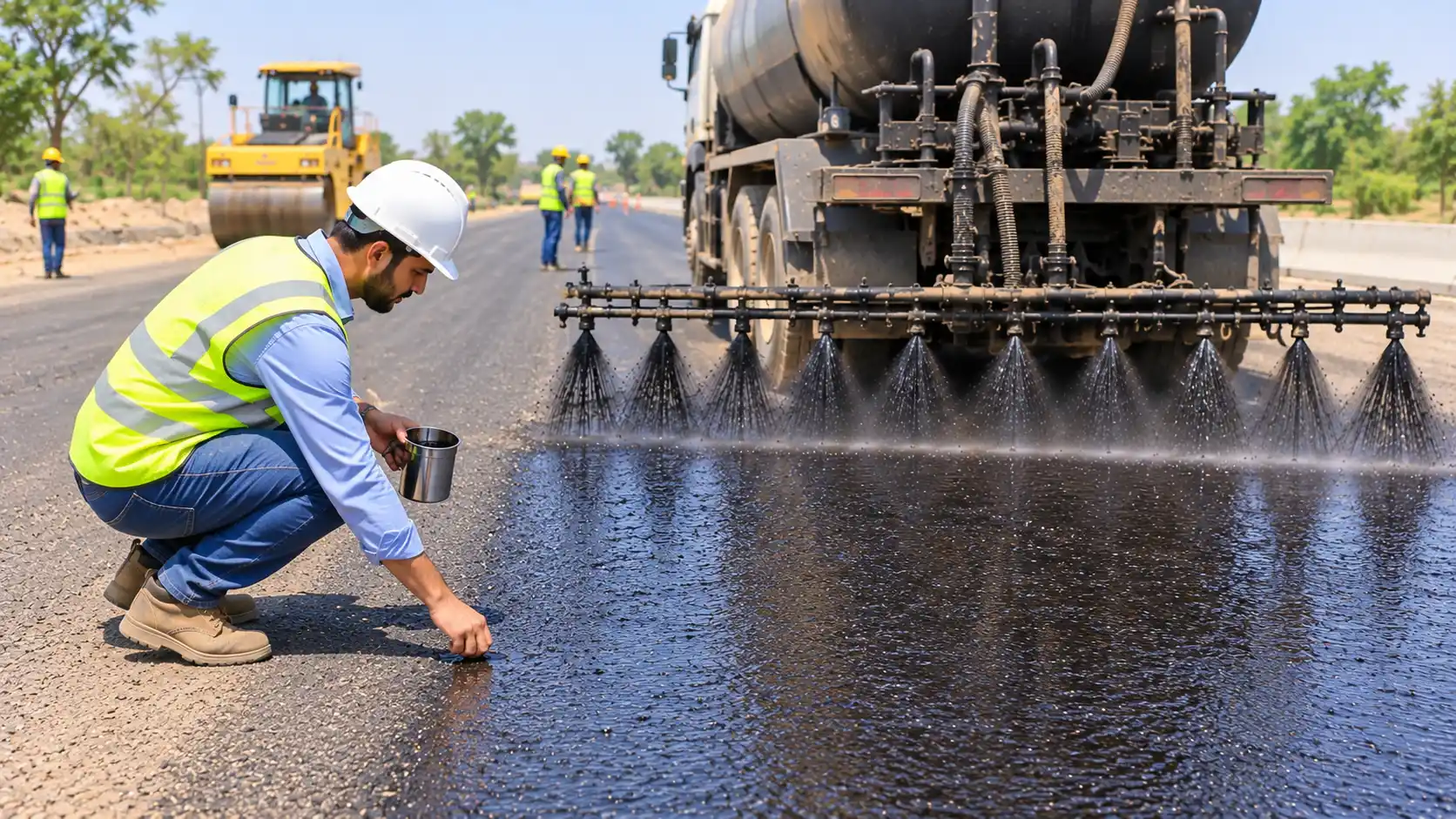
Prime coat vs tack coat comes down to the surface. A prime coat is sprayed on an unbound granular base before the first asphalt layer. It soaks in, binds loose fines, and seals the base. A tack coat is sprayed on existing asphalt or concrete. It stays on top and bonds the new layer to the old one. Prime coats are heavier — about 0.15 to 0.50 gal/yd² — and cure for 24 hours or more. Tack coats break within hours.
Both prime coat and tack coat are thin sprays of bitumen. Both go down before asphalt does. One distributor truck often sprays both on the same job, which is why the two names get swapped on site and in conversation. The distinction is simple once you know what each one touches: a prime coat goes on a base with no binder in it, and a tack coat goes on a surface that already has binder in it. The material, the rate, and the cure time all follow from that.
This guide covers what each coat does, which materials and rates go with each, how to calculate quantities, and the mistakes that cause bond failures. If you are budgeting for tack coat material quantities on your next paving project, our free tack coat calculator handles the arithmetic for you.
Prime Coat vs Tack Coat at a Glance
| Prime coat | Tack coat | |
|---|---|---|
| Applied to | Unbound granular or stabilized base | Existing asphalt, milled surface, or concrete |
| Main job | Penetrate and seal the base, bind surface fines, prepare for asphalt | Bond a new asphalt layer to the layer below |
| Where it ends up | Soaks into the top of the base | Stays on the surface as a thin film |
| Typical binder | MC-30 or MC-70 cutback, slow-setting emulsions, penetrating prime emulsions | CSS-1h, SS-1h, CSS-1, SS-1, trackless tack |
| Typical rate | About 0.15 to 0.50 gal/yd² | About 0.02 to 0.15 gal/yd² residual |
| Wait before paving | About 24 to 72 hours | About 30 minutes to a few hours, until the emulsion breaks |
| If skipped or done badly | Base raveling, moisture problems, weak bond to the first lift | Slippage, cracking, delamination |
Rates vary by agency — the project specification is the controlling document.
What Is a Prime Coat?
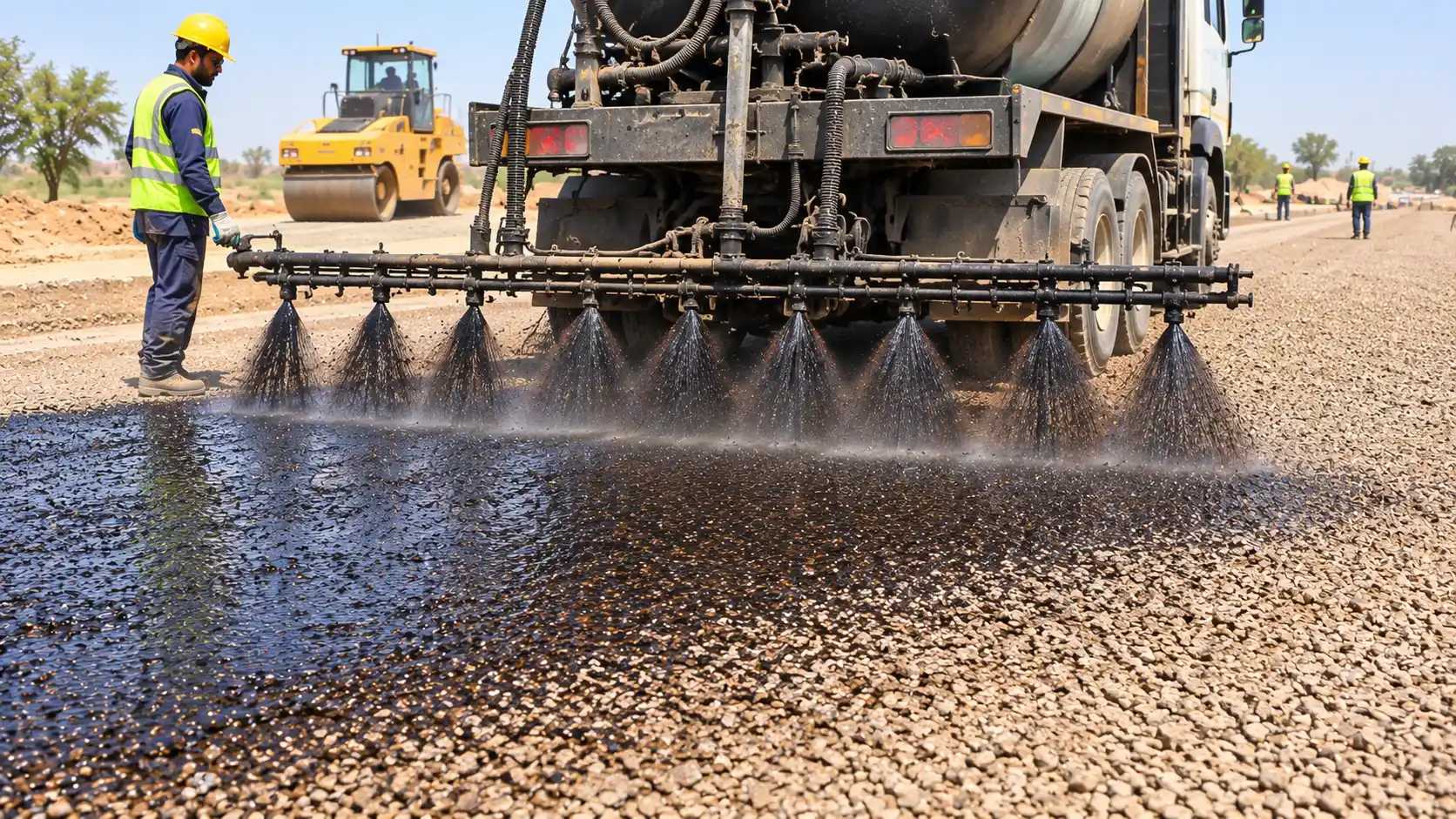
A prime coat is a low-viscosity bituminous liquid sprayed onto an unbound granular base — such as crushed stone or stabilized soil — before the first asphalt layer goes down. The liquid is thin on purpose so it can flow into the top of the base and stay there.
What a prime coat does
- Binds loose fines at the surface of the base so they do not ravel under construction traffic
- Seals the base against water, limiting moisture from rain and preventing moisture loss from the base
- Controls dust until the asphalt is placed
- Prepares the surface so the first asphalt layer bonds to the base
Rain, wheel traffic, and wind all attack a bare granular base. A primed surface gives the paving crew a firmer, more uniform platform to work from.
Prime coat materials
| Base condition | Common binder | Why |
|---|---|---|
| Tight, fine-graded or clay-bound base | MC-30 | The most fluid medium-curing cutback, so it can enter fine pores |
| Open, coarse base | MC-70 | Medium curing gives it time to penetrate before the solvent flashes off |
| Where cutbacks are restricted | CSS-1h or SS-1h, or a penetrating prime emulsion | Water-based, no solvent release |
Cutbacks penetrate deeper and release solvent as they cure. Many regions restrict that, and emulsions have taken a growing share of prime work. Our guide on bitumen emulsion grades and what the codes mean covers the full classification system in detail.
Prime coat application rate
Cutback prime coats are typically applied at about 0.20 to 0.50 gal/yd² (roughly 0.9 to 2.3 L/m²), with open bases at the high end. Emulsion prime coats typically run about 0.15 to 0.30 gal/yd² residual. A federal airfield specification, for example, calls for 0.20 to 0.30 gal/yd² for its prime coat. The base absorbs the liquid, so the rate is a volume of material leaving the spray bar. Test sections confirm whether the base takes the rate without pooling.
Prime coat curing
Most prime coats need 24 to 72 hours to cure, depending on the binder, rate, base moisture, and weather. Some specifications require the primed surface to stay undisturbed for at least 48 hours. The coat is ready for asphalt when the binder has penetrated and no wet or excess material remains on top.
What Is a Tack Coat?
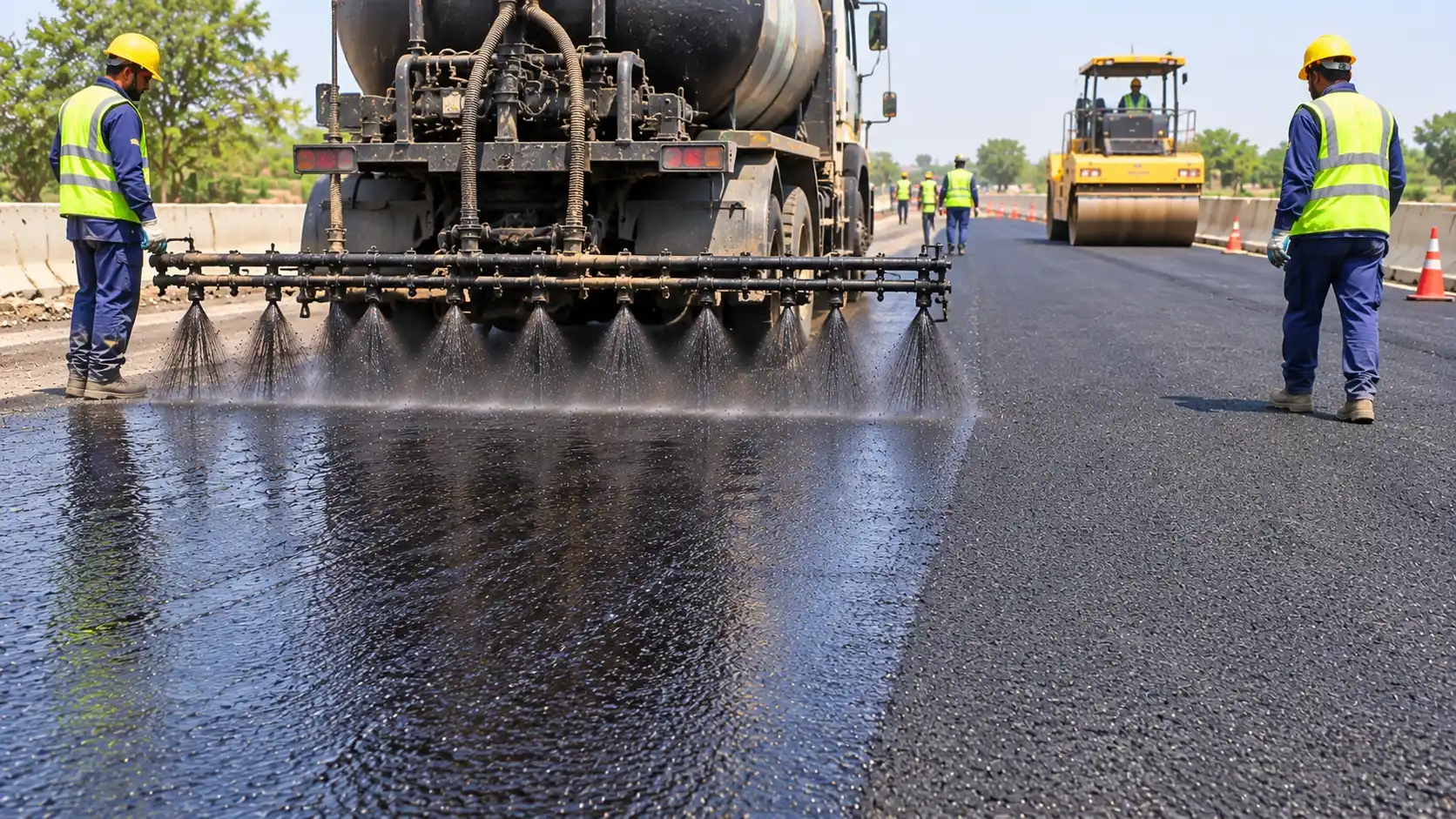
A tack coat is a thin film of asphalt emulsion sprayed between a new asphalt layer and the surface below it. It bonds the two layers so the pavement acts as one structure under traffic. Without that bond, the top layer can shift independently of the layer beneath.
Tack coats go on the top of a lower asphalt lift before the next lift, on existing pavement before an overlay, on a milled surface before the new surface course, and on concrete where the specification calls for an asphalt overlay.
Tack coat materials
CSS-1h (cationic slow-setting, hard base) is the most commonly specified tack emulsion in the United States. Other common choices are SS-1, SS-1h, and CSS-1. All are slow-setting grades that can be sprayed in a thin, even film and then break predictably. Trackless tack uses a harder binder that does not stick to tires and equipment, which helps on jobs where trucks must run over the tacked surface. The full classification of these emulsion grades is explained in our bitumen emulsion guide.
Tack coat application rate
Tack coat rates are written as residual asphalt — the binder left on the surface once the water has gone. Across agencies, the residual rate falls between about 0.02 and 0.15 gal/yd² (0.09 to 0.68 L/m²), and 0.04 to 0.08 gal/yd² is the common working band.
| Surface | Rate guidance |
|---|---|
| Dense, smooth, newly placed asphalt | Lower end |
| Flushed or bleeding surface | Lower end — it already carries excess binder |
| Dry, aged, or oxidized surface | Higher end |
| Open-textured or raveled surface | Higher end |
| Milled surface | Highest band — true surface area exceeds plan area |
Diluting tack coat
Emulsion is sometimes diluted with water at 1:1 so the crew can spread the binder more evenly at low rates. Caltrans notes that 1:1 suits milled pavement in warm weather, and that a steep grade or high cross slope calls for little or no dilution to avoid puddling and runoff.
Dilution arithmetic: A diluted emulsion must be applied at a higher spray rate to leave the same residual. The formula: diluted rate = undiluted rate × (1 + water ÷ emulsion). Add water to the emulsion, not emulsion to water, or the emulsion can break early. Some agencies — including Missouri DOT — prohibit field dilution, citing inaccurate ratios and incompatible water sources.
Tack coat break and cure
Fresh emulsion is brown. As water separates from the asphalt it turns black — that color change is called the break. Pave only after the tack has broken. Hot mix placed on unbroken, brown tack traps water at the interface and gives almost no bond. In warm, dry weather the break often takes 30 minutes to 2 hours. Cold, humid weather, heavier application, and dilution all push it longer. Keep traffic off the tacked surface where possible; if trucks must cross it, trackless tack or a clean-wheel rule reduces pickup.
Where Each Coat Goes in the Pavement
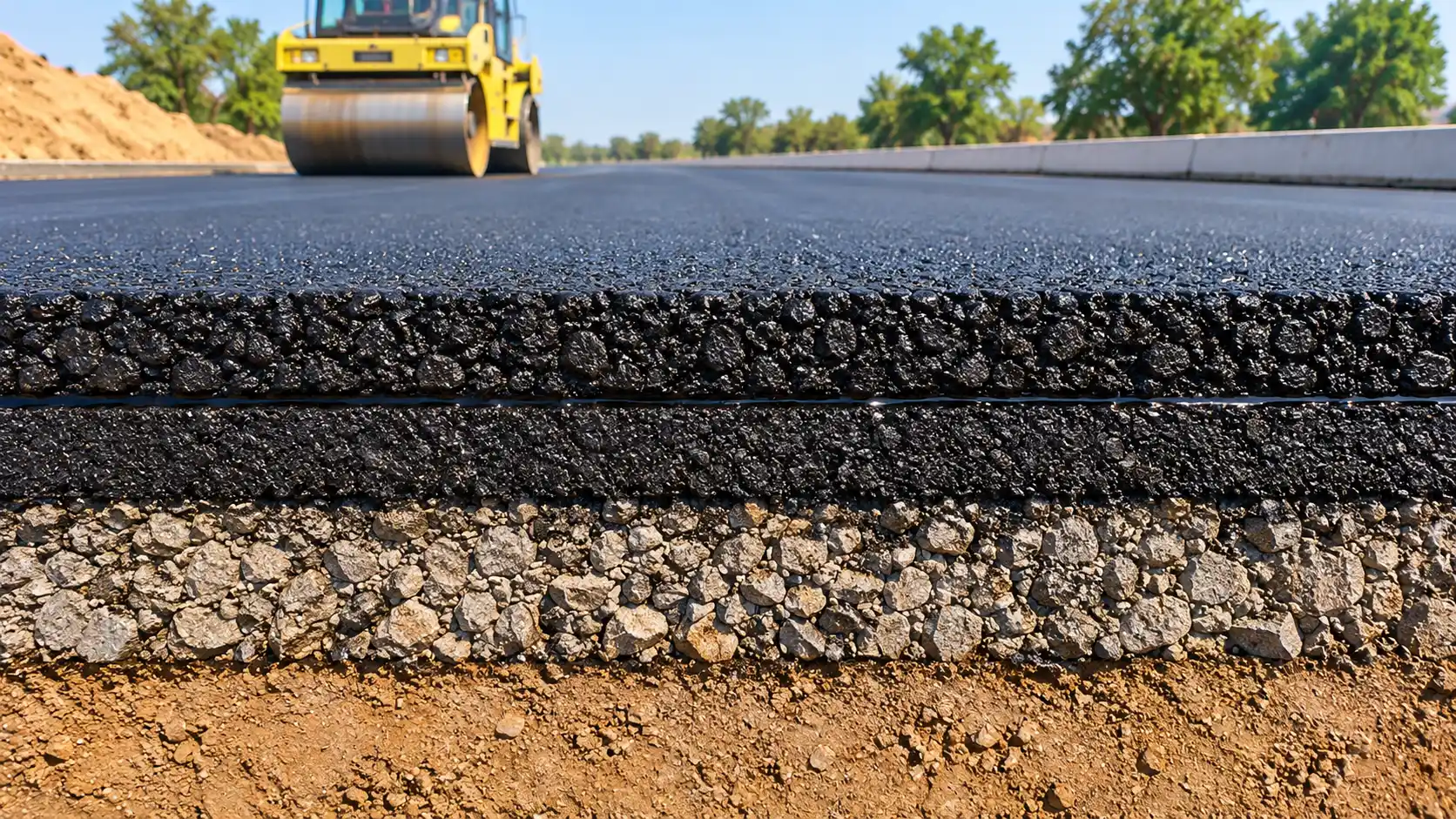
The order of layers shows why the two coats never overlap.
New pavement on a granular base
- 1.Compacted subgrade
- 2.Subbase and granular base
- 3.Prime coat on the base (where specified)
- 4.First asphalt layer — base or binder course
- 5.Tack coat on top of that layer
- 6.Surface course
Overlay on existing pavement
- 1.Existing pavement — cleaned and sometimes milled
- 2.Tack coat
- 3.New asphalt overlay
For typical layer thicknesses and structural design requirements, see our asphalt pavement thickness guide, which covers driveways, roads, and parking lots.
Application Rates Compared
| Prime coat | Tack coat | |
|---|---|---|
| Rate in gal/yd² | About 0.15 to 0.50 | About 0.02 to 0.15 residual |
| Rate in L/m² | About 0.7 to 2.3 | About 0.09 to 0.68 residual |
| Rate is measured as | Volume sprayed (the base absorbs it) | Residual binder left after the water leaves |
| Dilution | Not typical | Common at 1:1 where the specification allows |
To convert, 1 gal/yd² is about 4.53 L/m². Sources quote different rates for the same coat, so use the figure in your project specification and confirm it with a test strip.
How to Calculate Prime and Tack Coat Quantities
The basic formula is the same for both:
Formula
Quantity (gal) = area (yd²) × application rate (gal/yd²)
Prime coat example
A 1,000 yd² base at 0.25 gal/yd² needs 250 gallons of cutback or emulsion.
Tack coat example
1,000 yd² of asphalt, target residual rate 0.05 gal/yd²:
- Residual asphalt needed: 1,000 × 0.05 = 50 gallons
- Emulsion at 60% residue: 50 ÷ 0.60 = ~83 gallons undiluted
- Diluted 1:1 with water: ~83 gal emulsion + ~83 gal water = ~167 gallons sprayed (~0.17 gal/yd²)
Residue varies by emulsion — FHWA puts it at roughly 57 to 70 percent of the undiluted emulsion, so use the figure on the supplier's certificate. Check whether a quoted rate means residual binder or sprayed emulsion. Mixing them up is one of the most common sources of short orders on site. Our common asphalt estimation mistakes guide covers other quantity errors that push budgets over, and our free tack coat calculator handles overall tack quantities for a paving job.
FHWA guidance: The Federal Highway Administration's tack coat guidelines recommend verifying residual content with the supplier's mill certificate and conducting a test strip before full application on any project.
Common Mistakes and Failures
Prime coat mistakes
- ✕Paving before the prime has cured — leaves wet binder under the asphalt
- ✕Choosing a binder too thick for the base to absorb
- ✕Spraying more than the base can take — leaves pooled material on top
- ✕Letting construction traffic cut up the primed surface before paving
Tack coat mistakes
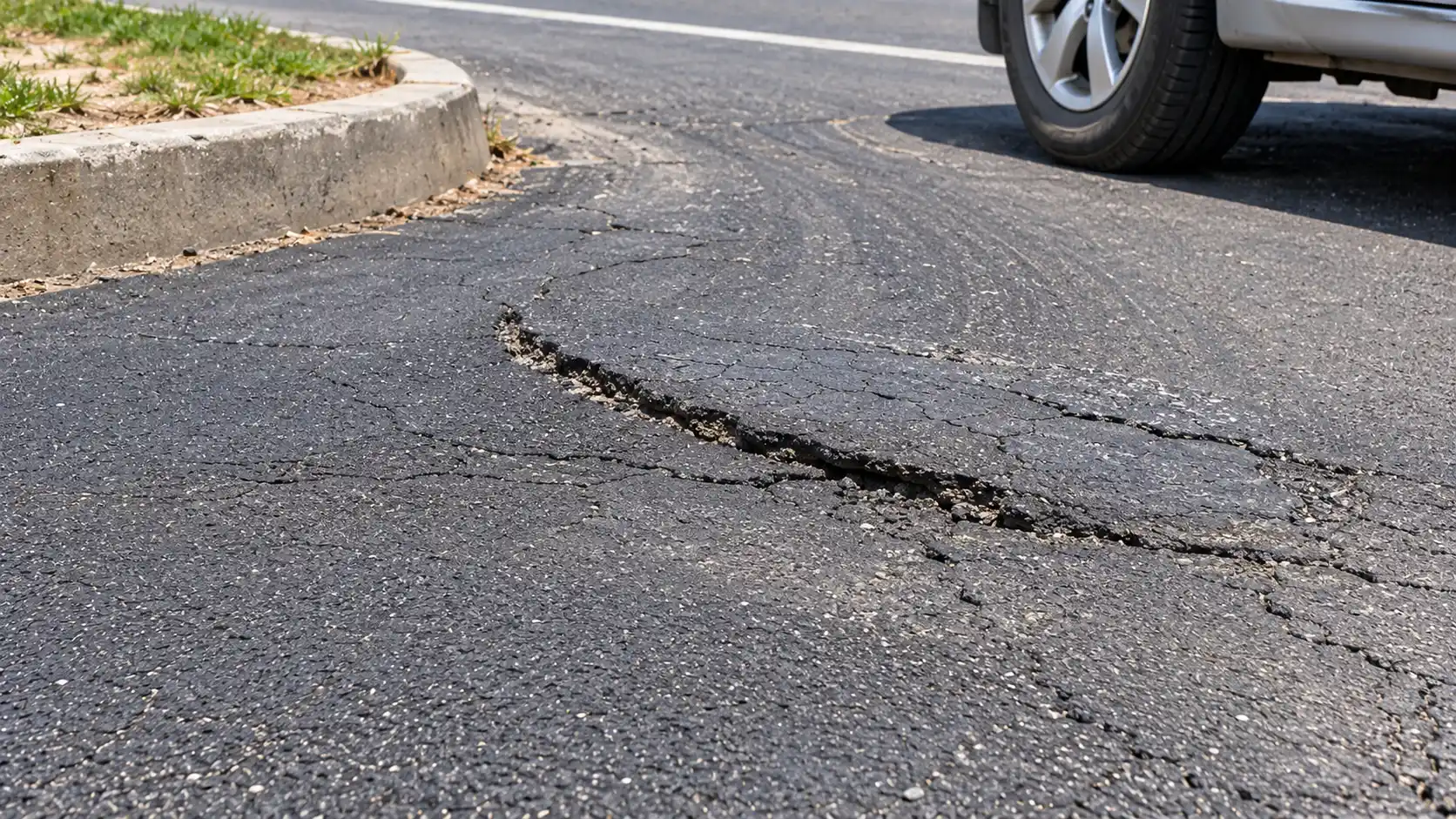
- ✕Too much tack — acts as a lubricant and creates a slippage plane
- ✕Too little or uneven tack — missed strips leave unbonded areas
- ✕Paving on brown tack — emulsion has not broken, water stays trapped
- ✕Spraying onto a dusty or dirty surface — tack does not bond to contamination
- ✕Using a smooth-surface rate on a milled surface — higher rate is needed
- ✕Tracking — trucks pull tack off and leave bare spots
- ✕Skipping tack between lifts without authorization
Crescent-shaped slippage cracks and delamination at the bond line trace back to the tack coat — not to the mix or the layer thickness. Understanding bitumen binder grades and performance specifications helps in selecting the right emulsion for the temperature and traffic conditions on a given project. Rain washes tack coat away before it can break, which is one reason the guide to paving asphalt in the rain lists wet tack coat as a primary failure risk.
Do You Need Both?
| Scenario | Prime coat | Tack coat |
|---|---|---|
| New road or parking lot on granular base | Where specified | Between asphalt lifts |
| Overlay on existing asphalt | Not used | Yes |
| Overlay on milled asphalt | Not used | Yes, at the higher rate |
| Asphalt over concrete | Not used | Where the specification calls for it |
Whether a project uses a prime coat is a specification decision, and some agencies omit it on dense, well-compacted bases. Some specifications also let the engineer authorize skipping tack between new lifts when the surface is clean, though most still require it. Treat both as engineering calls and follow the project documents. For more context on how binder selection affects pavement performance, the Asphalt Institute's tack coat best practices is a widely referenced industry resource.
Summary
The choice between the two coats follows the surface under the asphalt. Prime goes on an unbound base, penetrates it, and cures for a day or more. Tack goes on a bound surface, stays on top, and is ready once it turns black. Their materials, rates, and cure times differ because their jobs differ.
Calculate quantities from the residual rate and the emulsion's residue percentage, follow the project specification, and let every tack coat break before the asphalt arrives. For a broader look at how bitumen properties affect pavement performance, our complete bitumen guide covers grades, density, and temperature behavior in full.
Planning a paving project? Use our free Bitumen Calculator to estimate mix weight, binder content, and aggregate requirements accurately — before you commit to a contractor quote.
Frequently Asked Questions
What is the main difference between a prime coat and a tack coat?
A prime coat is sprayed on an unbound granular base and soaks into it. A tack coat is sprayed on an existing asphalt or concrete surface and stays on top to bond the next layer.
Can a tack coat replace a prime coat?
No. Tack emulsion is applied at a far lighter rate and does not penetrate a granular base, so it cannot bind loose fines or seal the base.
Is a tack coat needed between every asphalt layer?
Most specifications require it. Some allow the engineer to authorize omitting it between new lifts when the surface is clean and free of dust and debris.
How long does a prime coat take to cure?
Usually 24 to 72 hours, depending on the binder, rate, base moisture, and weather. Some specifications require at least 48 hours undisturbed.
How long should a tack coat sit before paving?
Until it breaks from brown to black and the water has left. In warm, dry weather that often takes 30 minutes to 2 hours. Cold, humid weather or dilution pushes it longer.
What is the application rate for a tack coat?
Residual rates run about 0.02 to 0.15 gal/yd², with 0.04 to 0.08 the common working band. Milled and aged surfaces take more than smooth, dense ones.
What binder is used for a prime coat?
Medium-curing cutbacks such as MC-30 and MC-70 are traditional. Slow-setting emulsions or penetrating prime emulsions are used where cutbacks are restricted.
Why is tack coat diluted?
Dilution adds water so the crew can apply a thin, even film at low residual rates. The spray rate must increase to leave the same residual, and dilution also lengthens the break time.
What happens if you skip the tack coat?
The new layer can slide on the old one under traffic. The result is slippage, cracking, and delamination — the surface can separate over time.

Founder & Web Developer
Nabeel Awan is a web developer and the founder of BitumenCalcPro. His work focuses on web development and building practical online tools, with a strong interest in civil engineering, asphalt, bitumen, pavement construction, and construction technology.