Quick Overview
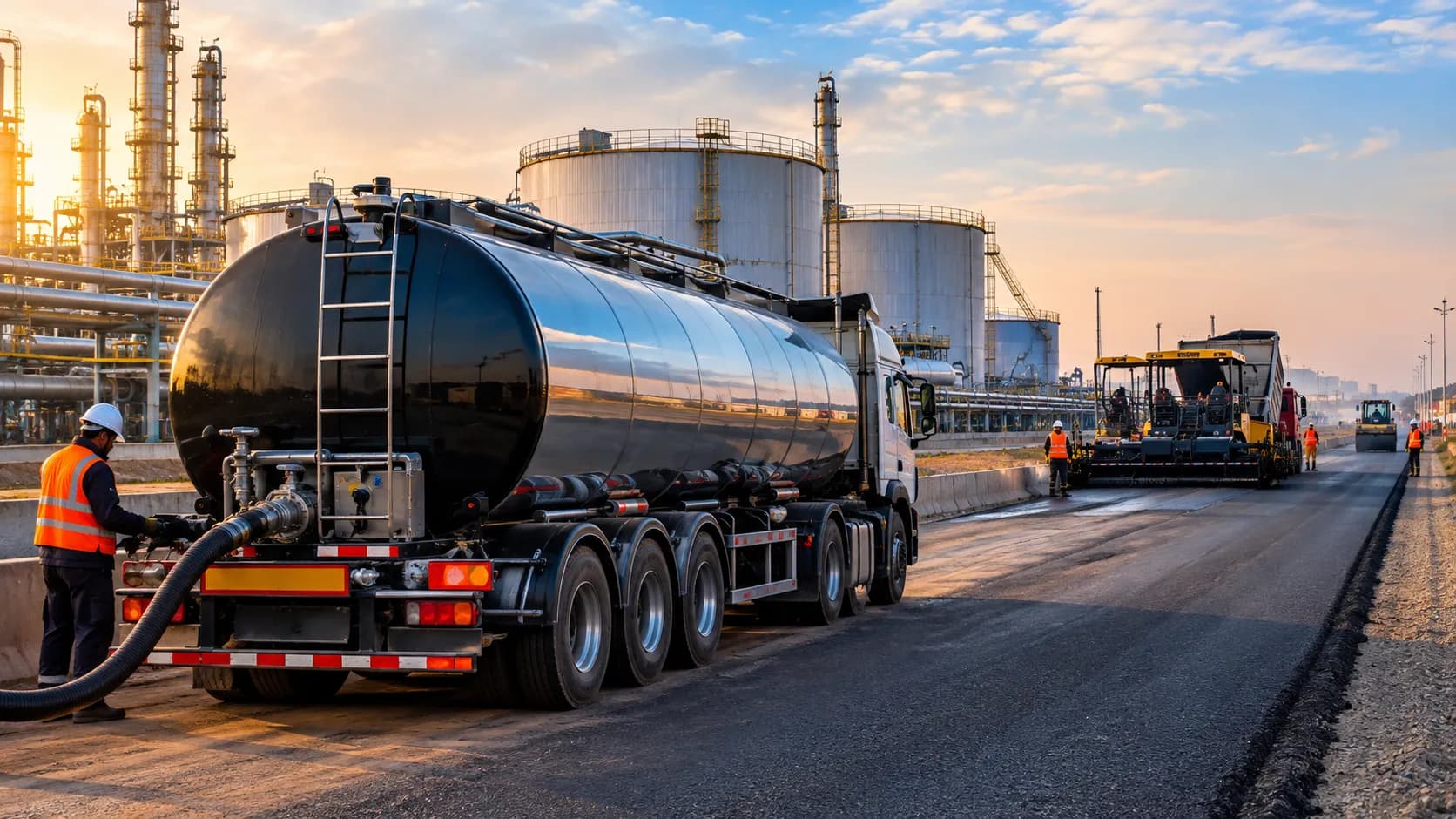
Most road bitumen moves hot, at roughly 120°C to 190°C, in insulated and heated road tankers, rail tank cars, ISO tank containers, and bitumen carrier ships. Remote or small jobs use cold packaging such as steel drums and bags. Oil sands bitumen also travels by pipeline after it is thinned with diluent. Hot bitumen is usually shipped as a dangerous good under UN 3257.
Bitumen is a hard, black solid at room temperature. A paver needs it as a hot liquid. Almost every rule of bitumen transport comes from closing that gap.
So how is bitumen transported from a refinery to a road site without cooling, spilling, or burning anyone? It depends on the grade, the distance, and the job size. A highway project needs bulk tankers. A village patch repair may use a few steel drums. An export order may cross an ocean in a heated ship.
Below: the methods, temperatures, rules, hazards, and a delivery checklist. If you want to understand what bitumen is before diving into how it moves, our complete guide to bitumen covers the chemistry, grades, and uses in full detail.
Why Bitumen Needs Special Transport
Bitumen is thick and sticky at ambient temperature. Heat turns it into a fluid, and the hotter it gets, the thinner it flows. If it cools too far, it will not pump, drain, or spray.
Bitumen also insulates well. The layer touching a cold tank wall cools first while the core stays hot. That is why tankers rely on insulation and heating coils to hold the temperature a load already has — not to heat bitumen from cold.
Two products share the name, and they move differently:
- Road (paving) bitumen is a refinery product. It moves as a hot liquid, or cold in packaging for small jobs. Understanding the different bitumen grades helps clarify why different grades demand different handling temperatures.
- Oil sands bitumen is produced in places like Alberta. It moves through pipelines after dilution, or by rail.
Terminology note: In North America, road bitumen is often called asphalt or asphalt cement. This article uses “bitumen” throughout. For a full breakdown of what separates the binder from the finished pavement mix, see our asphalt vs bitumen complete guide.
Bitumen Transport Methods at a Glance
Each method suits a different scenario. The table below summarises the trade-offs before diving into each one in detail.
| Method | State | Best For | Main Drawback |
|---|---|---|---|
| Road tanker | Hot liquid | Refinery or terminal to plant or site | Heat loss on long trips |
| Rail tank car | Hot liquid | Long-distance bulk | Needs rail access, then a truck for the last leg |
| Bitumen carrier ship | Hot liquid, up to 250°C | Import, export, coastal bulk | Needs heated terminals |
| ISO tank container | Hot liquid | Small export loads, places without terminals | Heating needed at destination |
| Steel drums | Cold | Remote sites, small jobs | Residue, waste, slow decanting |
| Bags and blocks | Cold | Niche remote supply | Leaks, packaging that may not melt |
| Pipeline (dilbit) | Thinned with diluent | Oil sands crude bitumen | Diluent cost and recovery |
| Emulsion tanker | Cool, water-based | Tack coats, spraying, cold mix | Frost and separation risk |
How Is Bitumen Transported by Road?
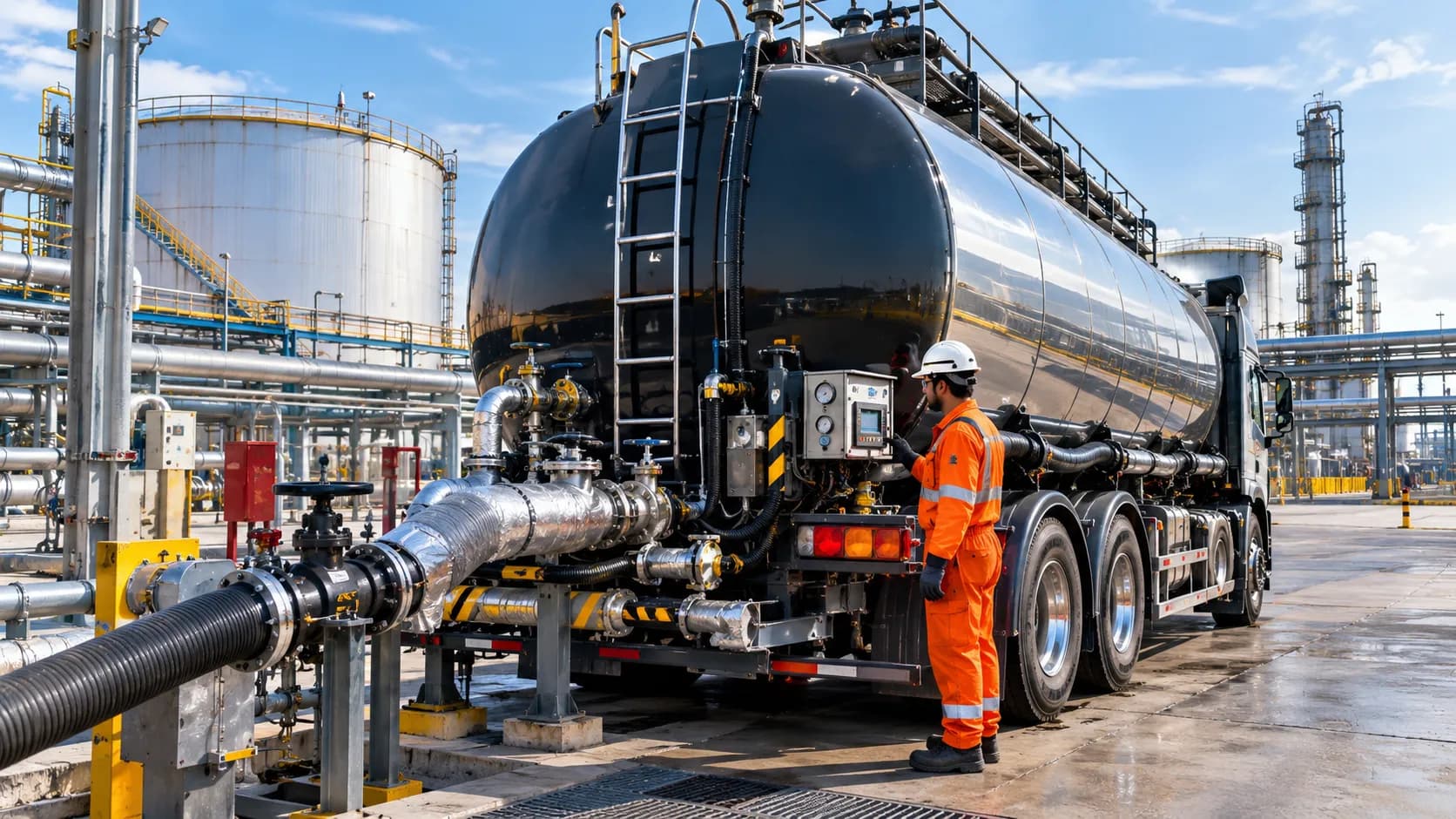
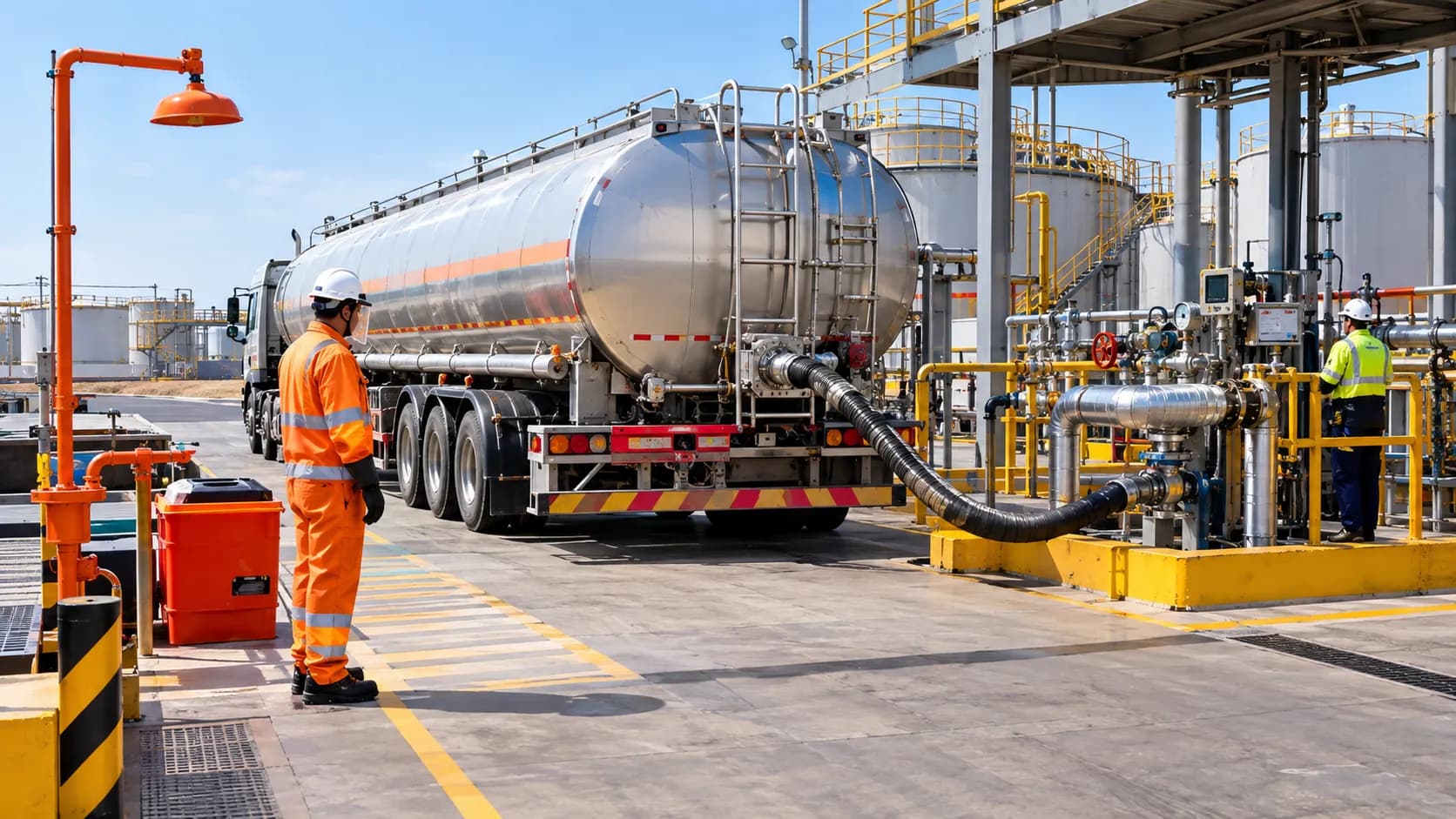
Road tankers are the most common link between a terminal and a mixing plant or job site. The tank is insulated and fitted with a heating system, temperature controls, and lagged discharge pipes.
Heating comes in two main forms. Electric or steam coils reach about 100°C, and hot oil systems can reach 300°C. A tanker does not heat bitumen from cold — it holds the heat the load already has.
Distance is the practical limit. A poorly lagged tank lets the load thicken on a long trip. Cooled bitumen slows unloading, burns more heating fuel, blocks discharge lines, and leaves crews waiting on site. That is why delivery distances stay limited and route planning matters.
Road Tanker Loading and Unloading Procedure
The routine below is a typical pattern used in the UK and many other markets. Steps vary by country and individual site requirements.
The tank is confirmed clean and dry. Water contact with hot bitumen causes a violent steam reaction, and contamination can ruin the entire load.
The driver inspects hoses, connections, and valves before pumping begins.
Driver and site representative complete a bitumen discharge permit together before unloading starts.
Someone watches the discharge throughout. If a leak appears anywhere, transfer stops immediately.
Delivery uses a ground-based pump, pressure discharge, or gravity. In the UK, around 70% of sites use pressure discharge.
Rail Transport
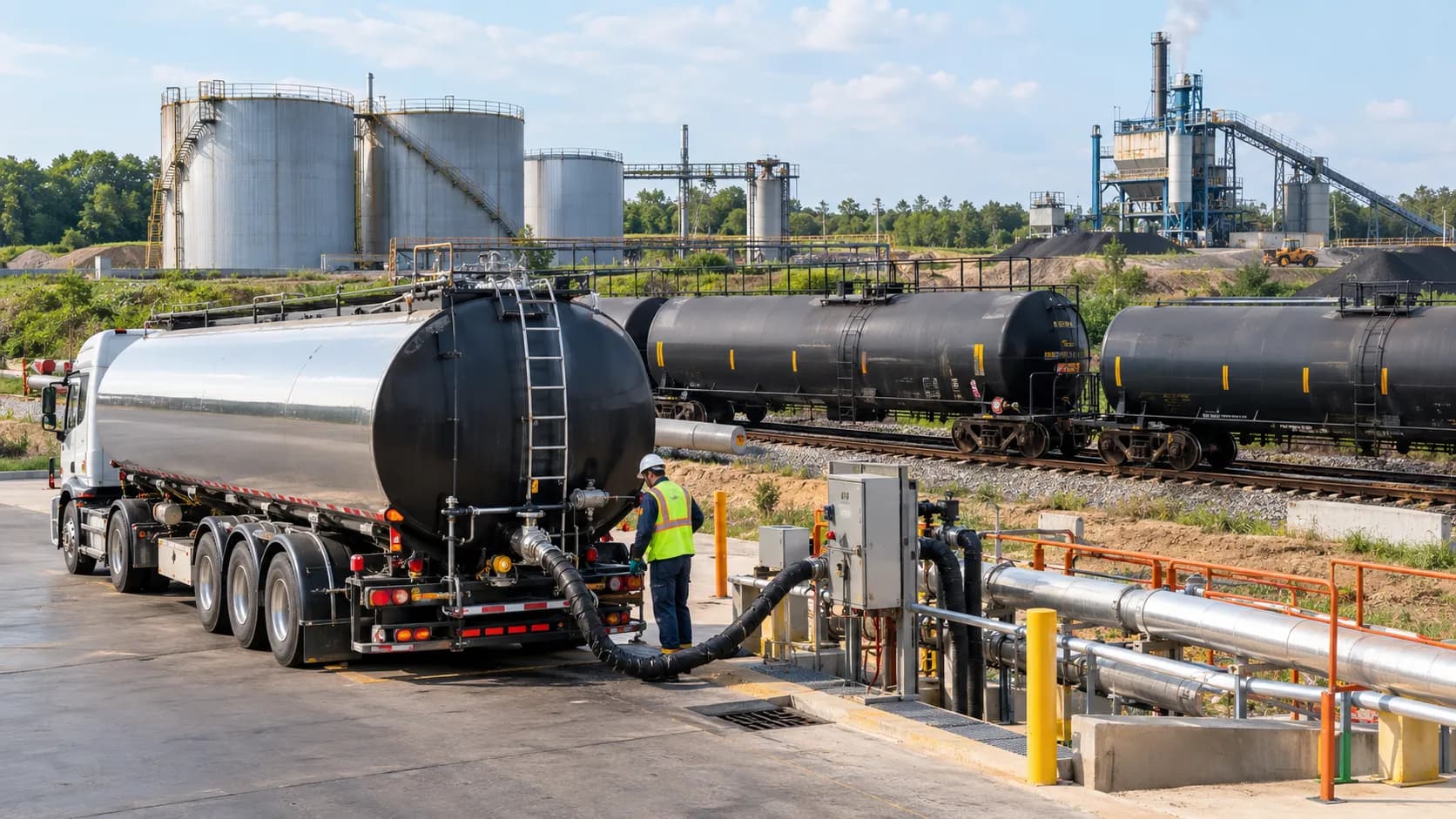
Rail suits long distances and large volumes where trucks alone become slow and expensive. For road bitumen, insulated tank containers can ride the rail network and transfer to a truck for the final leg to the mixing plant or site.
Rail matters for oil sands bitumen too. Rail cars need less diluent — or none — which saves the cost of thinning the product. Even so, many producers still ship diluted bitumen by rail because pipelines feed the rail loading points.
Understanding bitumen density by grade and temperature is important for rail billing, since density affects how much mass a tank of a given volume carries — and rail freight is typically billed by weight.
Ships and Bitumen Carriers
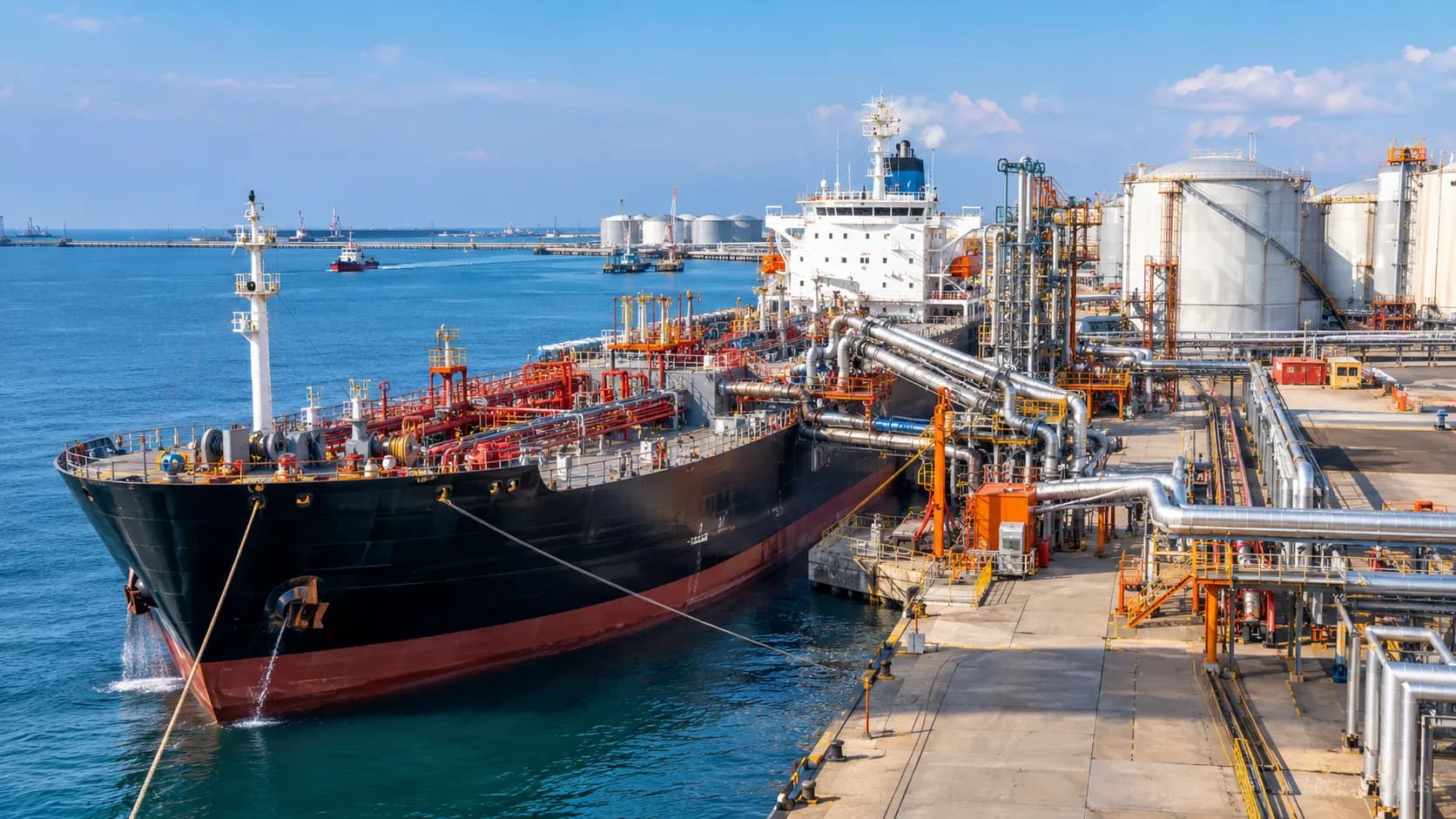
Bulk overseas trade uses specialized ships. A bitumen carrier has insulated cargo tanks, thermal oil heating, and heated lines and pumps throughout. These systems hold cargo temperatures up to 250°C throughout the voyage.
The tanker RATHBOYNEis a well-documented example. It has two independent tank blocks of four tanks each, with a total capacity of 5,400 m³. The tanks are insulated with Rockwool, and layered rubber supports absorb heat so a 250°C cargo reduces to about 80°C where it meets the hull.
Marine Cooling Rate
Marine sources give a typical cooling rate of about 1°C every 4 hoursin insulated tanks, so heating runs continuously throughout the voyage. Bitumen also clings to tank walls — without good temperature control, a significant quantity can remain on board after discharge.
Ships unload at terminals equipped with bitumen pumps, insulated pipelines, and heated shore tanks. From there, road tankers complete the final delivery to mixing plants or job sites.
ISO Tank Containers and Bitumen Containers
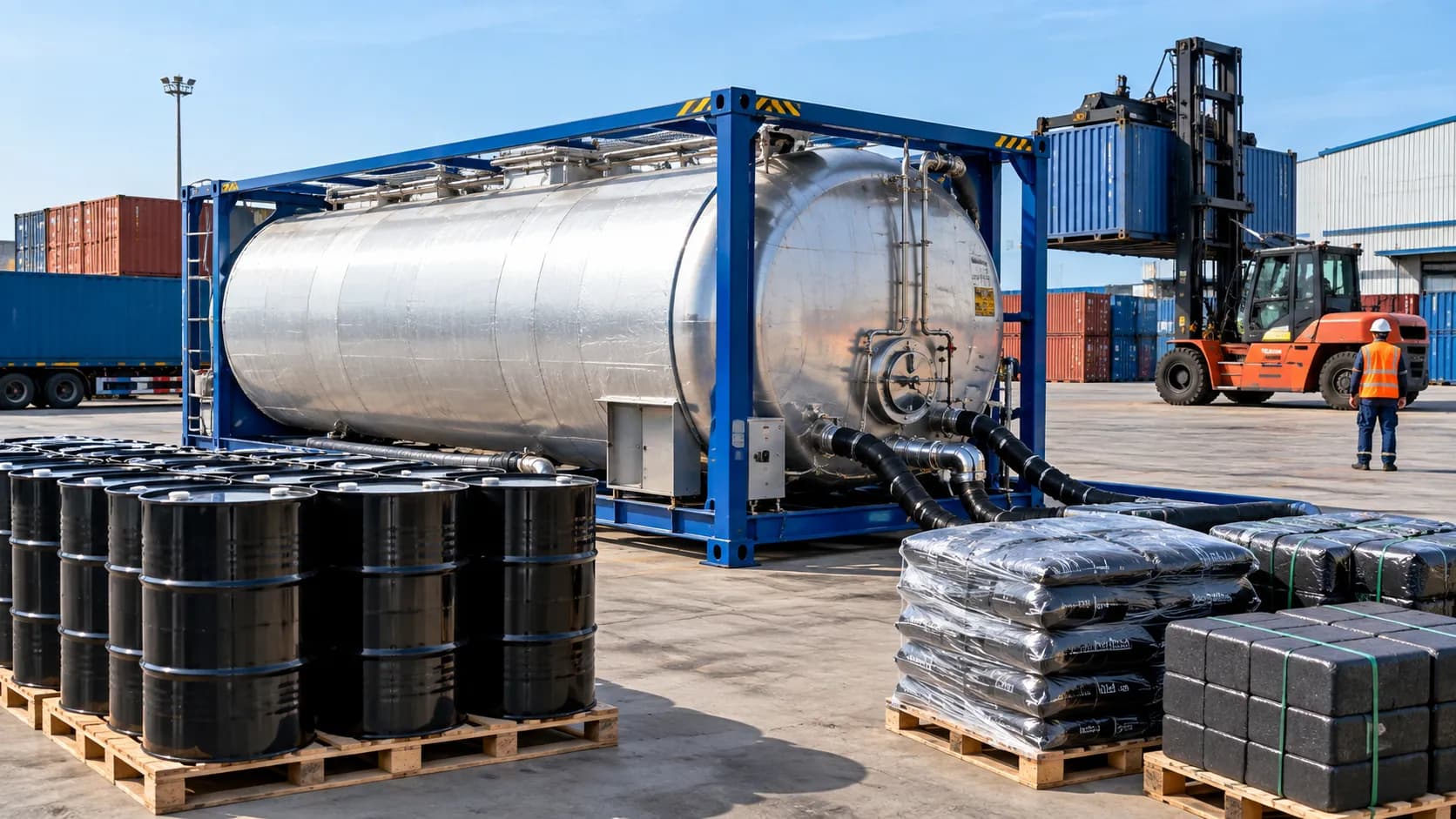
Not every port has a bitumen terminal. Insulated ISO tank containers fill that gap. A bitumen ISO tank is a heated, insulated variant of the standard chemical tank, usually built to T4 or T11 specifications, with heating coils or electric elements. Capacity runs up to 20 tonnes.
The same container moves by truck, rail, and ship interchangeably. That flexibility makes it a practical choice for smaller export volumes or delivery to sites far from a purpose-built terminal.
Drums, Bags, and Other Cold Packaging
Cold transport is a small part of global bitumen trade, covering regions that are hard or costly to reach by bulk methods. For small on-demand patch repairs using cold-applied material, our guide to cold mix bitumen covers application rates, storage, and performance limits in detail.
Steel Drums
Steel drums are the classic option for small quantities, typically 150 or 200 litre sizes. Their well-known drawbacks:
- A standard dry box container holds only 72 to 80 drums — about 18 tonnes — less than a bitumen container in the same shipping slot.
- About 2% to 3% of the bitumen stays behind as unrecoverable residue per drum.
- Used drums are hard to recycle and typically become industrial waste.
- Decanting requires a lot of energy and specialised heating equipment.
Safety warning:Never heat a sealed drum with a naked flame. Use a decanter or heating chamber built for the job and follow the supplier's instructions precisely.
Bags, Blocks, and Specialist Packaging
Bags have their own problems. Polyethylene, polypropylene, and paper bags often leak during handling, and plastic bags may not fully melt into the bitumen — meaning workers must remove them manually before use, adding time on site.
Blocks, pellets, and cardboard containers also exist. Patent filings describe bitumen blocks wrapped in thermoplastic film, and some suppliers ship in 1 cubic metre cardboard containers recycled after use. Their market share is very small compared with hot bulk delivery.
Pipelines and Diluted Bitumen
Crude oil sands bitumen is too thick to flow through a pipeline on its own. Producers thin it with a diluent such as natural gas condensate at 25% to 55% by volume, depending on the bitumen grade, the pipeline specifications, and the destination refinery. The resulting blend is called dilbit. The diluent costs money, occupies pipeline capacity, and must be recovered and transported back to the oil sands for the next batch.
Road bitumen does not normally travel by long-distance pipeline. Inside refineries and terminals, it moves through heated, insulated pipes. Researchers continue to test solid-form bitumen for shipping, but the commercial case remains unproven at scale.
For context on why oil sands bitumen behaves so differently from refinery-grade paving bitumen, the Natural Resources Canada oil sands overview provides authoritative background on production, composition, and transport methods.
Bitumen Emulsion Transport
Emulsion is bitumen dispersed in water with an emulsifier. It needs far less heat than paving bitumen, but it has specific vulnerabilities during transport and storage. For a full breakdown of emulsion types, production methods, and grade codes like CRS-1 and SS-1, see our bitumen emulsion explained guide.
Temperature range
Keep emulsion between 10°C and 85°C. Below 10°C, frost splits the emulsion into bitumen and water permanently — it cannot be recombined and must be discarded.
Handling precautions
Allow gentle agitation only so the product does not separate. A road tanker exposes more emulsion surface to air, which can cause skinning. Circulate bulk storage tanks at regular intervals.
Cutback bitumen — thinned with solvent rather than water — follows different transport rules. The solvent makes it flammable, so always check the Safety Data Sheet (SDS) for the specific hazard classification before arranging transport.
Temperature Guide for Bitumen Transport
Published numbers differ because grade, supplier, and country all change the target. The supplier's delivery note always has the final say. These ranges represent typical industry practice.
| Stage | Typical Range |
|---|---|
| Standard paving bitumen storage | 150°C to 180°C |
| Polymer modified bitumen (PMB) storage | 170°C to 185°C |
| Road tanker delivery temperature | ~120°C to 190°C |
| Bitumen carrier cargo (ship) | Up to 250°C |
| Bitumen emulsion | 10°C to 85°C |
Why does storage above 200°C cause problems?
It accelerates oxidation and ageing of the binder — effectively pre-ageing bitumen before it ever reaches the pavement. This shortens road service life and changes the grade properties.
Why is below 120°C a problem for road tankers?
Bitumen becomes too viscous to pump efficiently at this point. Discharge lines block, unloading slows, and on-site waiting time stretches — all adding cost to the delivery.
Why is PMB especially time-sensitive during transport?
Polymer modified bitumen can sit for only about three to five days before polymer separation becomes a real risk. A delayed PMB delivery is a genuine operational problem that can render the entire load unusable.
Rules and Labeling: UN 3257 and Dangerous Goods Classification
Hot bitumen counts as a dangerous good in transport. A typical SDS for 50/70 penetration grade lists UN 3257, Class 9, Packing Group III, under the name elevated temperature liquid, n.o.s. That entry applies across ADR (road), RID (rail), and IMDG (sea) regulatory regimes.
What UN 3257 Covers
UN 3257 covers liquids at or above 100°C and below their flash point. Some regimes — including US DOT rules — treat product loaded at 100°C or below as outside the elevated temperature category. So loading temperature can directly change the classification and the paperwork required.
UK Compliance Example
- The CDG Regulations 2009 apply, and drivers must hold an ADR Vocational Training Certificate for the relevant tank class.
- Hauliers and suppliers must appoint a Dangerous Goods Safety Advisor, and vehicles carry ADR hazard markings.
- Records of batch numbers, quantities, and routes support traceability and regulatory compliance.
Important: Rules differ significantly by country. This article is general information, not legal advice — always check your national dangerous goods regulator and your carrier before shipping. The UNECE ADR regulations are the authoritative reference for European road transport of dangerous goods.
Safety Hazards During Bitumen Transport and Delivery
Bitumen transport and delivery carry serious hazards. Understanding them before arrival on site is the first step to managing them correctly.
Severe burns
Paving grade bitumen is supplied at 150°C to 190°C — far hotter than boiling water. Burns are severe and deep. First aid: flood the area immediately with cold running water for at least 20 minutes, cover with clean gauze, and get the casualty to hospital. Never use gasoline, kerosene, or solvents to remove bitumen from skin.
Hydrogen sulfide (H₂S)
H₂S forms naturally in bitumen and collects in the vapor space above the cargo. At high concentrations it paralyses the sense of smell — a fading rotten-egg odor does not mean exposure has ended. Treat all hatches and confined spaces with extreme care, and use calibrated gas detectors before entry.
Water contact — boil-over risk
Moisture in tank walls or pipework causes violent steam expansion and boil-over when hot bitumen enters. All receiving tanks must be thoroughly dry and inspected before any transfer begins.
Fire risk
Do not use compressed air near hot bitumen. Do not put water on burning bitumen — use dry powder or foam extinguishers rated for Class B fires.
PPE requirements
UK guidance requires heat-resistant gloves, safety glasses, a full face shield, and a neck cape within 6 metres of any delivery. A functioning safety shower must be located within 20 metres of the unloading point.
Which Transport Method Fits Which Job?
Heat drives cost. Heated tankers burn significant energy to maintain temperature. Packaging avoids that energy cost but introduces residue losses, handling waste, and slower site operations. Match the method to the volume, distance, and available infrastructure.
| Scenario | Best Transport Method |
|---|---|
| Refinery to mixing plant within a few hours' drive | Road tanker |
| Long-distance bulk with rail access at both ends | Rail tank cars, then road tanker for the last leg |
| Large overseas volume to a port with a bitumen terminal | Bitumen carrier ship to terminal, then road tanker |
| Small overseas volume, no bitumen terminal available | Heated ISO tank container |
| Remote site, small quantity needed | Steel drums or packaged bitumen blocks |
| Tack coats and spray surface treatment work | Bitumen emulsion tanker |
| Oil sands crude bitumen movement | Pipeline (dilbit) or rail car |
For pavement projects where you need to estimate total binder quantity before booking a delivery, the Bitumen Tank Volume Calculator gives fast, accurate estimates based on road dimensions, mix density, and binder percentage.
Delivery Checklist for Contractors and Site Teams
Transport Loss and Quantity Estimates
Bitumen is usually bought by weight but used by volume. It expands when heated, and its specific gravity runs from approximately 1.00 to 1.04. A volume measured hot contains less mass than the same volume measured cold. One tonne at room temperature is a little under 1 m³.
If drums are used, always add the expected residue percentage to your order quantity. With 2% to 3% left unrecoverable in each drum, a 100-tonne drummed order typically delivers only 97 to 98 tonnes of usable binder. Factor this into procurement from the start.
Estimating Binder Quantity Before You Order
To turn a pavement area and thickness into a binder quantity, use the bitumen quantity calculator. Getting the order right before delivery day avoids expensive short loads or costly second deliveries — both of which carry their own temperature management risks.
Conclusion
Bitumen transport is fundamentally a heat problem. Paving bitumen moves hot in insulated tankers, rail cars, ISO containers, and ships. Cold packaging covers remote jobs but wastes 2% to 3% of product as drum residue. Emulsion needs frost protection to remain effective, and oil sands bitumen requires diluent to flow through pipelines.
Before any delivery, confirm the grade, temperature, and unloading method. Keep receiving tanks completely dry, ensure the full site team wears appropriate PPE, check how the load is billed, and understand which bitumen grade suits your pavement conditions before placing the order.
For background on the material itself — what it is, where it comes from, and how its properties drive every transport decision — our what is bitumen guide is the natural companion to this article.
And when you're discussing deliveries or writing specifications, it helps to say the material's name correctly. Our guide to pronouncing bitumen covers the British (BICH-uh-mun), American (buh-TOO-mun), and Australian pronunciations so you can use the word confidently in any setting.
Frequently Asked Questions
How is bitumen transported by road?
In insulated, heated tankers that hold the load between roughly 120°C and 190°C. The driver and site team follow a formal discharge procedure and wear full PPE including heat-resistant gloves, face shield, and neck cape.
At what temperature is bitumen transported?
It depends on grade. Road delivery ranges from 120°C to 190°C. Ships carry cargo up to 250°C. Polymer modified bitumen (PMB) typically travels at 150°C to 190°C. Bitumen emulsion stays between 10°C and 85°C.
Can bitumen be transported cold?
Yes. Drums, bags, and blocks carry it cold for remote or small jobs. It must be reheated before use, and drums leave 2% to 3% unrecoverable residue — factor this into your order quantity.
How is bitumen transported overseas?
Bulk loads go by bitumen carrier ship with insulated, heated cargo tanks maintaining up to 250°C. Smaller export volumes travel in heated ISO tank containers that move interchangeably by truck, rail, and ship.
Is bitumen a dangerous good in transport?
When loaded at or above 100°C, it is typically classified under UN 3257, Class 9, Packing Group III as an elevated temperature liquid. Some regimes exclude product loaded at or below 100°C — always verify local rules for your specific route.
How long can bitumen stay hot in a tanker?
It depends on insulation quality, ambient temperature, and starting load temperature. Insulated ship tanks lose about 1°C every 4 hours. Road tankers vary considerably — ask the supplier for a maximum transit time for your specific load and season.
What happens if bitumen cools in the tanker?
Viscosity rises sharply. Unloading slows and discharge lines can block solid. The tanker heating system can reheat the load, but long delays are costly and best avoided through careful route planning and realistic delivery windows.
How is oil sands bitumen transported?
By pipeline after dilution with 25% to 55% diluent (dilbit), or by rail with less or no diluent. Rail requires no dedicated pipeline infrastructure but still needs terminal access at both ends for loading and unloading.

Founder & Web Developer
Nabeel Awan is a web developer and the founder of BitumenCalcPro. His work focuses on web development and building practical online tools, with a strong interest in civil engineering, asphalt, bitumen, pavement construction, and construction technology.