Quick Answer
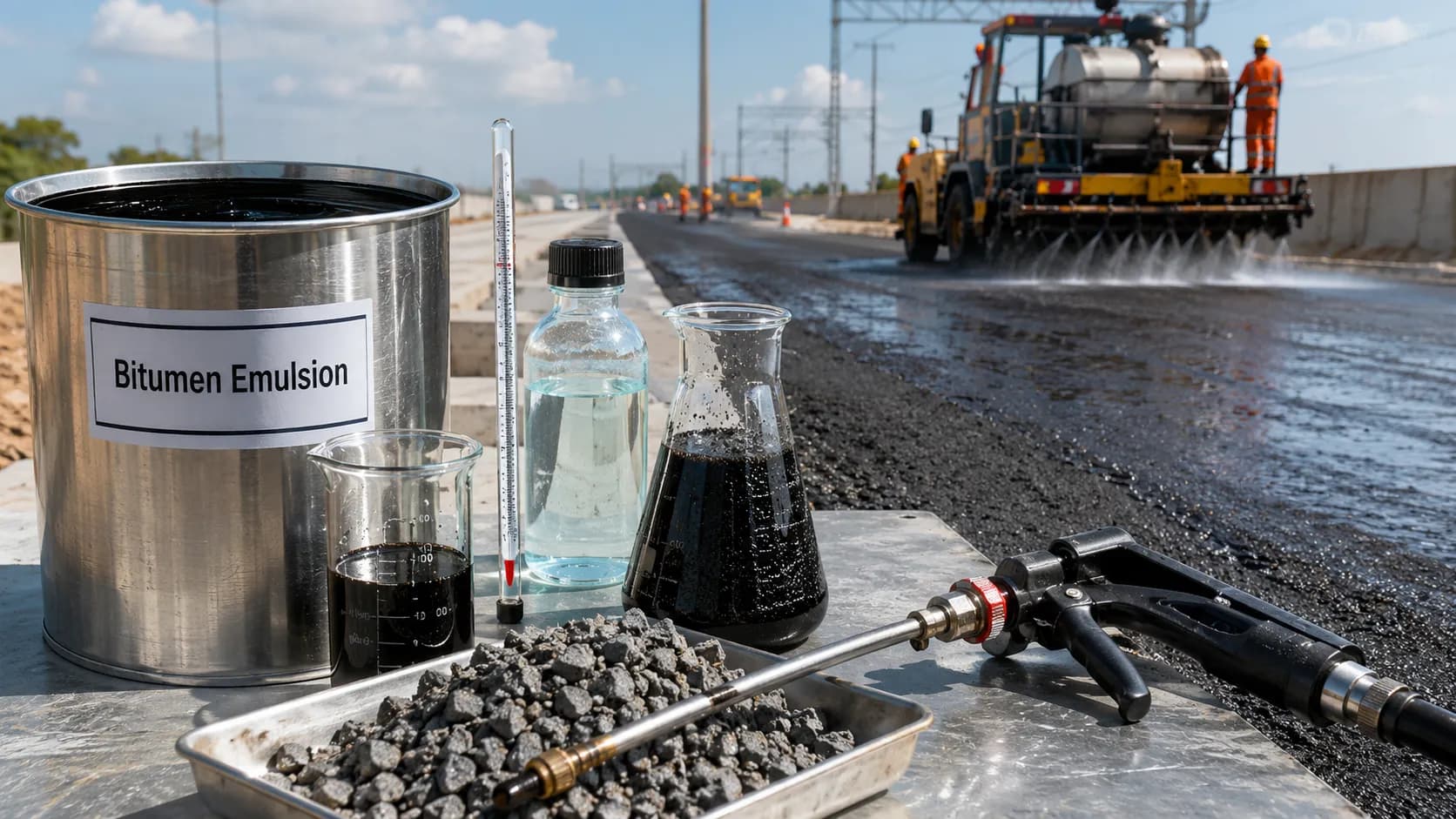
Bitumen emulsion is bitumen broken into tiny droplets and suspended in water with an emulsifier, so it stays workable at normal outdoor temperatures instead of needing to be heated. It's classified by electrical charge (cationic or anionic) and setting speed (rapid, medium, or slow), and it's widely used for tack coats, prime coats, chip seals, and cold mix asphalt.
Most road problems — failed tack coats, patchy surface treatments, crumbling spray seals — trace back to a bitumen emulsion that was applied wrong, chosen wrong, or misunderstood entirely. And that happens because emulsion looks like a single product when it's actually a family of dozens, each built for a specific job.
This guide covers exactly how bitumen emulsion works, how it's made, and how to read the grade codes that tell you what each product actually does. By the end, you'll know how to pick the right type for the job — and why getting it wrong is more common than most contractors admit.
What Is Bitumen Emulsion?
Bitumen emulsion is a mixture of bitumen, water, and a chemical emulsifier, engineered so the bitumen stays sprayable and workable without any heat. Instead of a single, thick mass of binder, the bitumen exists as millions of microscopic droplets — typically between 1 and 10 microns across — suspended evenly throughout the water.
A useful comparison is milk. Milk is fat droplets held in suspension in water by natural proteins, which is why it stays smooth and pourable instead of separating into oil and water. Bitumen emulsion works on the same basic principle, just with bitumen droplets and a synthetic emulsifier standing in for the fat and proteins.
Most road-grade emulsions run about 60% bitumen and 40% water by weight, though the exact ratio varies by grade and intended use. Once the emulsion is applied and the water evaporates — or, in some formulations, once the electrical charge neutralizes on contact with aggregate — the bitumen droplets merge back together and “break,” leaving a continuous binder film behind. That final film is functionally identical to what heated bitumen would leave, just applied without ever needing a burner.
Difference Between Bitumen and Bitumen Emulsion
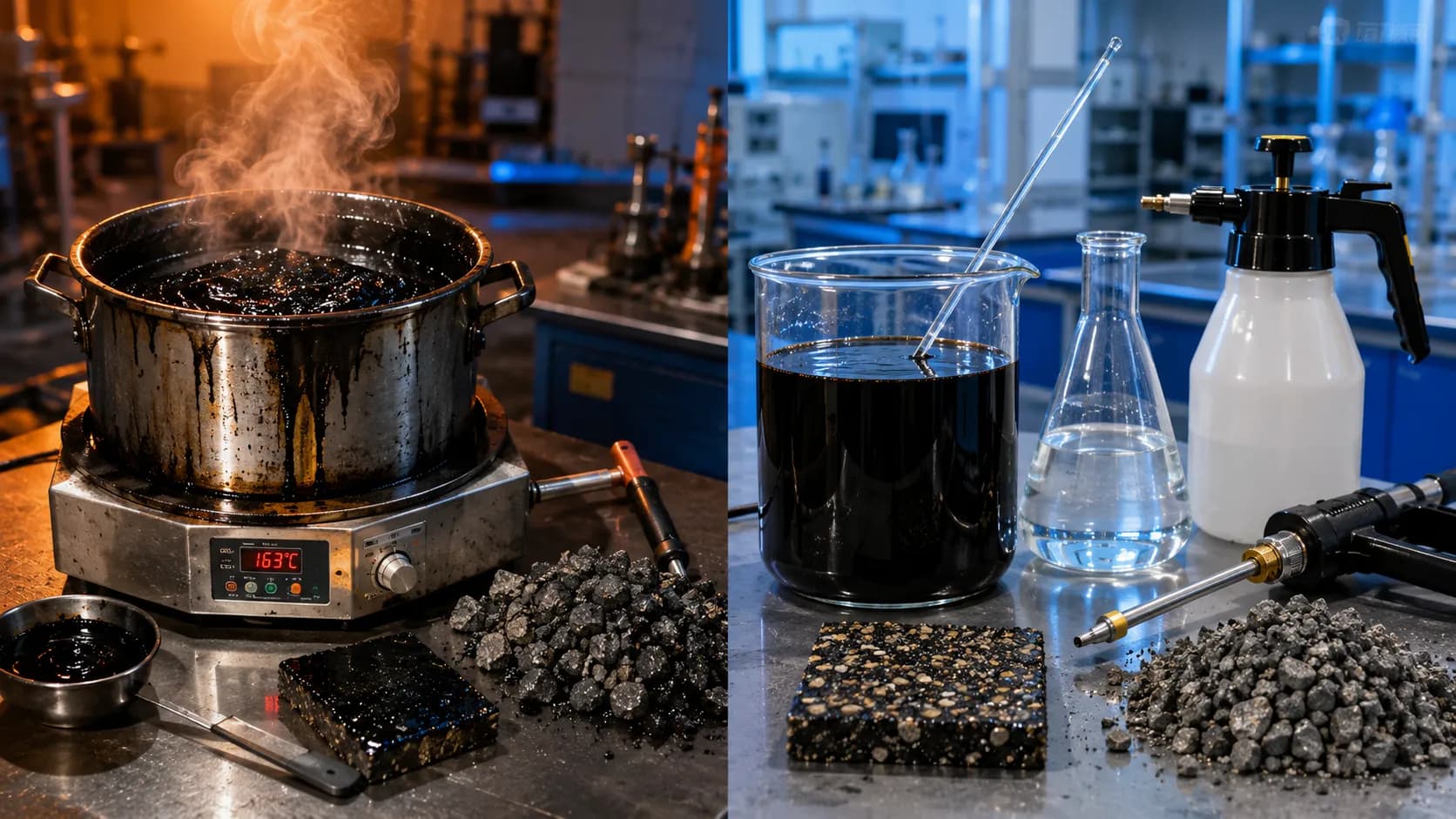
These two terms get used almost interchangeably in casual conversation, but they're meaningfully different products with different handling requirements.
| Feature | Bitumen | Bitumen Emulsion |
|---|---|---|
| Physical state | Semi-solid, needs heat to become workable | Liquid at ambient temperature |
| Application temperature | 150–190°C | 10–70°C, no heating required |
| Composition | Pure petroleum binder | ~60% bitumen, ~40% water, plus emulsifier |
| Storage | Heated tanks required for extended storage | Stable in sealed containers at ambient temperature, within shelf life |
| Energy use | High — constant heating during storage and application | Low — no heating needed |
| Typical use | Hot mix asphalt, roofing | Tack coats, prime coats, chip seals, cold mix |
| Setting behavior | Cools and hardens | Water evaporates or charge neutralizes, then bitumen breaks and bonds |
The short version: bitumen is the raw binder, and bitumen emulsion is an engineered, water-based delivery form of that same binder — built specifically to remove the heat requirement from certain applications. For a broader picture of the pure binder itself, our guide on what bitumen is covers composition, grades, and properties in full.
Types of Bitumen Emulsion
Bitumen emulsions are classified along two independent lines: the electrical charge of the bitumen droplets, and how quickly the emulsion sets after application. Understanding both is necessary to read an emulsion's grade code correctly.
By Electrical Charge: Cationic vs. Anionic
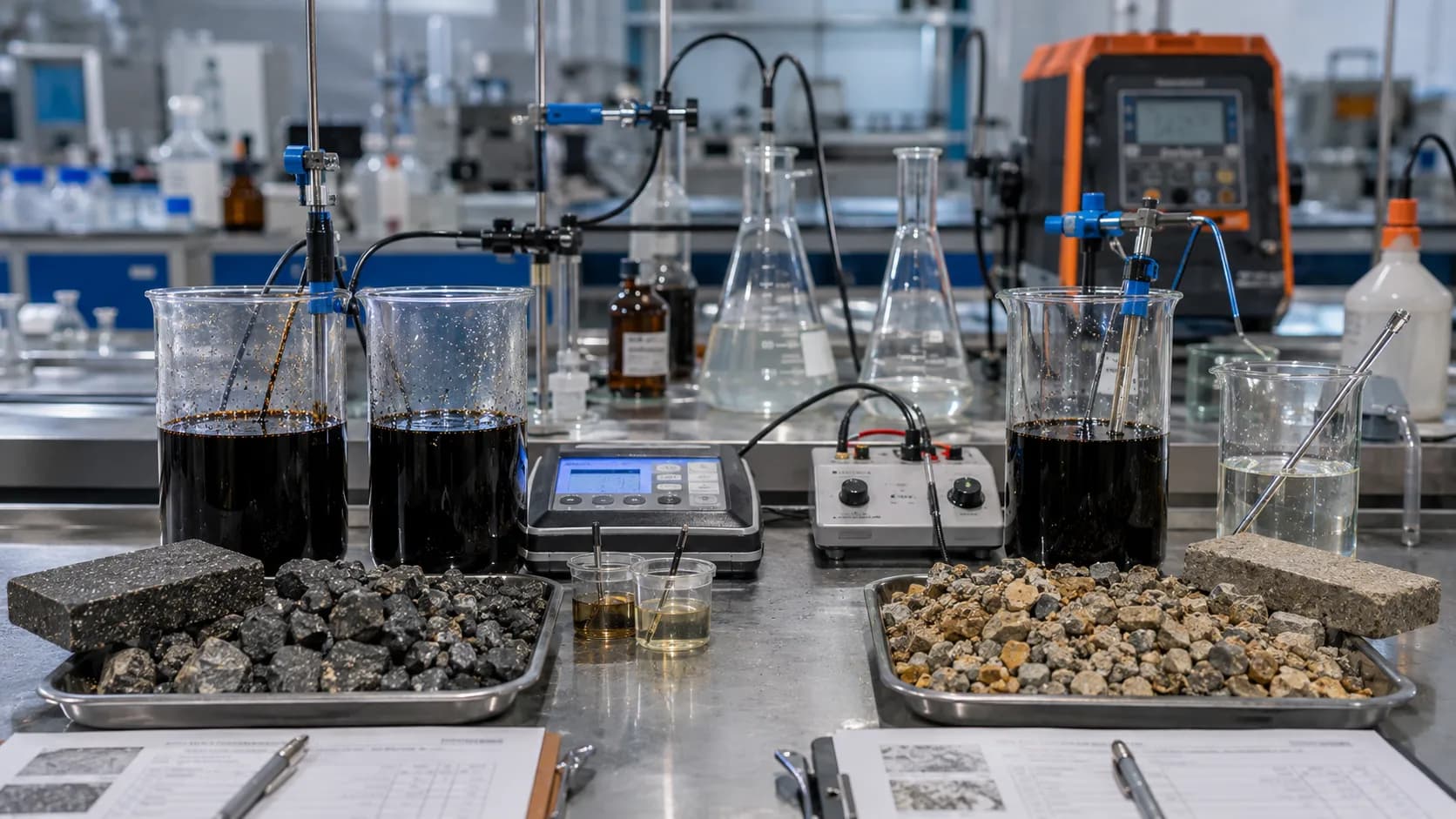
Cationic emulsionscarry a positive charge on the bitumen droplets, created using an acidic emulsifier. Because most aggregate surfaces carry a natural negative charge, cationic emulsions bond to them quickly and strongly — the opposite charges attract on contact, which is part of why cationic types tend to set faster. Grade codes for cationic emulsions carry a “C” prefix, as in CRS-1 or CMS-2.
Anionic emulsionscarry a negative charge, created using an alkaline emulsifier. These are chosen when the aggregate itself is alkaline, such as limestone or dolomite, since cationic emulsions don't bond as effectively with that type of surface chemistry. Grade codes for anionic emulsions carry no charge prefix — RS-1 is anionic, while CRS-1 is its cationic counterpart.
In practice, cationic emulsions dominate road construction in most regions today, since siliceous aggregates — which carry a negative charge and pair naturally with cationic binders — are far more commonly used than alkaline ones.
By Setting Speed: RS, MS, SS, QS
Breaks and cures quickly after application, ideal for tack coats and surface dressing where minimal road closure time matters.
Takes longer to break, giving more working time for mixing with aggregate before it sets. Common in cold mix and patching applications.
Designed for extended workability, often chosen for prime coats where the emulsion needs time to penetrate a porous granular base before setting.
Sets even faster than RS grades, used for specific fast-turnaround treatments like some slurry seals.
Reading a Full Grade Code
A complete grade designation combines charge, setting speed, and a viscosity number, sometimes with an added letter for base bitumen hardness. For example:
| Grade Code | Charge | Setting Speed | Viscosity / Notes |
|---|---|---|---|
| RS-1 | Anionic | Rapid Setting | Lower viscosity — tack coats |
| CRS-2 | Cationic | Rapid Setting | Higher viscosity — surface dressing |
| CSS-1h | Cationic | Slow Setting | Harder base bitumen ('h' suffix) |
| HFMS-2 | Anionic | Medium Setting | High-float — gel-like quality prevents binder drain-off |
Higher viscosity numbers (2 vs. 1) generally mean a thicker, heavier emulsion film — RS-2, for instance, deposits more binder per application than RS-1, which is why RS-1 suits tack coats and RS-2 suits surface dressing, where a heavier film is needed to lock aggregate chips in place. Understanding these grade codes is closely related to the broader system of bitumen grade classification, which covers penetration, VG, and PG grades used for hot mix binder selection.
Bitumen Emulsion Density
Bitumen emulsion density sits close to that of plain bitumen, since its two main ingredients — bitumen and water — have similar densities to begin with.
| Material | Typical Density Range |
|---|---|
| Bitumen emulsion | 1.02 – 1.05 g/cm³ (1020 – 1050 kg/m³) |
| Plain paving bitumen (60/70) | 1.01 – 1.04 g/cm³ (1010 – 1040 kg/m³) |
| Water | 1.00 g/cm³ (1000 kg/m³) |
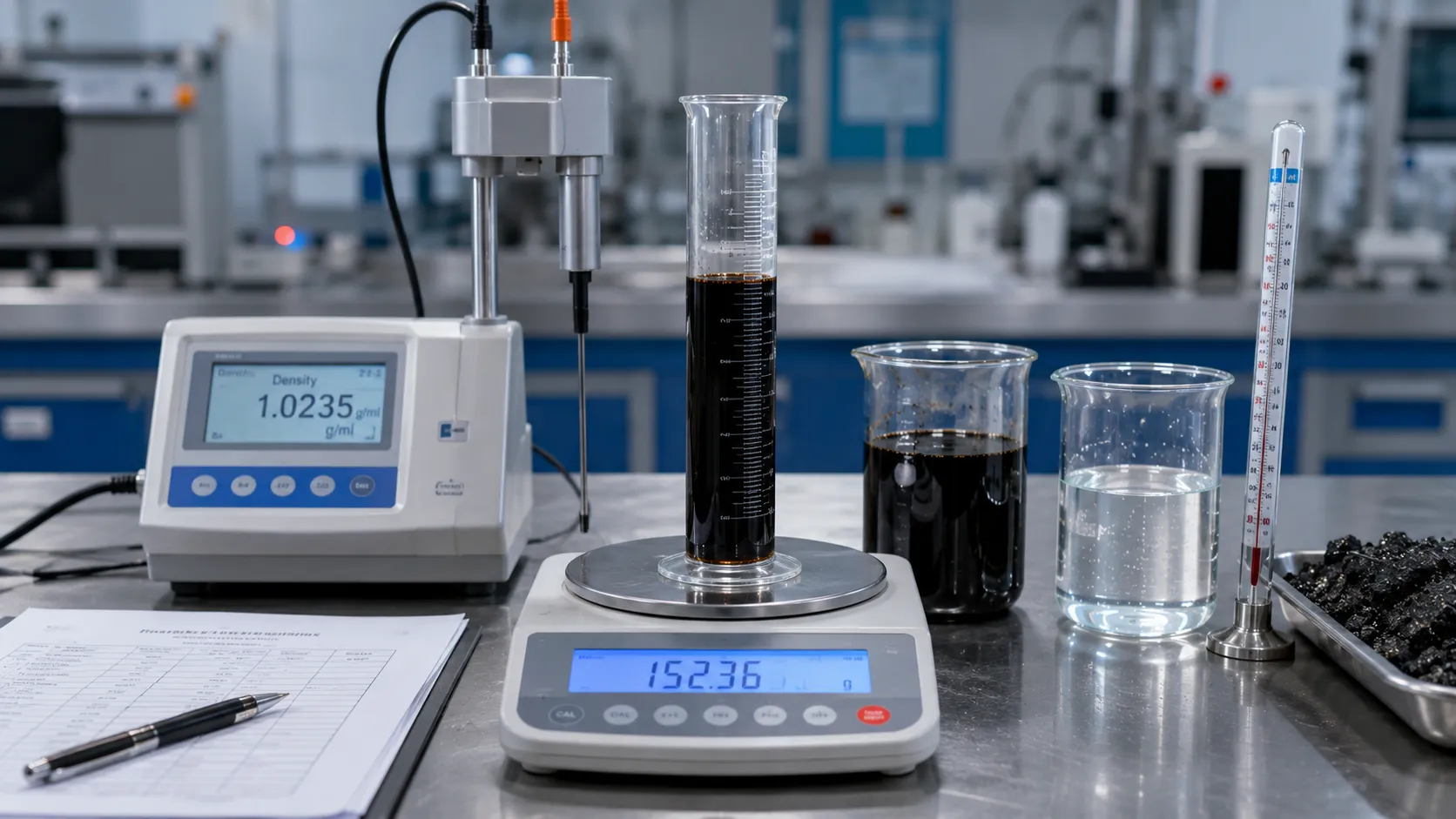
These figures are general reference ranges. Actual density varies by manufacturer, formulation, and the specific bitumen and emulsifier used, so always confirm exact values against the supplier's certificate of analysis before using them in material calculations. For a full breakdown of density across different bitumen grades and forms, see our Bitumen Density Chart.
How Bitumen Emulsion Is Made (Bitumen Emulsion Plant)
Bitumen emulsion production happens in a specialized piece of equipment called a colloid mill, and the process follows a consistent sequence regardless of scale.
Raw bitumen is heated to roughly 100–140°C, enough to reduce its viscosity so it can be pumped and processed, without overheating to the point of damaging the binder or generating excess fumes.
Water is mixed with the emulsifier and, for cationic emulsions, an acid, at a carefully controlled pH. This phase is kept below about 90°C to prevent boiling once combined with the hot bitumen.
The hot bitumen and the water/emulsifier phase are fed into the mill simultaneously through separate inlets.
Inside the mill, a high-speed rotor spins within a narrow gap next to a stationary housing. The intense shear force tears the bitumen into microscopic droplets, typically 1 to 10 microns across.
As the bitumen breaks apart, the emulsifier coats each droplet and gives it its electrical charge, which is what keeps the droplets from re-merging in storage.
The finished emulsion is cooled and moved to storage tanks, typically kept between about 10°C and 50°C depending on the grade.
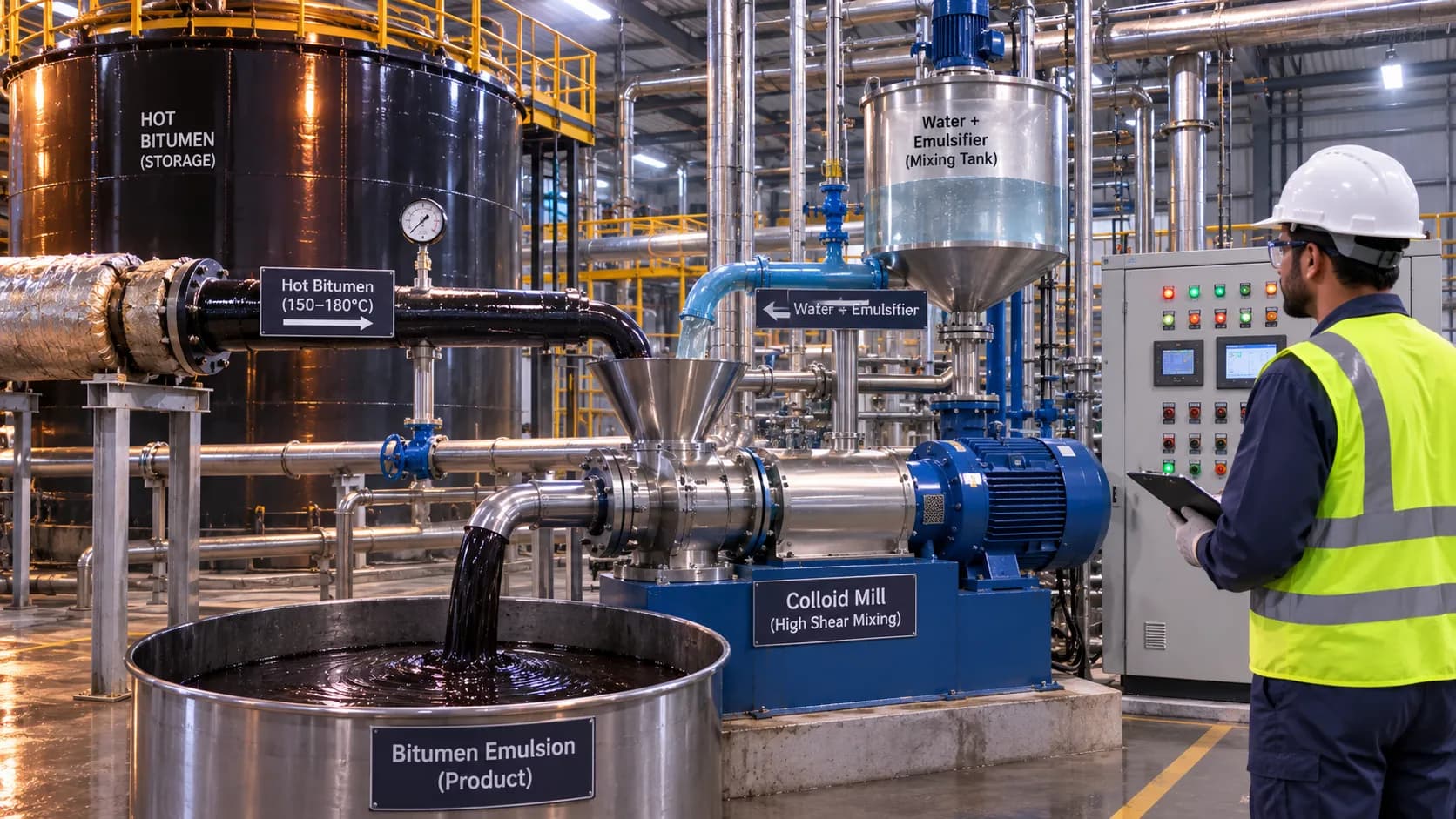
A bitumen emulsion plant can run as a batch process, mixing a fixed quantity at a time, or as a continuous in-line process, where bitumen and water phases are drawn directly from storage tanks and blended on the fly. Larger commercial operations typically favor continuous production for consistency and throughput, while smaller or specialty producers often use batch systems.
According to the Asphalt Institute, emulsion manufacturing consistency — particularly droplet size distribution and emulsifier concentration — directly determines how the finished product will behave on site, making process control critical in any bitumen emulsion plant.
What Is Bitumen Emulsion Used For?
Bitumen emulsion's ability to work without heat makes it suitable for a wide range of road and construction applications. Each application requires a specific grade matched to the job's setting speed and binder film thickness requirements.
Tack Coats
A thin layer applied between asphalt lifts to bond them together. Typically RS-1 or CRS-1 — rapid-setting and low-viscosity to penetrate quickly without excess pooling.
Prime Coats
Applied to a granular base before the first bituminous layer. Usually a slow-setting grade like SS-1, chosen for its ability to penetrate a porous surface before setting.
Chip Seals & Surface Dressing
A heavier-film rapid-setting grade (RS-2 or CRS-2) sprayed onto the road surface with aggregate chips pressed in immediately after.
Slurry Seals & Microsurfacing
Thin, protective surface treatments that extend pavement life without a full resurfacing, commonly used on urban roads and parking areas.
Cold Mix Asphalt
Emulsion-coated aggregate used for pothole repair, patching, and low-traffic road construction — stays workable without a hot mix plant.
Soil Stabilization & Waterproofing
Mixed into granular material to improve binding and reduce dust on unpaved surfaces, or used as a cold-applied barrier against moisture on structures.
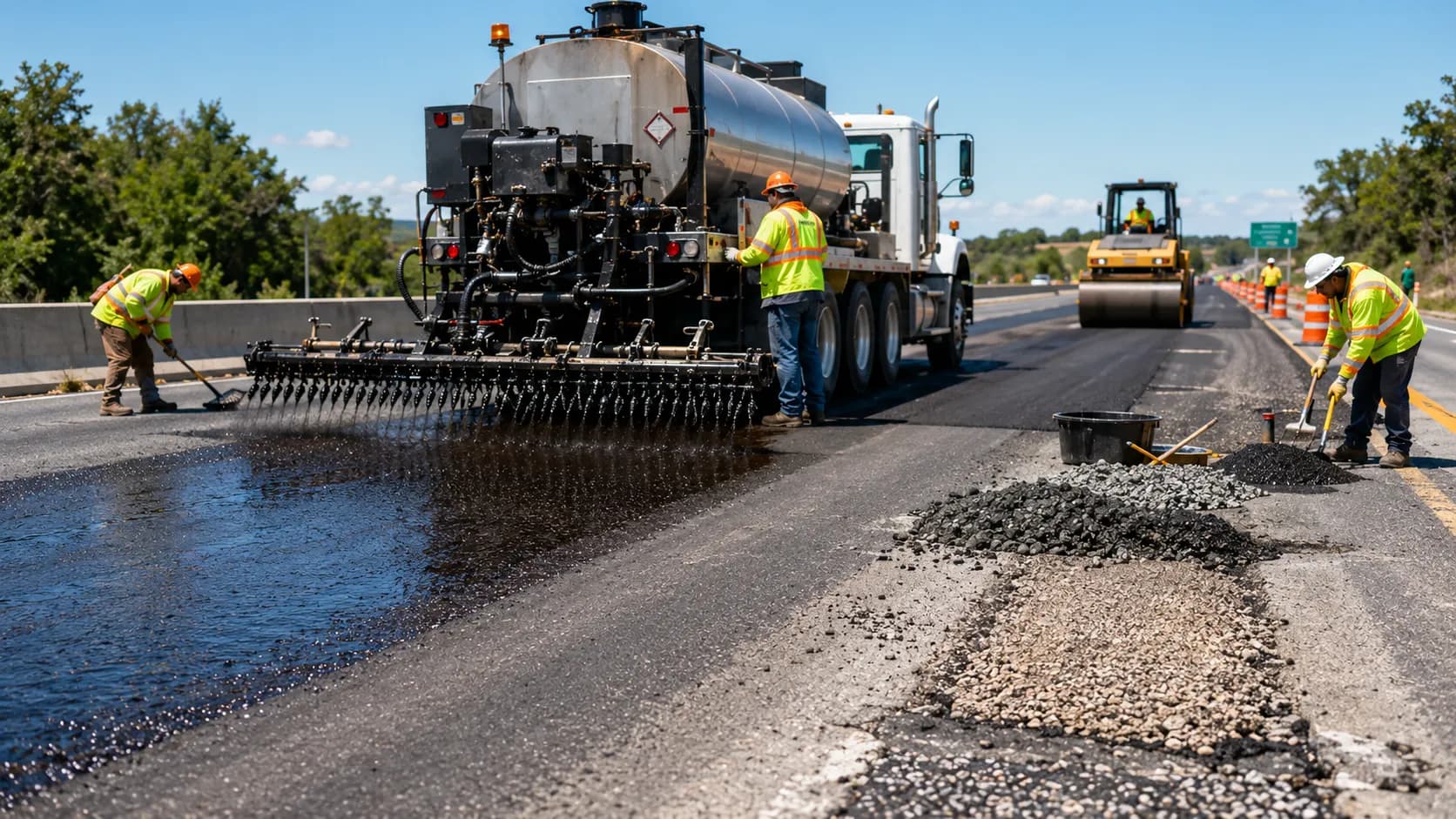
For projects involving cold mix or emulsion-based surface treatments, estimating material quantities upfront avoids over-ordering and site delays. Our free Tack Coat Calculator can help you estimate binder quantities for tack coat, prime coat, and emulsion-based projects quickly.
Advantages of Bitumen Emulsion
- No heating equipment required, which removes a major cost, energy, and safety burden compared to hot bitumen
- Lower energy consumption, since nothing needs to stay hot during storage or application
- Reduced fire and burn risk — crews work with a cool, water-based material rather than bitumen heated to 150°C or higher
- Lower fume exposure, since there's no thermal degradation of the binder during application the way there is with hot bitumen
- Works with damp aggregate, unlike hot mix, which generally needs dry material for proper coating
- Versatile across applications, from thin surface treatments to full cold mix production, by simply changing the grade
These advantages are especially meaningful for maintenance work, where road crews often need to repair potholes or apply tack coats quickly without the logistics of a full hot plant. This is the same reason cold mix bitumen — which relies on emulsified or cutback binder — has become standard for emergency repairs and low-traffic construction.
Bitumen Emulsion Explained: Video Overview
Watch the video below for a visual walkthrough of how bitumen emulsion is made, classified, and applied in road construction — covering the colloid mill process and cationic vs. anionic types in under 15 minutes.
Video: Bitumen emulsion explained — types, colloid mill production, and road construction applications
Bitumen Emulsion Storage and Shelf Life
Bitumen emulsion is generally stable for a defined shelf life when stored correctly — typically around 10°C to 50°C, sealed away from freezing temperatures and excessive heat. Freezing can permanently break the emulsion prematurely, separating the bitumen from the water before it's ever applied, while temperatures that run too high for extended periods can also destabilize it.
Around 12 months when stored correctly in sealed containers at recommended temperatures.
Freezing permanently separates the emulsion — once broken prematurely, it cannot be re-emulsified for use.
Drums should be rolled or gently agitated before use to ensure bitumen droplets remain evenly distributed.
Final Verdict
Bitumen emulsion takes the same binder used in hot mix asphalt and re-engineers it into a water-based, cold-applied form by suspending microscopic bitumen droplets in water with an emulsifier. Its classification by charge (cationic or anionic) and setting speed (RS, MS, SS) determines exactly which job it's suited for, from tack coats to chip seals to cold mix asphalt. Produced in a colloid mill and stored at moderate temperatures, it delivers most of what plain bitumen offers while cutting the energy, safety, and handling demands that come with working hot.
For authoritative technical specifications on bitumen emulsion grades and test methods, the Federal Highway Administration (FHWA) publishes detailed pavement engineering guidance, including emulsion specifications for federal road projects.
Unsure how to say the binder's name in a client meeting or classroom? Our bitumen pronunciation guide breaks down the British, American, and Australian forms with full IPA symbols and a 10-minute practice routine.
Frequently Asked Questions
What is the difference between bitumen and bitumen emulsion?
Bitumen is the raw petroleum binder that needs heat to become workable. Bitumen emulsion is that same binder broken into microscopic droplets and suspended in water with an emulsifier, so it stays workable at normal outdoor temperature without any heating.
What are the main types of bitumen emulsion?
Emulsions are classified by electrical charge (cationic or anionic) and by setting speed (rapid, medium, or slow setting), giving combinations like CRS-1, MS-2, or SS-1, each suited to different applications.
Is cationic or anionic bitumen emulsion better?
Neither is universally better — it depends on the aggregate. Cationic emulsions bond well with most common aggregate types, while anionic emulsions are chosen for alkaline aggregate like limestone or dolomite.
What is the density of bitumen emulsion?
Typically around 1.02–1.05 g/cm³ (1020–1050 kg/m³), close to plain bitumen, since both bitumen and water — its two main components — have similar densities.
How is bitumen emulsion made?
It's produced in a colloid mill, where heated bitumen and a water-emulsifier mixture are fed in together and sheared into microscopic droplets under intense mechanical force, then cooled and stored.
Can bitumen emulsion be used instead of hot bitumen for all applications?
No. It's well suited to tack coats, prime coats, surface treatments, and cold mix, but it doesn't match the strength and durability of hot mix asphalt for new road construction or high-traffic pavement.
Are there alternatives to bitumen?
Some road projects use alternative binders such as bio-based binders, sulfur-extended asphalt, or binders incorporating recycled plastic, though these remain less common than conventional bitumen and bitumen emulsion.
Does bitumen emulsion expire?
Yes. It has a defined shelf life, commonly around 12 months when stored correctly, and can degrade or separate prematurely if frozen, overheated, or stored past its rated shelf life.

Founder & Web Developer
Nabeel Awan is a web developer and the founder of BitumenCalcPro. His work focuses on web development and building practical online tools, with a strong interest in civil engineering, asphalt, bitumen, pavement construction, and construction technology.