Quick Answer
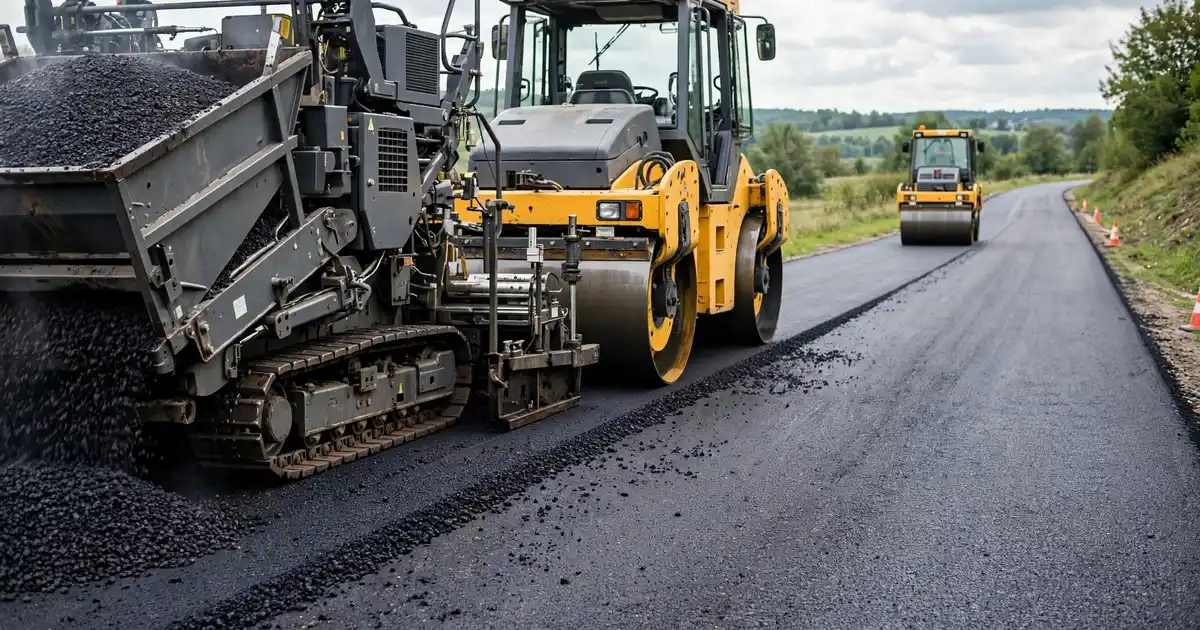
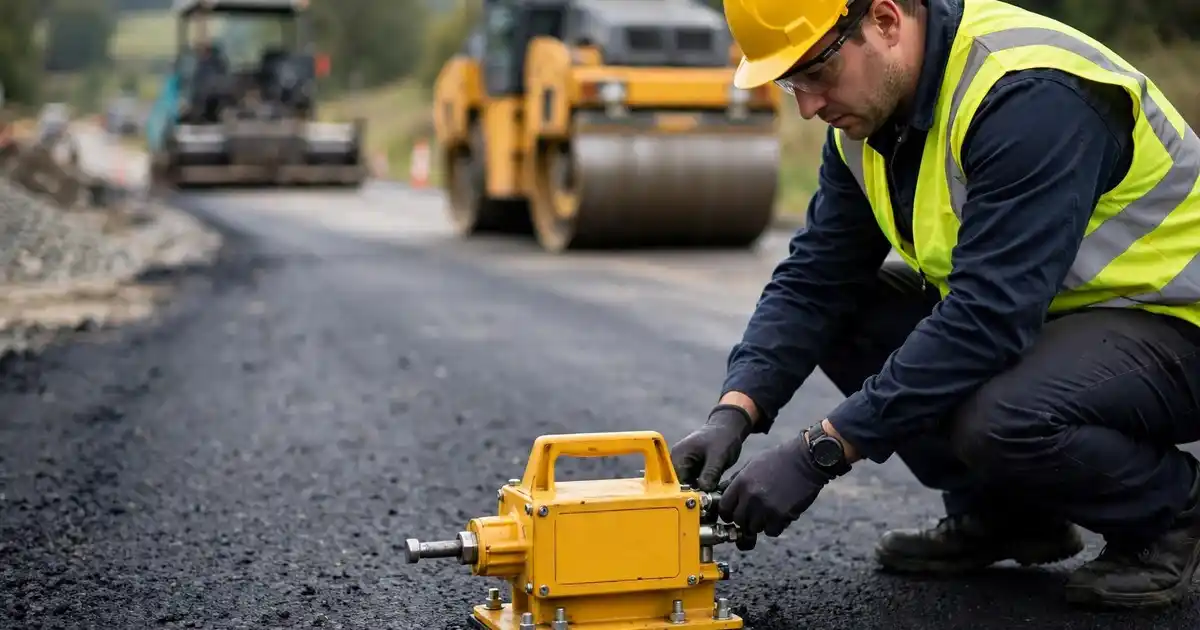
To compact asphalt properly, roll the mix while it is still hot, between roughly 300°F and 175°F (149°C to 80°C). Use a vibratory roller for breakdown rolling right behind the paver, a pneumatic or second vibratory roller for intermediate passes, and a static steel roller to finish. Keep a steady walking speed, avoid sudden stops, and test density against the mix's maximum theoretical density (Gmm). Most highway specifications call for at least 92% of Gmm.
Asphalt compaction decides how long a pavement lasts. A well-designed mix laid with 9% to 10% air voids will crack, ravel, and rut early. The same mix compacted to the right density can last years longer.
This guide explains how to compact asphalt in the field: the temperature windows, roller types, rolling patterns, and density checks that crews use on real projects. It also covers small jobs like driveways and patches, and the mistakes that waste the most density.
What Compaction Does to Asphalt
Hot mix asphalt (HMA) is coated aggregate that behaves like a soft solid while hot. Rollers press the stones closer together, squeeze out air, and lock the particles into a tight, durable structural matrix.
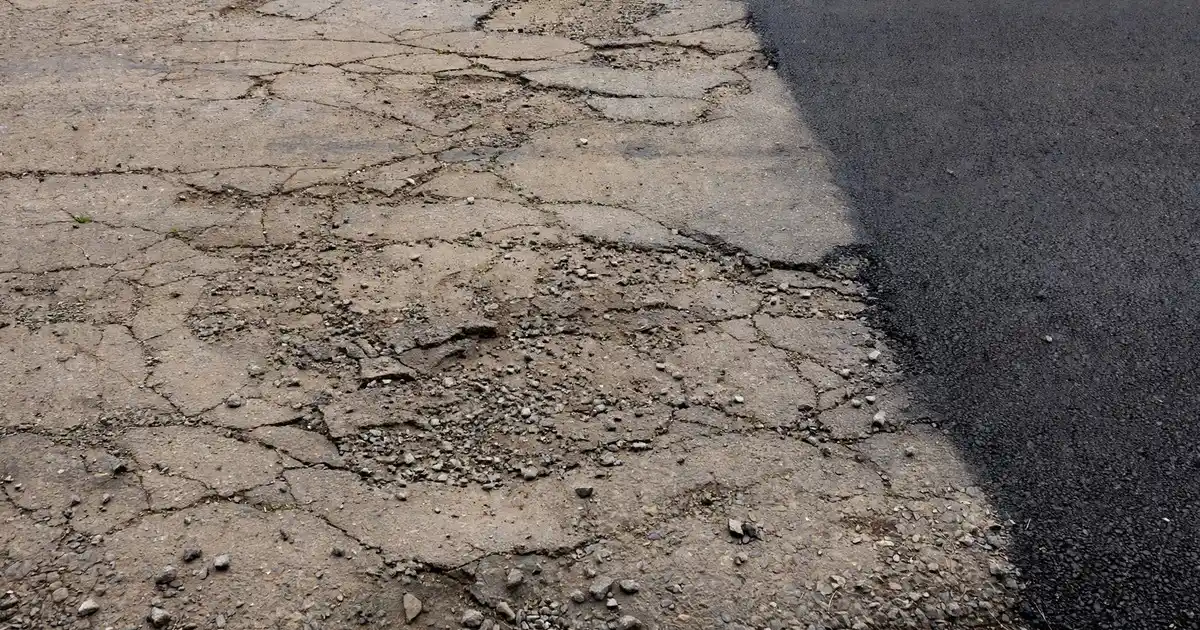
Less air means less room for water and oxygen. Water causes stripping and potholes. Oxygen oxidizes and hardens the bitumen binder, and hard binder cracks under load and thermal cycles.
Here is what density looks like at each stage of the paving train:
- Behind the paver screed, the mat usually sits at about 70% to 90% of its maximum density.
- After breakdown rolling, it reaches roughly 90% of Gmm.
- After intermediate and finish rolling, the target is typically 92% to 94% or higher.
Federal Highway Administration (FHWA) guidance supports 92% as a minimum in-place density, with 93% to 94% preferred. Research often cited from the FHWA Asphalt Pavement Division also links each 1% gain in density to roughly a 10% increase in pavement service life. Treat that as a helpful engineering rule of thumb, since exact performance shifts with binder grade, aggregate characteristics, and traffic loading.
What Controls How Well Asphalt Compacts
Five environmental and physical conditions dictate how much density your rollers can achieve:
Mix Temperature
Hotter binder is thinner, allowing stones to slide into place easily under the drum.
Mat Thickness
Thick lifts retain heat longer. Thin lifts cool fast and leave very tight rolling windows.
Base Temperature
A cold underlying base pulls heat rapidly out of the bottom of the fresh mat.
Air Temperature
Cool ambient weather shortens your total allowable rolling window significantly.
Wind Speed
Wind cools the mat surface rapidly, creating a tough crust that rollers struggle to compact.
Lift thickness also has a strict engineering minimum. For dense-graded mixes, a standard rule is specifying at least 3 to 4 times the nominal maximum aggregate size (NMAS). A lift thinner than that cannot compact properly because aggregate stones bridge against each other and the underlying base. See our detailed asphalt pavement layer thickness guide for lift depth specifications across base, binder, and surface courses.
Mix design matters too. Binder grade, aggregate angularity, and dust content all change how easily a mix densifies. Too little mineral filler can make a mix tender and prone to shoving; too much dust can cause check cracking under the roller drum.
Temperature Windows for Compacting Asphalt
Temperature is the single biggest factor crews can monitor and control. Mix usually leaves the batch plant near 300°F (149°C). The National Asphalt Pavement Association (NAPA) puts typical starting compaction temperatures at 275°F to 310°F (135°C to 155°C) for both unmodified and polymer-modified binders.
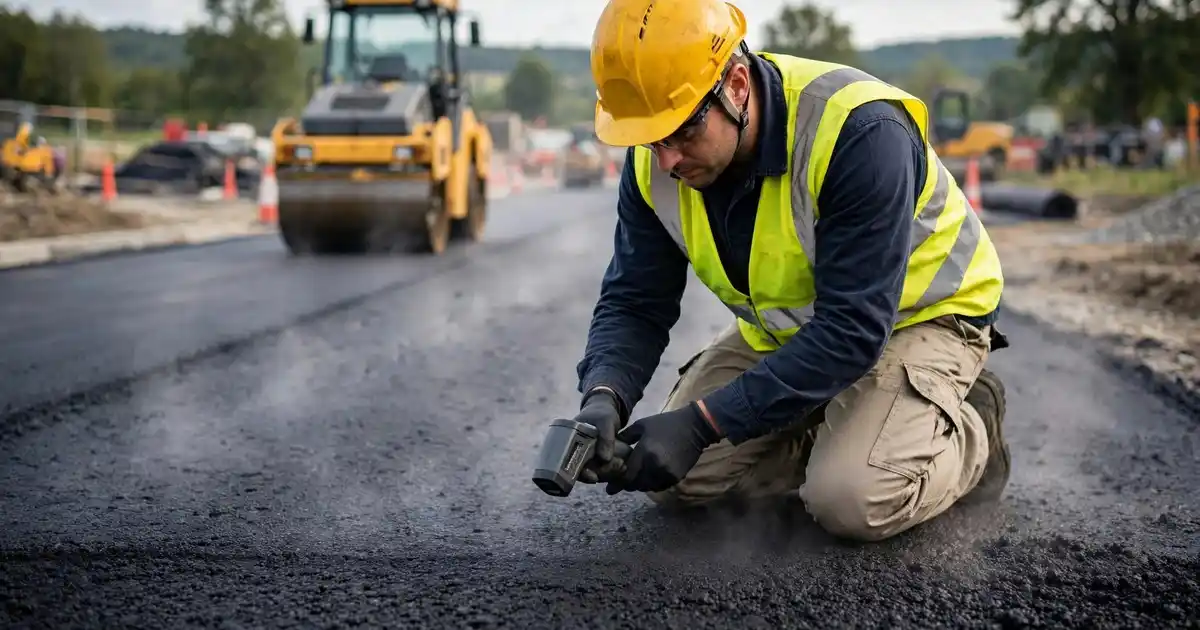
Check with your binder supplier for the exact range on your project, as warm mix additives and polymer modifiers can alter these thresholds.
| Rolling Phase | Typical Surface Temp | Purpose |
|---|---|---|
| Start of compaction | 275°F to 310°F (135°C to 155°C) | Mix is soft and easy to densify |
| Breakdown rolling | Finish before mat drops below ~240°F (116°C) | Builds most of the in-place density |
| Intermediate rolling | Well above cessation temperature | Adds density and closes gap to target |
| Finish rolling | About 185°F to 160°F (85°C to 71°C) | Removes roller marks and seals surface |
| Marks still removable | Down to about 160°F to 140°F (70°C to 60°C) | Last chance to fix minor surface blemishes |
Most density comes from the hottest part of the cycle, so crews want breakdown rolling executed immediately behind the paver. As the mat cools, binder viscosity shoots up and each subsequent roller pass delivers diminishing returns.
Every project should establish a cessation temperature — the lower boundary below which rolling no longer adds density. Continuing to run heavy vibratory rollers on cold asphalt will fracture aggregate stones, break the binder bond, and cause hairline surface cracks. Check our asphalt paving temperature chart for complete plant, road delivery, and breakdown rolling ranges. Weather plays a major role here; see our guide on paving asphalt in wet conditions and rain to understand how moisture accelerates heat loss.
Choosing the Right Rollers
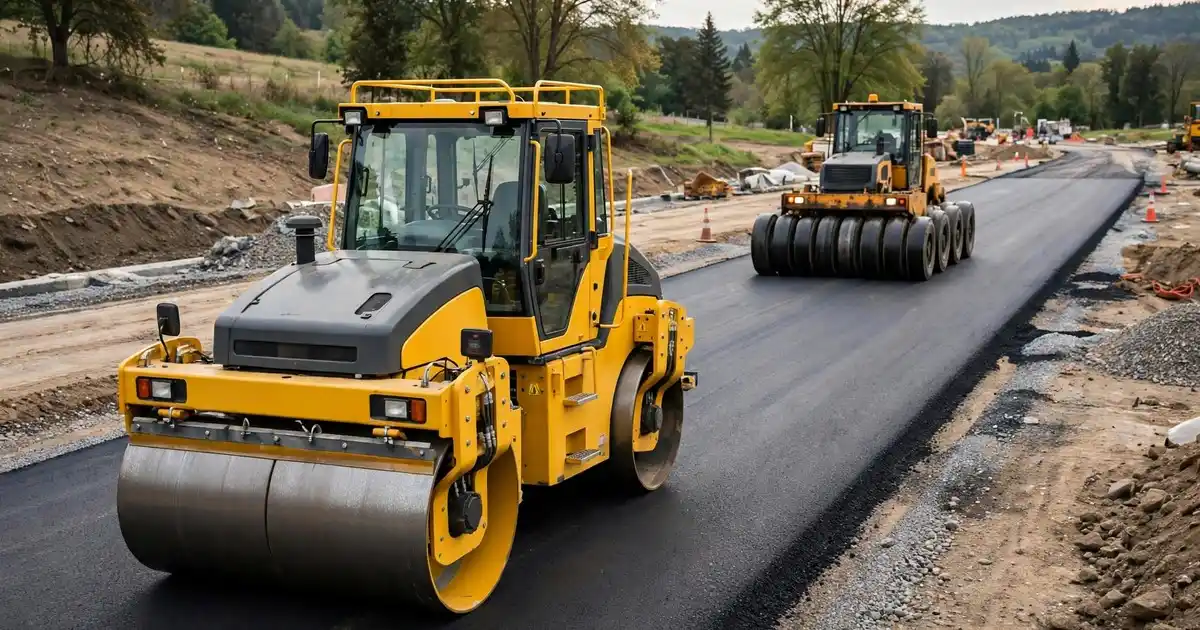
Most production highway paving jobs use a roller train of two or three machines. Each roller type serves a specific role in the densification process.
| Roller Type | How It Works | Best Position |
|---|---|---|
| Vibratory steel drum | Static weight combined with dynamic vibration | Breakdown rolling, sometimes intermediate |
| Pneumatic tire | Rubber tires providing kneading action | Intermediate rolling |
| Static steel drum | Static deadweight only | Finish rolling |
| Oscillatory roller | Drum shakes back and forth rather than up and down | Intermediate, or near fragile structures |
Practical Roller Operating Rules
- Drum Width: A wide drum covers more area per pass. Many contractors prefer a 78-inch drum for breakdown, while 84-inch drums add greater weight.
- Frequency & Amplitude: Run breakdown rollers at the highest available vibration frequency. Set amplitude according to lift depth: lower amplitude for thin lifts to prevent aggregate crushing, higher amplitude for thick base lifts.
- Keep Pneumatic Tires Hot: Cold rubber tires pick up hot bitumen and tear the mat surface. Keep pneumatic rollers actively working rather than idling on the shoulder.
- Static Finish Mode: Always switch vibratory rollers to static mode during finish rolling. Dynamic vibration on a cooling mat shatters aggregate.
Stiff, coarse mixes often require all three roller classes to achieve density. More workable, fine-graded mixes can sometimes reach spec density with a dual-drum breakdown roller, allowing intermediate rolling to be skipped if test cores verify compliance.
How to Compact Asphalt Step by Step
On a standard paving project, crews execute this precise operational sequence:
Prepare the base
Clean the surface and verify tack coat coverage. Check grade and slope. Check base temperature specs before the crew starts dumping mix.
Hold a pre-job meeting
The paver operators, roller drivers, and quality control (QC) technician must agree on the rolling pattern, drum widths, lane width, and target temperatures.
Lay a uniform mat
Maintain steady paver speed, consistent screed depth, and prevent aggregate segregation. Uneven mats always produce uneven density.
Start breakdown rolling immediately
For stable mixes, breakdown rollers should operate within 200 to 500 feet of the paver screed while the mix is at peak temperature.
Follow with intermediate rolling
Continue intermediate passes until the mat reaches required density, ensuring operations finish well above the cessation temperature.
Finish roll while the mat is warm
Use static steel drums to iron out tire tracks and roller marks, giving the finished pavement a smooth, uniform ride quality.
Test field density
Check in-place density using a calibrated nuclear gauge or non-destructive density meter, and take field cores to verify contract compliance.
Keep traffic off until cool
Fresh asphalt is tender. Keep all vehicle traffic off the new surface until the internal temperature drops below 140°F (60°C).
Construct a Test Strip First
Always pave a test section at the start of a production run. A test strip confirms the exact number of passes, vibration settings, and roller speeds needed for your specific mix design before committing full tonnage.
Rolling Pattern, Speed, and Technique
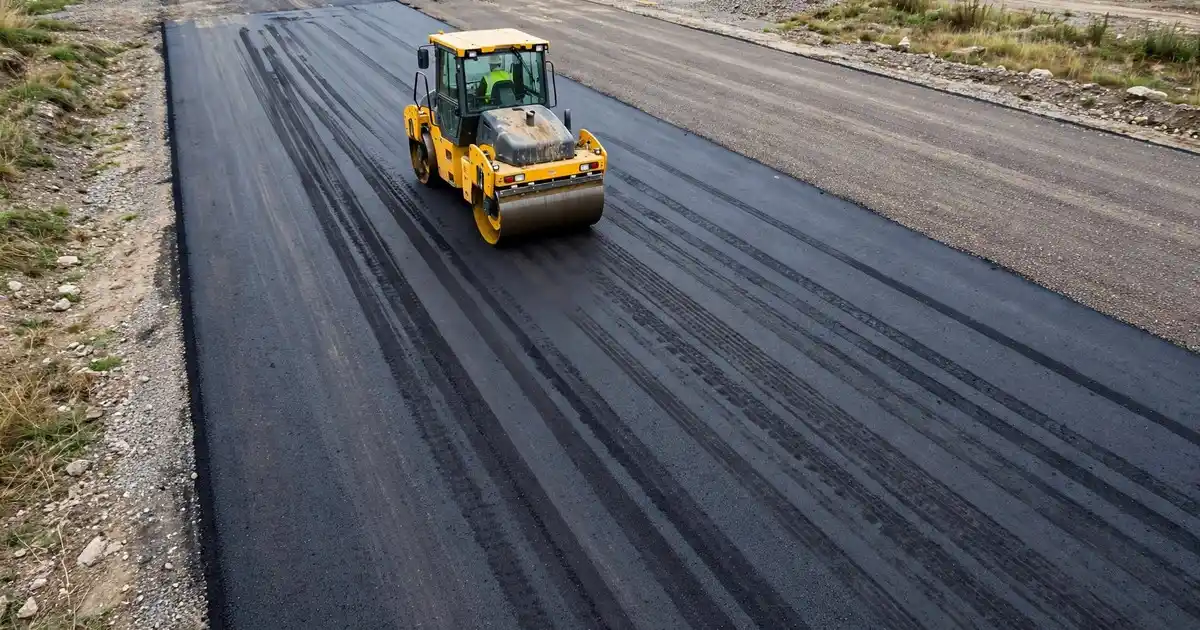
A rolling pattern is the engineered sequence of passes and coverage paths assigned to each roller. Operator consistency matters more than any single pass. The objective is uniform density from curb to curb.
Essential Operator Habits
- Roll at Walking Speed: Keep travel speed between 2.5 and 4.0 mph. Rolling too fast reduces compaction time under the drum; rolling too slowly wastes precious mix heat.
- Overlap Each Pass: Maintain a consistent 6-inch drum overlap. Begin rolling from the low side or unsupported edge and work progressively toward the center or high side.
- Drive Drum Toward the Paver: When rolling uphill or on flat grades, keep the powered drive drum facing the paver to minimize mat displacement and shoving.
- Stagger Reversal Points: Never stop or reverse the roller in the same transverse line across the lane. Angle the drum slightly and stagger turnarounds on cooled mat.
- Never Park on Hot Mat: Always park idling equipment on cool, fully compacted pavement to avoid permanent drum depressions.
- Compact Curves From Inside Out: On horizontal curves, roll the inner radius lane first where drainage falls, then work toward the higher outer elevation.
Breakdown rolling typically requires 2 to 4 passes depending on lift thickness and roller mass. Your initial test strip will establish the exact pass count needed to achieve target density.
Joints and Edges
Joints are almost always the first point of failure in asphalt pavements. The mix at an unconfined joint gets less lateral support during compaction, leading to higher localized air voids.
For longitudinal joints, most agency specifications require pinching the joint on the first pass: position the roller primarily on the hot mat with 6 inches overlapping onto the cold, previously compacted lane. For transverse joints, roll perpendicular across the joint first with support boards at the edge before resuming linear compaction.
At unsupported outer edges, keep the roller drum inset 4 to 6 inches from the unsupported edge on the breakdown pass to prevent lateral shoving, then pinch the outer edge on subsequent passes. Weak joint compaction is a primary cause of longitudinal cracking; see our diagnostic guide on asphalt cracking types and causes to identify joint separation and raveling early.
Compacting Tender Mixes
A tender mix lacks shear stability within a critical intermediate temperature range (often between 240°F and 190°F). When rolled with steel drums, it shoves horizontally, creates a bow wave ahead of the roller, and can actually lose density rather than gain it.
Warning Signs of a Tender Mix
- • Mat moves laterally and shoves under the drum
- • Transverse check cracks form directly behind the roller
- • Roller impressions remain visible even after finish passes
Field Corrective Actions
- • Compact heavily at peak temperature before shoving begins
- • Stop steel-wheel passes immediately once shoving occurs
- • Switch to a pneumatic tire roller for intermediate kneading
- • Resume static finish rolling once the mix drops below 180°F
If a mix exhibits chronic tenderness across multiple days, consult the asphalt plant mix designer. Excess sand, low dust-to-binder ratios, or rounded natural aggregate are typical causes.
Compacting Asphalt on Small Jobs
Driveways, small parking patches, and utility cuts cannot accommodate a full-size roller train. However, the underlying physics of heat and compaction remains identical.
| Job Type | Compaction Equipment | Field Execution Notes |
|---|---|---|
| Residential Driveway | Small tandem vibratory roller (1.5–3 ton) | Place thin, even lifts and compact while above 220°F |
| Pothole or Patch | Vibratory plate compactor or hand tamper | Compact perimeter edges first, then work into center |
| Utility Trench | Trench roller or heavy plate compactor | Compact in 2-inch lifts and slight overfill to allow roll-down |
| Tight Angles & Curbs | Hand tamper (8×8 inch steel plate) | Use only where mechanical equipment cannot access |
Small patches lose heat dramatically faster than wide continuous mats. When patching, speed is paramount. For homeowners and small repair crews, our DIY asphalt driveway crack and pothole repair guide covers cold patch compaction and crack sealing step by step.
Remember that compacted asphalt is noticeably thinner than loose mix. NAPA guidelines estimate the typical roll-down factor for dense-graded hot mix at approximately 20% to 25%. A 2.5-inch loose spread compacts down to about 2.0 inches. Ordering quantities based solely on loose volume will leave you short of material; use our guide on how to calculate asphalt yield and coverage per ton to convert between compacted thickness and delivery tonnage accurately.
Measuring Compaction: The Basic Formula
In pavement engineering, compaction is defined as the ratio of field bulk density (Gmb) to the laboratory maximum theoretical density (Gmm) of the loose mix:
Percent Compaction (%) = (Field Density ÷ Gmm) × 100
In-place Air Voids (%) = 100 − Percent Compaction
Worked Calculation Example
Suppose a drilled field core measures a bulk density of 2.30 g/cm³, while the plant Rice test determined a maximum theoretical gravity (Gmm) of 2.45 g/cm³:
- • Compaction = (2.30 ÷ 2.45) × 100 = 93.9%
- • Air Voids = 100 − 93.9% = 6.1%
This core meets typical DOT specifications requiring a 92% minimum compaction threshold and falls cleanly within the optimal 93%–94% performance target.
To explore the laboratory testing procedures behind Gmb and Gmm, read our in-depth walkthrough on calculating air voids in asphalt. On job sites, density is typically verified through four testing methods:
Nuclear Density Gauge
Provides instantaneous in-place density readings on the hot mat; calibrated regularly against cores.
Core Extraction
The gold standard of quality acceptance; drilled specimens are weighed and measured in a lab.
Non-Nuclear Meters
Electromagnetic impedance gauges used where radioactive regulatory restrictions apply.
Intelligent Compaction (IC)
GPS-guided drum accelerometers that map real-time stiffness, passes, and temperature.
Common Mistakes That Cost Density
Under-compaction rarely stems from equipment breakdown; it almost always results from operational errors in timing and technique.
Starting breakdown rolling too late
Once the mat drops below 220°F, density is permanently lost. Additional passes on a cold mat burn fuel without achieving compaction.
Rolling at excessive travel speeds
Operating beyond 4 mph drastically reduces the number of drum impacts per foot, causing density to drop across the lane.
Parking or stopping on hot asphalt
Bringing a roller to a dead stop on warm mix leaves drum indentations that finish rollers cannot iron out.
Letting pneumatic tires cool down
Cold rubber picks up bitumen, stripping binder from the surface and producing a scarred, segregated texture.
Running vibration on a cold mat
Applying dynamic vibration below the cessation temperature fractures aggregate and shatters the internal structure.
Skipping the pre-job test strip
Guessing pass counts without density verification leads to either under-compacted roads or crushed aggregate.
Ignoring ambient wind and base temps
A 15 mph wind can cut the available compaction window by 50%. Roller trains must tighten up immediately in windy conditions.
Poor longitudinal joint compaction
Failing to pinch joints on the first pass creates an open, permeable seam that cracks and ravels in the first winter.
Conclusion
Achieving proper asphalt compaction comes down to heat, timing, and pattern consistency. Roll early while the mat is hot, match the roller type to the compaction phase, maintain a steady walking speed, and adhere to a pattern verified by a pre-job test strip.
Check results against Gmm, pay rigorous attention to longitudinal and transverse joints, and adjust techniques for tender mixes and windy weather. Do those things consistently, and the pavement will achieve the in-place density it needs to last decades.
Before heading out to the field, use the free Bitumen Calculator at BitumenCalcPro to accurately size your asphalt tonnage, aggregate blends, and tack coat requirements based on your design thickness and roll-down factors.
Frequently Asked Questions
What temperature should asphalt be when you compact it?
Start while the mix is near its placement temperature, typically 275°F to 310°F (135°C to 155°C). Finish breakdown rolling before the mat drops below about 240°F (116°C), and complete finish rolling above roughly 160°F to 175°F (71°C to 80°C). Check your project spec for exact numbers.
How many passes does it take to compact asphalt?
It depends on the mix, thickness, and roller. Breakdown rolling often takes 2 to 4 passes, followed by intermediate and finish rolling. A test strip tells you the actual number for your job.
Can you compact asphalt after it has cooled?
No. Cold asphalt is too stiff to densify, and rolling it can crack the surface. If density is short, fix the process on the next section (start earlier, roll closer to the paver, add a roller). Cold-lay patch products use different materials and methods.
How do you compact asphalt without a roller?
Use a plate compactor for patches and a hand tamper for edges. Work in thin layers while the mix is hot. Expect lower density than a roller gives, so use these methods only for small repairs.
What density is good enough?
Research supports 92% of Gmm as a minimum for in-place density, and 93% to 94% is preferred. Your agency's specification is the final rule on any project.
Why does under-compacted asphalt fail early?
High air voids let water and air in. Water weakens the bond between binder and stone, and oxygen hardens the binder. The result is raveling, cracking, and potholes, often within a few seasons.

Founder & Web Developer
Nabeel Awan is a web developer and the founder of BitumenCalcPro. His work focuses on web development and building practical online tools, with a strong interest in civil engineering, asphalt, bitumen, pavement construction, and construction technology.