Quick Answer
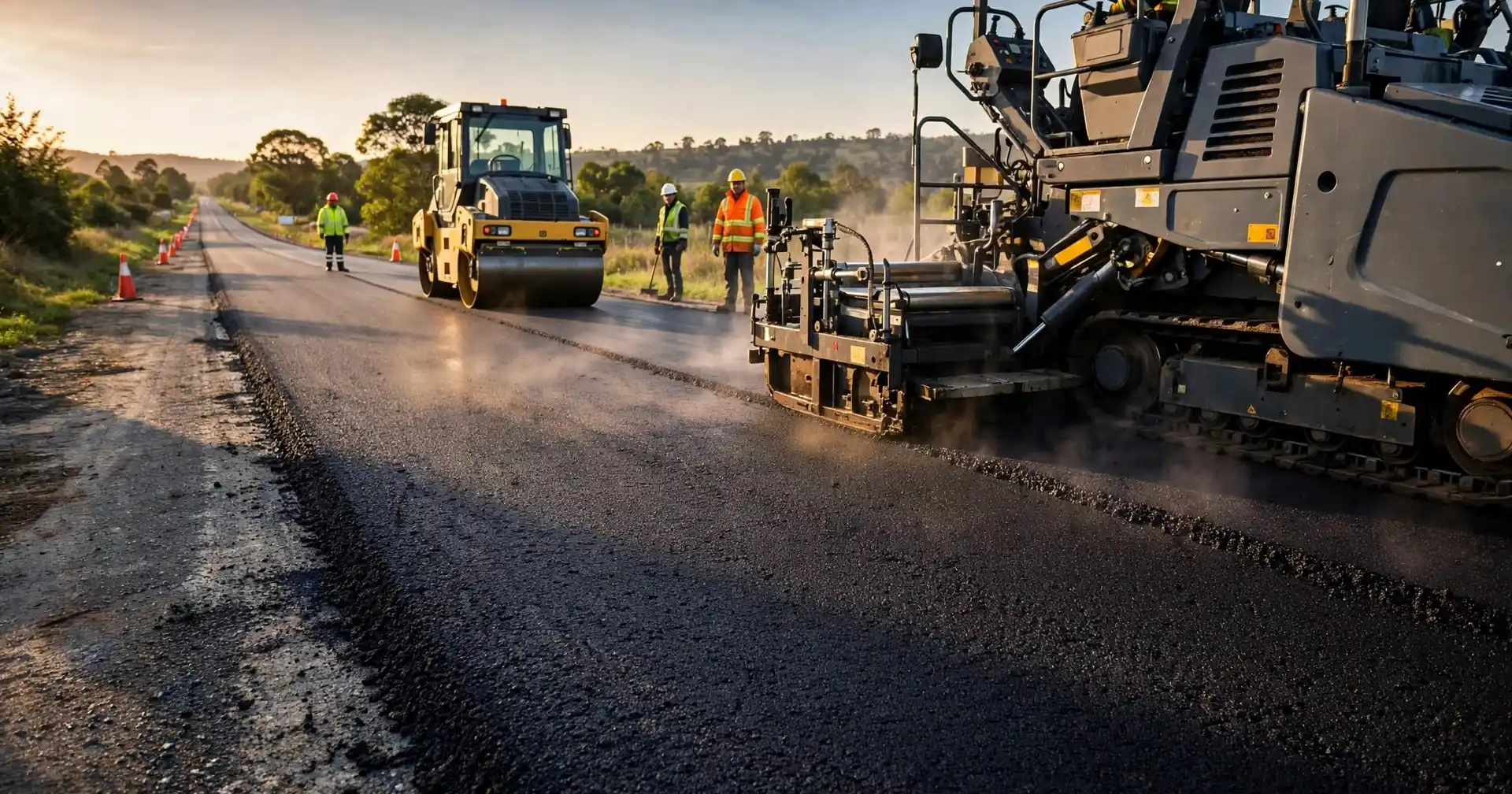
An asphalt paving temperature chart tracks hot mix from plant to cooled mat. Mix is produced at roughly 275 to 350°F (135 to 177°C) and reaches the road at about 250 to 325°F. Breakdown rolling starts above roughly 240°F, rolling should finish before the mat falls to about 175 to 185°F (the cessation temperature), and traffic waits until it is below about 140°F. Ambient air and surface temperatures usually must be at least 35 to 55°F, depending on lift thickness and agency specification.
Asphalt paving is a race against the thermometer. Hot mix has to be spread, rolled, and finished before it cools, and each stage has its own temperature window. An asphalt paving temperature chart shows those windows in one place, from the plant discharge to the point where traffic can safely drive on the surface.
This guide gives the working chart, the minimum air and surface temperatures by lift thickness, the differences between hot, warm, and cold mix, and the hot- and cold-weather adjustments crews make. Specifications vary by agency, so treat the numbers as typical ranges and follow your project documents.
Asphalt Paving Temperature Chart
| Stage | Temperature (°F) | Temperature (°C) | Notes |
|---|---|---|---|
| Plant production (hot mix) | 275 to 350 | 135 to 177 | Specifications cap the upper end by binder and mix design |
| Mix at the road | 250 to 325 | 121 to 163 | Some agencies set a strict floor of 265°F |
| Behind the screed, before breakdown | 240 to 290 typical; floor near 190 to 200 | 116 to 143; floor near 88 to 93 | Minimum varies by agency and mix design |
| Breakdown rolling (first coverage) | Start before surface drops below ~240 to 250 | 116 to 121 | Roll as hot as the mat tolerates without shoving |
| Intermediate rolling | Finish before about 175 to 190 | 79 to 88 | Most of the density comes in this band |
| Cessation temperature | About 175 to 185 | 79 to 85 | Rolling adds little or no density below this |
| Finish rolling | Finish before about 140 to 150 | 60 to 66 | Removes roller marks and irons surface |
| Open to traffic | Below about 140 | 60 | Driveways usually wait 24 to 48 hours |
These are typical agency ranges, and a few states set tighter or looser limits. California Department of Transportation (Caltrans) specifications, for instance, give slightly different breakdown and finish limits depending on the binder grade, and a national review of state highway specifications found minimum placement temperatures ranging from 200°F for a warm mix to 265°F for a polymer-modified PG 64-22 mix.
Minimum Air and Surface Temperature by Lift Thickness
Thin lifts lose heat fast, so they demand warmer weather. A thick lift holds heat longer and stays workable. Agencies formalize this as a table linking minimum ambient air and surface temperature directly to compacted lift thickness:
| Compacted Lift Thickness | Minimum Ambient Temperature (°F) | Minimum Ambient Temperature (°C) |
|---|---|---|
| 1.0 inch or less | 55°F | 13°C |
| 1.1 to 2.0 inches | 45°F | 7°C |
| 2.1 to 3.0 inches | 40°F | 4°C |
| 3.1 to 4.5 inches | 35°F | 2°C |
Standard highway specifications prohibit placement on a wet or frozen surface and require mix arriving at the road between 265°F and 325°F. Other transportation departments publish separate columns for surface wear courses versus base courses, requiring higher minimum ambient thresholds for wearing courses (commonly 45°F to 50°F and rising). Review your project specification and our comprehensive asphalt pavement layer thickness guide to check standard lift depths.
Field Example: Base vs. Air Temperature
A crew plans to place a 2-inch surface course. The agency table above specifies 45°F minimum for that thickness. At 9:00 AM, the ambient air reads 52°F and rising, yet an infrared check on the shaded aggregate base reads 44°F.
Because the base is below the 45°F requirement, placing hot mix over it will flash-cool the bottom of the mat, preventing proper compaction. The crew waits for direct sun to warm the stone or shifts the placement window to the afternoon.
Always check temperature on the surface as well as in the air. A dark, previously paved base in full sun can read 15°F to 20°F above ambient air, while a damp or shaded aggregate base can read well below it.
Hot Mix vs Warm Mix vs Cold Mix Temperatures
| Parameter | Hot Mix (HMA) | Warm Mix (WMA) | Cold Mix |
|---|---|---|---|
| Production temperature | 275 to 350°F | 215 to 275°F | Ambient (unheated) |
| Minimum at paver screed | About 225 to 250°F | About 200 to 225°F | Not applicable |
| Primary use cases | Highways, driveways, parking lots | Long hauls, cool weather, late season | Pothole patching & emergency repairs |
| Weather window | Warm, dry conditions | Wider window, lower base cutoffs | Cool and damp conditions |
Warm mix asphalt (WMA) incorporates chemical additives or water-injection foaming that lowers binder viscosity, allowing aggregates to be fully coated and compacted at temperatures 30°F to 60°F below conventional HMA. This significantly extends paving into cooler autumn months and cuts fuel consumption at the plant.
Cold mix asphalt requires no heating plant. It is formulated with solvent cutbacks or specialty emulsifiers for temporary pothole repairs in wet and chilly conditions, though it does not match hot mix in structural capacity or service life. Our detailed cold mix bitumen guide explains where cold patches perform best.
How Fast Asphalt Cools
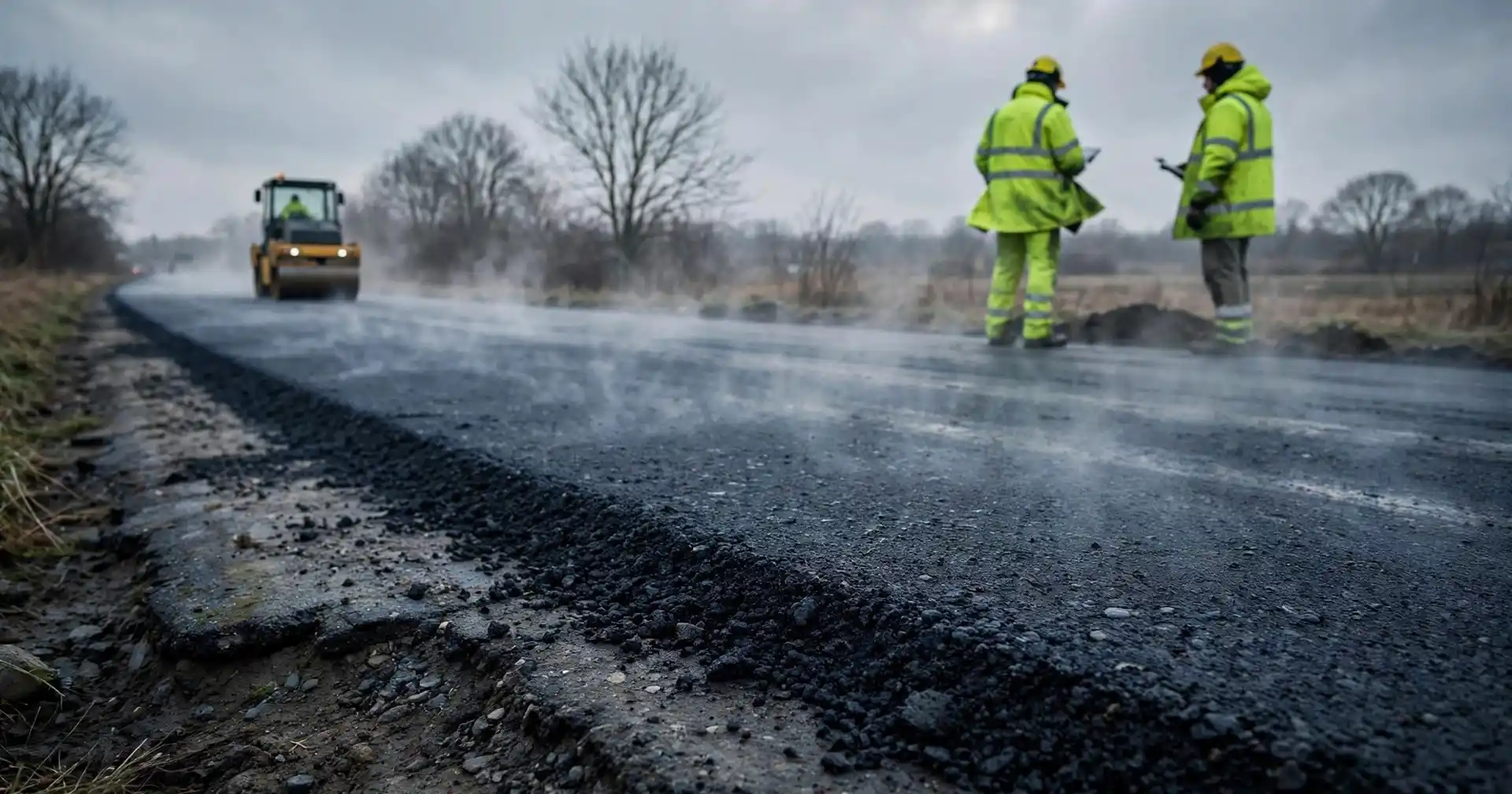
Six physical and environmental factors determine how many minutes your crew has before the mat reaches its cessation threshold:
Lift Thickness
Lifts over 2 inches retain internal core heat significantly longer than thin 1-inch surface lifts.
Base Temperature
A cold base pulls heat rapidly out of the bottom of the fresh mat by conductive transfer.
Delivery Temperature
Mix delivered at 300°F gives a much longer rolling window than mix arriving at 260°F.
Ambient Air Temperature
Cold air speeds convective cooling across the exposed mat.
Wind Speed
Wind is the most aggressive cooling factor; a 15 mph wind cuts available compaction time in half.
Solar Radiation
Direct sun preheats the base and slows surface heat loss; shaded areas cool rapidly.
Compaction also reduces layer thickness. A mat placed loosely at 1⅞ to 2 inches compacts down to approximately 1½ inches under heavy rollers — a reduction of roughly 20% to 25%. When estimating required material quantities, always calculate from compacted thickness rather than loose depth. Use our step-by-step asphalt yield and coverage per ton guide to convert between dimensions, density, and ordered tonnage.
What Each Roller Does at Its Temperature
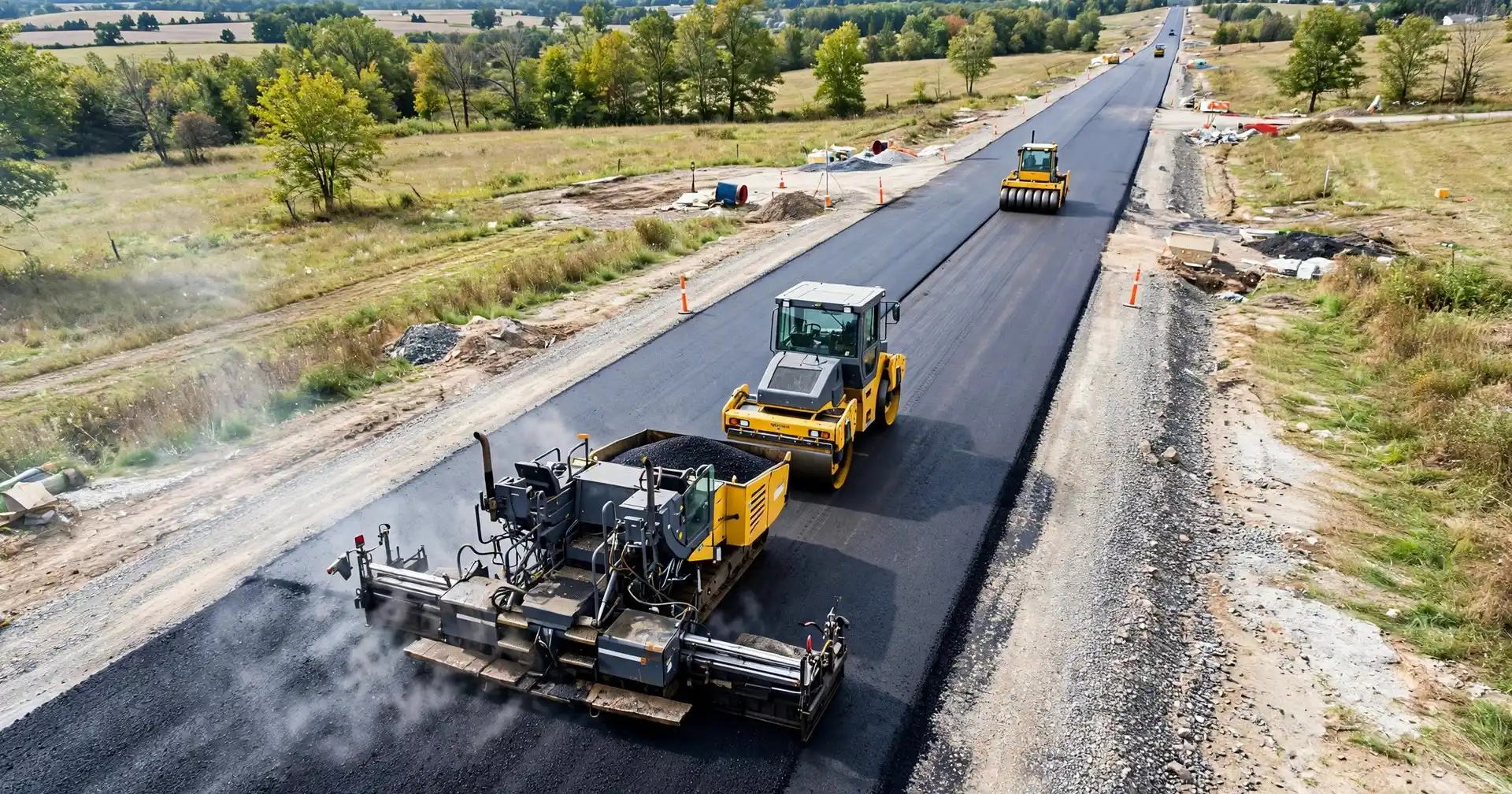
Paving operations deploy a synchronized roller train. Each machine type operates within a defined temperature slice to build density without scarring the mat:
Breakdown Rolling (240°F – 290°F)
Operates right behind the paver screed. It achieves the vast majority of target density while the binder is fluid. Heavy vibratory double-drum rollers typically lead this phase.
Intermediate Rolling (190°F – 240°F)
Continues densification and seals voids. Pneumatic rubber-tire rollers provide a kneading action that knits aggregate particles together before the mix reaches cessation.
Finish Rolling (140°F – 175°F)
A static steel-wheel roller irons out tire marks, ridges, and surface blemishes. It does not add density — its sole purpose is providing a smooth, uniform ride surface.
Below the cessation temperature (roughly 175°F), additional roller passes will not increase density. Specifications typically mandate achieving 92% to 97% of the mix's maximum theoretical density (Gmm). A mat that drops below 175°F before rolling finishes will fall short of density and suffer premature distress. Consult our complete operational guide on how to compact asphalt with proper roller sequences and passes to master the rolling pattern.
Hot Weather Paving
Extreme ambient heat does not stop paving, but it alters the operational plan. When air temperatures climb above 85°F (29°C), state highway guidance (such as New York State DOT specifications) advises:
- Lower Production Temperature: Reduce mix plant discharge temperature by 15°F to 20°F to prevent excessive binder tenderness and mat shoving.
- Limit Pass Count: Stop rolling once density is reached; over-rolling hot asphalt causes the mix to shove and create bow waves ahead of the drums.
- Park Rollers Off the Mat: Heavy rollers must never stand idle on hot pavement, as they leave permanent drum depressions.
- Delay Traffic Opening: Keep vehicle traffic completely off the mat until internal temperatures cool below 140°F (60°C). On private driveways and parking lots, waiting 24 to 48 hours prevents power-steering tire gouges.
Cold Weather Paving
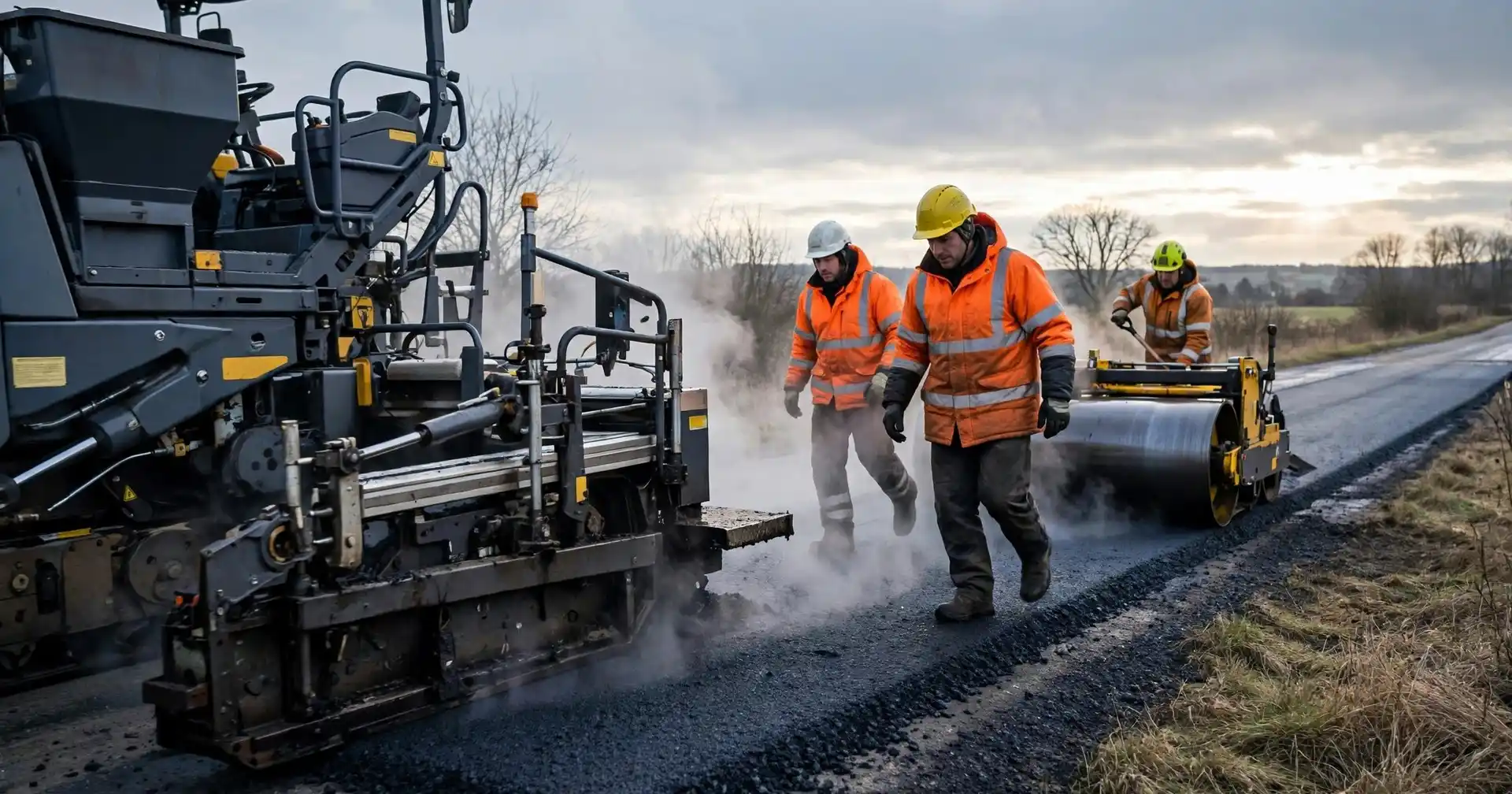
Cold weather compresses the compaction window drastically, leaving crews little margin for error. Strict cold weather paving rules must be enforced:
Check Air and Surface Simultaneously
Specifications require both air and base temperatures to be above the threshold and rising before releasing plant trucks.
Utilize Warm Mix Asphalt (WMA)
WMA foaming or chemical additives allow workable compaction down to lower ambient limits where specifications permit.
Design Thicker Lifts
Where elevation permits, placing thicker lifts (2.5 to 3.5 inches) dramatically increases heat retention compared to thin surface layers.
Monitor Wind Velocity Closely
Wind draws heat from the surface within minutes; keep haul trucks tarped and tighten the roller spacing behind the paver.
Respect Seasonal Cutoff Dates
Most DOT agencies enforce calendar cutoff dates (typically mid-October to early November) after which surface paving is prohibited.
Never Spray Tack on Frozen Pavement
Applying bituminous emulsion to frozen asphalt traps water and emulsifiers that freeze, preventing bond. See our guide on prime coat vs tack coat for proper emulsion break.
Emulsion break times and tack bonding are thoroughly covered in our prime coat vs tack coat comparison. Furthermore, wet conditions multiply cold-weather risks; see our analysis on paving asphalt in wet conditions and rain to understand how moisture causes steam stripping and debonding.
How to Measure Asphalt Temperature
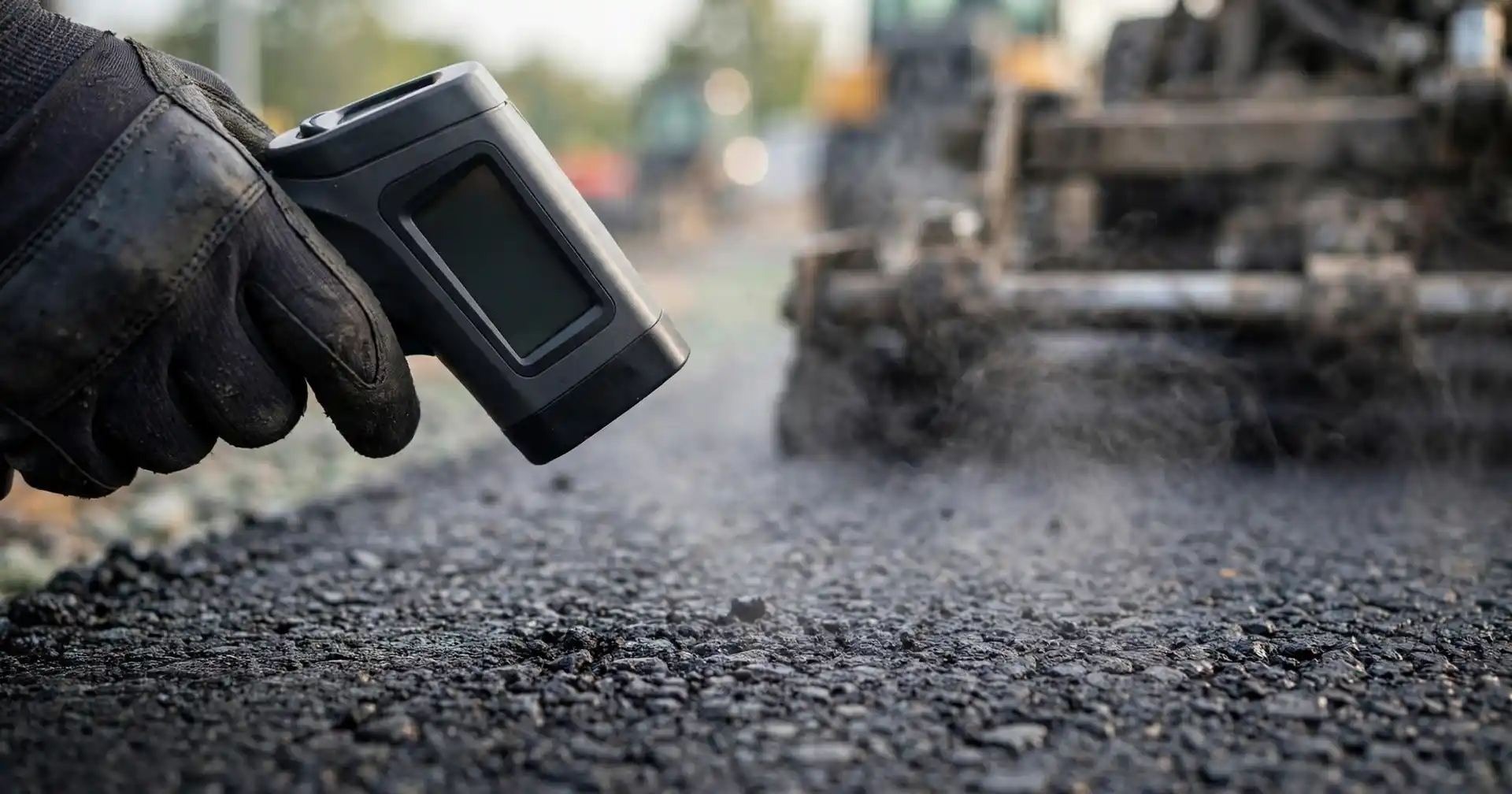
Handheld infrared (IR) thermometers and thermal imaging cameras are the standard jobsite tools for assessing mat temperatures, while modern pavers often feature continuous screed-mounted infrared sensor bars.
Surface vs. Internal Core Temperatures
Infrared guns measure the radiant temperature of the upper aggregate crust only. In windy or chilly conditions, the surface of the mat can register 30°F cooler than the core of the lift. Quality control inspectors should periodically insert an armored stem-dial thermometer into the center of the uncompacted lift to confirm actual internal compaction heat.
Take readings at multiple locations across the lane width (centerline, quarter points, and outer unconfined edges), as thermal segregation in the delivery truck can create cold spots that compact unevenly.
Common Temperature Mistakes
Failing to adhere to temperature boundaries is the root cause of most premature pavement cracking, rutting, and raveling.
Paving below minimum air or base temperatures
The mat loses heat before rollers can complete target passes, leaving excessive in-place air voids.
Overheating mix at the asphalt plant
Heating mix beyond 350°F severely oxidizes and ages the bitumen binder, making the finished pavement prematurely brittle.
Delaying breakdown rolling passes
Allowing a roller to fall 600+ feet behind the paver allows the mix to drop below 240°F, permanently locking in low density.
Rolling below the 175°F cessation threshold
Vibrating a cooled mat fractures aggregate stones and breaks internal bonds without adding density.
Ignoring cold or damp base conditions
A cold aggregate base chills the bottom of the lift in seconds via conduction, causing severe bottom-up density loss.
Placing thin lifts in windy weather
Thin 1-inch overlays lose heat in under 8 minutes in 15 mph wind; schedule thin wearing courses during calm, warm days.
Confusing Fahrenheit and Celsius specifications
250°F is 121°C; ensure crews, scale operators, and testers are calibrated to the same temperature scale.
When temperature drops prevent rollers from hitting density, the resulting high void content can be measured using the procedures in our guide on calculating air voids in asphalt.
Quick Reference: Fahrenheit to Celsius
Use this rapid conversion table for standard asphalt paving milestones:
| °F | °C | Paving Milestone |
|---|---|---|
| 140°F | 60°C | Safe threshold to open pavement to traffic |
| 150°F | 66°C | Finish rolling cutoff window |
| 175°F | 79°C | Critical compaction cessation temperature |
| 190°F | 88°C | Intermediate rolling target completion |
| 225°F | 107°C | Minimum delivery temperature for warm mix |
| 250°F | 121°C | Minimum road delivery for standard hot mix |
| 275°F | 135°C | Target breakdown rolling temperature |
| 300°F | 149°C | Standard HMA placement temperature behind screed |
| 325°F | 163°C | Upper delivery threshold for polymer-modified mixes |
| 350°F | 177°C | Maximum allowable plant production ceiling |
Frequently Asked Questions
What temperature is hot mix asphalt laid at?
Typically 250 to 325°F (121 to 163°C) at the road behind the paver screed, with the exact range set by agency specification and binder grade.
What is the minimum temperature for paving asphalt?
Most specifications call for about 35 to 55°F (2 to 13°C) air and surface temperature, depending on lift thickness. A common surface-course rule is 40 to 50°F and rising.
What is the cessation temperature for asphalt?
About 175 to 185°F (79 to 85°C). Below this threshold, rolling adds little or no density and can fracture aggregate stones.
What temperature should asphalt be when you start rolling?
Breakdown rolling should start while the mat is above roughly 240 to 250°F (116 to 121°C), rolling as hot as the mat tolerates without shoving.
How hot is asphalt when it comes out of the plant?
About 275 to 350°F (135 to 177°C) for hot mix asphalt (HMA) and 215 to 275°F (102 to 135°C) for warm mix asphalt (WMA).
How long until you can drive on new asphalt?
The mat should cool below about 140°F (60°C) before traffic crosses it. Residential driveways and parking lots usually wait 24 to 48 hours to prevent surface scuffing.
Can you pave asphalt when it is cold?
Within limits. Warm mix additives, thicker lifts, and a sun-warmed dry base extend the season, but agency specifications set strict minimum air and base cutoffs.
What is the difference between hot mix and warm mix temperatures?
Warm mix is produced at about 215 to 275°F, compared with 275 to 350°F for hot mix. Chemical additives or water injection foaming help it coat aggregate and compact at lower temperatures.
Summary
Hot mix asphalt moves through a precise sequence of temperature milestones: produced at 275°F to 350°F, placed on the road at 250°F to 325°F, rolled while hot enough to densify, and completed before dropping below the 175°F to 185°F cessation threshold.
Thin lifts, wind, and cold bases shorten the workable window rapidly, while warm mix asphalt and thicker lifts provide valuable buffer time. Always verify minimum requirements against project specifications and measure the mat continuously using calibrated infrared and probe thermometers.
Before ordering mix for your next paving job, use the free Bitumen Calculator at BitumenCalcPro to calculate required tonnage, volume, and material coverage accurately.

Founder & Web Developer
Nabeel Awan is a web developer and the founder of BitumenCalcPro. His work focuses on web development and building practical online tools, with a strong interest in civil engineering, asphalt, bitumen, pavement construction, and construction technology.