Quick Answer
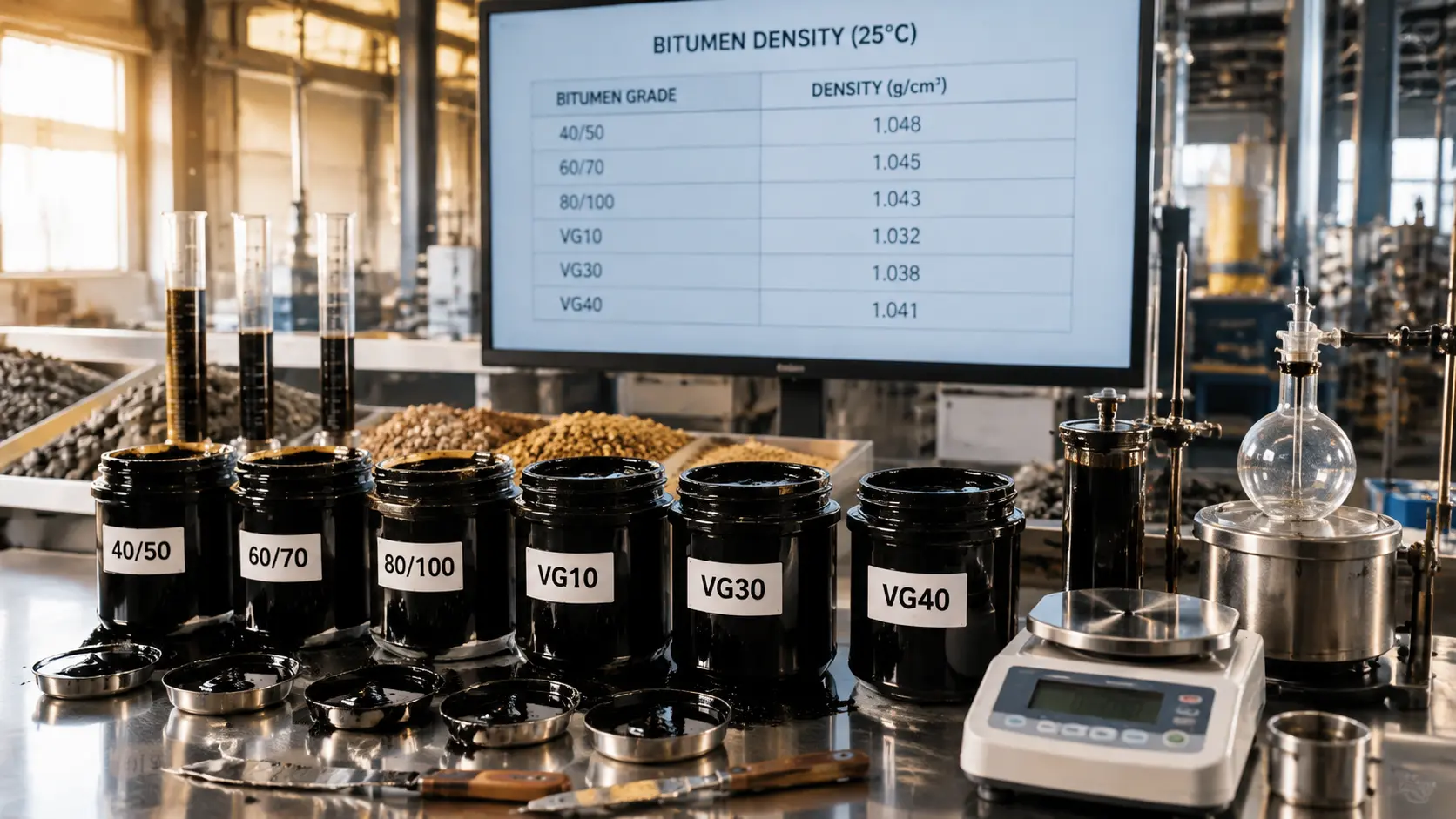
Bitumen density typically falls between 1.00 and 1.05 g/cm³ (1000–1050 kg/m³) at 25°C, though it varies by grade, source, and temperature. Softer penetration grades like 80/100 sit toward the lower end, while harder or oxidized grades run higher. Density drops as bitumen heats up, which matters for accurate material calculations and mix design.
Bitumen density is one of those values that's easy to get approximately right and easy to get exactly wrong. Use the wrong figure — or ignore how much it shifts with temperature — and your quantity calculations will be off. That leads to material shortfalls, ordering errors, and wasted budget on jobs of any size.
This guide gives you a ready-to-use bitumen density chart by grade and temperature, explains what drives those variations, and shows you exactly how to apply the figures in real calculations.
What Is Bitumen Density?
Density measures how much mass fits into a given volume — for bitumen, it's usually expressed in kilograms per cubic meter (kg/m³) or grams per cubic centimeter (g/cm³). Since bitumen sits so close to water's density of 1.00 g/cm³, small differences between grades matter a lot in engineering calculations, even though the material always looks and feels similarly heavy and thick.
Density is closely related to specific gravity, a term you'll see just as often on technical data sheets. Specific gravity compares bitumen's density to that of water at the same temperature, so a specific gravity of 1.02 simply means the bitumen is 2% denser than water. In practice, the two numbers are close enough to use interchangeably for most fieldwork, though lab reports usually specify which one they're giving.
Bitumen Density Chart
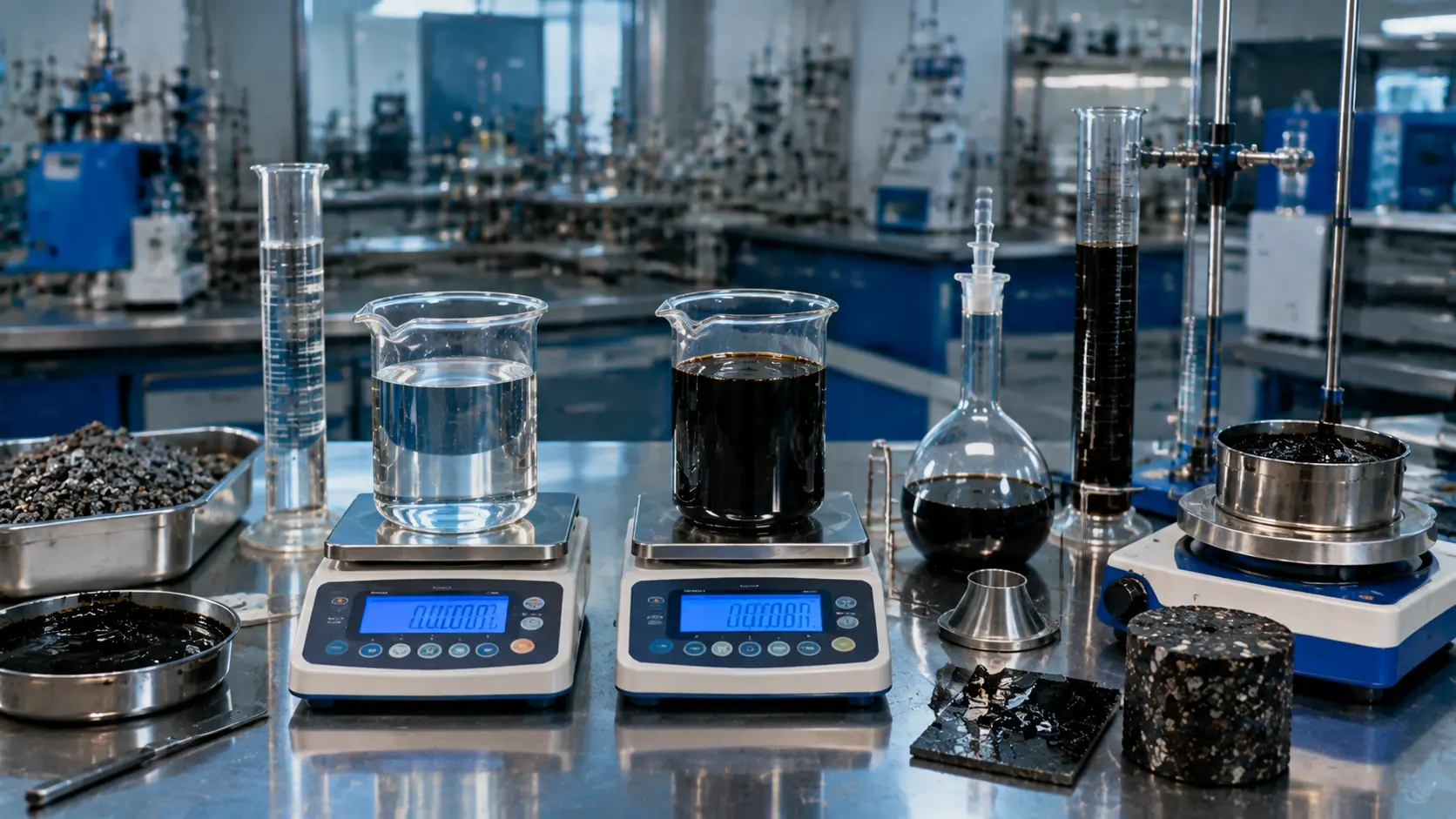
The table below gives typical density ranges for common bitumen grades at 25°C. These figures are general industry reference ranges compiled from supplier data sheets and technical sources — actual values vary by producer, crude oil source, and manufacturing process, so always check the certificate of analysis for the specific batch you're using.
| Bitumen Grade | Density Range (g/cm³) | Density Range (kg/m³) |
|---|---|---|
| Penetration 40/50 | 1.02 – 1.05 | 1020 – 1050 |
| Penetration 60/70 | 1.01 – 1.04 | 1010 – 1040 |
| Penetration 80/100 | 0.99 – 1.02 | 990 – 1020 |
| VG10 | 0.99 – 1.01 | 990 – 1010 |
| VG30 | 1.00 – 1.03 | 1000 – 1030 |
| VG40 | 1.02 – 1.05 | 1020 – 1050 |
| Bitumen emulsion | 1.02 – 1.05 | 1020 – 1050 |
| Cutback bitumen | 0.92 – 0.97 | 920 – 970 |
| Oxidized (blown) bitumen | 1.05 – 1.10 | 1050 – 1100 |
| Polymer modified bitumen (PMB) | 0.98 – 1.02 | 980 – 1020 |
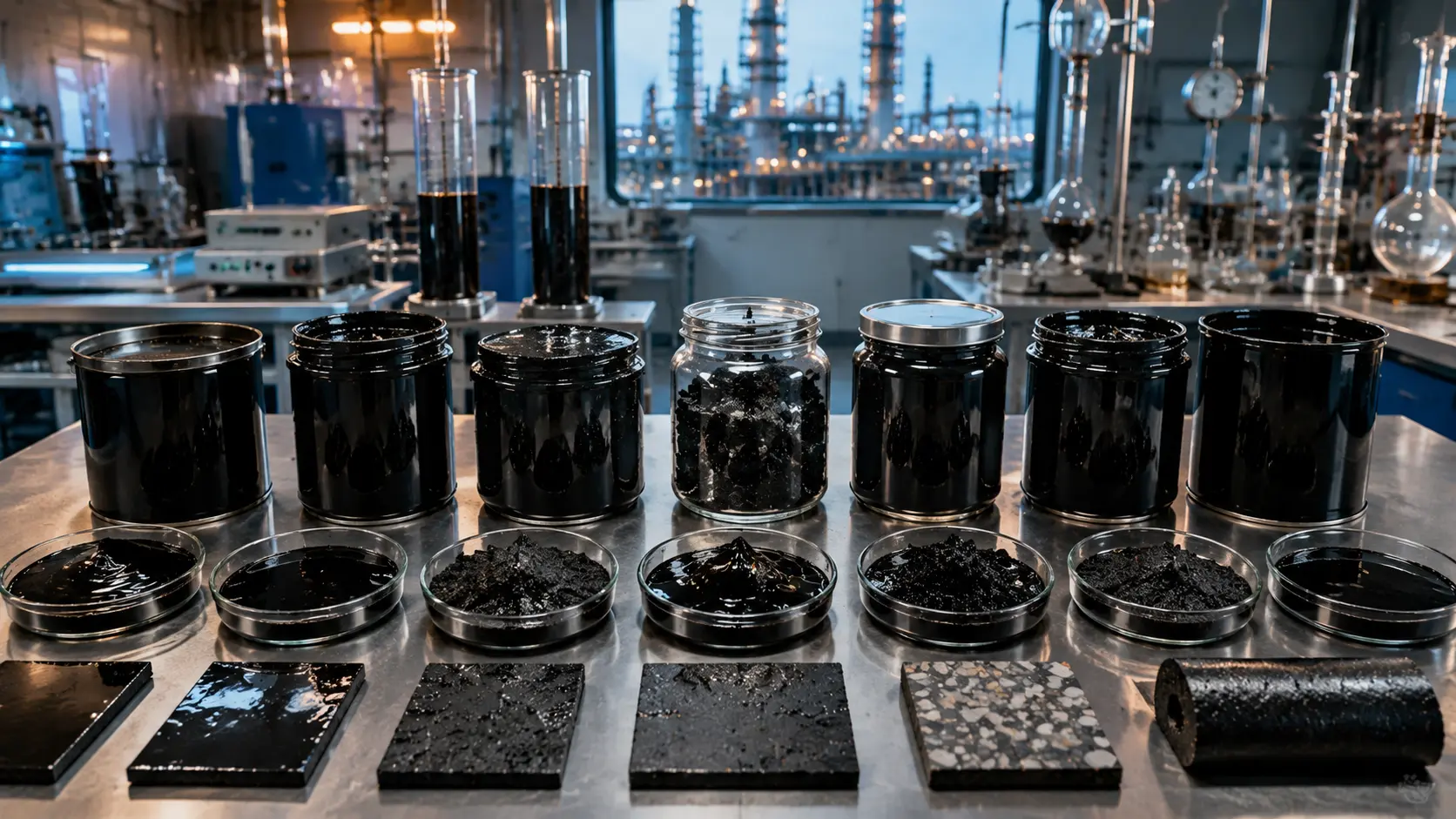
A few patterns worth noting:Harder penetration grades (40/50) generally run denser than softer ones (80/100), since they contain a different balance of asphaltenes and oils. Cutback bitumen reads noticeably lower because it's diluted with a lighter solvent, while oxidized bitumen reads higher because air-blowing changes its molecular structure. Emulsions sit on the higher end too, since they include water in the mix.
How Temperature Affects Bitumen Density
Density isn't a fixed number — it changes with temperature, and this is one of the most important things to understand before using any density chart for real calculations. As bitumen heats up, it expands slightly, which spreads the same mass over more volume and lowers the density reading.
| Temperature | Approximate Density (g/cm³) |
|---|---|
| 25°C | ~1.03 |
| 60°C | ~1.00 |
| 135°C | ~0.97 |
| 160°C | ~0.95 |

Why this matters for hot mix & storage tanks:A reading taken at 25°C isn't directly comparable to one taken at 135°C–160°C. When storing hot bitumen, use our Bitumen Tank Volume Calculator for thermal expansion math, or run paving project weights through our Asphalt Tonnage Calculator for accurate field estimates.
Density vs. Specific Gravity: What's the Difference?
These two terms cause more confusion than they should. Density is an absolute measurement — mass per unit volume. Specific gravity is a ratio — bitumen's density divided by water's density at the same temperature, which makes it a unitless number.
In practice: if bitumen density is 1020 kg/m³ and water density is 1000 kg/m³ at the same temperature, the specific gravity is 1.02. Since water's density is so close to 1.00 g/cm³, the two figures end up numerically almost identical, which is why they're often used interchangeably in the field even though they measure slightly different things.
Why Bitumen Density Matters
Density isn't just a technical curiosity — it directly affects several practical decisions on a construction project.
Material estimation
Converting between weight and volume when ordering, storing, or transporting bitumen depends entirely on an accurate density figure.
Transport & storage planning
Tankers and storage tanks are rated by volume, but bitumen is typically bought and sold by weight, so density is the conversion factor between the two.
Mix design
Asphalt mix design calculations use bitumen density alongside aggregate density to determine void content and binder ratios accurately.
Quality control
A density reading that falls outside the expected range for a given grade can be an early warning sign of contamination or dilution.
Cost calculations
Since bitumen is often priced by weight but handled by volume, density errors can lead to real under- or over-ordering on a project.
For accurate project estimates, our Bitumen Calculator uses density as a core input to convert between weight and volume, making it easy to cross-check your material orders against supplier invoices.
How Bitumen Density Is Tested
The standard method uses a pycnometer, a small glass vessel with a precisely known volume. A sample of bitumen is weighed, placed in the pycnometer, and the volume it displaces is measured against a water reference at a controlled temperature. Dividing the mass by the volume gives the density directly.
Because temperature has such a large effect on the result, testing standards specify exact temperatures for the test — typically 25°C for standard reporting, though some specifications call for measurements at other temperatures relevant to storage or application conditions. The ASTM D70 standard governs the pycnometer test method for bitumen specific gravity and density.
Reputable suppliers include density figures on their certificate of analysis for every batch, tested under standardized conditions rather than estimated from general grade ranges.

Bitumen Density vs. Asphalt vs. Aggregate vs. Water
Bitumen doesn't work alone — it's always part of a larger mix, and comparing its density to the other materials involved helps put the numbers in context.
| Material | Typical Density (kg/m³) |
|---|---|
| Water | 1000 |
| Bitumen (paving grade) | 1000 – 1050 |
| Aggregate (crushed stone) | 2600 – 2900 |
| Hot mix asphalt (compacted) | 2200 – 2500 |
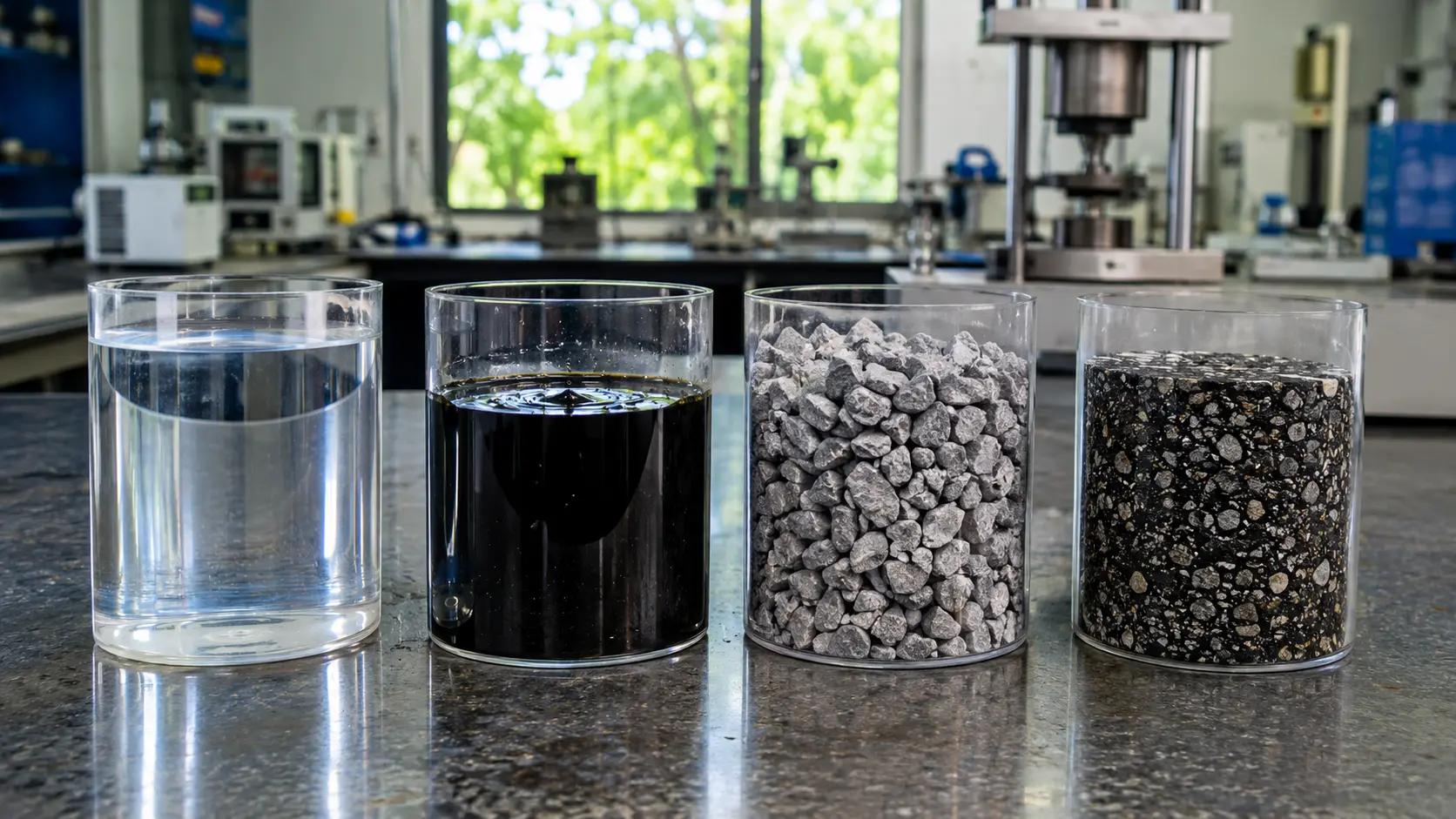
This comparison shows why bitumen makes up such a small percentage of asphalt by weight, despite doing most of the binding work — aggregate is roughly two-and-a-half to three times denser than bitumen, so even a small percentage of binder by weight ends up coating a much larger volume of stone.
For a deeper look at what goes into the mix, see our guide on what bitumen is and how it's used, which covers the full composition of asphalt and how bitumen behaves as a binder.
Using Density to Spot Bitumen Quality Issues
Density can double as a rough quality check. Bitumen diluted with cheaper substances like recycled oil, furnace oil, or diesel typically reads below the expected density range for its stated grade, since these additives are lighter than pure bitumen. On the other end, unusually high density readings can point to contamination with ash or over-oxidized residue.
Low Density Warning
Density below the expected range for a grade often indicates dilution with lighter substances (recycled oil, diesel, kerosene). Softening point and penetration tests will confirm.
High Density Warning
Unusually high density may signal over-oxidation or contamination with ash or heavy residue. Full lab testing — penetration, ductility, softening point — is needed to confirm.

Important:This isn't a substitute for full lab testing — penetration, softening point, and ductility tests remain the proper way to verify grade and quality — but a density reading well outside the normal range for a given grade is a reasonable early flag that something about a shipment deserves closer inspection before it's accepted or used. The Asphalt Institute publishes full specifications and test method standards for bitumen quality acceptance.
How to Use This Chart for Calculations
Density charts become genuinely useful once you apply them to real numbers. Two common conversions come up constantly in fieldwork:
Converting volume to weight
Weight (kg) = Volume (m³) × Density (kg/m³)Example: 2.5 m³ of 60/70 bitumen at a density of 1020 kg/m³ = 2,550 kg = 2.55 metric tons
Converting weight to volume
Volume (m³) = Weight (kg) ÷ Density (kg/m³)Example: 5 tons (5000 kg) of VG30 at 1010 kg/m³ = 4.95 m³ of storage or transport volume needed

These conversions matter most when ordering material by weight but needing to confirm it fits in a tanker rated by volume, or when a mix design specifies binder content by volume but the supplier invoices by weight. Getting the density value wrong — or using one measured at the wrong temperature — is one of the more common sources of estimating errors on paving projects.
Pro tip: Rather than doing these conversions manually, our free Bitumen Calculator handles weight-to-volume and volume-to-weight conversions automatically as part of full asphalt quantity estimates. You can also check our guide on cold mix bitumen — density differences between cold mix and hot mix affect estimation in ways that catch many contractors off guard.
Summary
Bitumen density sits close to water's, typically in the 1.00–1.05 g/cm³ range, but the exact figure shifts with grade, temperature, and source. Harder grades and oxidized bitumen run denser; cutback bitumen and softer penetration grades run lighter. Getting density right — and matching it to the correct temperature — matters for everything from ordering the right quantity to spotting a diluted shipment before it's used.
For project-specific calculations, use the exact density figure from your supplier's certificate of analysis rather than a general chart, since real-world values can vary from the typical ranges shown here. If you're estimating asphalt material quantities, our Bitumen Calculator lets you plug in your exact density and binder content to get accurate weight and volume estimates for any paving project.
Frequently Asked Questions
What is the density of bitumen in kg/m³?
Most paving-grade bitumen falls between 1000 and 1050 kg/m³ at 25°C, though the exact figure depends on grade, source, and temperature.
Is bitumen denser than water?
Usually slightly, yes. Most paving grades have a specific gravity just above 1.00, meaning they're marginally denser than water, though some softer grades come in close to or just under water's density.
Why does bitumen density change with temperature?
Like most materials, bitumen expands as it heats up. The same mass spread across a larger volume means the density reading drops as temperature rises.
Does bitumen grade affect density?
Yes. Harder penetration grades and oxidized bitumen tend to read denser, while softer grades and cutback bitumen (diluted with solvent) read lower.
How do I convert bitumen density from kg/m³ to tons/m³?
Divide by 1000. A density of 1020 kg/m³ is the same as 1.02 tons/m³.
Can density tell me if bitumen has been adulterated?
It can offer an early warning. A density reading noticeably outside the normal range for a stated grade may indicate dilution or contamination, but full lab testing is needed to confirm quality.
What temperature is bitumen density usually measured at?
25°C is the standard reference temperature for most reported density values, though testing at higher temperatures matters for applications closer to actual mixing or application conditions.

Founder & Web Developer
Nabeel Awan is a web developer and the founder of BitumenCalcPro. His work focuses on web development and building practical online tools, with a strong interest in civil engineering, asphalt, bitumen, pavement construction, and construction technology.