Quick Answer
Modified bitumen roofing is a multi-layer asphalt membrane reinforced with rubber (SBS) or plastic (APP) polymers, built for flat and low-slope roofs. It costs roughly $4 to $12 per square foot installed, lasts 15 to 25 years (up to 30 with good maintenance), and is applied by torching, hot mopping, cold adhesive, or self-adhering peel-and-stick sheets.
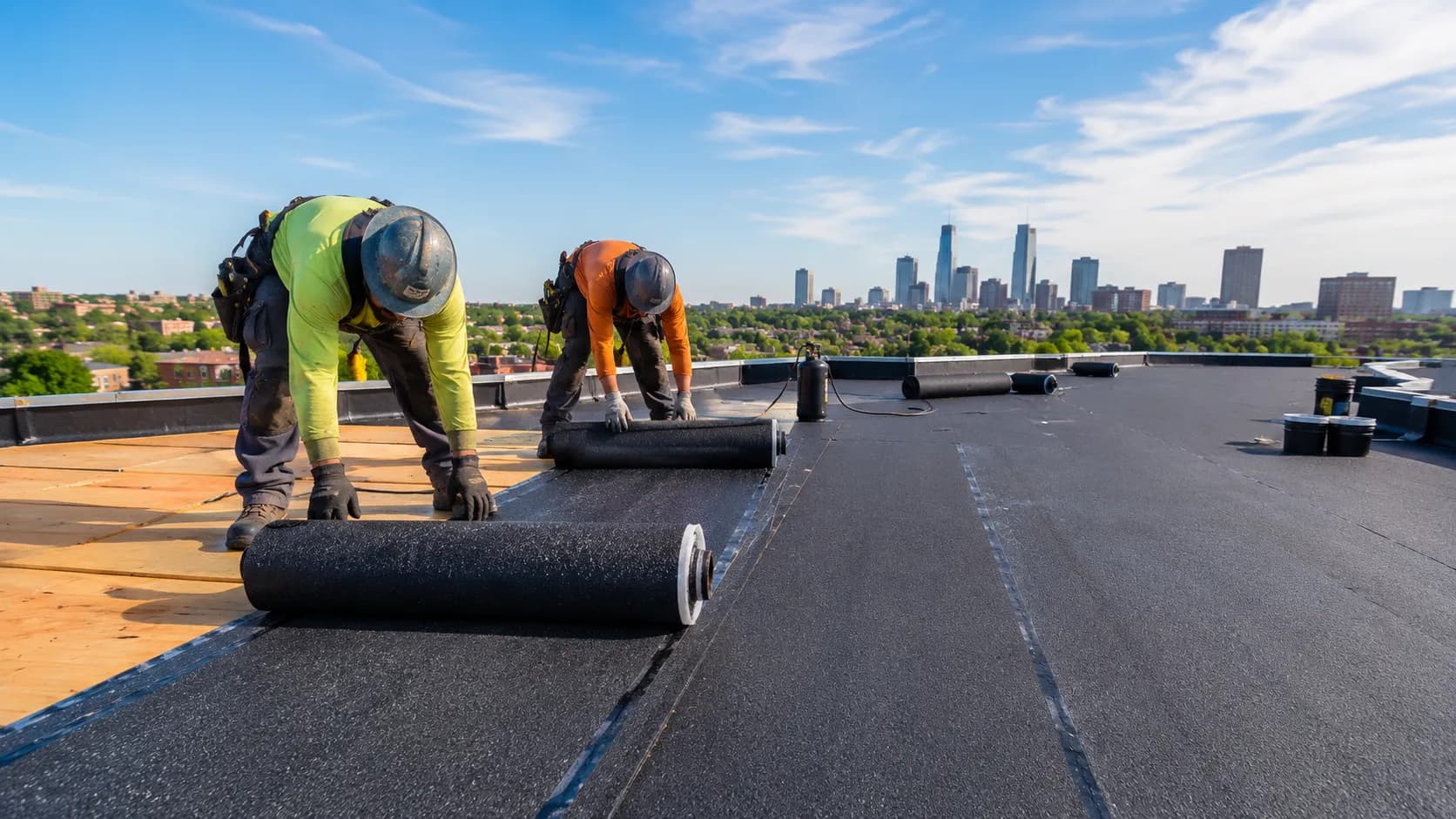
Modified bitumen roofing has been waterproofing flat and low-slope commercial buildings since the 1970s — and it's still one of the most widely specified systems today. That track record comes from one thing: it works reliably when installed correctly, across a wide range of climates and building types.
This guide covers the full picture — how it's made, how it's installed, what it costs, and how it compares to TPO and EPDM — so you can decide whether it's the right fit for your roof.
What Is Modified Bitumen Roofing?
Modified bitumen is an asphalt-based roofing membrane with polymers mixed into the asphalt to change how it behaves. Plain asphalt gets brittle in the cold and soft in the heat. Add a polymer — either a rubber compound or a plastic one — and the material stays flexible across a wider temperature range and resists cracking for longer.
The membrane isn't built layer by layer on the roof the way old built-up roofing (BUR) was. It's manufactured in a factory as reinforced rolls, usually 3 to 4 feet wide, then shipped to the job site and applied over a base layer. Most systems use two or three plies: a base sheet for structure and a cap sheet on top that handles UV exposure and weather.
Mod bit showed up in Europe in the 1960s as a fix for BUR's biggest weaknesses — slow installation, heavy reliance on crew skill, and asphalt that dried out and cracked within a decade or two. It reached North America by the 1980s and has stayed a standard option for commercial flat roofs ever since, especially on buildings that see regular foot traffic from HVAC servicing or maintenance crews.
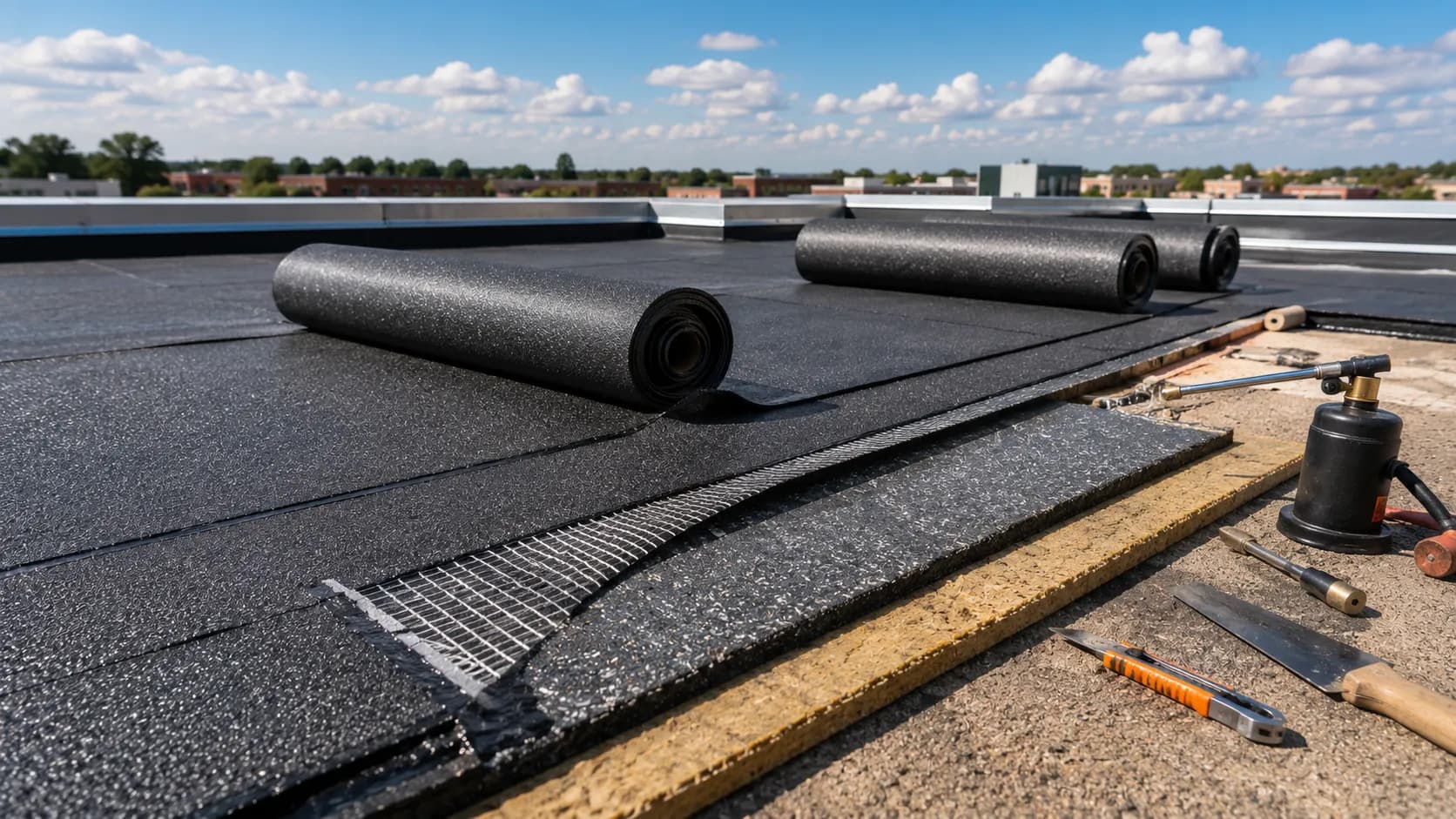
SBS vs. APP: The Two Types of Modified Bitumen
Almost every mod bit product on the market falls into one of these two categories. The polymer used changes how the membrane installs, how it performs, and where it makes sense.
SBS (Styrene-Butadiene-Styrene)
SBS is a synthetic rubber. Think of it like a rubber band — it stretches when temperatures shift and returns to shape instead of cracking. That elasticity makes SBS membranes a strong choice in climates with big temperature swings or hard freezes, since the roof can expand and contract without splitting. SBS sheets can be installed with hot asphalt, cold adhesive, or as a self-adhering peel-and-stick product, which gives contractors more flexibility on job sites where an open flame isn't practical.
APP (Atactic Polypropylene)
APP is a plastic-based polymer, sometimes described as "plastic asphalt." It's more rigid than SBS once installed, but it holds up better against UV exposure over time. That makes it a common choice in hot, sun-heavy regions like the Gulf Coast and the Southwest. APP is almost always torch-applied. The installer runs a propane torch under the sheet to melt the asphalt coating on its underside, then rolls it onto the substrate while it's still tacky. It requires higher heat than SBS installation, which is part of why fire safety planning matters more with APP jobs.
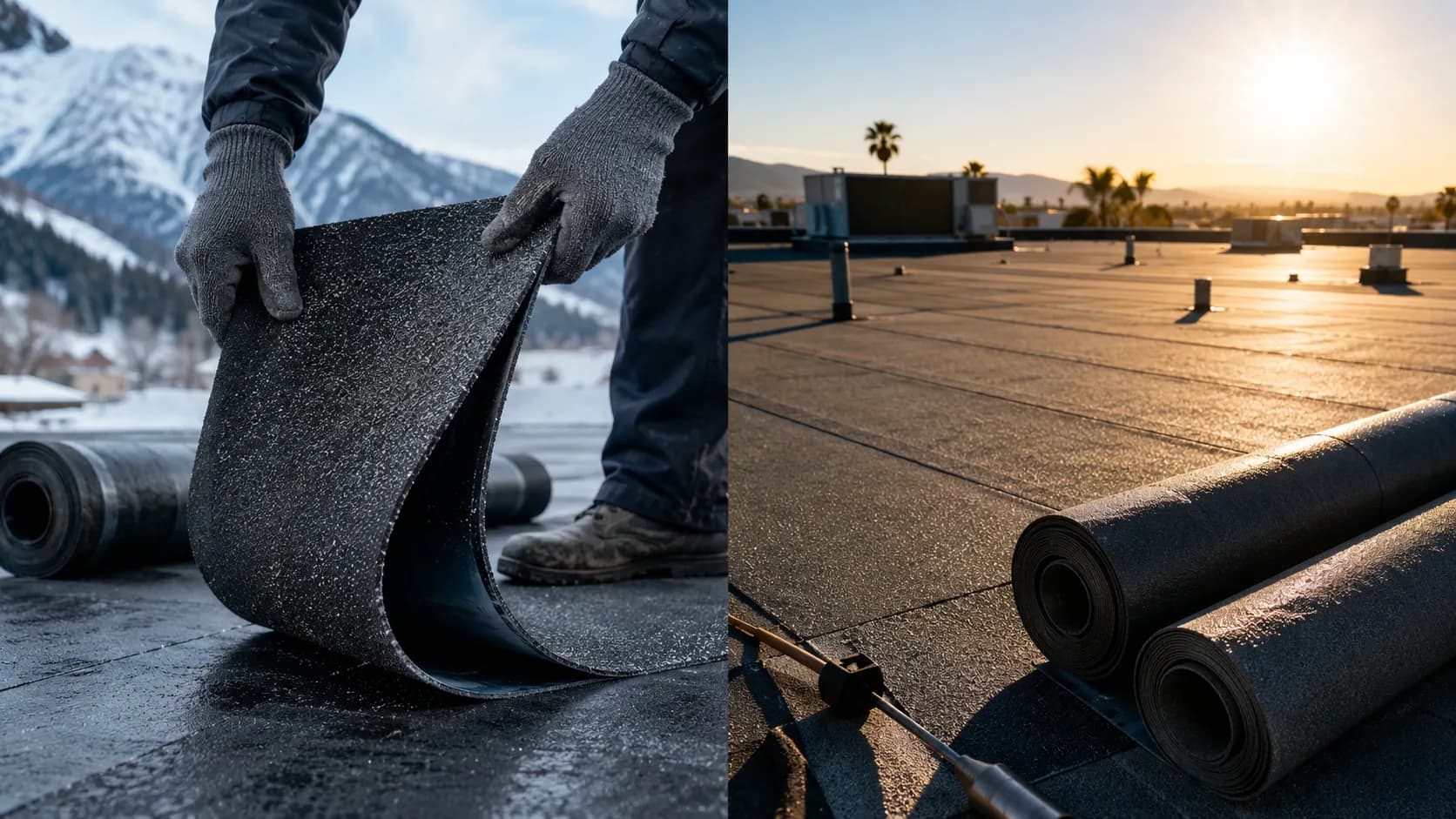
Quick comparison:
| Feature | SBS | APP |
|---|---|---|
| Base material | Rubber (synthetic) | Plastic |
| Flexibility | High — performs well in cold and freeze-thaw cycles | Lower — more rigid once cured |
| UV resistance | Good | Better |
| Common installation | Torch, cold adhesive, or self-adhered | Almost always torch-applied |
| Best climate fit | Regions with cold winters or wide temperature swings | Hot, high-UV regions |
Neither type is universally "better." The right choice depends on your climate, your roof's slope and traffic level, and how the installer plans to apply it.
How Modified Bitumen Is Installed
There are four main installation methods, and the one a contractor recommends usually comes down to building code, roof access, and the type of membrane being used.
The installer uses a propane torch to melt the underside of the roll as it's laid down. This is the most common method for APP and one option for SBS. It bonds well and works in a wide range of conditions, but it requires an open flame on the roof, so many cities require a hot work permit and a fire watch during and after installation.
Hot asphalt is heated in a kettle on the ground and piped or carried up to the roof, then mopped out in sections. The membrane is set into the hot asphalt while it's still fluid. This method doesn't need an open flame on the roof surface itself, but it does require specialized equipment and an experienced crew.
An asphalt-based adhesive is spread with a trowel or squeegee, and the membrane is pressed into it. No torch, no hot kettle. It's a good option for buildings where fire risk is a bigger concern, though the adhesive can take longer to cure fully.
The membrane comes with an adhesive backing already applied, protected by a release film. Peel it off, position the sheet, and press it down. It's the fastest and safest method to install, with no flame and no hot materials, but it depends heavily on surface temperature and prep — cold weather can prevent a strong initial bond.
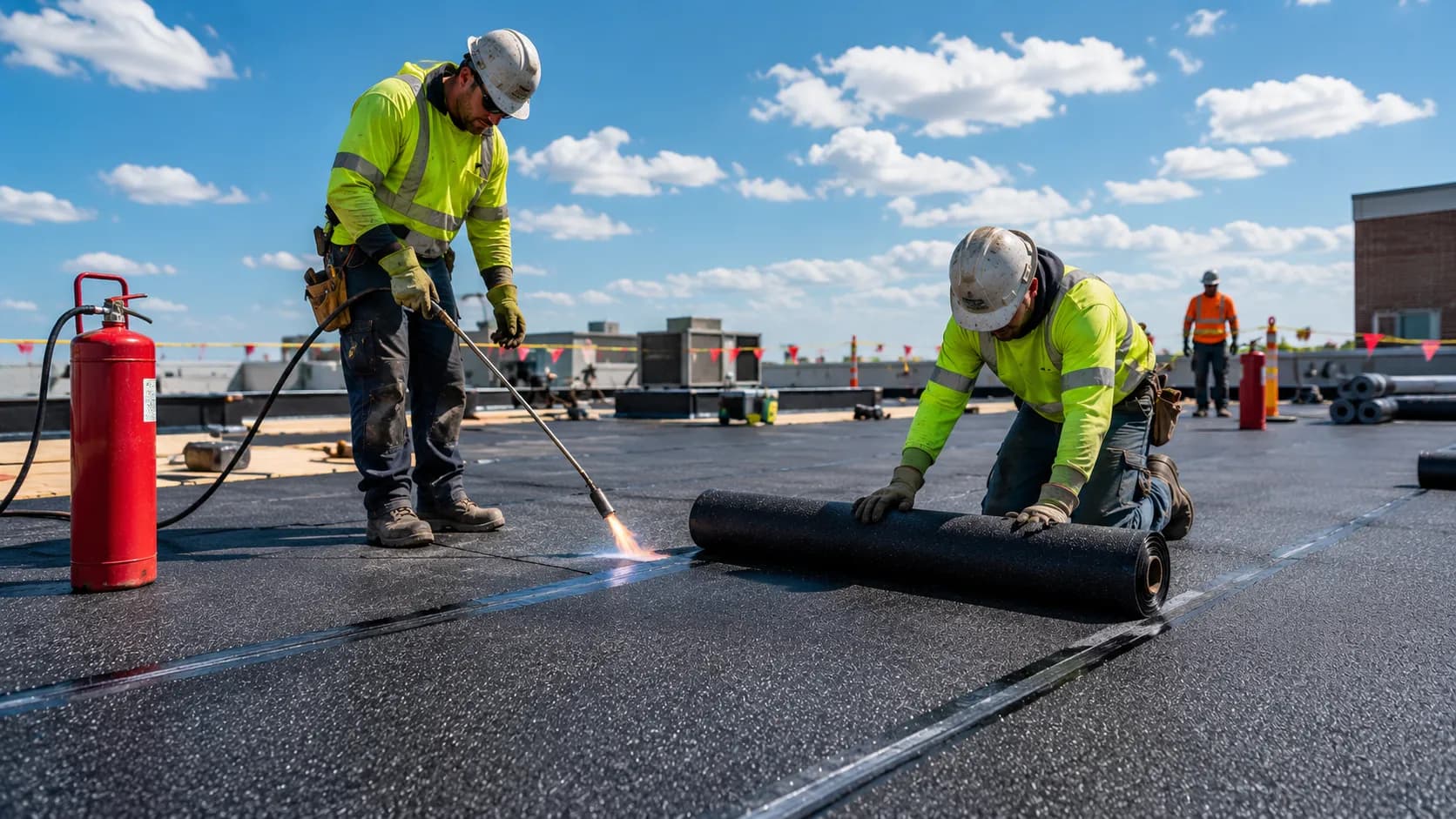
What a Modified Bitumen System Actually Looks Like
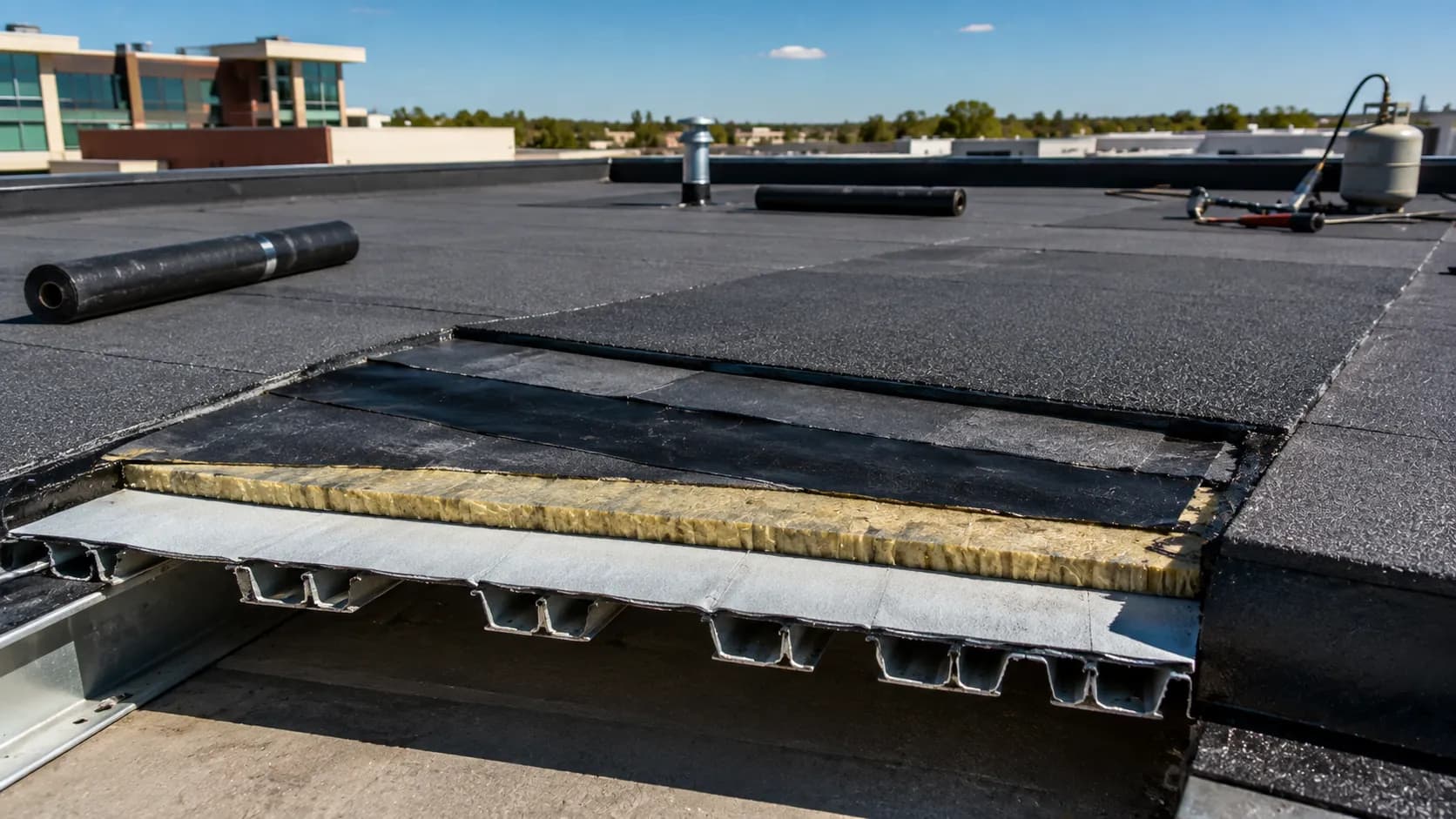
A typical mod bit roof assembly has several layers working together, not just one membrane sitting on the deck:
- Roof deck — the structural surface (plywood, concrete, or metal decking)
- Vapor barrier — (if needed) — controls moisture movement from inside the building
- Insulation — for energy performance and to create a stable substrate
- Base sheet — the first ply of modified bitumen, providing structure
- Cap sheet — the top ply, which handles weather exposure and often includes UV-reflective granules
This layered, redundant design is one of mod bit's real advantages. If something punctures the top ply, the layer underneath is still there holding the water back — which isn't true for most single-ply membranes.
How Much Does Modified Bitumen Roofing Cost?
Installed pricing generally runs $4 to $12 per square foot, with most projects landing in the $6–$10 range. A few things move that number:
- Ply count — a 3-ply system typically adds $2–$3 per square foot over a 2-ply system, but it also extends lifespan meaningfully.
- Installation method — torch and hot-mop jobs often involve more labor and equipment than self-adhered systems.
- Tear-off vs. overlay — removing an existing roof adds cost versus installing over a prepared surface.
- Deck condition and access — a roof needing structural repair or with difficult crane/ladder access will run higher.
- Reflective coating — adding a reflective cap sheet or coating adds roughly $1–$2 per square foot but can lower cooling costs.
For a 1,500 to 1,700 square foot flat roof, that translates to a typical installed range of about $7,000 to $17,000, though exact numbers depend heavily on local labor rates and the specifics above. Getting a site-specific quote is the only reliable way to know your actual number — these ranges are a starting point for budgeting, not a final bid. If you're managing a pavement project alongside your roofing, you can also estimate your road paving costs instantly with our Bitumen Calculator Online.
How Long Does Modified Bitumen Roofing Last?
Most modified bitumen roofs last 15 to 25 years. A well-installed 3-ply system with a quality cap sheet, good drainage, and regular maintenance can reach 25 to 30 years. A poorly drained or neglected 2-ply system can fall well short of that, sometimes needing attention within 12 to 15 years.
The biggest factors affecting real-world lifespan:
standing water that doesn't drain within 48 hours accelerates membrane breakdown and voids most manufacturer warranties.
repeated HVAC servicing or maintenance visits wear down the cap sheet faster in high-traffic zones.
dark, uncoated membranes absorb more heat and degrade faster under constant sun.
seam sealing and flashing details matter more than the membrane itself in most failure cases.
twice-yearly inspections catch small issues before they become leaks or structural problems.
Modified Bitumen vs. TPO vs. EPDM: Which Should You Choose?
These three materials cover most of the commercial flat roofing market today. Here's how they stack up:
| Factor | Modified Bitumen | TPO | EPDM |
|---|---|---|---|
| Installed cost | $4–$12/sq ft | $5–$10/sq ft | $3–$8/sq ft (typically the lowest) |
| Typical lifespan | 15–25 years | 20–30 years | 25–30 years |
| Puncture/foot traffic resistance | Strong — multi-ply, redundant | Moderate | Moderate |
| UV/heat reflectivity | Depends on cap sheet color and coating | Strong — usually white, reflective | Weak unless coated (traditionally black) |
| Repair difficulty | Easy — patches quickly | Requires heat-welding equipment | Easy — patches with adhesive |
| Seam method | Torched, mopped, or self-adhered overlaps | Heat-welded | Taped or adhered |
If your roof gets regular foot traffic or is in a storm-prone area where impact resistance matters, modified bitumen's layered, redundant construction is a genuine strength. If minimizing cooling costs is the priority, TPO's reflectivity usually wins. If lowest upfront cost and long service life with minimal maintenance is the goal, EPDM often comes out ahead — though it offers less puncture resistance than mod bit.
There's no single "best" flat roofing material. The right one depends on your building's traffic, climate, budget, and how long you plan to own the property. You can explore other alternative materials like cold mix bitumen which is typically reserved for pothole and pavement repair rather than structural roofing.
Pros and Cons of Modified Bitumen Roofing
Advantages
- •High tensile strength and strong resistance to punctures, tears, and foot traffic
- •Multi-ply, redundant construction — a single puncture doesn't cause an immediate leak
- •Multiple installation methods, so contractors can adapt to fire codes or access constraints
- •Excellent waterproofing, especially in multi-ply configurations
- •Patches and repairs quickly and inexpensively compared to welded single-ply systems
- •Decades of field performance data — it's a proven system, not a newer, less-tested product
Drawbacks
- •Shorter average lifespan than TPO, EPDM, or PVC
- •Dark cap sheets absorb heat, which can raise cooling costs unless a reflective coating is used
- •Torch-applied installation carries fire risk and often requires permits and a fire watch
- •Installation can produce strong odors and fumes, particularly with torch-down application
- •Heavier than single-ply membranes, which matters on older structures with limited load capacity
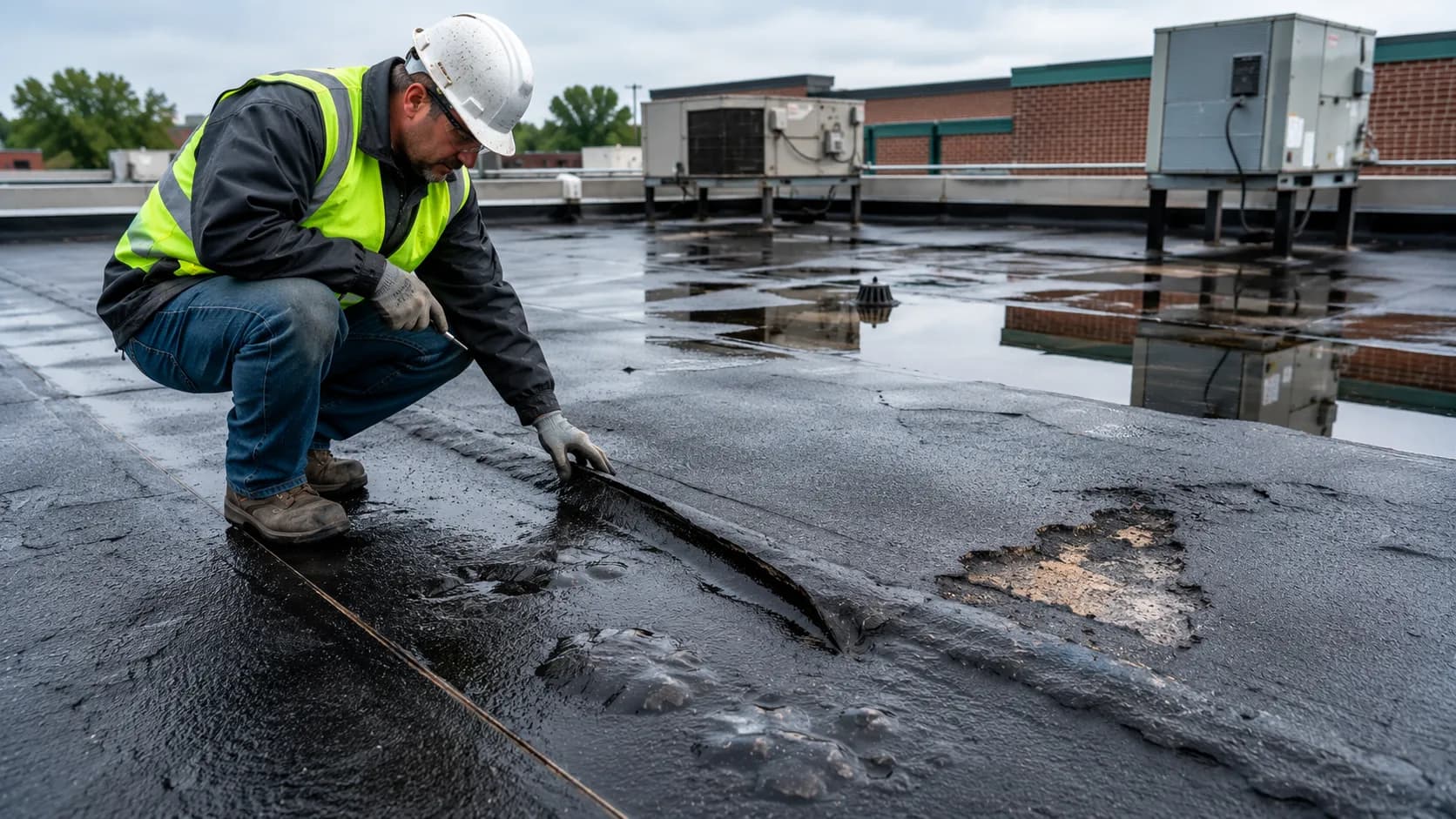
Signs Your Modified Bitumen Roof Needs Repair or Replacement
Catching problems early is almost always cheaper than waiting for a leak. Watch for:
Need to fix a leak? Read our comprehensive step-by-step guide on Modified Bitumen Roof Repair for detailed instructions on fixing blisters, seam failures, and ponding water.
- Blistering or bubbling on the membrane surface, which signals trapped moisture or air
- Cracking or splitting especially around seams and flashing details
- Granule loss on the cap sheet, which exposes the asphalt underneath to direct UV damage
- Standing water that doesn't drain within a day or two after rain
- Soft spots underfoot which can indicate saturated insulation below the membrane
- Visible seam separation where two sheets of membrane have pulled apart
A twice-yearly inspection — typically spring and fall — plus a check after major storms is standard practice for catching these issues before they turn into structural repairs. Check our guide on bitumen grades if you're interested in the core material testing behind these roofs.
Conclusion
Modified bitumen earns its long track record by doing one thing well: standing up to punctures, foot traffic, and storm debris better than most single-ply alternatives, thanks to its layered construction. It costs less upfront than TPO in many markets and repairs faster and cheaper than heat-welded systems when something does go wrong.
Where it gives ground is lifespan and energy efficiency — TPO and EPDM both tend to outlast it, and an uncoated dark membrane won't do your cooling bills any favors. For buildings with heavy roof traffic, tight budgets, or a need for fast, reliable repairs, modified bitumen remains one of the most practical flat roofing systems available. For buildings prioritizing energy savings above all else, it's worth weighing against TPO before deciding. For protecting the detail work around penetrations, edges, and gutters with a liquid-applied product, our guide to bitumen paint waterproofing covers application, surfaces, and drying times. You can learn more about general bituminous products by exploring our Knowledge Hub.
Frequently Asked Questions
Is modified bitumen roofing good for residential homes?
It's mainly used on flat or low-slope roofs, which are more common on additions, garages, porches, and some modern home designs than on standard pitched residential roofs. For a flat-roof section of a house, it's a solid, cost-effective option.
Is torch-down roofing safe?
Yes, when installed by a licensed, experienced crew following local fire codes. Most jurisdictions require a hot work permit and a fire watch during and after installation because of the open flame involved.
Can you install modified bitumen over an existing roof?
In many cases, yes — if the existing deck and insulation are in good condition and local code allows an overlay. A roofing contractor needs to inspect the existing structure first, since a compromised deck or wet insulation underneath should be addressed rather than covered over.
How is modified bitumen different from built-up roofing (BUR)?
BUR is built on-site, layer by layer, alternating hot asphalt and reinforcing felt. Modified bitumen is manufactured off-site as pre-formed rolls with polymers already added, which makes installation faster and more consistent while still keeping BUR's proven multi-layer approach.
Does color affect performance?
Yes. Dark cap sheets absorb more heat, which can increase cooling costs and accelerate UV-related aging. A reflective granule cap sheet or an applied coating reduces heat absorption and can extend the membrane's service life.

Founder & Web Developer
Nabeel Awan is a web developer and the founder of BitumenCalcPro. His work focuses on web development and building practical online tools, with a strong interest in civil engineering, asphalt, bitumen, pavement construction, and construction technology.