Quick Answer
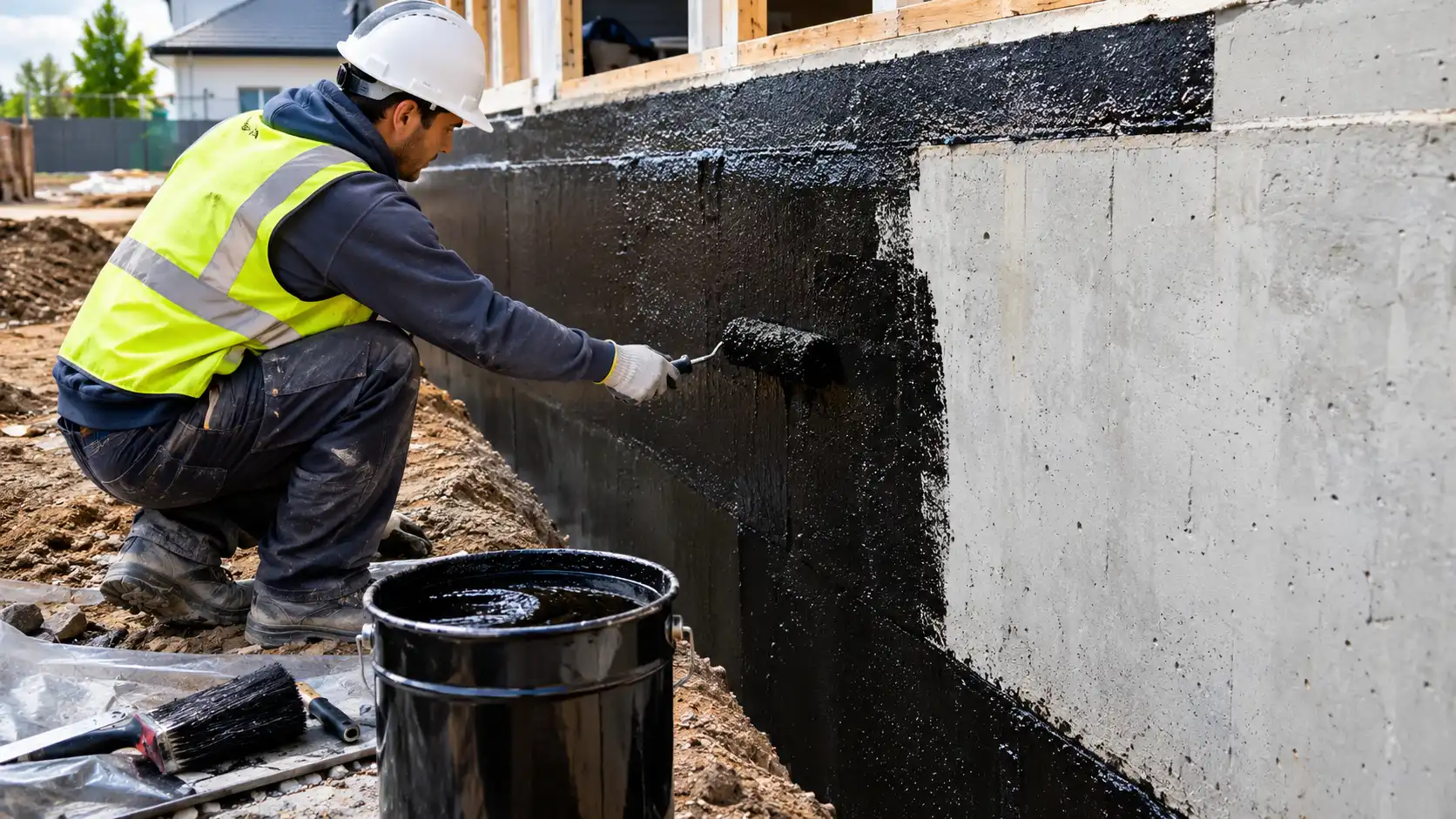
Bitumen paint is a black, solvent-based coating made from bitumen that waterproofs and protects surfaces like concrete, wood, steel, and foundations against moisture, corrosion, and weather damage. It's cold-applied and touch dry within a few hours, with full cure times varying by product, typically landing somewhere in the 24 to 72 hour range. It's widely used on roofs, foundations, metalwork, and underground structures, though it generally can't be painted over without a specialist primer, since it tends to bleed through most topcoats.
Bitumen paint is one of the oldest, simplest waterproofing products still in common use — a thick, black coating that goes on cold and dries into a tough, water-resistant film. It shows up on roofs, foundations, steel structures, and wood that needs protecting from moisture, and it's cheap enough that most hardware stores carry at least one version of it.
This guide covers what bitumen paint actually does, where it works best, how long it takes to dry, and the handful of things that trip people up when they use it for the first time — especially around overcoating and surface prep. If you want to understand the broader material first, our complete guide to bitumen covers the chemistry, grades, and uses in full detail.
What Is Bitumen Paint
Bitumen paint is a thick, black coating made by dissolving bitumen in a solvent — usually white spirit — along with pigments and additives that help it spread and cure evenly. Once applied, the solvent evaporates and leaves behind a solid, flexible bitumen film that's waterproof, weather-resistant, and resistant to low concentrations of acids and alkalis.
It's often called bituminous paint or black bitumen paint interchangeably, and it's closely related to bitumen coating and bitumen membrane products, just in a ready-to-brush liquid form rather than a sheet or thick trowel-applied compound. Some manufacturers also offer coal tar versions with similar properties, though bitumen-based formulas have become more common as coal tar use has declined in many regions due to environmental and health regulations.
What Is Bitumen Paint Used For
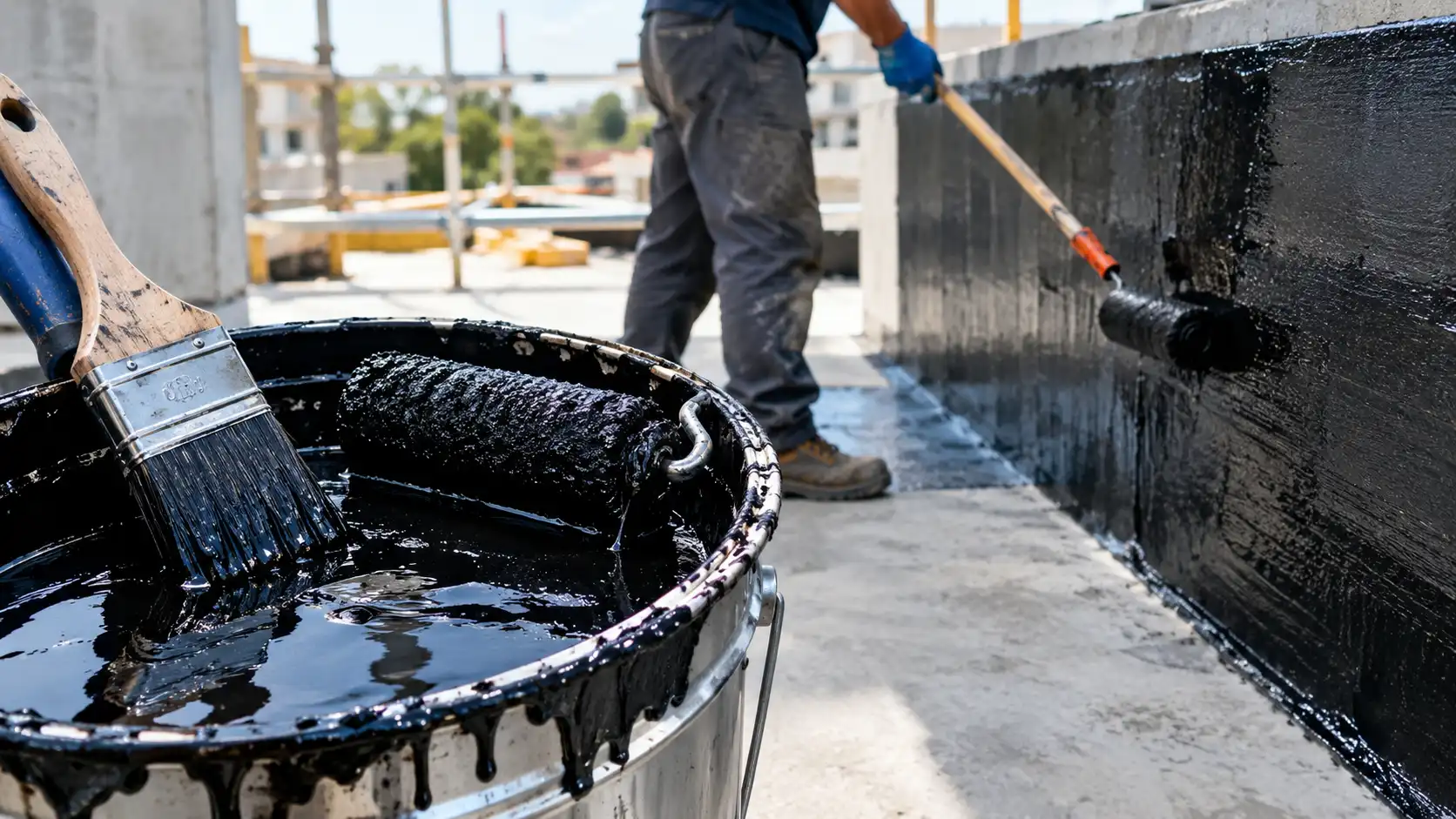
Bitumen paint's core job is simple: stop water and weather from getting into a surface that shouldn't absorb it. That single function covers a wide range of real applications.
Bitumen Paint for Concrete
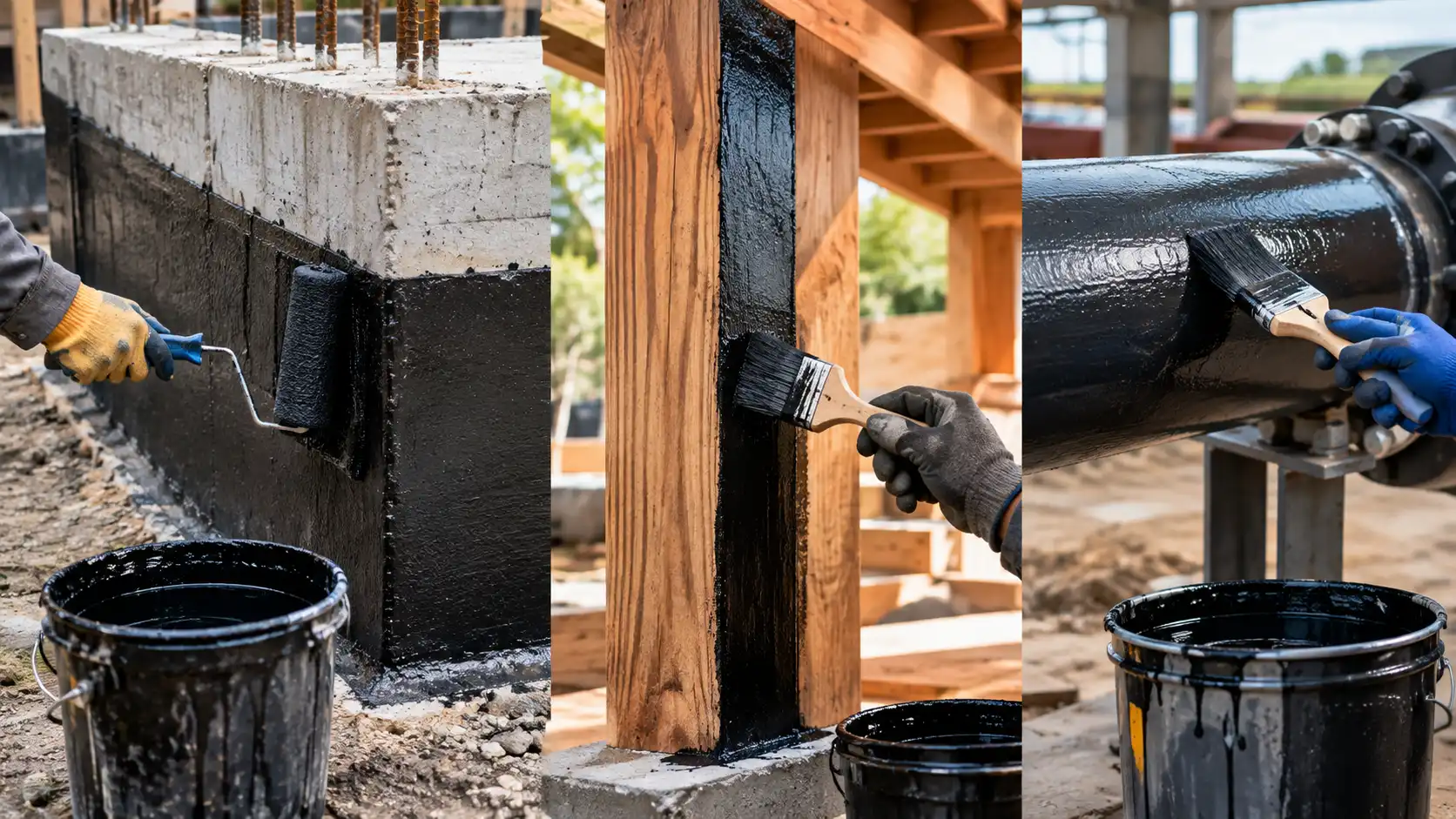
Concrete is porous by nature, which means it soaks up water readily unless something blocks that absorption. Bitumen paint forms a continuous barrier over the surface that stops water penetration and the chemical damage that comes with it — including the freeze-thaw cracking and reinforcement corrosion that untreated concrete is prone to over time.
It's commonly used on concrete foundations, retaining walls, and below-grade structures where ongoing moisture exposure is a given rather than an occasional risk. Because concrete is so porous, most manufacturers recommend a primer coat first. Skipping the primer on bare concrete often means the first coat of bitumen paint soaks in unevenly rather than forming a proper surface film.
Bitumen Paint for Wood
Wood rots when it stays wet, and bitumen paint for wood works by sealing the surface so water can't get in and start that process. It's a common choice for fences, garden sheds, wooden poles, and any exterior timber that sits exposed to rain and ground moisture.
A few rules matter more for wood than for other surfaces. Always apply bitumen paint to clean, dry wood. Painting over damp timber traps that moisture underneath the coating instead of keeping it out, which can speed up rot rather than prevent it. If the wood will sit in standing water or buried ground contact, bitumen paint is a reasonable choice specifically because it holds up well to prolonged water exposure — more so than many standard exterior wood finishes.
Bitumen Paint for Steel
Steel corrodes when exposed to moisture and oxygen over time, and bitumen paint protects it by forming a barrier that keeps both away from the metal surface. It's used across shipbuilding, pipelines, storage tanks, and general structural steelwork exposed to the weather.
Ferrous metal — meaning iron and steel — benefits most directly, though bitumen paint also works on non-ferrous metals like aluminium, zinc, and lead. For heavily rusted steel, a rust-inhibiting primer applied first gives the bitumen coating a stable surface to bond to, rather than coating over active corrosion. To understand the broader material science behind why bitumen bonds so effectively to metal surfaces, the British Board of Agrément (BBA) publishes approval certificates for waterproofing coatings used on structural materials in the UK.
Bitumen Paint for Foundations
Foundation waterproofing is one of bitumen paint's most common jobs, since below-grade concrete sits in constant contact with damp soil. A bitumen coating applied to the exterior face of a foundation wall acts as a flexible barrier that keeps that ground moisture from working its way into the structure.
This matters because a damp foundation doesn't just risk water ingress into a basement. Sustained moisture exposure also speeds up concrete deterioration and, where steel reinforcement is present, drives corrosion inside the slab itself. Bitumen-based coatings are commonly used on exterior foundation surfaces before backfilling, where the specified system is suitable for the structure and site conditions.
Bitumen Roof Paint
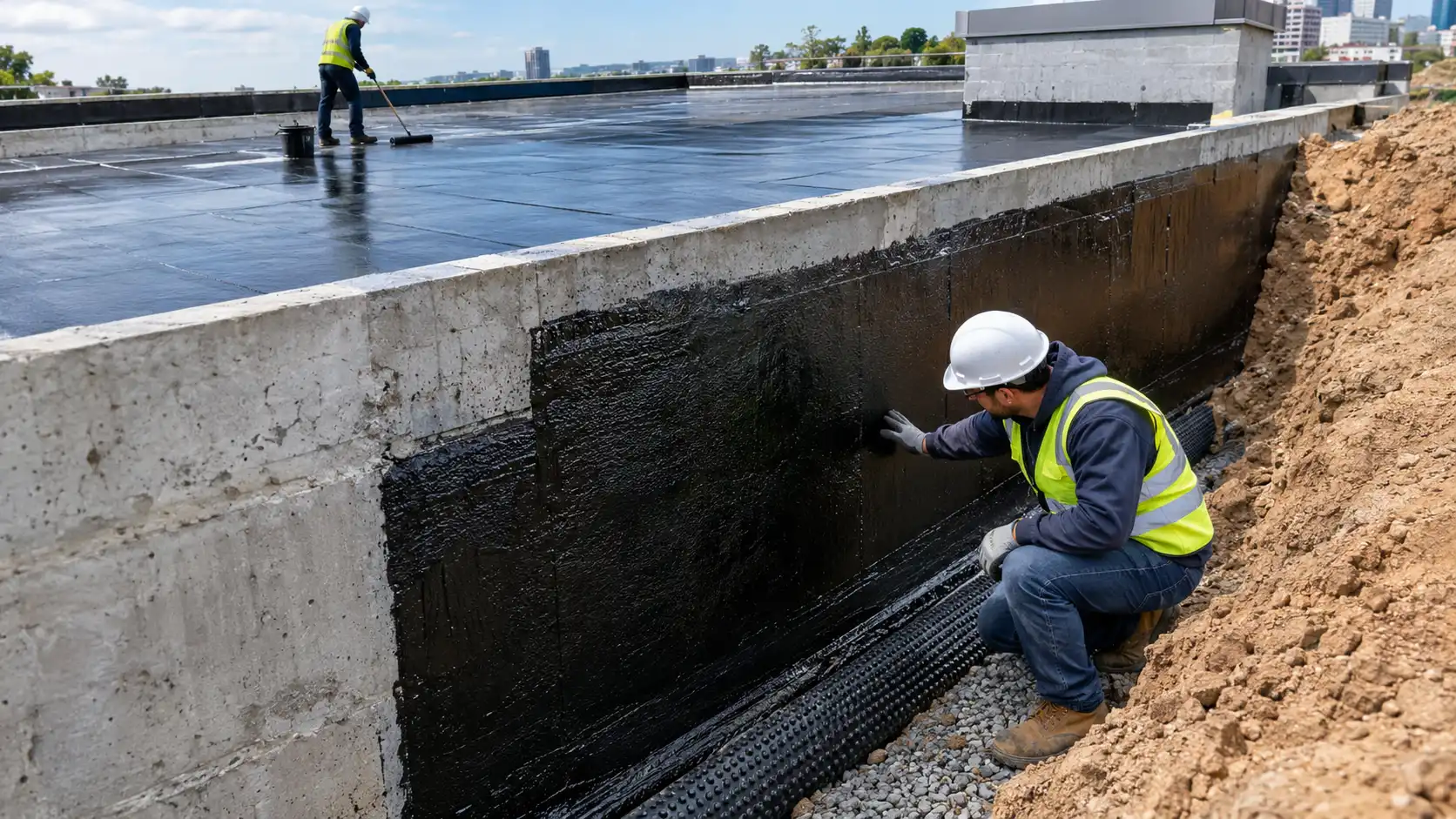
Roofing is one of the most visible and common uses for bitumen paint. It's applied to felt roofs, corrugated iron, and other roofing substrates to extend their waterproof life well past what the base material alone would manage.
Bitumen roof paint works as a flexible, weatherproof film over materials that would otherwise crack, corrode, or let water through as they age. It's a maintenance product as much as a protective one. UV exposure and weather cycling break the coating down faster on a roof than on a more sheltered vertical surface, so roof coatings may need periodic recoating as they weather. How often varies considerably by product and exposure, so it's worth following the manufacturer's maintenance recommendations for the specific coating used rather than assuming a fixed interval.
Color note: Bitumen paint is black by nature — a direct result of the bitumen itself rather than an added pigment choice. Some manufacturers offer tinted or specialist bitumen-based coatings for applications where a different color or finish is needed, but standard general-purpose bitumen paint remains black. For flat and low-slope roofing systems that go beyond a simple paint coat, our guide to modified bitumen roofing covers the membrane-based alternative in full detail.
Benefits and Disadvantages of Bitumen Paint
Benefits
- Strong waterproofing across concrete, wood, steel, and masonry
- Cold applied — no heating equipment or specialist tools needed
- Flexible once cured, moves slightly with the substrate without cracking
- Resistant to low concentrations of acids and alkalis
- Economical compared to membrane systems
- Fast initial drying, allowing a second coat the same day in most conditions
Disadvantages
- Difficult to apply in cold conditions — coating stiffens and spreads unevenly
- Softens in high heat, affecting performance on sun-exposed surfaces
- Limited overcoating options — standard paints bleed through it
- Can attack certain plastics, including polystyrene — check substrate compatibility
| Property | Performance |
|---|---|
| Waterproofing | Excellent — forms a continuous, pin-hole-free film |
| Flexibility | Good — moves with minor substrate movement without cracking |
| Chemical resistance | Moderate — handles dilute acids and alkalis; avoid strong solvents |
| UV resistance | Moderate — degrades faster on fully exposed roof surfaces |
| Cold-weather application | Poor — viscosity rises significantly below 5°C |
| Overcoating | Difficult — most topcoats bleed through without a specialist primer |
How to Apply Bitumen Paint
Bitumen paint is designed to be straightforward to apply, though a few steps make the difference between a coating that lasts and one that fails early.
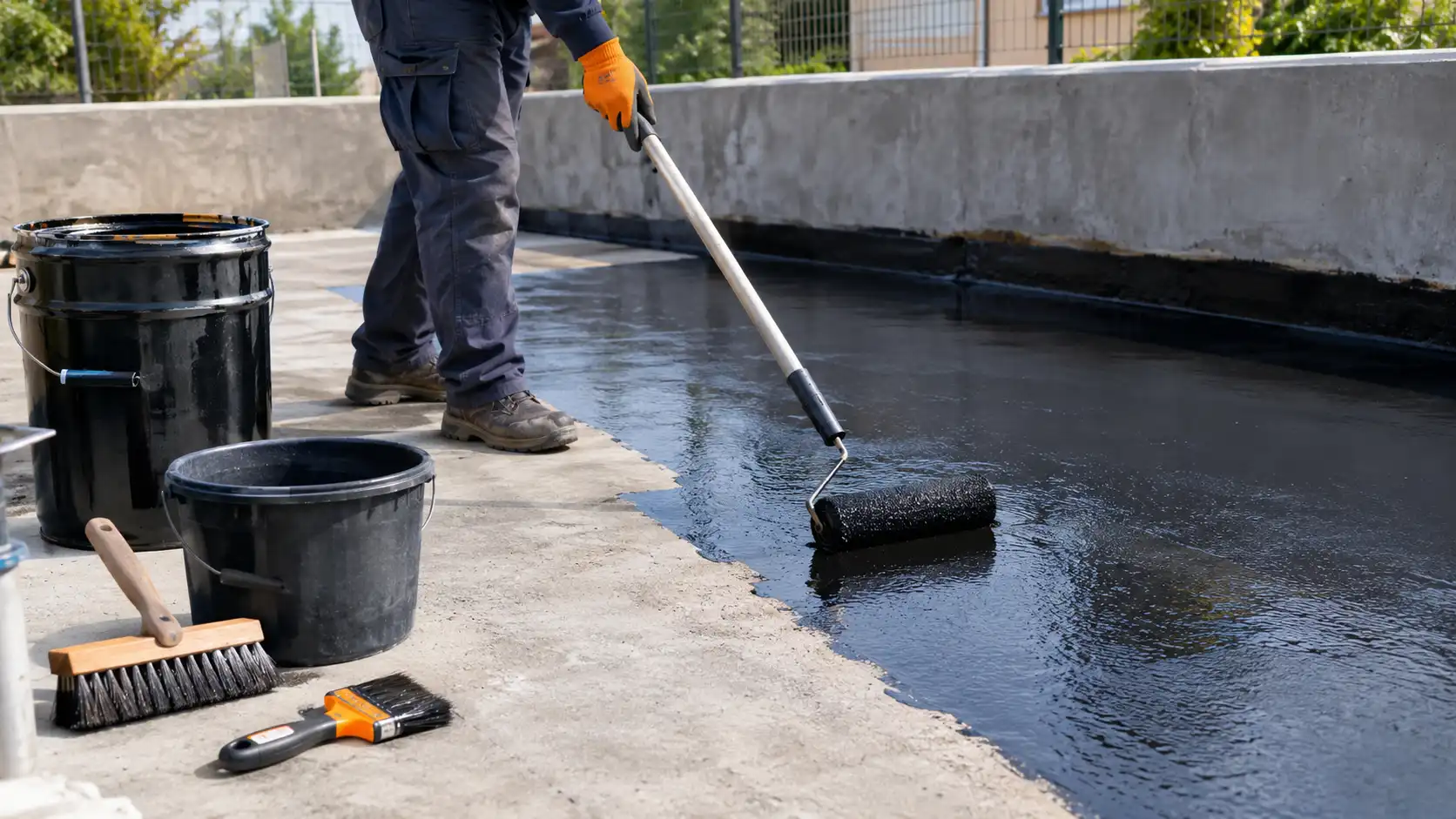
Remove loose dirt, debris, and old flaking material. A pressure wash followed by scrubbing any stubborn residue gives the coating a clean surface to bond to.
Bitumen paint should go onto a dry substrate. Applying it over damp concrete or wood traps moisture underneath rather than keeping it out.
Bare concrete, masonry, and some wood benefit from a dedicated bitumen primer first, since it seals the pores and improves adhesion for the main coating.
It's supplied ready to use and shouldn't need thinning. Pigment and bitumen can separate during storage, so thorough stirring is essential.
Work it evenly across the surface. Spray application covers large or awkward areas efficiently, while brush and roller give more control on edges and detail work.
Let each coat dry fully before the next. A single coat rarely gives full, even protection — especially on porous substrates like concrete and old wood.
Important: Avoid solvent contact after curing. Once dry, keep the coated surface away from areas where it might come into repeated contact with solvents, which can soften the bitumen film again and compromise its waterproofing performance.
How Long Does Bitumen Paint Take to Dry
Drying time varies by product, temperature, humidity, and the porosity of the surface it's applied to, but most bitumen paints follow a similar general pattern.
| Stage | Typical Timeframe |
|---|---|
| Touch dry | 2 to 8 hours |
| Ready for second coat | Same 2 to 8 hour window in most conditions |
| Full cure | 24 to 72 hours — varies by product, film thickness, and substrate |
Warmer, drier conditions speed drying noticeably, since the solvent evaporates faster. Cold, humid, or damp weather slows the process, sometimes significantly. Porous surfaces like concrete and wood tend to hold onto moisture longer than non-porous metal, which can extend drying time further on those substrates.
Different solvent-based bitumen coatings can cure at meaningfully different rates, so checking the specific product's technical data sheet is worth the extra few minutes rather than assuming a fixed timeline. The British Coatings Federation (BCF) publishes guidance and technical standards on protective solvent-based coating performance and cure conditions.
Can You Paint Over Bitumen Paint
This is one of the most common questions people run into, usually after deciding they want to change the color of a previously bitumen-coated surface. The honest answer: it's possible, but it's genuinely harder than painting over most other surfaces.
Bitumen paint has a tendency to bleed through standard topcoats — especially solvent-based ones — since heat and sunlight can soften the bitumen underneath and pull its dark pigment up through the new layer. A handful of approaches work more reliably than a direct repaint:
The most commonly recommended option. Its metallic particles form a physical barrier that blocks bleed-through better than standard primers.
Applied after a suitable barrier primer, these tend to perform better than solvent-based topcoats, which are more prone to reactivating the bitumen underneath.
Sold specifically for overcoating bitumen, these are formulated to handle the bleed-through problem directly.
Letting the bitumen paint cure fully and age before attempting to overcoat improves results — fresher bitumen is more prone to bleeding than a coating that's had time to fully harden.
Simplest option: If changing color matters less than simply refreshing protection, recoating with another layer of bitumen paint is by far the easiest route — bitumen bonds well to itself with no bleed-through risk at all. For those exploring protective roof coatings more broadly, our guide on modified bitumen roof repair covers maintenance and recoating strategies for membrane-based roofing systems.
Waterproof Bitumen Paint vs Bitumen Membrane
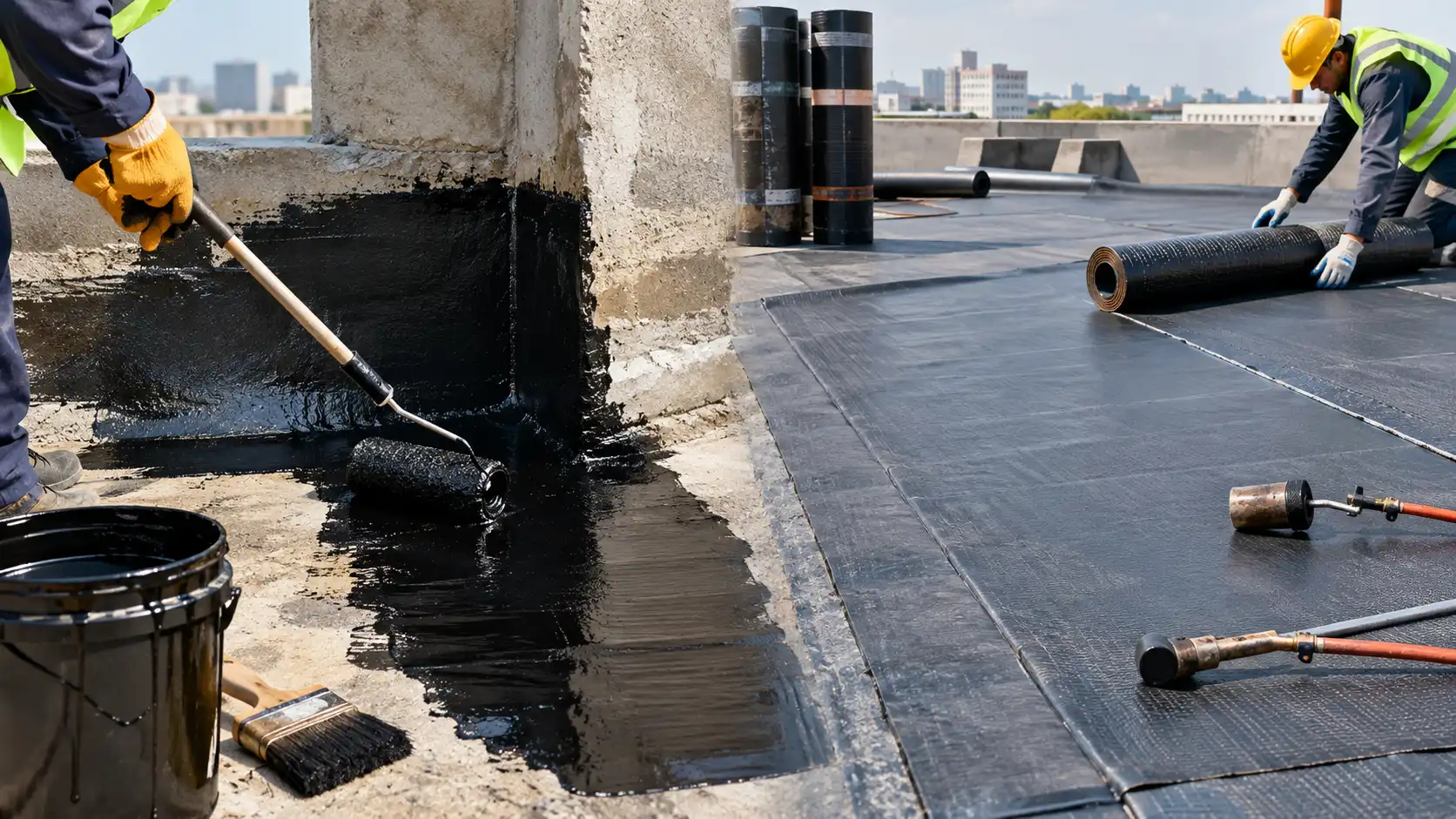
Bitumen paint and bitumen membrane solve the same basic problem — keeping water out — but they're different products suited to different jobs. Bitumen paint is a liquid coating, brushed or sprayed on in thin layers, which makes it practical for irregular shapes, metalwork, and detail areas a sheet membrane can't easily cover. Bitumen membrane is a manufactured sheet, often reinforced with fiberglass or polyester, which gives it more consistent thickness and durability for large, flat roofing or below-ground applications.
| Factor | Bitumen Paint | Bitumen Membrane |
|---|---|---|
| Application | Brush, roller, or spray — cold applied | Torch-applied, self-adhesive, or cold-bonded |
| Best use | Metalwork, wood, foundations, details | Flat roofs, large below-ground areas |
| Thickness | Thin — 2 to 3 coats typically | Consistent — typically 3 to 5 mm |
| Complex shapes | Excellent — conforms to any geometry | Limited — sheets need cutting and overlapping |
| Cost | Lower — materials and labour | Higher — materials and specialist installation |
| Durability | Good with maintenance | Excellent — reinforced for long-term use |
In practice, the two are often used together. A bitumen paint coating can serve as a primer or detail sealant around membrane edges, penetrations, and joints, where a rigid sheet can't easily conform. For flat roofing projects comparing these systems against modern single-ply options, our TPO vs modified bitumen comparison breaks down cost, durability, and which system suits which building type.
Bitumen Spray Paint
Spray application is one of the three standard ways to apply bitumen paint, alongside brush and roller, and it's a practical choice for large surfaces, awkward shapes, or jobs where speed matters more than fine control. Most ready-to-use bitumen paints don't require thinning before spraying, though checking the specific product's guidance matters, since formulations vary in viscosity.
Spray application gives more even coverage across large, flat, or textured areas than brush work typically achieves, but it comes with tradeoffs. Overspray control matters more, and detail areas like edges and joints often still need a brush for proper coverage. A lot of professional roofing and tank-coating work uses spray for the bulk of the surface and brush work for edges, seams, and penetrations.
Conclusion
Bitumen paint earns its long track record by doing one job reliably: stopping water from getting where it shouldn't. It works across concrete, wood, steel, and foundations, applies cold with basic tools, and cures into a flexible, weatherproof film within a day or two under normal conditions.
The one real limitation worth planning around is overcoating — since standard topcoats tend to bleed through and need a specialist primer or compatible product to cover cleanly. For straightforward waterproofing on roofs, foundations, and metalwork, it remains one of the simplest, most economical options available.
To understand how bitumen itself behaves as a material — its grades, properties, and chemistry — our bitumen grades guide is the natural companion to this article, covering penetration grades, viscosity grades, and how to choose the right specification for the job.
Frequently Asked Questions
What is bitumen paint made of?
It's bitumen dissolved in a solvent, typically white spirit, combined with pigments and additives that help it spread, dry, and cure into a flexible, waterproof black film.
Is bitumen paint waterproof?
Yes. Waterproofing is its primary function, forming a continuous barrier that blocks water penetration on concrete, wood, steel, and masonry surfaces.
How long does bitumen paint take to dry?
Touch dry typically takes 2 to 8 hours, with full cure commonly taking 1 to 3 days, depending on temperature, humidity, and the porosity of the surface.
Can you paint over bitumen paint?
It's possible but limited. Standard topcoats often bleed through, so an aluminium leafing primer or a specialist bitumen-compatible coating generally gives better results than a direct repaint.
Can bitumen paint be used on wood?
Yes, it's commonly used to waterproof fences, sheds, and exterior timber. Apply it only to clean, fully dry wood, since painting over damp timber traps moisture underneath the coating.
Is bitumen paint safe for drinking water tanks?
Not all formulations are. Check the specific product's technical data sheet, since standard bitumen paint is not always rated safe for potable water contact.
How often does a roof need bitumen paint reapplied?
It varies by product and exposure rather than a fixed schedule, since UV exposure and weather cycling on a roof break the coating down faster than on more sheltered surfaces. Check the manufacturer's maintenance guidance for the specific coating used.
Does bitumen paint need a primer?
On porous surfaces like bare concrete and some wood, yes. A primer seals the surface pores and improves adhesion before the main coating is applied.

Founder & Web Developer
Nabeel Awan is a web developer and the founder of BitumenCalcPro. His work focuses on web development and building practical online tools, with a strong interest in civil engineering, asphalt, bitumen, pavement construction, and construction technology.