Quick Answer
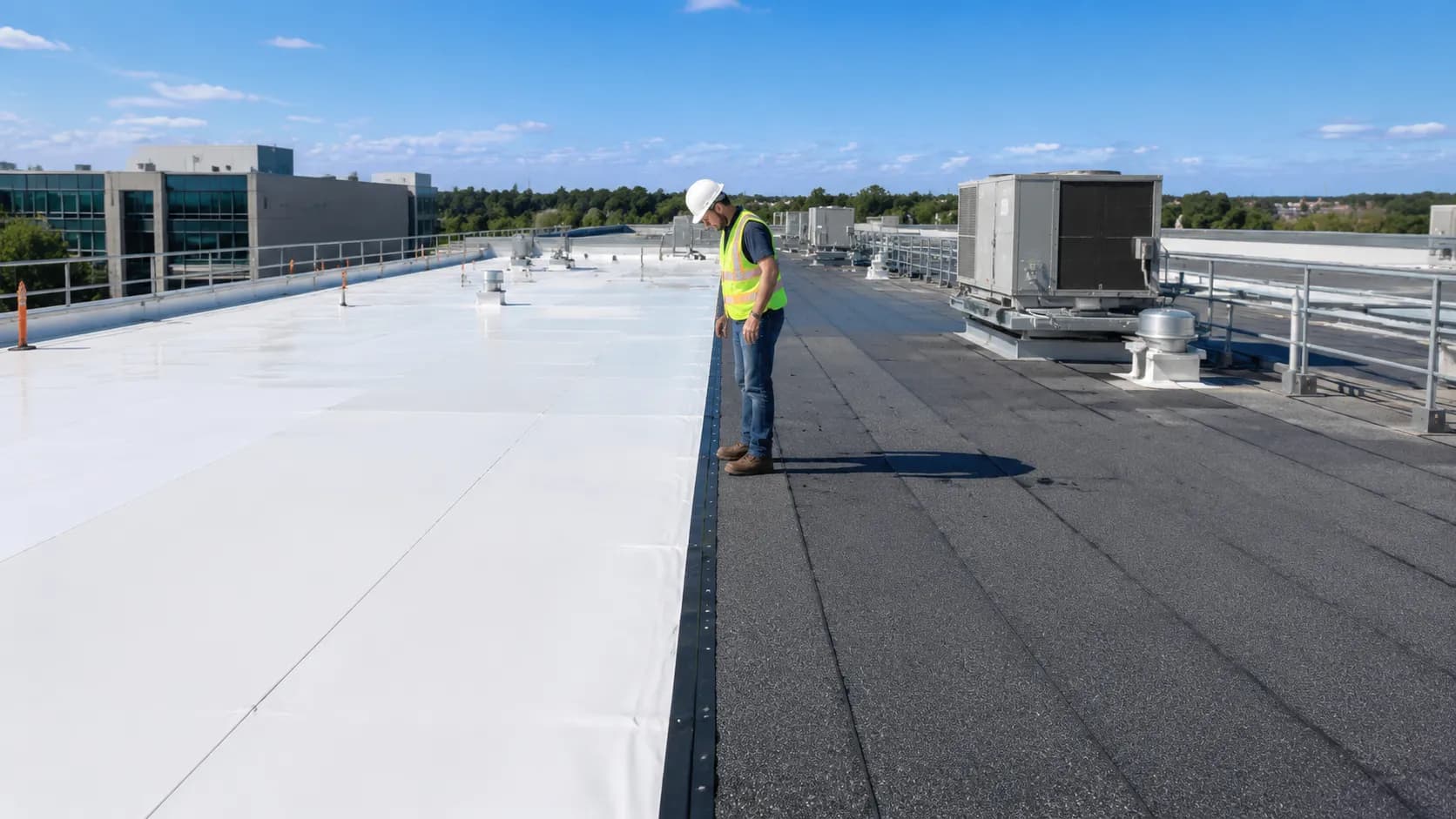
TPO is a single-ply, heat-welded membrane that costs less upfront, reflects heat, and typically lasts 20–30 years. Modified bitumen is a multi-layer, asphalt-based system that costs more but resists punctures and foot traffic better, typically lasting 15–20 years. Choose TPO for energy savings and budget; choose modified bitumen for high-traffic, impact-heavy roofs.
TPO vs modified bitumen is one of the most debated roofing decisions in commercial construction — and the honest answer is that neither system is universally better. Each has conditions where it outperforms the other, and making the wrong call adds years of maintenance headaches or an early replacement.
This guide breaks down both systems side by side — cost, durability, energy performance, climate suitability, and installation complexity — so you can make the call based on your specific roof, not a general recommendation.
What Is TPO Roofing?
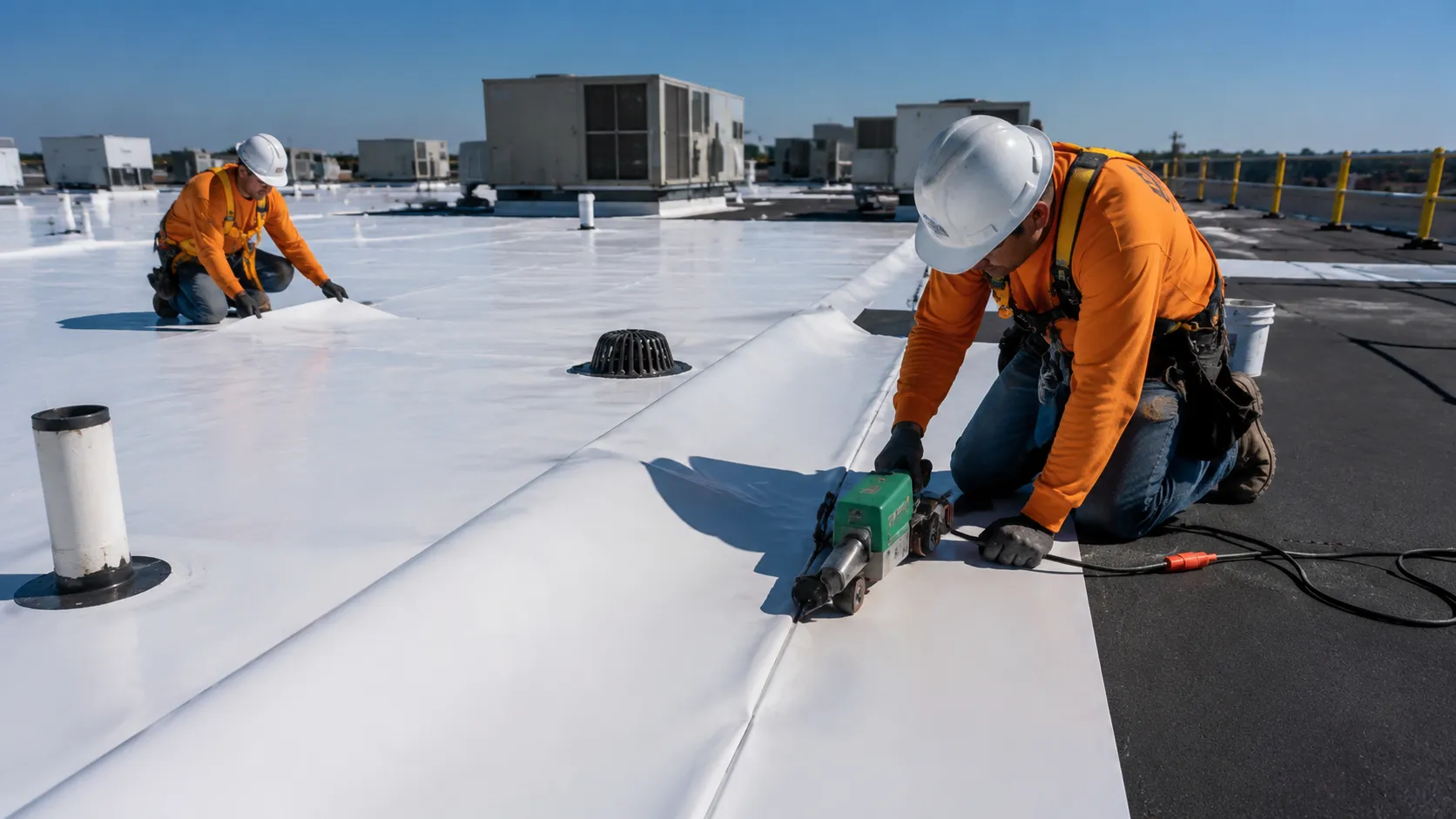
TPO stands for thermoplastic polyolefin. It's a single-ply membrane, meaning the whole roof is covered with one continuous sheet instead of multiple stacked layers. The sheet itself has three bonded layers: a base layer, a polyester-reinforced fabric core for strength, and a thermoplastic top layer that gives it its light color and weather resistance.
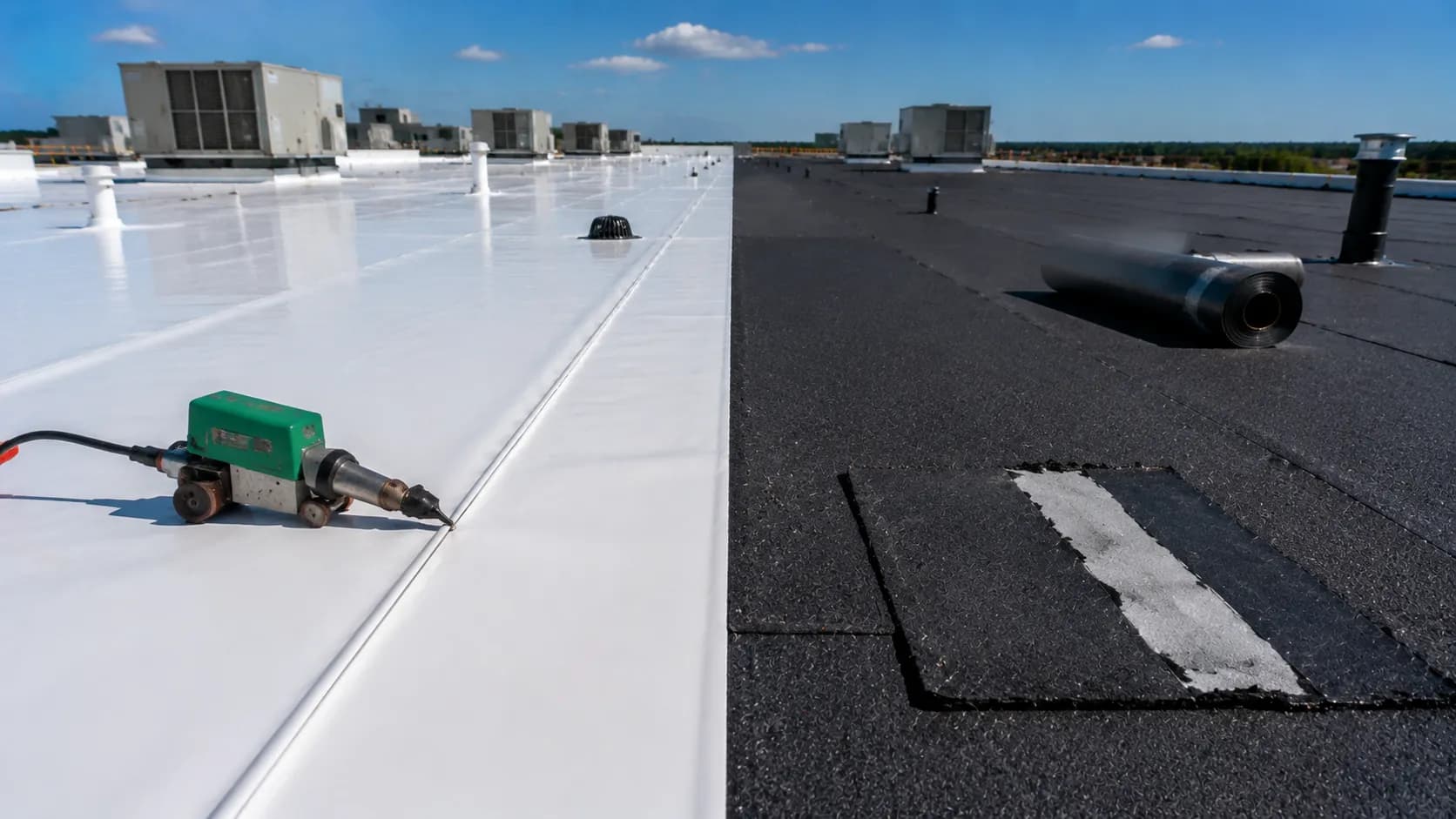
Rolls of TPO come in large sheets and get heat-welded together on-site, creating seams that are actually fused rather than just glued or taped. This welding process is what makes or breaks a TPO installation — done correctly, the seams are as strong as the membrane itself; done poorly, they're the first place a roof will fail.
TPO has only been widely used since the 1990s, but it has quickly become the most common material on new commercial low-slope roofs in the U.S. Its rise is largely due to two things: it's cheaper to install than most alternatives, and its bright white surface reflects sunlight instead of absorbing it. For energy-efficient standards, the U.S. Department of Energy frequently recognizes cool roofs like TPO for reducing cooling demand.
What Is Modified Bitumen Roofing?
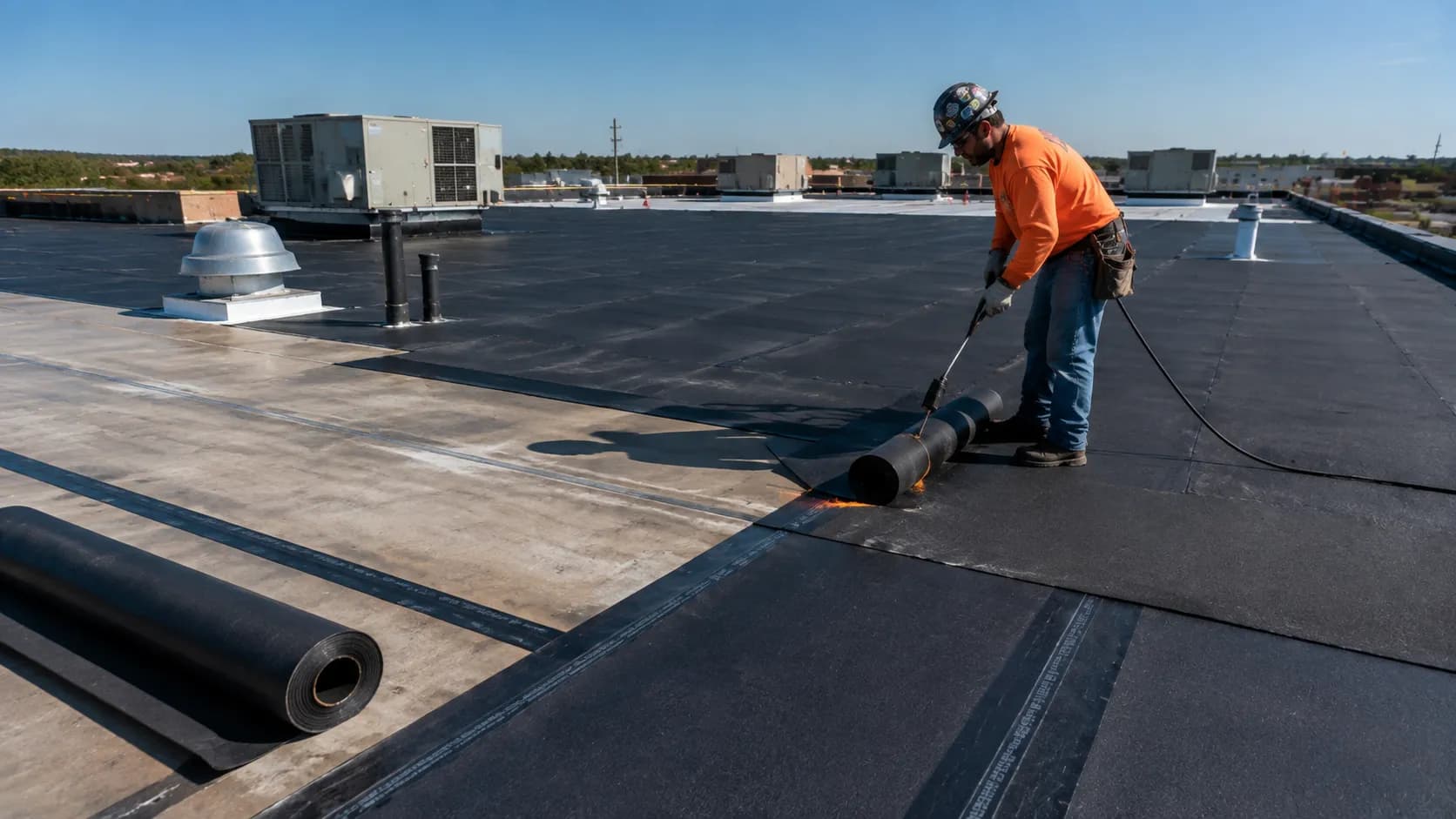
Modified bitumen is an asphalt-based roofing system developed in the 1970s as an upgrade to older built-up roofing (BUR). The "modified" part refers to polymers blended into the asphalt to improve its performance:
- SBS (styrene-butadiene-styrene): adds rubber-like flexibility, helping the membrane move with the building without cracking.
- APP (atactic polypropylene): improves resistance to aging and UV exposure.
These asphalt-polymer blends are reinforced with fiberglass or polyester mats and manufactured into rolls. A typical system uses a base layer and a cap layer, and some installations add a reinforcing fabric layer or an asphalt emulsion base coat for extra protection — similar in structure to traditional built-up roofing, just more advanced. You can learn more about its composition in our detailed bitumen basics guide.
Modified bitumen can be installed a few different ways: torch-applied (heat welding), cold-applied adhesive, self-adhered rolls, or mechanically fastened. Torching requires skilled installers and careful fire safety precautions, which is one reason labor costs run higher than TPO. The National Roofing Contractors Association (NRCA) provides extensive guidelines on proper and safe installation of these heavy-duty systems.
TPO vs. Modified Bitumen: Side-by-Side Comparison
| Factor | TPO | Modified Bitumen |
|---|---|---|
| Structure | Single-ply membrane | Multi-layer, asphalt-based |
| Typical lifespan | 20–30 years | 15–20 years |
| Upfront cost | Lower | Higher |
| Installation | Heat-welded seams, faster labor | Torch, cold-adhesive, or mechanically fastened |
| Energy efficiency | High — reflective white surface | Lower unless coated; absorbs heat |
| Impact/puncture resistance | Moderate — thinner membrane | High — reinforced layers |
| Standing water tolerance | Good | Weaker; needs proper slope |
| UV resistance | Strong, especially in white | Weaker over time without coating |
| Leak detection | Easier on light surface | Harder on dark, granulated surface |
| Warranty (typical) | Often longer with proper install | Commonly 10–12 years |
| Best for | Hot climates, budget-conscious projects, energy savings | High foot traffic, storm-prone areas, impact resistance |
Cost Comparison
TPO is generally the more budget-friendly option, both for materials and labor. The membrane itself is less expensive, and heat-welded installation tends to go faster than layering and torching a modified bitumen system. To accurately estimate flat roof material costs, you can use our flat roof system calculator.
Modified bitumen costs more, partly because it's a byproduct of crude oil refining, so its price shifts with oil markets and refinery output. Installation labor also costs more because torch-applying or layering multiple sheets takes longer and requires more skilled labor than welding a single TPO sheet.
That higher upfront cost isn't necessarily wasted money. Modified bitumen's thicker, reinforced structure can offset the price difference over time on roofs that take a beating from foot traffic, dropped tools, or storm debris.
Durability and Lifespan
This is where the two systems diverge the most, and the answer depends heavily on what the roof has to deal with day to day.
Modified bitumen's reinforced, multi-layer build makes it genuinely tough. It resists cracking, tearing, and impact damage well, which is why it's often the better pick for roofs with regular foot traffic, like buildings with rooftop HVAC access points that technicians walk across often. It typically lasts 15 to 20 years, with lifespan depending heavily on installation quality and how much wear the roof takes over time.
TPO, while thinner, tends to outlast modified bitumen when installed correctly, often reaching 20 to 30 years thanks to strong resistance to UV rays and heat. But that durability comes with a catch: TPO can puncture more easily than modified bitumen, since it doesn't have the same reinforced, multi-ply structure. On roofs where equipment gets dragged around or maintenance crews are walking frequently, that's a real consideration.
Modified bitumen has one structural advantage in a specific scenario: it handles building movement well because of its flexible SBS or APP polymers. TPO, however, tends to manage standing water more comfortably, which matters most on roofs with minimal slope where water can't drain quickly.
Energy Efficiency
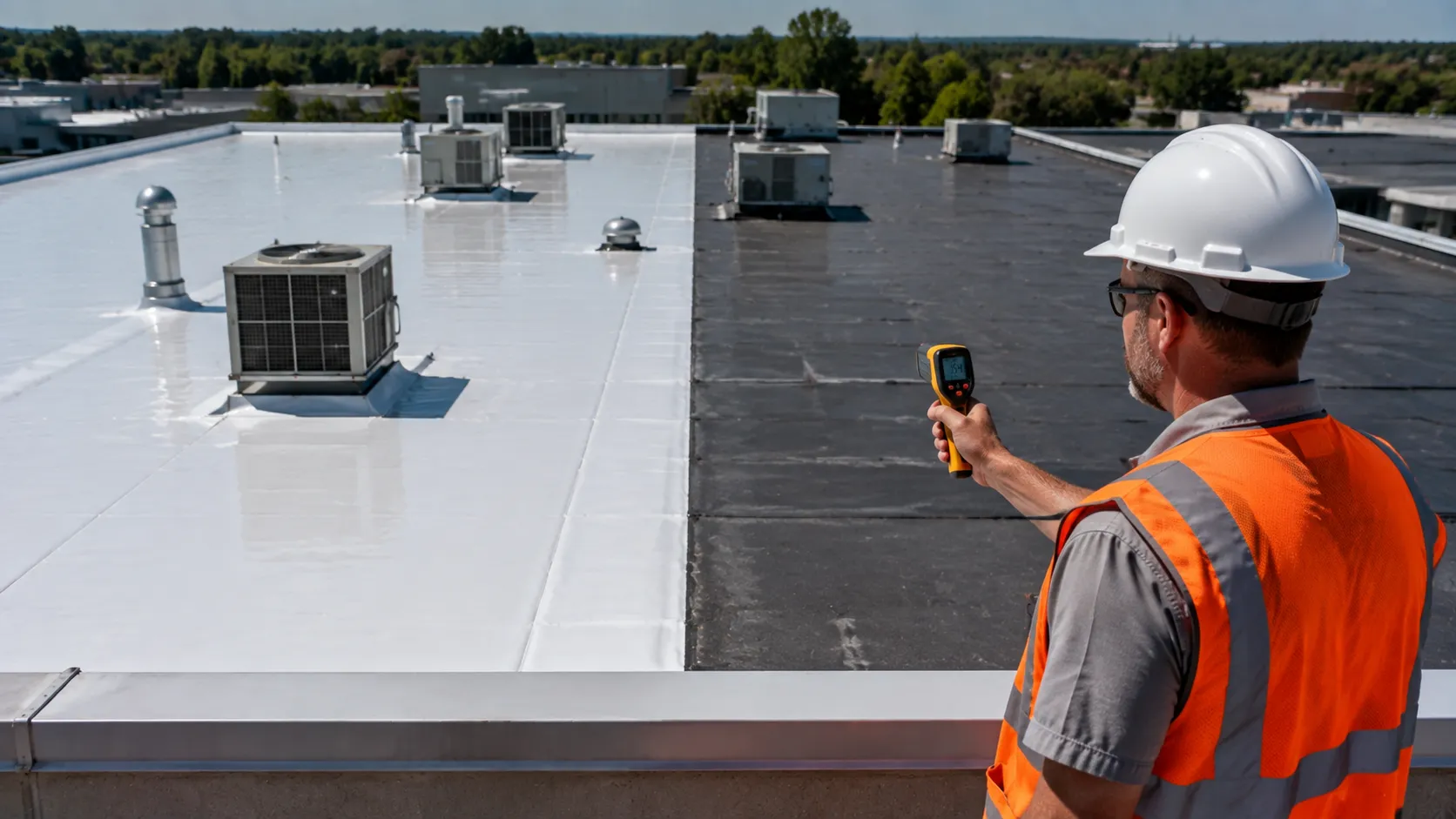
TPO's biggest selling point for many building owners is its impact on cooling costs. Because it's typically white, TPO reflects sunlight rather than absorbing it, which keeps the roof surface — and often the building below it — cooler. In hot climates, that translates directly into lower air conditioning bills.
Modified bitumen's natural surface is darker and granulated, so it absorbs more heat by default. It can be made more energy-efficient with a reflective coating, but that's an added step and cost rather than a built-in feature. Without a coating, a modified bitumen roof will run hotter than an equivalent TPO roof in direct sun.
Weather and Climate Performance
Both systems can perform well, but they have different strengths depending on the climate.
- In hot, high-UV climates: TPO tends to age better. Asphalt-based membranes are more prone to long-term UV and heat degradation than white TPO, which matters in markets that see intense, sustained sun exposure.
- In storm-prone or high-wind areas:Modified bitumen's reinforced structure holds up well against debris impact and wind-driven damage. It's a common choice in regions that regularly deal with hail or storm debris.
- On low-slope roofs with drainage issues:TPO handles standing water more reliably than modified bitumen, which matters if the roof design doesn't allow water to drain quickly after rain.
- For leak detection:TPO's light, smooth surface makes it easier to spot cracks or splits during inspection. Modified bitumen's dark, granulated surface can hide early signs of failure, meaning problems sometimes go unnoticed longer.
Installation and Maintenance
TPO installation is generally faster and less labor-intensive, since it involves rolling out large sheets and heat-welding the seams. That said, seam quality is everything — a poorly welded seam is the most common cause of TPO leaks and premature failure. It's worth choosing a contractor with specific TPO welding experience rather than assuming any commercial roofer can do it well.
Modified bitumen installation takes more steps and more skilled labor, whether it's torch-applied, cold-adhered, or mechanically fastened. Torch application in particular carries fire-safety risks during installation that require trained crews and proper precautions. You can dive deeper into these materials in our full guide to modified bitumen roofing systems.
On the maintenance side, both systems are relatively low-maintenance once installed correctly. Modified bitumen is often described as easy to repair and patch, since damaged sections can be identified and resealed without redoing the whole roof. If you need to repair and maintain your existing asphalt-based roof, many owners find patching very straightforward. TPO repairs are also straightforward when the damage is caught early, but seam failures can sometimes be harder to trace than surface punctures.
Which One Should You Choose?
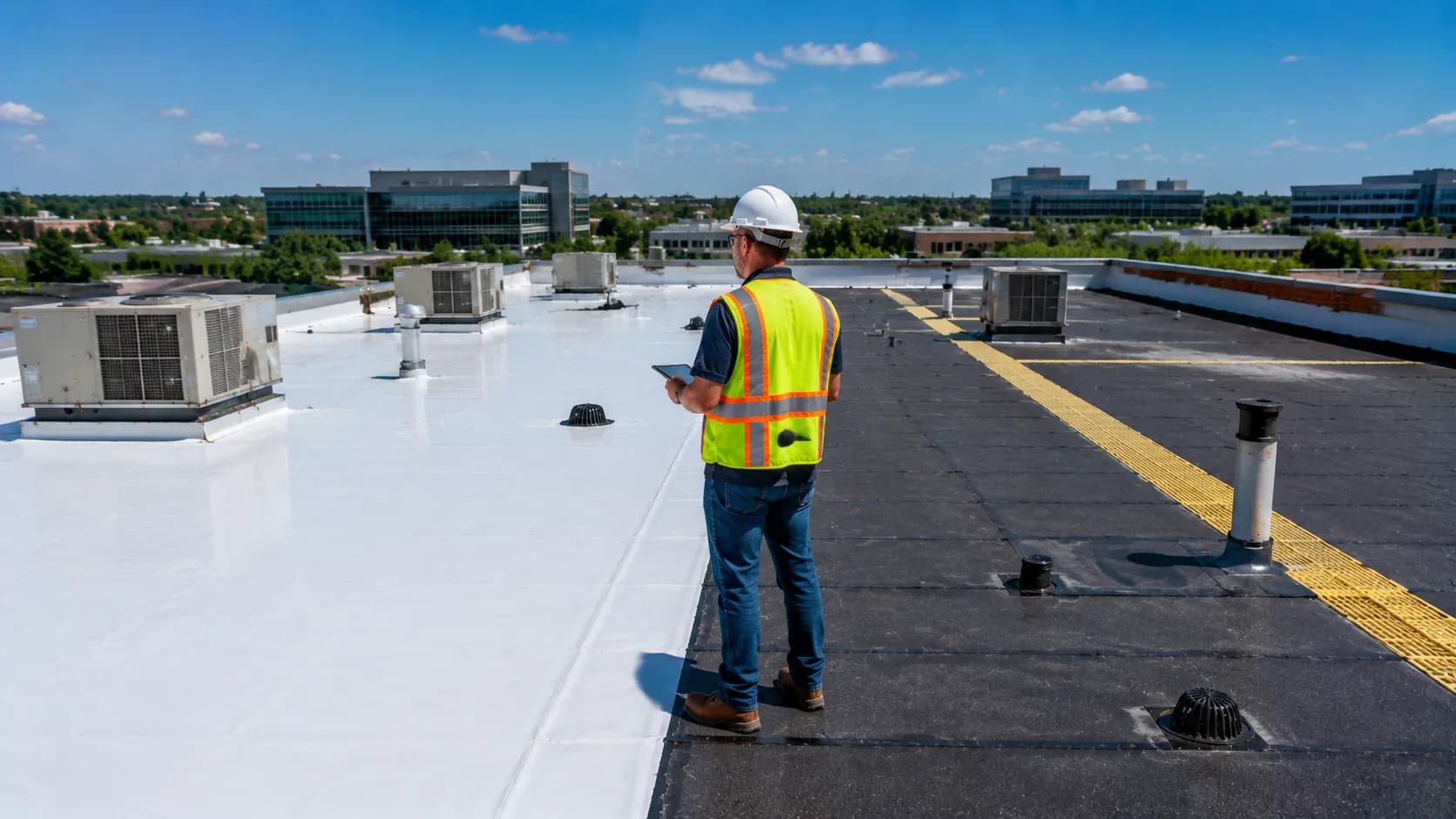
There's no universal right answer here — it comes down to what matters most for your specific building.
Choose TPO if:
- You're working with a tighter budget
- Your building is in a hot, sunny climate and cooling costs are a concern
- Your roof doesn't see heavy foot traffic
- Fast installation timelines matter
Choose modified bitumen if:
- Your roof gets frequent foot traffic or has multiple rooftop units requiring regular access
- You're in a storm-prone area with risk of hail or debris impact
- You want a roofing system with a long history of proven field performance
- You're willing to pay more upfront for added impact resistance
Some property owners with an existing modified bitumen roof that's still structurally sound choose to repair and maintain it rather than switch systems entirely, which can be a cost-effective way to extend its service life instead of a full replacement.
Summary
TPO and modified bitumen solve the same problem — keeping water out of a flat or low-slope roof — but they get there differently. TPO leans on a single reflective membrane that's cheaper to install and better at cutting cooling costs. Modified bitumen leans on layered, reinforced asphalt that holds up better under impact and foot traffic, at a higher price. The right choice depends less on which material is "better" overall and more on your climate, your roof's traffic level, and your budget for upfront cost versus long-term durability. A roofing professional who can inspect your specific building will give you a far more reliable answer than any general comparison.
Common Questions
Is TPO or modified bitumen better for a flat roof?
Neither is universally 'better' — it depends on your priorities. TPO tends to win on cost, energy efficiency, and lifespan in sunny climates. Modified bitumen tends to win on impact resistance and performance on high-traffic or storm-exposed roofs.
How long does a TPO roof last compared to modified bitumen?
TPO typically lasts 20 to 30 years when properly installed and maintained. Modified bitumen typically lasts 15 to 20 years, with actual lifespan depending on installation quality, climate exposure, and maintenance.
Which roofing material is cheaper, TPO or modified bitumen?
TPO is generally cheaper both in material cost and installation labor. Modified bitumen costs more partly because it's asphalt-based, tying its price to crude oil markets, and partly because installation methods like torching require more skilled labor.
Can modified bitumen be made more energy-efficient?
Yes, but it requires an added reflective coating. Without one, its darker surface absorbs more heat than TPO's naturally reflective white membrane.
Does TPO puncture easily?
TPO can puncture more easily than modified bitumen because it's a thinner, single-ply membrane without the same reinforced, multi-layer structure. Roofs with heavy foot traffic or equipment movement may be better suited to modified bitumen.

Founder & Web Developer
Nabeel Awan is a web developer and the founder of BitumenCalcPro. His work focuses on web development and building practical online tools, with a strong interest in civil engineering, asphalt, bitumen, pavement construction, and construction technology.